
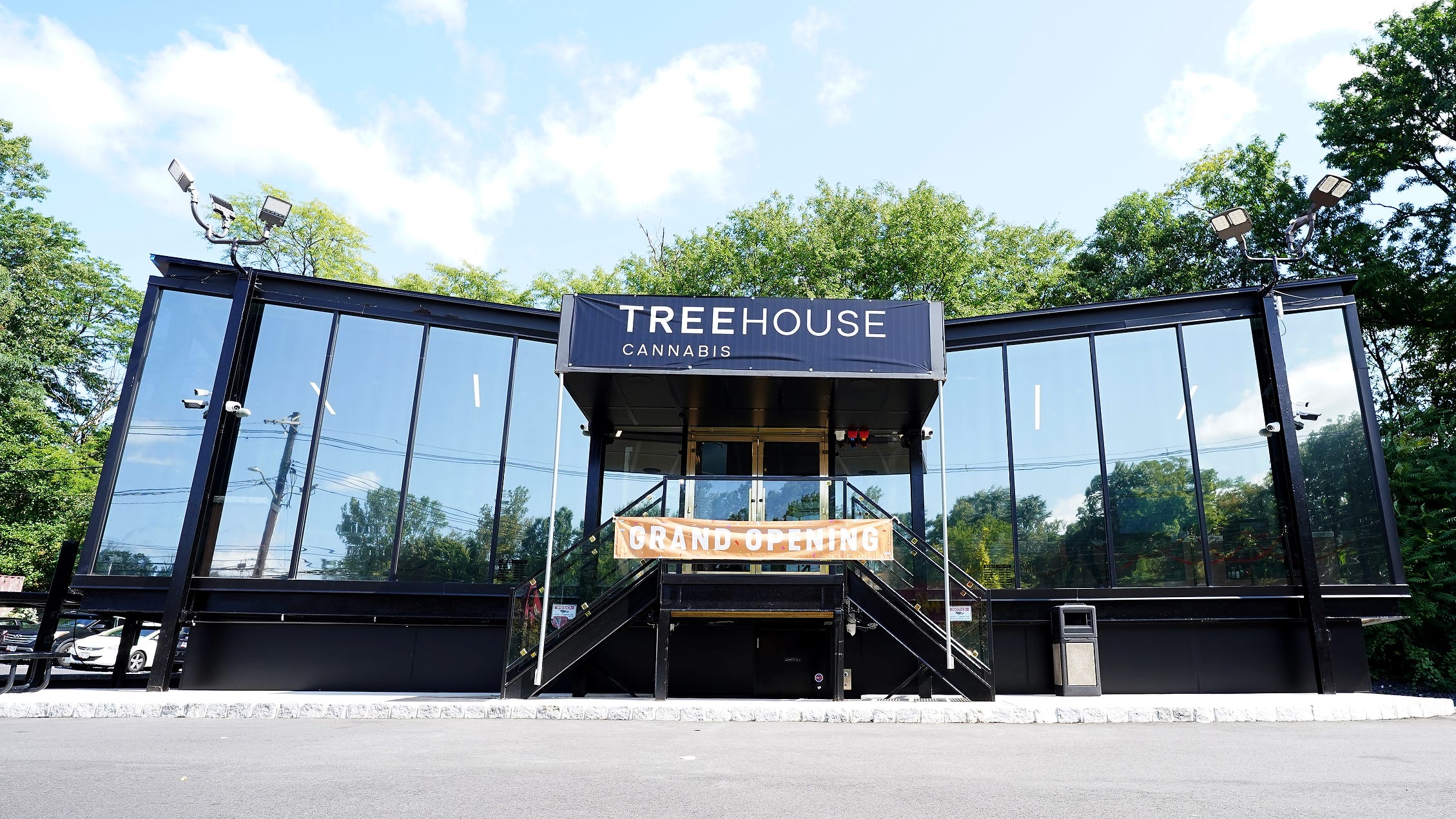

Treehouse Cannabis owner talks opening Rockland’s first pot shop
Treehouse Cannabis owner Seth Marks talks ‘interesting journey’ to opening Rockland’s first legal recreational pot shop.
- New York legalized recreational marijuana in 2021 and created the Office of Cannabis Management (OCM).
- As of May 2025, 386 of 651 approved recreational dispensaries and 32 medical dispensaries operate statewide.
- Adults 21 and older can purchase up to 3 ounces of cannabis daily.
New York’s recreational cannabis industry got off to a rocky start in 2021, with dispensaries slow to open as lawsuits and red tape weighed down the process.
Recreational weed use was legalized via the Marijuana Regulation and Taxation Act, which established the Office of Cannabis Management to regulate the sale of medical and recreational cannabis and hemp.
Four years in, the rules around the sale and use of recreational marijuana in New York are still coming into focus as enforcement and health concerns continue to arise.
Here are the basics of where recreational cannabis is available in New York, who can buy it and how laws around it are being enforced.
How many cannabis dispensaries are operating in NY?
651 “adult-use” (recreational) dispensaries were approved statewide, with 428 dispensaries operating, as of July 10, 2025. There are also 36 medical dispensaries approved.
As of May 1, 17 dispensaries were operating in Westchester, four in Rockland, and none in Putnam.
At what age can you purchase cannabis in NY?
One must be 21 years of age to purchase recreational cannabis, the same age to purchase alcoholic beverages. There are no age restrictions for participating in the Medical Cannabis Program, although patients under 18 must have a registered, designated caregiver.
How much cannabis can a person purchase in NY?
An individual can purchase up to 3 ounces of cannabis products daily.
Where can cannabis dispensaries set up business?
There are no limits on the number of dispensaries per community, but there are distance limitations.
In municipalities with a population of 20,000 or more, adult-use dispensaries must be at least 1,000 feet apart, measured in a straight line between the main entrances. In municipalities with fewer than 20,000 people, the distance increases to 2,000 feet.
Applicants may apply to the Cannabis Control Board for waivers for locations that don’t meet the minimum distance requirements. Generally, dispensaries may not be within 500 feet of a school, as defined in New York State Education Law, or a public youth facility, or within 200 feet of a house of worship.
Who enforces NY laws on cannabis dispensaries?
New York’s Office of Cannabis Management operates teams responsible for enforcement and oversight. Its Enforcement and Investigations Team leads efforts against unlicensed, illicit cannabis operations across the state. Its Compliance Team, in conjunction with its Trade Practice Bureau, is responsible for ensuring that licensed cannabis businesses comply with all applicable rules and regulations, including operational standards, product handling, and reporting requirements.
What’s being done about unlicensed cannabis operations in NY?
New York’s cannabis office says illicit cannabis shops remain a serious concern as they undermine licensed dispensaries and pose risks to public health and safety.
The Enforcement and Investigations Team, in conjunction with local law enforcement, is responsible for investigating and taking enforcement action to protect consumers, safeguard public health, and ensure a fair and lawful marketplace for licensed operators. OCM does not have jurisdiction over the legal use of consumption outside of a licensed business. The state Department of Health and local municipalities should be consulted regarding any limitations on smoking or vaping.
Is there a fee or tax to open a dispensary? What’s NY’s share of profits?
New York collects dispensary license fees and taxes on the sale of cannabis.
New York’s Social and Economic Equity program for cannabis dispensaries aims to address the disproportionate impact of past cannabis prohibition on certain communities and individuals. Applications that qualify as advancing social and economic equity pay a 50% reduction in application and license fees.
| Type | Amount |
| Adult-Use Application Fee, per application | $1,000 |
| Adult-Use Retail Dispensary License Fee | $7,000 |
What are taxes on cannabis in NY, and where does the tax money go?
There’s a retail tax of 13% on all adult-use cannabis product sales, with 9% going to the state and 4% to local municipalities, according to OCM. There’s a wholesale tax of 9% on the sale of cannabis products. These funds go toward education, public health, and enforcement, with 40% reinvested into communities harmed by past cannabis criminalization.
What’s the state of medical marijuana in NY?
In 2016, New York implemented the Medical Cannabis Program. In March 2021, the Marijuana Regulation and Taxation Act amended the program and improved access for medical patients, who must obtain a medical cannabis certification card and a state ID. There are no age restrictions for participating in the Medical Cannabis Program, although patients under 18 must have a registered, designated caregiver.
How many people participate in NY’s Medical Cannabis Program?
As of July 10, 2025, the program had 97,922 registered patients statewide and 4,568 certifying practitioners, according to the state agency.
How do you qualify for NY’s medical marijuana program?
After being approved by a healthcare provider, patients can use their medical cannabis certification, along with a government-issued photo ID, at any licensed medical dispensary to purchase cannabis products.
Licensed practitioners can prescribe controlled substances and are qualified to treat patients after completing an approved educational course.
Steve Lieberman covers government, breaking news, courts, police, and investigations. Reach him at slieberm@lohud.com Twitter: @lohudlegal
Read more articles and bio. Our local coverage is only possible with support from our readers.