
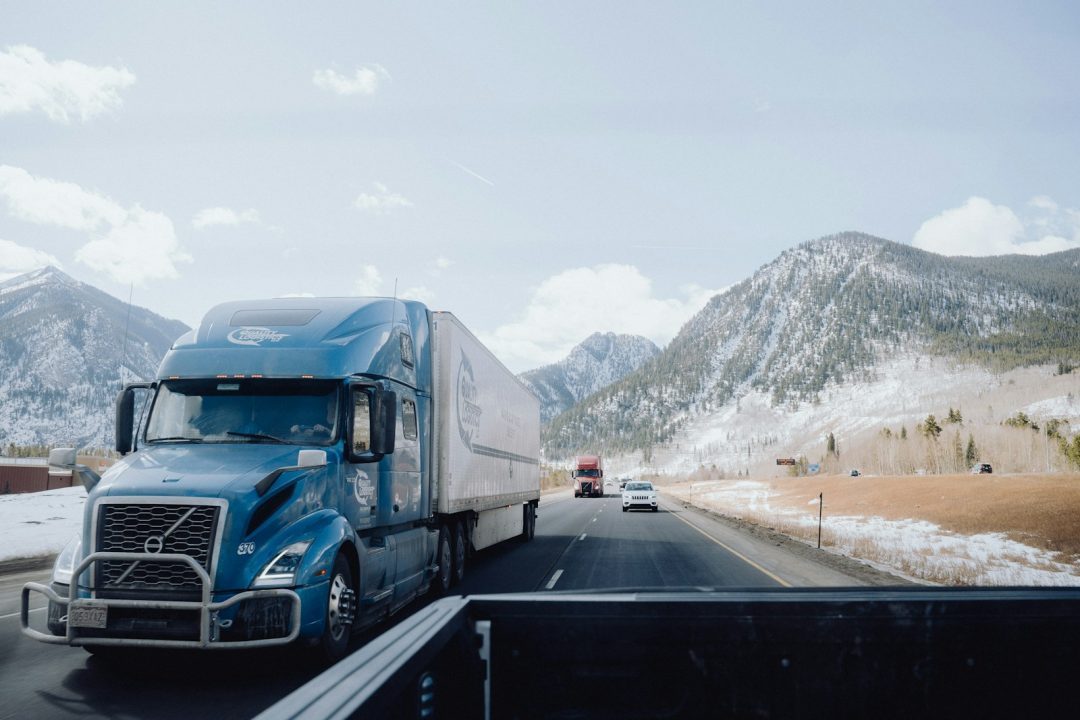
DOT Bucks The President About Cannabis
May 18, 2026
Published by toker
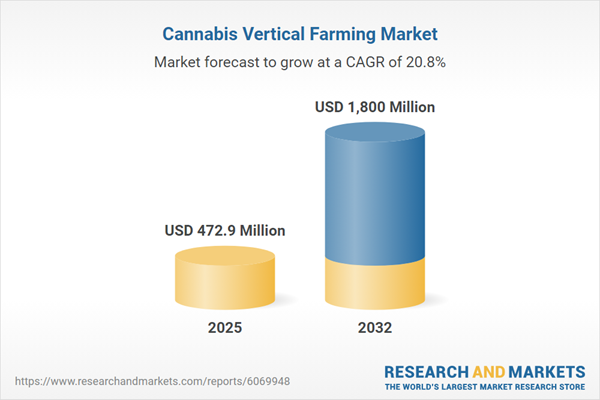

Walk into any well-stocked hemp shop right now and you will notice something. Watermelon flavored edibles are everywhere, and the Delta 9 gummy category is leading the charge. This is not just a seasonal trend or a marketing gimmick. There are real reasons why this particular combination of cannabinoid and flavor has caught on so […]
The post Why Watermelon Delta 9 Gummies Are Trending in Hemp Edibles appeared first on Stoner | Pictures | Stoners Clothing | Blog | StonerDays.

A quarter-century after Terence McKenna’s death, his daughter Klea McKenna is building the archive his legacy deserves — and confronting a storage unit she hadn’t opened in 25 years.
The late Terence McKenna isn’t easy to categorise. A lecturer, author, ethnobotanist, philosopher and High Times cover alumnus, McKenna was a defining voice of the psychedelic community through the ’80s and ’90s. He popularised ideas like DMT elves and the Stoned Ape Theory, and preached the Heroic Dose — five dried grams of psilocybin mushrooms in silent darkness — to anyone willing to listen.
A quarter-century after his passing, videos of his lectures continue to amass millions of views. Now his daughter Klea McKenna, a visual artist based in San Francisco, is stewarding that legacy by building an archive of his intellectual work and life story through recordings, photos, journals, manuscripts, lecture notes and personal letters. We sat down with her to talk about grief, memory, mushrooms and what it actually meant to grow up as Terence McKenna’s kid.
I’m a visual artist and I also write and teach. My primary medium for the last 17 years has been cameraless photography, making images through light sensitivity, but without a camera, a lens, or a negative. I stretch the photographic medium to record touch and pressure, to capture something that feels more like subjective experience and less like the objective witnessing for which photography was invented.

My dad died when I was 19, and it had been a fairly traumatic decade leading up to that. At the time, I walked away from everything. I was looking to build a life of my own, independent of my family of origin. Somehow, time slipped past me, and it has been 25 years. Now I feel ready to take this on. So here I am, juggling two kids, an art career, and managing the family company, Lux Natura.
My early childhood was in the early 1980s on the Big Island of Hawaii. We lived off the grid and close to nature. There was no electricity, phones, or indoor plumbing, which was its own kind of Idylic, magical existence; psychedelic or otherwise. Then we moved back to the “mainland” – to rural Northern California – a little closer to civilization, but still deep in the subculture. That’s where my closest friendships were formed, and where I spent my adolescence.

Collected materials from Terence McKenna’s life: Photos, letters, journals, audio recordings, manuscripts and travel documents. Photo by Klea McKenna, 2026.
Psychedelics were just in the air I breathed. I did go through a period of frequent experimentation in my teens, but never became obsessed like some teens do, because there was nothing forbidden about it. Mushrooms have remained a source of joy and introspection for me, a place I check in with from time to time, like visiting where you came from.
Mushrooms have remained a source of joy and introspection for me, a place I check in with from time to time, like visiting where you came from.
Klea McKenna
Yes. At some point, his travel and speaking engagements increased rapidly, and he became less present at home. People were coming up to him more, wanting his attention, wanting to talk to him. That increased into the 90s. But really, he wasn’t famous in the way that true celebrities are. He was very niche. Even today, some people lose their minds when they realise who my dad is, but 95% of people have no idea who he is. It all depends on what scene you are in.
Like any charismatic person, he could turn it on and off. He held court at home in our living room a lot with guests visiting and him ranting for them, so we were used to that version of him. I also think children are a captive audience for any parent, so he would try out his “schtick” on us. He loved sayings, catchphrases and wordplay. He made up outlandish stories to test how gullible we were; he delighted in being a trickster.
People often ask me if he was a good dad, perhaps not by our 2026 standards. But it was the ’80s (the parenting bar was pretty low, especially for dads), and he was doing the best he could. My own parenting challenges have given me a lot of compassion for my parents’ shortcomings.
There is no perfectly concise summary because what he was doing was avant-garde at the time. I used to call him a writer, but that wasn’t quite right. The best I’ve come up with is ‘psychedelic philosopher.’
“Psychedelic philosopher.”
Klea McKenna’s best summary of what her father did — and why no other label quite fits.
I don’t really feel attached to their provability because I see him as a storyteller. And as he said (via Mark Twain): “Don’t let truth get in the way of a good story”.
Some of his theories were better than others, for sure. I still see articles about the Stoned Ape Theory 25 years later.
For me, though, as decades have passed, I experience his work as art. I’m not super hung up on the details. People sometimes ask me very specific questions about the consistency of his words and meaning: “One time he said this thing and another time he said this other thing, and those don’t really match…”
Well, when I stand in front of a painting, I don’t check its consistency. I check how it makes me feel. If it moves me, that’s valuable art.
When I stand in front of a painting, I don’t check its consistency. I check how it makes me feel. If it moves me, that’s valuable art.
Klea McKenna

Portrait of Terence McKenna by Marc Franklin, 1989.
I’ve often thought, “Thank God social media didn’t exist when he was alive,” because he might have been alarmingly good at it. But the reality is that he’d be 80 years old. Before he died at 53, he was already slowing down energetically, becoming more of a hermit. He didn’t want to travel as much. He wanted to be more rooted. He spoke with less urgency — more professorially — looking back at history and questioning what lay ahead.
Maybe that was just a phase, or maybe that was the brain cancer beginning to affect him, because we don’t know how long he had it before diagnosis.
It’s a Venn diagram of intelligence, charisma and obsession. There are many very smart people with theories. But very few of them were as good at explaining their theories, especially back then.
We’ve come through the era of TED Talks and presenting big, complex ideas in a palatable way. Back then, that hadn’t happened yet. The intellectual performer was a relatively rare thing.
He also didn’t just dabble in those ideas. There was a level of commitment to his belief that’s attractive to people who do dabble in these kinds of ideas. Part of what he offered was permission to experiment, both with drugs and with your own mind. He gave permission to be weird and to take the leap.

I began by trying to triage the occasional rights requests for Terence’s work, and realized that if you pull one thread, the whole thing starts to unravel.
At that point, nothing was organized. So we started gathering disparate pieces from different locations and people, friends and family, and institutions he lectured at, to create this collection. Then, we began cataloguing, digitizing and transcribing those materials.
There was one storage unit in Hawaii that I’d been paying for for 25 years, but never opened — grief is weird that way. There are also hundreds of letters he saved, so I’m reaching out to people he corresponded with, trying to reconstruct both sides of those conversations.
There was one storage unit in Hawaii that I’d been paying for for 25 years, but never opened — grief is weird that way.
Klea McKenna
My parents (Terence McKenna and Ethnobotanist, Kathleen Harrison) founded Lux Natura in 1976, first as a mail-order business selling mushroom spore prints, then as a small press and clearinghouse for their various publications and recordings. It’s now a family partnership, which I manage, consisting of my mom, my brother and I, representing my dad’s intellectual property rights. Our foundational project is to build an archive of Terence’s original work and life story.
Our goal is to find a forever home for this collection in an institutional archive where it can be professionally preserved and made available to the public for research and collaboration.
Archives act as an official form of memory; it’s how events and people are written into our collective history. As the role of psychedelics in our culture changes, characters that were once on the fringe are becoming the history of a mainstream phenomenon.
Terence and others of his milieu should be archived and recorded just as any major cultural moment should be, you know? Not just for his individual perspective, but as a part of the history of the West Coast counterculture and its broader impact.
He had an exceptional memory for details. Part of his ability to perform the way he did was that he could quote things he’d read, take the information, find unexpected connections between things from different times and different fields of study and weave them into this web that made them meaningful to whichever subject he was talking about.
But, yes, we have about 300 pages of notes. Rather than being scripts for lectures, he’d work through his ideas and their connections on notes, finding a sequence and a rhythm that he could improvise within.

Klea McKenna sorting her father’s letters. Photo by Airyka Rockefeller, 2026.
Because he died young, there’s a feeling that he wasn’t finished. There’s more of him, his ideas, his work, to give.
I want to give his work a different entry point than anything presented so far. There are topics he spoke about that have received less airtime — creativity, the role of the artist/shaman, alchemy — I’d like to bring those to the foreground.

Terence McKenna’s field journal from a 1976 trip to the Amazon.
I’m also interested in finding a new aesthetic direction for his work. I think the psychedelic community are hungry for that as well, to leave behind this kind of 90s-doing-70s-aesthetic that we’ve been stuck on for thirty years, but without sterilizing it by going into the corporate-pharmaceutical-whitewash direction either. This feels like a timely and enticing challenge.
We’re launching a podcast in June. It will range from his iconic lectures to raw, early lost rants, restored radio dialogues and casual conversations with friends recorded in the living room, as well as field recordings and even dramatized readings from his journals and personal letters.
Another project, eventually, will be a series of books made from his lectures, curated around major themes. These would be a very approachable synthesis of his best rants about these topics — a sort of Terence McKenna Primer in five volumes.
I’m most excited about sharing the archival material itself in a visual form. Whether that becomes an interactive website or a beautiful, image-based book, I’m not sure yet.
Join our mailing list at www.TerenceMcKenna.com to stay informed about new releases. We share glimpses on Instagram of the archival process and what we are finding @Real.Terence.McKenna.
You can find Klea’s artistic work at Euqinom Gallery in San Francisco or at www.KleaMcKenna.com.
<p>The post Terence McKenna’s Daughter Has Been Paying for a Storage Unit in Hawaii for 25 Years. She Just Opened It. first appeared on High Times.</p>
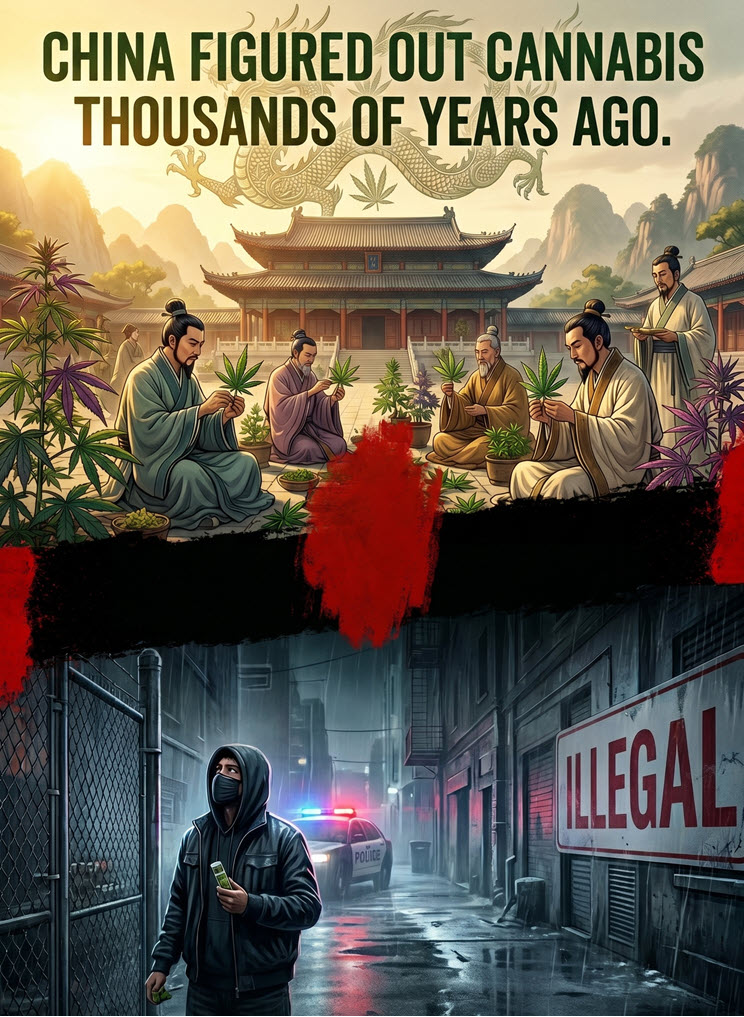

Chinese researchers at Shandong University just published a study in the Journal of Archaeological Science that does something straightforward: it tells the truth about cannabis’s place in human history. Using phytolith analysis — the study of microscopic plant silica structures found in soil — the team examined 132 samples from two Late Neolithic settlements in the Shandong province. What they found was not marginal or incidental. Cannabis was one of the five grains.



 “Acceptance of the newly proposed rule would mean that no state-legal medical cannabis patient will any longer have to choose between either their medicine or their constitutional right to bear arms.”
The post ATF Posts Draft Document Acknowledging Medical Cannabis Scheduling Change appeared first on NORML.
A 501c3 commissioned accredited private labs to test whole hemp biomass. The results are preliminary. They also answer a question that USDA’s food-data infrastructure has spent seven years not asking.
Hemp has been federal food in the United States since 2018.
Seven years later, USDA’s main nutritional database still has no entry for the whole plant. Seeds, yes. Plant, no.
A 501c3 called Food First Initiative just spent $9,379.20 in donor money paying private labs to do the work.
The labs came back with numbers.
Per 100 grams of dried seedless hemp biomass: 5,990 mg of calcium. 2,336 mg of potassium. 8.67 grams of protein. 34.6 grams of dietary fiber.
With seeds in the mix: 12.1 grams of protein. 35.6 grams of fiber. 321 calories per 100 grams.
Eurofins detected seven essential amino acids across all four sample conditions. Glutamic acid led the dried-with-seeds profile at 1.46 percent, followed by aspartic acid (1.17%), arginine (0.84%), leucine (0.69%) and valine (0.55%).
Per 100g dried hemp biomass
12.1g
Protein, dried biomass with seeds
35.6g
Dietary fiber, dried biomass with seeds
5,990mg
Calcium, dried seedless biomass
2,336mg
Potassium, dried seedless biomass
Sources: AGQ USA (calcium, potassium, protein, fiber) and Eurofins Nutrition Analysis Center, commissioned by Food First Initiative. Methods: ICP-OES for minerals, elemental analyser for protein, AOAC 982.30 mod for amino acids.
The samples came from a grain-type cultivar called Amaze Auto, developed by Andy Simons of Full Spectrum Seeds and grown on an organic plot in Flint, Michigan. The Michigan Department of Agriculture and Rural Development tested the harvest at 1.27% total CBD and no detectable THC. Federally compliant.
The lab work is real. AGQ USA in Oxnard, California ran the nutritional and mineral panels. Eurofins subcontracted the amino acid and free fatty acid analysis to its Nutrition Analysis Center in Iowa, using AOAC standard methods. Both labs are accredited. The reports are billed to a Las Vegas entity called NutriData, which commissioned the work on FFI’s behalf.
What the data is not: peer-reviewed. Replicated across geographies. A basis for clinical health claims. Single farm. Single cultivar. Single growing season. FFI says as much.
What it is: the first publicly available baseline nutritional profile of whole hemp biomass in the United States. Generated because nobody at the federal level had done it.
USDA has hemp seed data. The agency’s hulled hemp seed entry (FDC ID 170148) has been in the database since 2018. The agency has flagged it as not being updated.
There are 1,416 branded products in FoodData Central with the word “hemp” in them. Granola bars. Protein powders. Dog treats. Smoothies.
There is no entry for the plant.
Federally legal since 2018. Federally unstudied as food.
Food First Initiative asked the USDA Agricultural Research Service to support, oversee or conduct the kind of basic nutritional research the agency does routinely for other federally legal crops. The agency said it could not.
The FOIA response (2025-REE-04776-F) documents the reason. FoodData Central’s food-selection process prioritizes foods that are highly consumed, fortified, in market reformulation or attached to a feeding study at the agency’s Human Studies Facility. Whole hemp biomass doesn’t move through any of those pipelines.
That is not a refusal. It is something quieter and more durable. A federally legal crop sits outside the workflow that generates federal nutritional data, and the agency’s response to a 501c3 asking it to step in was that the workflow doesn’t go there.
What USDA has
What USDA doesn’t have
Food First Initiative is not a neutral research body. It is an advocacy 501c3 (EIN 99-1692998) whose stated mission is to establish cannabis as a “food first” within government agencies and, eventually, to dismantle federal regulations around the plant.
The lab work was paid for by what the group calls “title sponsors.” FFI has not publicly named them. The Eurofins and AGQ reports list NutriData, a Las Vegas-based entity, as the commissioning client.
That layer matters. It doesn’t invalidate the data. The methods are standard. The numbers are real. It does mean readers should know who paid before any future findings get packaged as definitive.
The next round of testing, FFI says, will need to be replicated across cultivars and climates before any of this travels beyond a baseline.
That is the right caveat.
It is also the kind of work USDA has the capacity to do.
So far, it hasn’t.
Editor’s note: This article is based on accredited laboratory reports commissioned by Food First Initiative (AGQ USA reports AL-26/010312, 010317, 010320, 010330; Eurofins reports AR-26-QR-003755 through 004094), the Michigan Department of Agriculture and Rural Development compliance COA for the Amaze Auto cultivar (25-PH-10477), and USDA FOIA response 2025-REE-04776-F. Findings are preliminary and have not been peer-reviewed. Food First Initiative is an advocacy 501c3 (EIN 99-1692998); its lab work was commissioned through NutriData, Inc.
<p>The post The Feds Won’t Study Hemp As Food. A Nonprofit Just Did It For $9,379. first appeared on High Times.</p>





We use cookies to improve your experience on our site. By using our site, you consent to cookies.
Manage your cookie preferences below:
Essential cookies enable basic functions and are necessary for the proper function of the website.
Drag & drop or click to select
JPEG, PNG, GIF, WebP, MP4, WebM · Images max 30 MB · Videos max 100 MB