
Ten Black Heroes Behind Cannabis Legalization

Ten Black Heroes Behind Cannabis Legalization


Ten Black Heroes Behind Cannabis Legalization

From early reform efforts to modern legalization fights, these Black leaders helped reshape cannabis law and justice.

Written by Parabola Center for Law and Policy

Today, support for cannabis legalization is widespread. A majority of Black Americans favor reform, politicians now campaign on outdated drug laws, and celebrities speak openly about racial disparities while building careers in the legal cannabis industry. That visibility, however, is the result of decades of work by Black leaders who challenged prohibition at moments when public opinion, policy, and personal risk were far less predictable.

In earlier decades, speaking publicly in favor of legalization carried far greater personal and professional risk. Before public support began to increase, advocates could jeopardize their careers and reputations. Consumers faced criminal prosecution and incarceration. These risks were not borne equally: because the War on Drugs disproportionately targeted Black communities, Black advocates and consumers faced significantly higher legal and social consequences.

Since the 1990s, High Times has celebrated both unsung heroes and well-known activists for bravely standing up for what they believe in. This Black History Month, we continue that tradition by recognizing some of the Black leaders whose early courage and truthfulness were critical to the legalization movement. Without their courage, we might never have secured the rights we often take for granted today.

Parabola Center for Law and Policy, a POC-led cannabis nonprofit that puts people over profits, curated this list to honor the individuals who have done just that–fought for people’s rights without regard for personal risk or gain. From the thousands whose hard work and dedication have led to better marijuana laws, we selected 10 Black champions to honor for their contributions to legalization. 

1. Professor Michelle Alexander

In 2010, Michelle Alexander changed the conversation with her bestselling book, The New Jim Crow: Mass Incarceration in the Age of Colorblindness. While reshaping the national dialogue in favor of criminal justice reform, she also made a major impact on cannabis policy.

In a memorable address to the International Drug Policy Reform Conference, she criticized the hypocrisy of white men profiting from newly legal cannabis while thousands of Black and brown people remained locked up for the same activity. 

In 2015, she inspired a new generation of cannabis leaders when she declined to endorse Ohio’s legalization effort, writing, “Granting an oligopoly for ten wealthy investors is not justice.” The measure failed 65-35. 

2. Dr. Joycelyn Elders

An outspoken advocate for public health, Dr. Joycelyn Elders is best known for her steadfast support for comprehensive sex education in public schools. In 1993, she became the first Black person to serve as Surgeon General, nominated by Bill Clinton, and she achieved extraordinary results for underserved communities. Although widely recognized for her moral clarity and candor on many public health issues, it is less well known that she was also an early supporter of marijuana legalization. 

In 2010, she supported California’s Prop 19, telling the New York Times, “I think we consume far more dangerous drugs that are legal: cigarette smoking, nicotine and alcohol. I feel they cause much more devastating effects physically. We need to lift the prohibition on marijuana.”

3. Major Neill Franklin

After 34 years in law enforcement, Major Neill Franklin began reexamining his role in prohibition and in repairing the harm it had caused. In 2010, well before legalization entered the mainstream, he joined the Law Enforcement Action Partnership, and testified in support of marijuana legalization across the country. Over the next decade, using his professional credibility and reputation, he helped broaden the movement by making the case that regulated cannabis was better for public safety. 

His groundbreaking leadership didn’t stop at legal cannabis; he also joined United Nations advocacy efforts to end the prohibition of all drugs globally. Dubbed “the cop who broke with the drug war,” Major Franklin was recognized as a High Times Freedom Fighter last year.

4. Dr. Carl Hart

Dr. Carl Hart is a neuroscientist and psychologist at Columbia University who has spent decades challenging myths about drug use through both his research and his acclaimed books. When trace amounts of cannabis in Trayvon Martin’s blood were cited to justify his killing, Dr. Hart publicly dismantled the claim, comparing it to the alarmist narratives of  Reefer Madness

He has also served as an expert witness in family court to protect mothers from having their children removed based solely on a positive cannabis test during pregnancy. By consistently confronting fear-based policymaking and advancing evidence-based research, he has reshaped the legalization debate.

5. Linda Jackson, LVN

A cannabis nurse who was evaluating patients for cannabis approvals as early as 2003, Linda Jackson has been described as “way ahead of the curve.” While nurses’ contributions in the early era of medical cannabis in California received less attention than those of physicians, they were equally essential. In aninterview with the cannabis journal O’Shaughnessy’s, she detailed the process she used for patient intake. 

Because medical cannabis regulations had not yet been clearly defined, she and her team developed a framework from scratch to interview patients, assess their history, and obtain their consent–all using telemedicine. Through this approach, she estimated that between 300 and 400 patients received approval to medicate with cannabis.

6. Dr. Renee Johnson

A scientist and professor at Johns Hopkins Bloomberg School of Public Health, Dr. Renee Johnson would not describe herself as an “advocate.” But as a researcher who looks at substance use in marginalized groups including people of color, immigrants, and LGBTQ+ youth, her work to discover and publicize the true impacts of legalization has been vitally important. 

When many of her counterparts were quick to declare that medical cannabis laws increased use, she led astudy showing the opposite: three years after medical marijuana was first approved, rates of use declined. At the same time, she warned that use could rise or fall depending on context, emphasizing that public education would be key. Her commitment to truth over rhetoric has had a meaningful, positive impact on the legalization debate.

7. Professor Beverly Moran, Esq.

The first Black woman to serve on the national board of NORML, Professor Beverly Moran has a wealth of credibility as a professor of law and sociology. A longtime academic affiliated with institutions such as Vanderbilt Law School, she consistently focused on protecting consumers within emerging legal markets. 

In aninterview, she explained the distinction that drives her work: “We have to understand that there’s a difference between consumers and the industry. . . [T]obacco consumers do not want tobacco to be more addictive, and yet tobacco companies worked for decades to make it more addictive. Alcohol producers and casinos would be more than happy if everyone was addicted to their products. These are the issues we deal with. . . how to keep it safe, how to keep it legal, how to keep research going, how to keep people out of jail.”

8. Dorsey Nunn

With a three-word question – “What about Pookie?” – Dorsey Nunn challenged the national legalization movement to call for the transition of those in the legacy market into the legal market. Sentenced to life in prison at age 19, he began advocating for the rights of incarcerated people while still behind bars. After his release, he co-founded All of Us or None and became executive director of Legal Services for Prisoners with Children, helping build a nationwide movement to restore the civil rights of formerly incarcerated people. 

Featured in 13th by Ava DuVernay, Dorsey Nunn has changed the conversation by insisting that those most affected by the War on Drugs lead the fight to end it.

9. Deborah Peterson Small

The academic article The War on Drugs is a War on Racial Justice was written by attorney, community organizer, and Harvard Law School graduate Deborah Peterson Small in 2001. When she wrote How We Can Reap Reparations from Marijuana Reform in The Root in 2016, she had been inspiring organizations and activists for over 15 years with her organization Break the Chains, and it was still far ahead of the curve. 

As one of the first people to argue that marijuana legalization should serve as a way to compensate the Black communities that the War on Drugs had harmed, Deborah Small has had a profound impact on the way that legalization laws were written and implemented.

10. Clifford W. Thornton, Jr.

Clifford Thornton retired in 1997 to work on drug policy issues. By 2001, he had spoken to over 60,000 people about drug policy reform, focusing on race relations, economics, and public health. In his talks, he shared his own tragic story of drug criminalization, when his mother died from a heroin overdose. 

In 2006, he became the first African-American candidate to appear on the general election ballot for Governor of Connecticut. Over the following decades, he continued to appear in the media hundreds of times, serving on the NORML board and helping to remove the DARE program from various districts. Almost 25 years after Clifford began full-time advocacy, his home state of Connecticut finally legalized cannabis.

Honorable Mention: Representative Barbara Lee

No list of this kind would be complete without mentioning Congresswoman Barbara Lee, an iconic marijuana law reform advocate whose outspoken support for change dates back to the 1970s. Rather than holding a static position or claiming vindication as public opinion shifted, Rep. Lee kept innovating and introducing more bills, culminating with the Marijuana Opportunity Reinvestment and Expungement (MORE) Act. 

When the MORE Act passed the U.S. House in 2020, it marked a symbolic but significant milestone: the first federal legalization bill approved by a chamber of Congress explicitly centered on racial justice. Without her decades of strategic and pioneering leadership, cannabis legalization in the US might look very different today.

Authors’ Note: To prevent any conflicts of interest, Parabola Center staff, board members, and advisors were not considered for this list.

All images courtesy of Parabola Center.

This article is from an external, unpaid contributor. It does not represent High Times’ reporting and has not been edited for content or accuracy.

<p>The post Ten Black Heroes Behind Cannabis Legalization first appeared on High Times.</p>

Source link

Thailand: Russians caught selling magic mushrooms for ‘stress relief’

Event: In-person Workshop: Mindful Practices and Legal Hurdles for Psychedelic Churches

Event: In-person Workshop: Mindful Practices and Legal Hurdles for Psychedelic Churches

This half day workshop covers the legal foundations and recent developments affecting psychedelic churches and sacramental practices. It focuses on religious freedom protections under RFRA, recent DEA exemptions, and ongoing enforcement risks under the Controlled Substances Act. Participants will examine practical risks faced by churches and leaders, including criminal enforcement, ethical harms, professional licensing exposure, and threats […]

Source link

Missouri rolls out decals to identify licensed cannabis dispensaries | State News

Missouri Rolls Out Decals To Identify Licensed Cannabis Dispensaries

Missouri Rolls Out Decals To Identify Licensed Cannabis Dispensaries

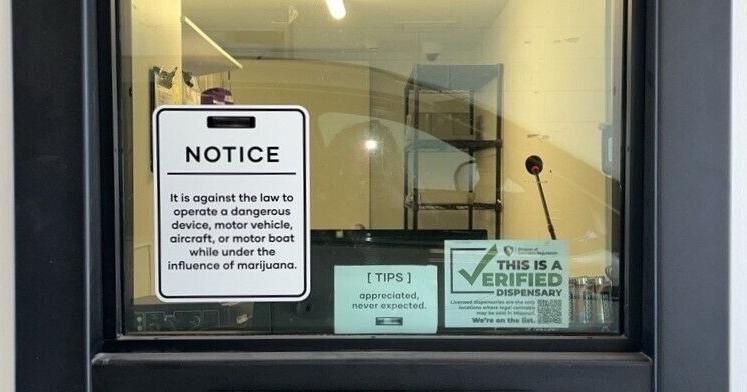
A new initiative designed to help cannabis patients and consumers identify licensed dispensaries and cannabis products is being implemented by the Missouri Department of Health and Senior Services’ Division of Cannabis Regulation.

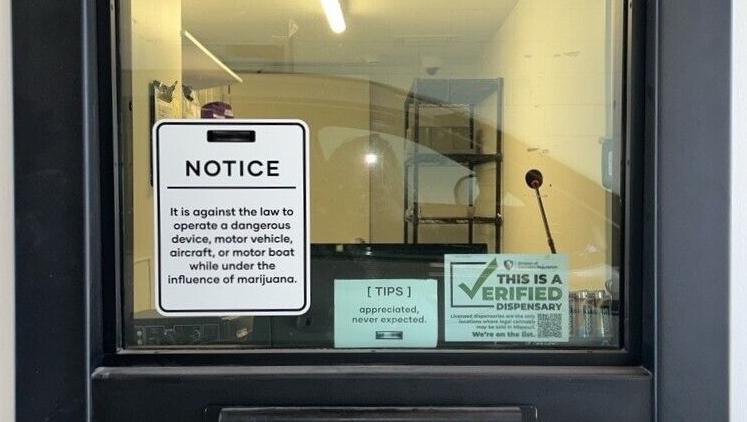
The initiative is titled “The Verified Dispensary: We’re on the List.”

It aims to provide tools to support informed purchasing decisions, including a state-issued decal linked to an interactive dispensary map and guidance on identifying regulated products, according to a news release.

“Missourians should have the opportunity to make informed decisions about where they access cannabis products if they choose to do so,” Division Director Amy Moore said in a news release. “The decal indicates that a cannabis business is licensed and regulated by the state and that its products meet regulatory requirements for health and safety.”

To Read The Rest Of KOMO, Click Here

The post Missouri Rolls Out Decals To Identify Licensed Cannabis Dispensaries appeared first on Marijuana Retail Report – News and Information for Cannabis Retailers.

Source link

Yale Scientists Reveal The Surprising Mental Health Benefits of Psychedelic Mushrooms

Yale Scientists Reveal The Surprising Mental Health Benefits of Psychedelic Mushrooms

Yale Scientists Reveal The Surprising Mental Health Benefits of Psychedelic Mushrooms

Yale University is one of the pioneering institutions in psilocybin research. So much so that they have their own multidisciplinary program dedicated to studying the effects of psychedelic agents and their therapeutic potential. They are currently running several psilocybin clinical trials, to better learn about its effects on various aspects of mental health, including obsessive-compulsive disorder, major depressive disorder, post-traumatic headaches, and cluster headaches,among others.

Source link

Curaleaf Laboratories and Sanity Group Announce Partnership to Advance Medical Cannabis Innovation in the UK

Curaleaf Laboratories and Sanity Group Announce Partnership to Advance Medical Cannabis Innovation in the UK

Curaleaf Laboratories and Sanity Group Announce Partnership to Advance Medical Cannabis Innovation in the UK

Curaleaf Laboratories, one of the UK-leading pharmaceutical-grade medical cannabis manufacturers, is delighted to announce a partnership with Berlin-based Sanity Group, a European life science company focused on cannabinoids and wellbeing products. 

The partnership brings together Curaleaf Laboratories’ established manufacturing, quality, and commercial capabilities with Sanity Group’s international expertise in cannabinoid-based therapeutics. Together, the companies will collaborate to develop, manufacture, and commercialise innovative medical cannabis products tailored to the needs of UK patients and healthcare professionals.

Under the agreement, Curaleaf Laboratories will leverage its MHRA-approved infrastructure and compliance framework to support the introduction of new formulations, while Sanity Group will contribute its pharmaceutical know-how, intellectual property and experience in building clinically relevant cannabinoid products across global markets.

Richard Hodgson, Managing Director of Curaleaf Laboratories: “This partnership represents a significant step forward in our mission to deliver consistent, pharmaceutical-grade medical cannabis products to patients in the UK. By working with Sanity Group, we are combining complementary strengths to accelerate innovation while maintaining the highest standards of quality, safety, and regulatory compliance.”

Finn Hänsel, Founder and Managing Director of Sanity Group: “The UK is a key strategic market for medical cannabis. Partnering with Curaleaf Laboratories allows us to translate our capabilities into scalable, compliant products that can make a meaningful difference for patients and prescribing clinicians.”

This partnership underscores the continued maturation of the UK medical cannabis market and reflects a shared vision to set new benchmarks for quality, innovation, and patient-centric care.

The first Sanity Group products manufactured under this partnership will be available on prescription by clinicians listed on the UK Specialist Register from Q1 2026.

If you are an interested healthcare professional seeking information on prescribing or ordering, please contact us at info@curaleaflaboratories.co.uk

Patients seeking information from their dispensing pharmacy may visit Curaleaf Pharmacy if applicable. Treatment decisions should be made in consultation with a qualified healthcare professional.

The post Curaleaf Laboratories and Sanity Group Announce Partnership to Advance Medical Cannabis Innovation in the UK appeared first on Business of Cannabis.

Source link

Standing on the Moon in Japan: Hemp, History, and the Long Game in Japan

Standing on the Moon in Japan: Hemp, History, and the Long Game in Japan

Standing on the Moon in Japan: Hemp, History, and the Long Game in Japan

I arrived in Tokyo in November for the Japanese International Hemp Expo (JIHE) 2025 with a familiar mix of jet lag, curiosity, and professional reflex. After decades working at the intersection of cannabis, law, and global markets, I’ve learned that the plant reveals more about a society than almost anything else. Where it’s embraced, feared, regulated, or whispered about tells you volumes about culture, history, and power.

Japan tells that story quietly, but unmistakably.

I was in Toronto just a few days earlier, where cannabis had been a focused topic at the International Bar Association (IBA) Annual Conference. In Canada, the discussion around cannabis is mainstream and where lawyers, regulators, and business leaders debate policy, compliance, and international markets with the same seriousness they do banking or intellectual property. Cannabis content that touched on cross-border trade, medical access, and compliance frameworks drew interested audiences, and there was no stigma in asking hard questions about the future of cannabis in global law.  

It was striking to see how normalized the conversation had become in Canada over the past several years. But also, how this topic has become embraced by the international legal community which, not too many years ago, refused to discuss the topic due to the conservative nature of the legal profession, in general.  

Stepping off the plane in Tokyo, the contrast was immediate. In Canada, cannabis is part of public discourse, policy development, and even social culture. In Japan, even the word is whispered. Enforcement is strict, social tolerance is low, and every interaction is filtered through layers of caution. The contrast was not just legal, but also cultural. Having just come from Toronto’s conference halls, I could see how Japan’s approach reflects a different philosophy entirely: patient, deliberate, and deeply conscious of social cohesion. Where Canada’s approach has been expansive and fast-moving, Japan’s feels like the measured heat of an onsen, with careful preparation, slow absorption, and respect for the process.

Tokyo is not just a city; it’s a living system. More than 30 million people move through it daily with a level of coordination that feels almost choreographed—have you seen the Shibuya Crossing, often referred to as the “Shibuya scramble”?  The Shinjuku Ward is widely recognized as one of the most intensely dense and bustling urban places on Earth. Trains arrive on the second. Streets are largely immaculate, and there are rarely trash cans anywhere to be found in public! Courtesy is ambient. You are constantly aware that you are being observed, but not in a hostile way, but in a communal one. Behavior matters here.

That awareness becomes especially pronounced if you come from a cannabis culture, like the United States.

Cannabis in a Culture of Restraint

Despite Japan being one of the world’s largest consumers of tobacco, you rarely see anyone smoking in public. Smoking on the street is prohibited or discouraged in many areas. Instead, smokers retreat into sealed, ventilated rooms—often without windows—where the act is hidden away, compartmentalized, and controlled. Those rooms are actually perfect for catching a ‘puff,’ but that is another story for another day.

Cannabis exists even further outside of public life. No one smokes openly. No one jokes about it casually. No dispensaries. No smell. No visible cannabis counterculture. Now, there were several exceptions to this rule; these were so-called CBD dispensaries, such as “Chillaxy,” which primarily sold converted cannabinoids and hemp derivatives. But marijuana was an elusive concept in Tokyo. Cannabis in Japan is not merely illegal; it is stigmatized. It is treated not like alcohol or tobacco, but like a hard drug; something dangerous, shameful, and career-ending. Possession arrests still make national news. 

This cultural backdrop shaped everything about JIHE 2025.  The Japanese International Hemp Expo was carefully, deliberately focused on hemp. Industrial hemp. Wellness hemp. Historical hemp. Hemp textiles. Medicinal research pathways. This was not a loophole, but a strategy.

The exhibition floor featured CBD products formulated to comply with Japan’s zero-THC expectations, innovative vape technologies designed for legal cannabinoids, hemp textiles and clothing, building materials, cosmetics, and nutraceuticals. Every booth felt precise, intentional, and well thought out.

What struck me wasn’t what was missing, but how much was present, given the constraints.

Japan has a long and underappreciated hemp history, and JIHE leaned into that truth with quiet confidence. Hemp, which is known as ‘asa,’ has been cultivated in Japan for thousands of years, woven into everyday life, spiritual practice, and national identity. Shinto priests still use hemp fibers in purification rituals; sacred ropes (‘shimenawa’) hung at shrines are traditionally made from hemp, symbolizing cleanliness, protection, and the boundary between the human and the divine. For centuries, hemp clothing was common, durable, and practical—especially in rural communities—valued not for intoxication, but for utility, resilience, and spiritual neutrality. In this context, hemp was never countercultural. It was foundational.

What many forget—particularly outside Japan—is that cannabis prohibition here is not ancient or organic; it is relatively modern. Japan’s restrictive cannabis laws largely took shape after World War II, influenced by U.S.-led occupation policies that collapsed distinctions between hemp and psychoactive cannabis into a single prohibited category. In doing so, a plant with deep agricultural and religious roots was recast as a social threat. JIHE, in many ways, felt like a careful act of historical restoration. This was not an attempt to provoke reform, but an effort to remind Japan of what it already knows. Hemp, framed correctly, is not a foreign idea returning home; it is a native one waiting to be remembered.

In that sense, Japan’s relationship with hemp feels less like a revolution and more like a refrain—I’ve been all around this world—and sometimes the future sounds most familiar when it echoes the past. The expo felt like a place where that memory was being carefully reawakened.

Photo courtesy of Yuika Takamura via Unsplash

Reform Without Provocation

The JIHE speaker lineup reflected the maturity of the conversation. These were not provocateurs. They were translators between cultures, legal systems, and futures.

Aaron Justus delivered a measured, regulatory-forward discussion of cannabinoids and compliance, speaking directly to the Japanese instinct for rules and structure. His message was clear: legitimacy comes from precision.

Sergyei Kovalenkov explored the industrial uses of hemp and building materials.

Morris Beegle brought cultural context and sustainability into the conversation, reminding attendees that hemp has always been about more than products, but about systems, communities, and long-term stewardship.

Paul Benhaim, one of the original architects of the modern hemp industry, offered a historical and economic perspective that felt particularly appropriate in Japan, where legacy and credibility matter deeply.

Riccardo Longato, founder and CEO of Clear, brought a message about technology, standards, and certification requirements.  

Mariana Larrea discussed stigma, medicine, and patients, grounding the discussion in human outcomes rather than abstract policy. 

Joining them was Olivia Ekenuwke, a German cannabis lawyer whose comparative legal analysis highlighted how Europe has navigated reform through incrementalism, court challenges, and patient-first frameworks. Her presence underscored an important truth: Japan is not alone in taking a cautious path, but it must eventually take a path.

Attiyah Ferrouz was also present, contributing insight on compliance and international hemp policy, rounding out a truly global conversation.

Ryan Bellone brought a message of considering cannabinoids as ingredients and highlighted the global cannabinoid ingredient supply chain. 

And weaving through it all was the presence of Laura Ramos, an international cannabis journalist whose reporting continues to document these inflection points as they happen, not after the fact. Witnesses matter.

Many of the speakers—including several of those above—had just participated in the Asian Hemp Expo in Bangkok. The geographical proximity between Japan and Thailand makes the contrast impossible to ignore.

A Regional Contrast

Thailand’s cannabis journey has been fast, loud, and at times chaotic. Legalization cracked open cultural doors almost overnight. Cannabis is visible, commercial, and woven into daily life in ways that would be unthinkable in Japan.

But Thailand is now in a recalibration phase. Regulation is tightening. Medical frameworks are being reasserted. The free-for-all is giving way to structure. But that structure has led to the production of some of the world’s finest cannabis, which is being grown, in large part, for export.  Jordan Tyler Herring, the visionary and dynamic leader of Hidden Valley Genetics Thailand, brought his California-based experience to Southeast Asia, which serves as a model for how things should be done.  But I digress…      

Japan, by contrast, hasn’t cracked at all. Instead, it is studying. Observing. Learning.

That difference was formally acknowledged just days before JIHE, during an event at the Thai Embassy in Tokyo, where officials and industry representatives announced a cooperative framework between Japan and Thailand for the continued development of the hemp industry. The symbolism was powerful: two countries, vastly different in cannabis policy, finding common ground through hemp. At the Embassy, Patrick Atagi, of the U.S. National Industrial Hemp Council, delivered a somber talk at the very moment the U.S. Congress had enacted a Resolution to effectively ban hemp derivatives in the U.S.  

While Thailand offers a glimpse of what rapid reform looks like, Japan offers a lesson in patience.

In Tokyo, I was so fortunate to meet Satoshi Morimoto. One of the most memorable people I met went simply by his Instagram handle: @mr_japanese_cannabis.  He was thoughtful. Soft-spoken. Fully aware of the risks inherent in even being publicly associated with the plant in Japan. He wasn’t loud. He didn’t posture. He connected people quietly, deliberately, like someone who understands that progress here happens in inches, not miles. He hosted a bunch of us one evening at his friend’s karaoke club (there are possibly 100,000 karaoke clubs in Tokyo, by the way), where songs were sung in English, Japanese, Spanish, Italian, and everything in between.  

At one point during my travels, someone discreetly gifted me a small amount of cannabis. It wasn’t very good, but that wasn’t the point. What mattered was the warning that came with it:

“Do not smoke this anywhere someone might see or smell.”

It wasn’t paranoia. It was protection.  

In that moment, the abstract idea of stigma became concrete. This wasn’t about enforcement alone, but it was about social consequence. In Japan, shame can be as powerful as law.

Japan’s Cannabis Control Act remains one of the strictest in the developed world. THC is prohibited. Possession arrests are aggressively prosecuted. In 2026, Japan is transitioning towards a new framework for medical cannabis—a pharma-like model—following the passage of legislation in late 2023, which aims to legalize cannabis-derived medicines while strengthening penalties for illegal recreational use. CBD exists only when it is demonstrably THC-free.

Hemp cultivation is permitted under narrow licensing schemes, with strict oversight and limited research pathways. Reform discussions exist, but they move slowly, shaped by cultural conservatism and a deep-seated fear of social disruption.

And yet, the irony is unavoidable: Japan is one of the most orderly societies on earth. If any country could manage cannabis responsibly, it would be this one. But that seems like a faraway sunshine daydream.

Japan as a Masterclass of Intention

Outside the conference halls, Japan was endlessly rewarding. The food alone felt like a masterclass in intention. Sushi that redefined freshness. Yakitori eaten standing in alleyways. Tempura so light it seemed to disappear. Even convenience stores offered meals better than many American restaurants. Eating the multi-course Kaiseki dinners, which seemed to never end. 

We were once asked to leave at least one restaurant because of strong perfume scent, which apparently, is a recognized, albeit strict, consequence of violating Japanese dining etiquette.  Who knew?! One of my favorites was a ramen counter in an alley that bordered on a spiritual experience.

The sake was always exceptional; it’s clean, complex, ceremonial. Like everything else, it was consumed with care.

Traveling across the country on high-speed trains was a revelation. Silent, smooth, precise. The subways of Tokyo were works of art in efficiency.  

We visited Hakone, with its surreal gardens and mountainous scenery, and where the nearby views of Mount Fuji felt unreal; almost like a painting refusing to move. But Hakone offered more than scenery; it offered insight. Soaking in the hot springs there while immersed in onsen culture, wearing a traditional kimono, and moving deliberately through spaces governed by ritual and restraint, I began to understand Japan’s regulatory psyche in a way no policy memo ever could.

The Onsen Theory of Change

An onsen is not something you rush. You do not enter it abruptly. You prepare. You wash. You wait. You respect the space, the people around you, and the accumulated wisdom that says timing matters. And don’t be late for your dinner time, or they will come into your room and get you!  And the hot pools, where you need to ease into the temperature slowly, or else!

That, it struck me, is Japan’s relationship with hemp…and eventually cannabis.

Where other jurisdictions plunge headlong into reform, Japan is testing the temperature. Hemp is the warm water at the edge of the pool. Regulation is the preparation. Social trust is the gatekeeper. The process is slow by design, not by ignorance. Change here is not meant to be disruptive; it is meant to be absorbed—much like the sixteen-course dinners!

Standing there, wrapped in a kimono, steam rising into the cold mountain air, I realized that Japan may not be behind, but it may simply be waiting until the conditions are right for the body politic to enter without harm. Reform, like the onsen, will come when it can be sustained, not merely survived. Kyoto was a lesson in reverence: temples, torii gates, geisha history, and layers of history that demanded quiet attention.

And everywhere—no cannabis. No smoke. No scent. No signal.

Playing the Long Game

Looking forward, Japan will change. It always has, but never on anyone else’s clock.

Hemp will continue to lead the way, quietly expanding the perimeter of what is culturally and politically acceptable. Medical necessity will slowly develop, introduced not through activism but through evidence. Science will open doors that rhetoric cannot. And when cannabis reform finally arrives in Japan, it will not look like California, Colorado, or Thailand. It will look Japanese.

Thailand, for its part, will continue to mature, moving from exuberant liberalization toward equilibrium and structure. The initial shock has passed. What remains is the harder work of governance. The two countries, now formally cooperating on hemp development, represent opposite ends of the cannabis reform spectrum, but together they sketch the future of cannabis in Asia: diverse, non-linear, and deeply shaped by culture.

JIHE 2025 was not about rebellion. It was about respect…for history, for law, for social cohesion, and for the long game.

As an American, that was both humbling and instructive. We are accustomed to speed, scale, and disruption. Japan reminds us that legitimacy is built differently—and sometimes more durably—when change is allowed to steep.

There is far more to discover here. And when the light finally shifts in Japan, it will do so quietly at first, until, suddenly, it is everywhere.

This article is from an external, unpaid contributor. It does not represent High Times’ reporting and has not been edited for content or accuracy.

<p>The post Standing on the Moon in Japan: Hemp, History, and the Long Game in Japan first appeared on High Times.</p>



Source link