

Prescribed cannabis and driving behaviours among two samples of people who regularly use illicit drugs, 2025
February 25, 2026
Published by toker
Since we founded Cannabiz Media, we have often looked back to report on the licenses that had been issued by state, activity and status. In this post we are taking a look forward at jurisdictions that will “likely” be issuing tranches of new licenses in the coming year. © CNB Media LLC dba Cannabiz Media
Source link

The first thing you will notice about Hyper Candy is its stunning bag appeal. The buds are often a beautiful mix of deep forest greens and flashes of royal purple, all wrapped in a thick, sticky blanket of white trichomes. It looks like it was rolled in sugar, which perfectly matches its sweet name. The aroma is just as impressive, hitting you with a bold mix of fruity berries and sweet citrus. Underneath that sweetness, you will pick up a sharp edge of diesel and a hint of chemical funk that lets you know this strain is a heavy hitter.
The experience starts with a quick, uplifting cerebral rush that clears away stress and fills you with a sense of euphoria. It is a very “happy” high that can make you feel more social, talkative, or focused on a hobby. As the high settles in, a smooth physical relaxation starts to spread from your head to your toes. Unlike heavier indicas, Hyper Candy doesn’t usually lead to couch-lock. Instead, it leaves you feeling physically light and mentally bright, making it an excellent choice for a fun afternoon or a relaxing evening with friends.
The post Hyper Candy Strain Feminized Seeds appeared first on Crop King Seeds.
Virginia lawmakers have advanced a bill to legalize marijuana sales along another step in the bicameral legislative process, with a House committee approving a substitute version of a Senate-passed reform measure.
The House General Laws Committee on Tuesday took up the legislation from Sen. Lashrecse Aird (D) and replaced its contents with the text of a House-passed version that’s being sponsored by the panel chair, Del. Paul Krizek (D), with some additional changes.
The bill as revised passed 16-4, sending it to the Appropriations Committee for further consideration and setting the stage for a bicameral conference committee to hammer out differences between the chambers’ version following additional steps in the legislative process.
“They’re still not going to be exact, but we’re working towards that,” Krizek said at the hearing. “We’re getting really close.”
While the revised bill as approved in committee is nearly identical to the House version Krizek is sponsoring, the panel adopted an additional series of amendments before voting it out favorably.
The proposal now stipulates that microbusiness licensees can cultivate, process or conduct retail sales at up to two locations instead of one, so long as they’re located within 10 miles of each other and operate under common ownership and control.
Members also amended the legislation to clarify that current medical cannabis businesses would only be able to cultivate cannabis indoors, including in secure greenhouses with a total canopy cap of 70,000 square feet. The amendment also makes it so they could not have any additional marijuana licenses beyond their medical permits with “dual-use privileges.”
Finally, the measure’s conversion fee structure was revised in a way that lets current medical marijuana businesses pay the $5 million for the privilege to serve the adult-use market in three installments: $2 million the first year, $2 million the second year and $1 million the third year.
Virginia lawmakers took action on multiple marijuana bills on a key deadline last week—advancing proposals to legalize cannabis sales, provide a pathway to resentencing for prior marijuana convictions and allow medical cannabis access in hospitals for seriously ill patients.
While both House and Senate marijuana sales proposals are aimed at giving adults a legal means of buying cannabis, the possession and home cultivation of which was legalized in the state in 2021, there are several substantive differences that will need to be resolved before the reform potentially goes to the governor’s desk. The House committee passage of the Senate legislation with the substitute language was another step toward those negotiations.
The differences between each chamber’s original versions include the start date for legal sales, cannabis tax rates and conversion fees for current medical marijuana businesses to participate in the recreational market and the form of the regulatory body that will oversee the industry, among other issues.
With respect to the Senate bill as introduced, members recently clashed in committee about amendments to the body’s version that would have added new penalties for illegal cannabis activity.
The amendments at issue from the Courts of Justice Committee included penalties for consumers who buy from unlicensed sources, the recriminalization of cannabis possession by people under 21 and making sales a class 1 misdemeanor for a first offense and a crime punishable by mandatory jail time for a second offense. As revised, the bill would have also raised the penalty for unlicensed cultivation to a felony punishable by up to five years in jail and made it a felony to transport with intent to distribute cannabis across state lines.
But the Finance and Appropriations Committee reversed the amendments earlier this month amid pressure from a coalition of advocacy groups that sent a letter to senators saying they undermined the “intent” of the legislation and the “will of the people” by adding criminal penalties for certain cannabis-related activity.
Despite the outstanding differences, both chambers’ commercial sales bills have largely aligned with recommendations released in December by the legislature’s Joint Commission to Oversee the Transition of the Commonwealth into a Cannabis Retail Market.
Meanwhile, certain GOP members have found themselves ideologically aligned with their Democratic colleagues throughout this legislative process, breaking with the majority of their caucus in support of creating a regulated marketplace for adults to purchase cannabis.
Since legalizing cannabis possession and home cultivation in 2021, Virginia lawmakers have worked to establish a commercial marijuana market—only to have those efforts consistently stalled under former Gov. Glenn Youngkin (R), who twice vetoed measures to enact it that were sent to his desk by the legislature.
Here are the key details of the Virginia marijuana sales legalization legislation, SB 542 and HB 642, prior to the House committee adoption of the substitute on Tuesday:
Gov. Abigail Spanberger (D) supports legalizing adult-use marijuana sales.
Meanwhile, House and Senate lawmakers also advanced separate legislation to provide resentencing relief for people with prior marijuana convictions.
The legislation would create a process by which people who are incarcerated or on community supervision for certain felony offenses involving the possession, manufacture, selling or distribution of marijuana could receive an automatic hearing to consider modification of their sentences.
The measure applies to people whose convictions or adjudications are for conduct that occurred prior to July 1, 2021, when a state law legalizing personal possession and home cultivation of marijuana went into effect.
Also on Tuesday, the House passed a bill to enact what’s known as “Ryan’s law,” a policy change providing that patients with terminal illnesses who are registered cannabis patients can access medical marijuana at health facilities such as hospitals.
It would require healthcare facilities to establish policies “to address circumstances under which an eligible patient would be permitted to use medical cannabis.”
Under the House legislation, healthcare facilities could suspend medical cannabis allowances if a federal agency such as the Department of Justice or Centers for Medicare and Medicaid Services takes enforcement action on the issue or issues a rule or notification expressly prohibiting use of medical cannabis in health facilities.
The Senate passed differing legislation concerning the use of medical cannabis in health care facilities earlier this month.
—
Marijuana Moment is tracking hundreds of cannabis, psychedelics and drug policy bills in state legislatures and Congress this year. Patreon supporters pledging at least $25/month get access to our interactive maps, charts and hearing calendar so they don’t miss any developments.
Learn more about our marijuana bill tracker and become a supporter on Patreon to get access.
—
Meanwhile, the Virginia House this month approved a bill to protect the rights of parents who use marijuana in compliance with state law.
Under the proposal from Del. Nadarius Clark (D), possession of use of cannabis by a parent or guardian on its own “shall not serve as a basis to deem a child abused or neglected unless other facts establish that such possession or consumption causes or creates a risk of physical or mental injury to the child.”
“A person’s legal possession or consumption of substances authorized under [the state’s marijuana law] alone shall not serve as a basis to restrict custody or visitation unless other facts establish that such possession or consumption is not in the best interest of the child,” the text of the bill, HB 942, states.
Separately, the Virginia Department of Labor and Industry recently published a new outlining workplace protections for cannabis consumers.
The post Virginia House Lawmakers Amend Senate-Passed Marijuana Sales Bill, Setting Stage For Bicameral Negotiations appeared first on Marijuana Moment.

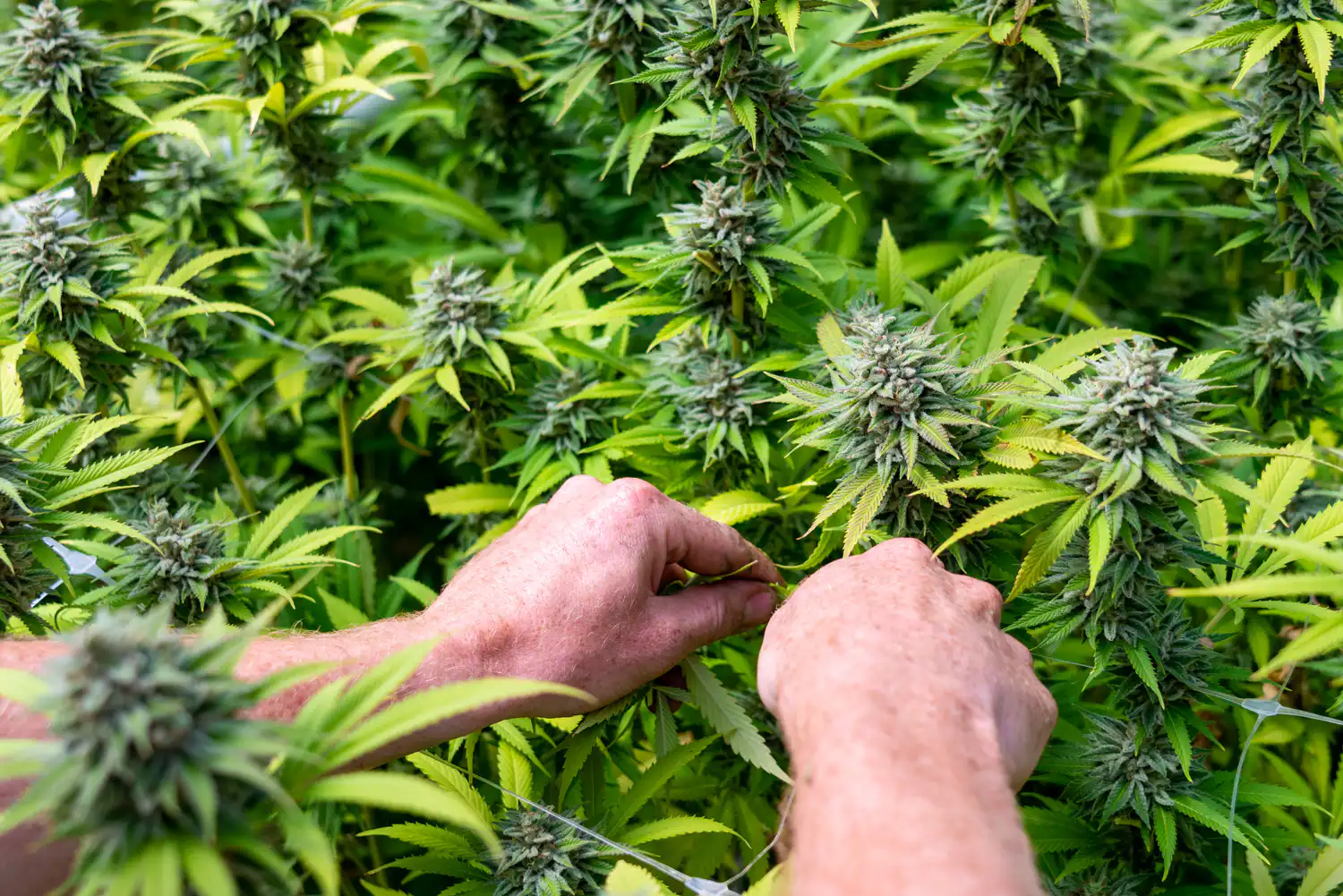
A Florida bill to significantly reduce the fee for military veterans to obtain medical marijuana registry identification cards has cleared another legislative committee.
The House Health & Human Services Committee approved the measure from Reps. Susan Valdés (R) and Michelle Salzman (R) in a 22-0 vote on Tuesday. This comes after the legislation cleared two other House panels and as separate Senate legislation to reduce medical cannabis costs for veterans is also advancing.
If HB 887 is enacted into law, veterans who have been honorably discharged would need to pay a $15 fee to obtain a medical cannabis card—down from the current $75 fee for most qualifying patients.
The $15 charge would also apply to any replacement cards, as well as annual renewals.
In order to qualify for the reduced fee, veterans would need to supply the state Department of Health (DOH) with a copy of their discharge release form, a U.S. Department of Veterans Affairs (VA) identification card or a Florida driver license “bearing the veteran designation.”
The law would take effect beginning on July 1 of this year.
“Medical cannabis has shown a promise in alleviating symptoms commonly experienced by our military veterans, like managing chronic pain, alleviating the effects of PTSD, improving sleep and the most important part of this is reducing the dependency on opioids,” Valdés said before the latest committee vote. “This bill will largely reduce the financial barriers that veterans face when accessing the card.”
According to a bill analysis, the reform would have an “indeterminate, negative fiscal impact on DOH.” While there are currently more than 931,000 registered medical marijuana patients in Florida, the “number of veterans who hold active medical marijuana use registry identification cards is unknown,” and so “the amount of revenue reduction is unknown.”
That said, the analysis states that the policy change would “have a positive fiscal impact on veterans who will experience a $60 reduction in the cost of the identification card under the bill.”
Earlier this month, the Senate Health Policy Committee advanced a bill from Sen. Alexis Calatayud (R) that would also reduce the medical cannabis registration fees for veterans to $15 and enact other reforms to expand medical marijuana access.
Under that proposal as amended, a doctor would be able to recommend up to five 70-day supply limits of cannabis or up to 10 35-day supply limits of smokable marijuana products. Under current law, they can only provide recommendations for a maximum of three 70-day supply limits for non-smokable cannabis and six 35-day supply limits for smokable marijuana.
The bill, SB 1032, would further make it so doctors would need to evaluate patients for medical marijuana qualification every 52 weeks, rather than the current statutory requirement of evaluations every 30 weeks.
Here’s an overview of other pending Florida marijuana bills:
—
Marijuana Moment is tracking hundreds of cannabis, psychedelics and drug policy bills in state legislatures and Congress this year. Patreon supporters pledging at least $25/month get access to our interactive maps, charts and hearing calendar so they don’t miss any developments.
Learn more about our marijuana bill tracker and become a supporter on Patreon to get access.
—
Meanwhile, a Florida campaign seeking to put marijuana legalization on the ballot is facing another complication as it continues to litigate the status of its 2026 signature drive. Under a new election law, the hundreds of thousands of signatures activists already collected for this year will not be carried over into the 2028 cycle.
Smart & Safe Florida recently submitted an appeal to the state Supreme Court concerning the invalidation of about 71,000 signatures for its 2026 petition, for example.
While the court agreed to close a separate case involving a legal review into the ballot measure from Smart & Safe Florida, it’s now been handed another case challenging the earlier mass signature invalidation.
Back in December, advocates filed a lawsuit in the Leon County circuit court, claiming Secretary of State Cord Byrd (R) unlawfully directed county election officials to invalidate about 42,000 signatures from so-called “inactive” voters and roughly 29,000 signatures collected by out-of-state petitioners.
That lawsuit came after another court upheld a previous decision to strike about 200,000 signatures that the state said were invalid because the petitions didn’t include the full text of the proposed initiative. The campaign contested the legal interpretation, but it declined to appeal the decision based on their confidence they’d collected enough signatures to make up the difference.
Smart & Safe Florida has generally disputed the secretary of state’s signature count, asserting the campaign submitted over 1.4 million petitions—hundreds of thousands more than the 880,062 valid signatures required to go before voters.
Ahead of the signature turn-in, Florida’s attorney general and several business and anti-marijuana groups urged the state Supreme Court to block the cannabis initiative, calling it “fatally flawed” and unconstitutional.
The Florida Chamber of Commerce, Florida Legal Foundation and Judge Frank Shepherd filed a separate joint brief stating that the parties remain “especially vigilant about the abuse of the citizen initiative process by out-of-state interests that think of Florida as just another market and the citizen initiative process as just another means of exploiting that market.”
The Florida Chamber of Commerce has consistently opposed attempts to move forward with adult-use legalization, even as its own polling has shown majority support for the reform.
The campaign fought several legal battles this cycle to ensure that its initiative is able to qualify for ballot placement.
Last month, the state attorney general’s office opened dozens of criminal investigations and submitted subpoenas requesting records from Smart & Safe Florida and its contractors and subcontractors over alleged fraud related to the petitioning effort.
Activists said in November that they’d collected more than one million signatures to put the cannabis measure on the ballot, but it’s also challenged officials at the state Supreme Court level over delays the certification process, arguing that the review of the ballot content and summary should have moving forward months ago when it reached an initial signature threshold. The state then agreed to move forward with the processing.
The governor campaigned heavily against an earlier version of the legalization proposal, which received a majority of voters in 2024 but not enough to meet the 60 percent threshold required to pass a constitutional amendment. Former Attorney General Ashley Moody (R) unsuccessfully contested the prior initiative in the courts.
Last March, meanwhile, two Democratic members of Congress representing Florida asked the federal government to investigate what they described as “potentially unlawful diversion” of millions in state Medicaid funds via a group with ties to DeSantis. The money was used to fight against a citizen ballot initiative, vehemently opposed by the governor, that would have legalized marijuana for adults.
The lawmakers’ letter followed allegations that a $10 million donation from a state legal settlement was improperly made to the Hope Florida Foundation, which later sent the money to two political nonprofits, which in turn sent $8.5 million to a campaign opposing Amendment 3.
The governor said last February that the newest marijuana legalization measure is in “big time trouble” with the state Supreme Court, predicting it would be blocked from going before voters this year.
The latest initiative was filed with the secretary of state’s office just months after the initial version failed during the November 2024 election—despite an endorsement from President Donald Trump.
Smart & Safe Florida expressed optimism that the revised version would succeed in 2026. The campaign—which in the last election cycle received tens of millions of dollars from cannabis industry stakeholders, principally the multi-state operator Trulieve—incorporated certain changes into the new version that seem responsive to criticism opponents raised during the 2024 push.
For example, it now specifically states that the “smoking and vaping of marijuana in any public place is prohibited.”Another section asserts that the legislature would need to approve rules dealing with the “regulation of the time, place, and manner of the public consumption of marijuana.”
In 2023, the governor accurately predicted that the 2024 cannabis measure from the campaign would survive a legal challenge from the state attorney general. It’s not entirely clear why he feels this version would face a different outcome.
While there’s uncertainty around how the state’s highest court will navigate the measure, a poll released last February showed overwhelming bipartisan voter support for the reform—with 67 percent of Florida voters backing legalization, including 82 percent of Democrats, 66 percent of independents and 55 percent of Republicans.
Photo courtesy of Max Jackson.
The post Florida Lawmakers Vote To Slash Medical Marijuana Fees For Military Veterans appeared first on Marijuana Moment.



The pharmacological difference between natural THC and synthetic cannabinoids like K2 is the difference between a partial agonist and a full agonist. THC, the active compound in cannabis, partially activates the CB1 receptor in your brain. There is a biological ceiling on how activated that receptor can get from natural cannabis. This is why a fatal marijuana overdose is, for all practical purposes, impossible.