
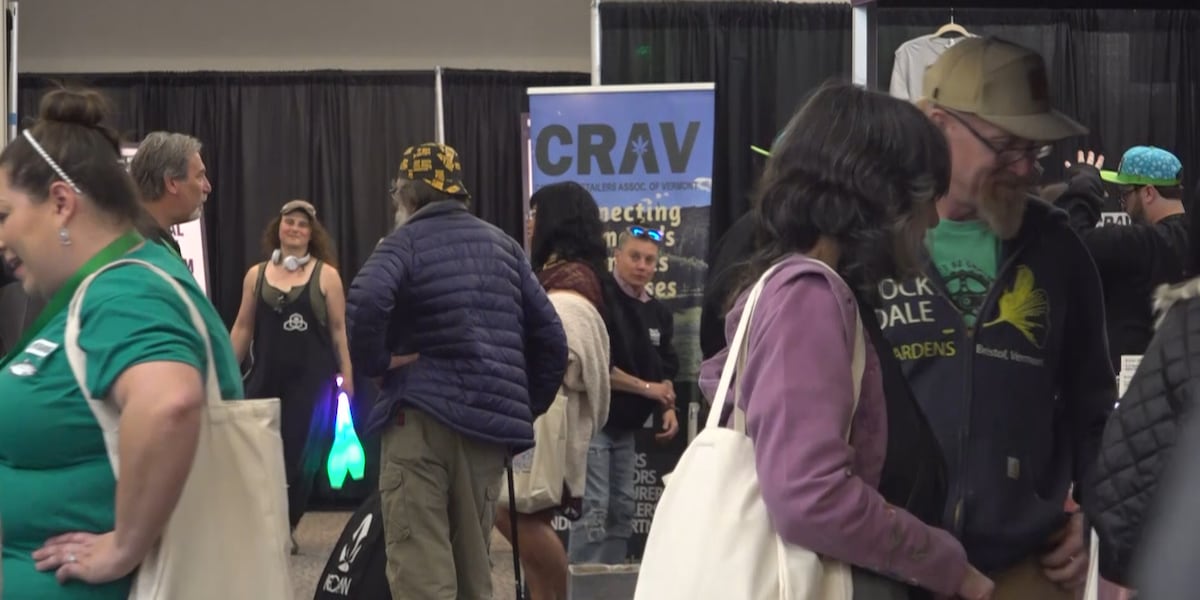
Vermont Cannabis Convention features ‘Best in Show’ competition
May 8, 2026
Published by toker
On this Cannacurio episode, Ed and Jacques Santucci of Opus Consulting discuss his years of leadership experience that eventually led him into the cannabis space, his success in working with Indigenous American tribes, the current state of the market, and what trends we should be looking out for, and so much more! © CNB Media LLC dba Cannabiz Media
Source link

Our product research team independently tests and reviews everything we recommend. When you make a purchase using our links, we may earn a commission. Learn more
Related Picks: Best CBD Cartridges
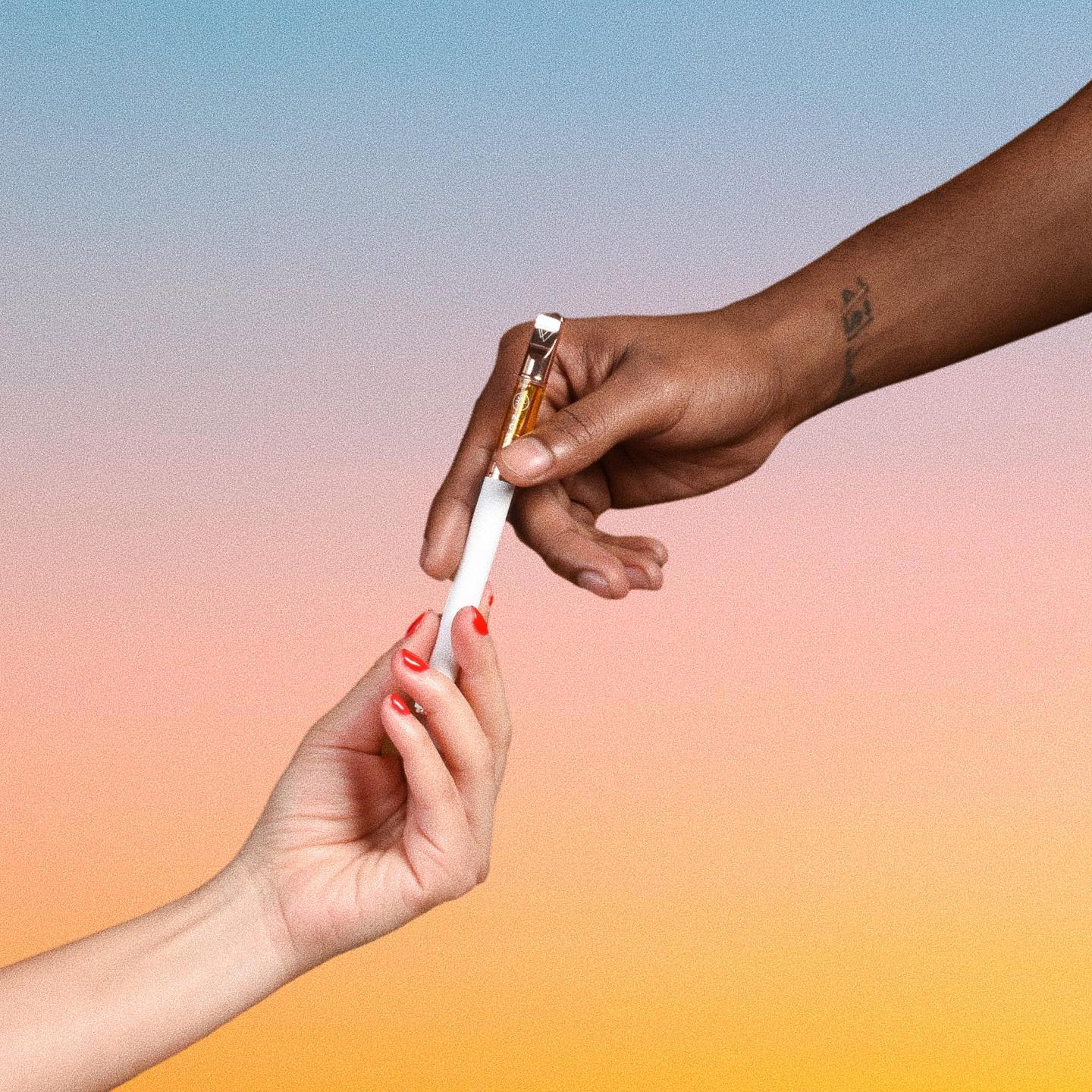
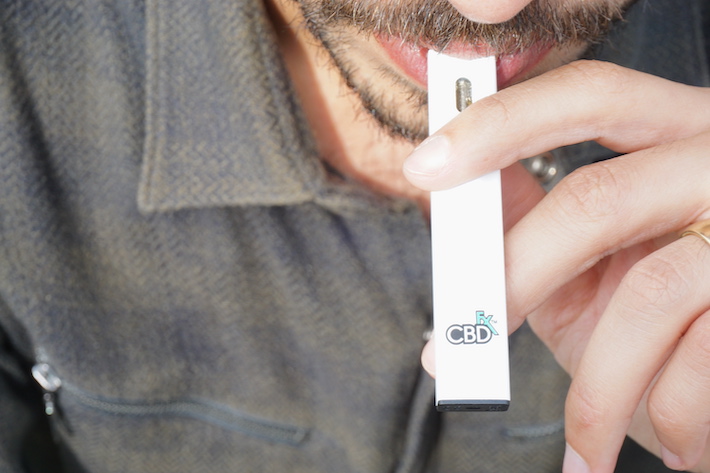
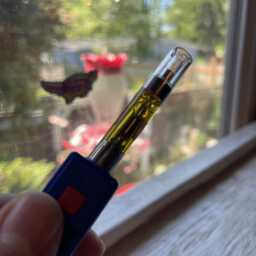
Cannabis vaping has come a long way since the days of the OG Volcano. With the explosion of nicotine vaping devices and the legalization of hemp, the landscape has shifted dramatically. Not only can you vape cannabinoids in liquid form, the wide range of hemp compounds makes it easier than ever to choose your precise blend and experience.
But finding the best CBD vape pen is hard, with rushed, low-quality devices flooding the market. We’ve used our Cannabinoid Product Quality Evaluation framework to sort the good from the bad, and find the 3 very best options out there today.
Dr. Ethan Russo once told us that there’s nothing CBD can do that won’t be helped by a little bit of THC, and that carries over here too. Broad spectrum options can work if you can’t have THC, though.
PG and VG are tried-and-tested for liquid vaping, but pure cannabis and terpene oils are also a solid option. MCT and other true “oils” have to be avoided, though.
Products with beta-caryophyllene, linalool and myrcene were prioritized for their anti-inflammatory and pain-relieving effects.
While terpenes aren’t absolutely necessary for vapes, they’re a great bonus for devices that have them.
From an initial list of 27 CBD vape pens, we’ve used our expert-backed Cannabinoid Product Quality Evaluation Framework to narrow it down to just these three excellent CBD devices.
Key Attributes
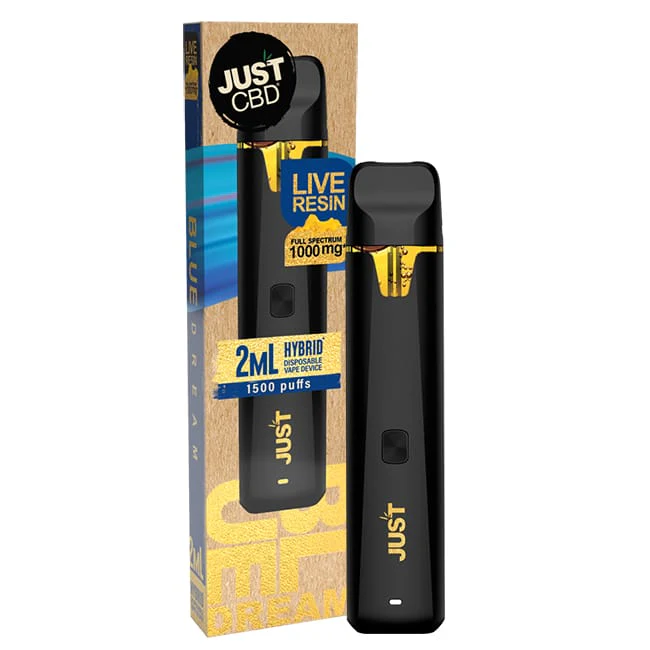
JustCBD’s Live Resin CBD Disposable combines a sizable CBD dose with a rich selection of other cannabinoids and just a touch of THC to top the whole thing off. It’s a solid option for a balanced experience with only a mild hint of effects from the THC.
It comes from live resin, taken from either Blue Dream or OG Kush strains. This is why – alongside 1,000 mg of CBD in the 2 ml tank – it also has 370 mg CBG, 95 mg CBT and smaller amounts of CBC, CBN and CBL. The device has a pod-style design, with a comfortable flat mouthpiece and enough battery life for about 1,500 puffs.
The $26.99 price tag is the icing on the cake.

Key Attributes
Mellow Fellow is one of those brands that just gets a lot of things right, from organically-grown hemp to flower only extractions, FDA-registered, GMP-certified manufacturing and right through to actually age checking consumers before you buy.
Their Relief Blend disposable is the best option out there if you can’t have any THC at all. It might be an isolate product, but it beat the broad spectrum options thanks to the comprehensive lab testing it goes through and its overall quality.
It’s a 1 ml disposable, so it isn’t hugely long-lasting, but it packs 1,000 mg of CBD and offers pure, focused effects.
It also has a USB-C port so you can recharge if it dies before you finish the juice.
Key Attributes
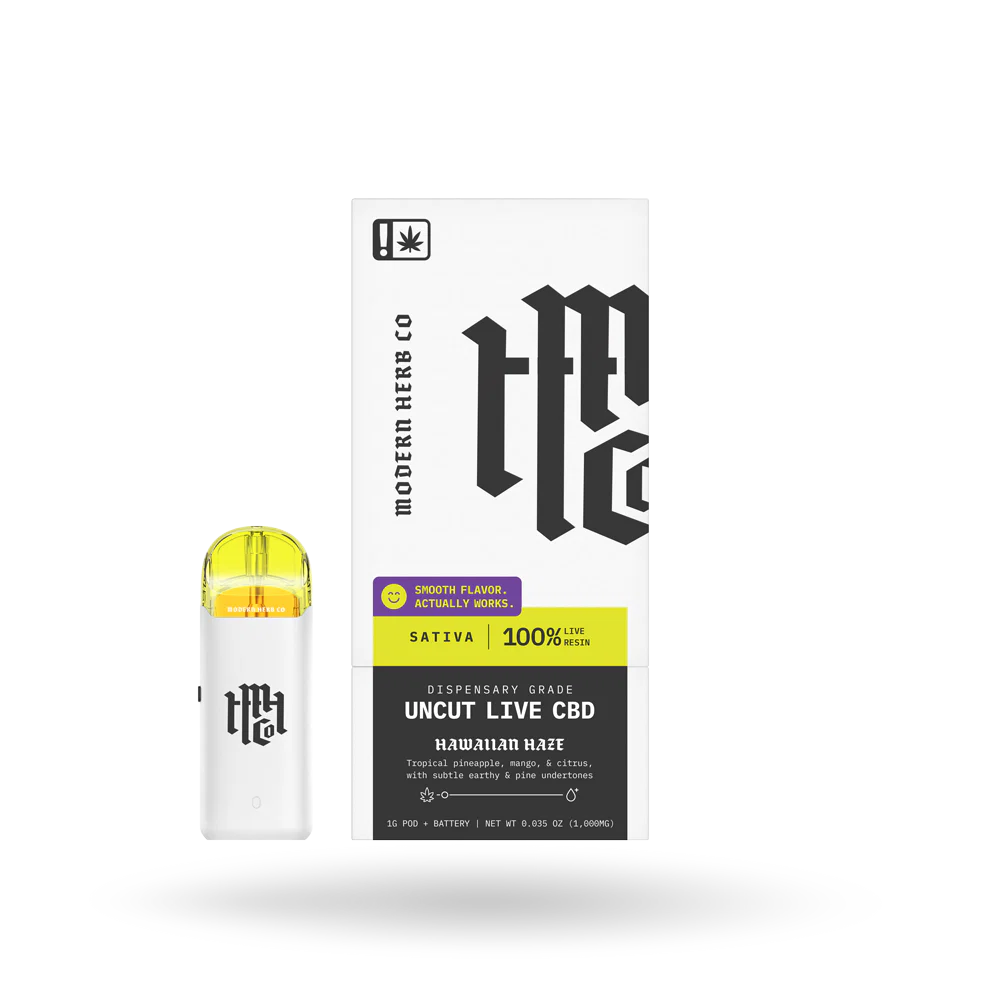
Modern Herb Co. is the house brand of the Hemp Collect, and they focus on pure hemp, delivered efficiently and cleanly. The live resin blend is rich in cannabinoids and terpenes, offering a genuine full spectrum experience in a convenient, pod vaping format.
The pod boasts substantial doses of CBDa and THCa, which are converted to the familiar CBD and THC as you vape. With 550 mg CBDa and 20 mg THCa, and smaller amounts of CBC, CBGa and CBLa, the pod offers a powerful hit in every puff. It’s also loaded with terpenes, making it the best option for entourage effects.
It’s also the only re-usable device in the list – just buy a new pod and keep vaping.
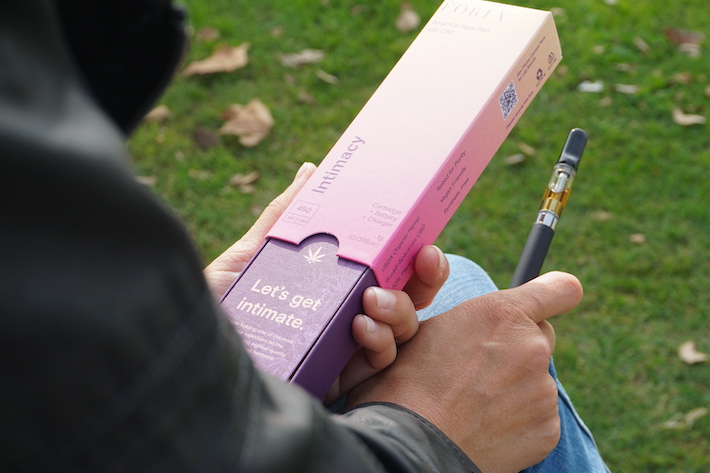
From the 27 CBD vape pens we found from online searches, only 3 ended up making the final list. We narrowed down the possibilities by looking at some crucial factors that anybody should look out for in a hemp product. Generally, we only considered products with a recent, verifiable lab report that includes safety testing as well as potency tests.
The most common reasons we discounted products were:
This left 7 products to be scored on our framework. Four of these scored well, but came just short of the 80% needed to be featured on this list: 3Chi’s Chill, Primary Jane’s Pure Gold, Hometown Hero’s G13 Disposable and Secret Nature’s CBD Disposable.
All of these CBD vape pens are still excellent, and most only barely fell short of a qualifying score.
Learn more about our testing methodology.
If you’re new to CBD vape pens, a lot of this might seem a little overwhelming. There’s a lot of information to take in, and the specifics about each pen could easily go right over your head. However, once you’ve learned a few key facts you’ll feel much better about shopping around for your pen. As well as this, here you’ll find some answers to common questions about CBD, such as whether it’s safe and what conditions it can help with (backed by evidence).
The major decision you have to make with CBD vape pens is whether you’re looking for a disposable or rechargeable one.
The issue is quite straightforward: disposables are more expensive and less eco-friendly, but more convenient, while rechargeables are a bigger initial investment but a more viable long-term solution, practically and financially.
Disposables are mainly recommended in a few situations: if you’re just trying CBD out, if you will be using sporadically rather than regularly, or if you’re really just wanting the most simple and convenient way to use CBD. Aside from charging the battery, the only difference is getting a refillable cartridge and some CBD vaping liquid, or just buying new cartridges when yours run out.
Rechargeables save you money in the long-term because you aren’t buying new batteries all the time, and you can get new cartridges separately.
It isn’t really “safe” to vape CBD but only in the way that it’s not really ideal to inhale anything that isn’t air. However, while there isn’t much evidence surrounding CBD specifically, it is possible to extrapolate in some cases from nicotine vaping.
For example, the best estimates suggest PG and VG-based nicotine e-liquid vaping is at least 95% less harmful than smoking tobacco. This technology has been widespread for the past decade and the evidence so far doesn’t raise huge alarms. It is likely to be bad for your lungs, but much less dangerous than the alternative.
For CBD, this argument is harder to make – you can easily consume it through a tincture or edible instead. However, vaping does give you an almost-instant effect, making it easier to stay dosed up through the day. And although there isn’t the same justification as with nicotine vaping, the evidence basically says the same thing.
In short, PG and VG aren’t so bad, but flavorings could be. CBD itself doesn’t degrade into anything dangerous when heated (actually it mainly becomes THC), and so the risks from it are likely to be very small if present at all. Additionally, nicotine vapers consume a lot more than CBD vapers.
So, is it safe to vape CBD? No. But it likely is very low risk.
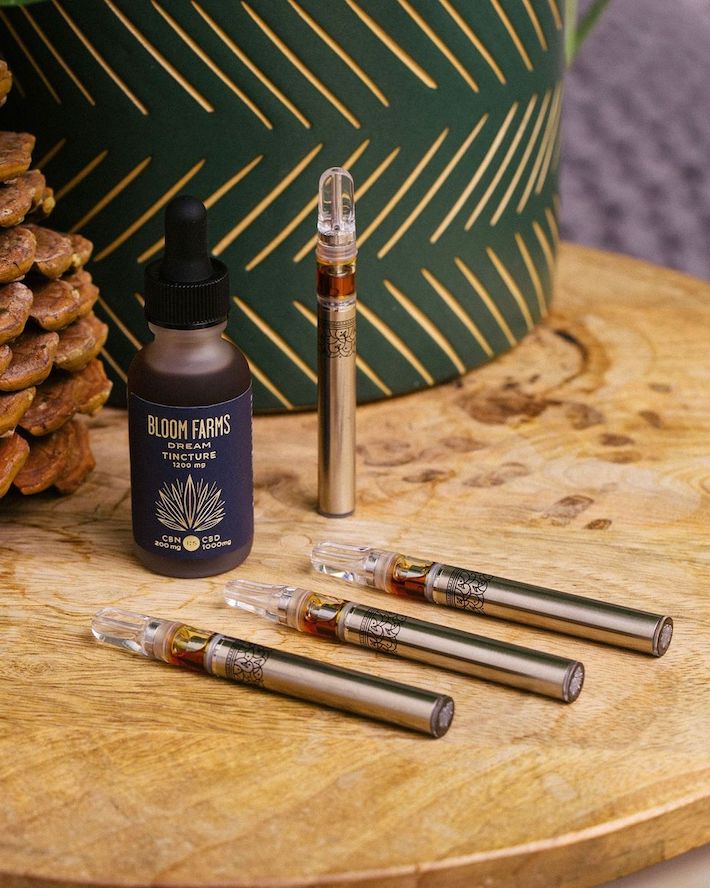
CBD oil is different to CBD vape liquid, and you can’t vape “true” oils like this.
Genuine CBD oil tinctures use something like coconut oil as a carrier, and any actual oils shouldn’t (and likely couldn’t) be vaped. Firstly, inhaling oil poses a risk of lipoid pneumonia, which is basically when the long fat molecules cause problems for your lungs. This is relatively similar to the vitamin E acetate scare of 2019 and the most important reason not to vape CBD oil.
However, even if you didn’t care about this, it’s unlikely you’d be able to efficiently vaporize CBD oils if you tried. Simply put, CBD vape juice is made from ingredients intended to be easy to vaporize. For example, VG (an alcohol, technically) will vaporize much more easily than coconut oil or anything similar.
Some of the confusion surrounding this comes from the fact that companies often use “oil” to refer to vaping liquids. This is unfortunate, but all you really have to do is keep an eye out for the intended purpose of the product. If it’s an oil for vaping, it will explicitly say so.
As a general rule, liquids you can vape will either contain PG and VG or be purely CBD and terpenes. If it contains an actual oil, this is probably an oral tincture.
You start to feel the effects of CBD at different times depending on how you take it. For example, if you consume a CBD edible, you’ll probably not feel the effects for an hour or two. For tinctures placed under your tongue, you’ll feel the effects after around 15 minutes.
When vaping CBD, the effects are noticeable much sooner than with other methods, likely after just a few minutes but certainly within 15 minutes. This is because the CBD gets a quick route to your bloodstream through your lungs. In short, vaping CBD is a quick, on-demand and efficient way to get your dose.
RELATED: Does CBD Show Up on a Drug Test?
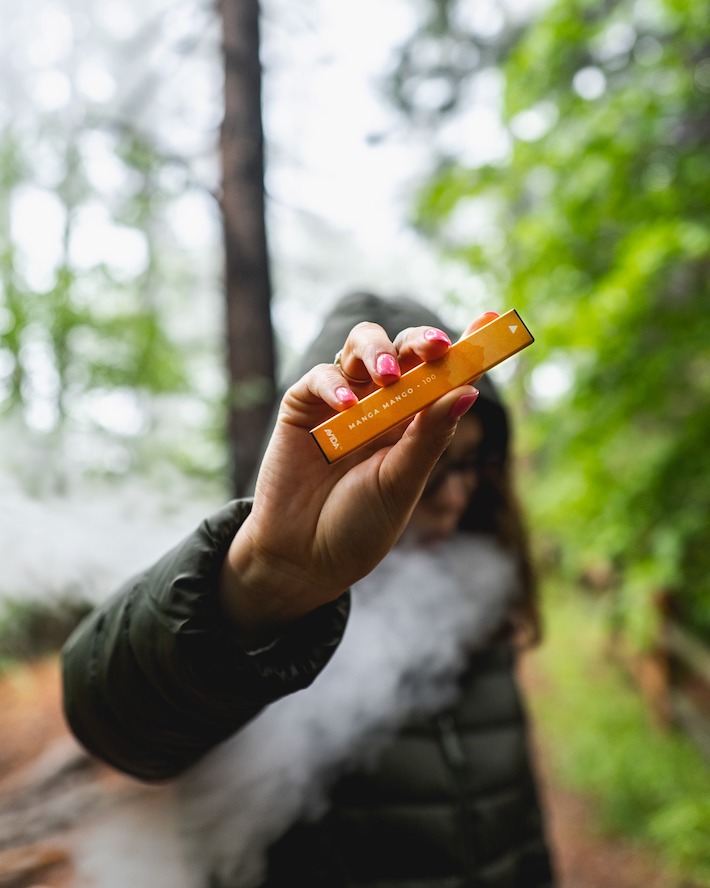
The recommended daily dose of CBD can vary quite wildly, but for most people somewhere between 20 and 40 mg per day works well. However, people go higher or lower than this based on a wide range of factors, and for some conditions like anxiety daily doses of up to 600 mg have been used.
If you’re concerned about how much you can safely vape – i.e. can you overdose on CBD? – there is basically nothing to worry about. Studies have shown that doses up to 1,500 mg per day are not only fine, but “well tolerated” in humans. It’s likely we could take much more than that without issues, and you would struggle to vape that much in a day anyway.
If you’re looking for a CBD dosage calculator or something similar, you can use a simple guide suggested by Veriheal:
In terms of vaping, if you’re buying CBD e-liquid, you’ll usually see the total CBD in the bottle listed on the labeling. Unfortunately you need to do a little conversion to find the mg/ml of CBD. Take the total CBD in the bottle and divide it by the number of ml in the bottle. So:
Amount of CBD in mg/ml = total CBD in bottle / number of ml in bottle
For example, for 1200 mg of CBD in 60 ml of liquid:
Amount of CBD = 1200 mg / 60 ml = 20 mg/ml
You can use this to help with your dosing, but there’s a more common approach…
Because of how common small doses are relative to the strength of most CBD e-liquids, a good measure of dose is the amount of CBD per puff.
This is challenging to calculate completely accurately – countless tiny factors could impact the result – some companies give per-puff estimates as a general guide. For instance, ECO Therapy suggests that a single draw contains 1 to 3 mg of CBD.
You can also use the total CBD and the listed “serving size” of the container to work out a per puff dose. A “serving” is often defined as a three-second puff. So divide the total CBD content by the number of servings, and this will tell you how much you get per 3 second puff.
However, the most reliable way to work this out is through testing. Things like how long you puff, how much you inhale and many other factors can affect more general guidelines. Measure out some CBD e-liquid into a cartridge or tank, doing the math to work out the CBD dose, and count the puffs it takes you to finish it. Divide the total CBD by the number of puffs and you have your answer. Some devices have puff counters that make this much easier to do.
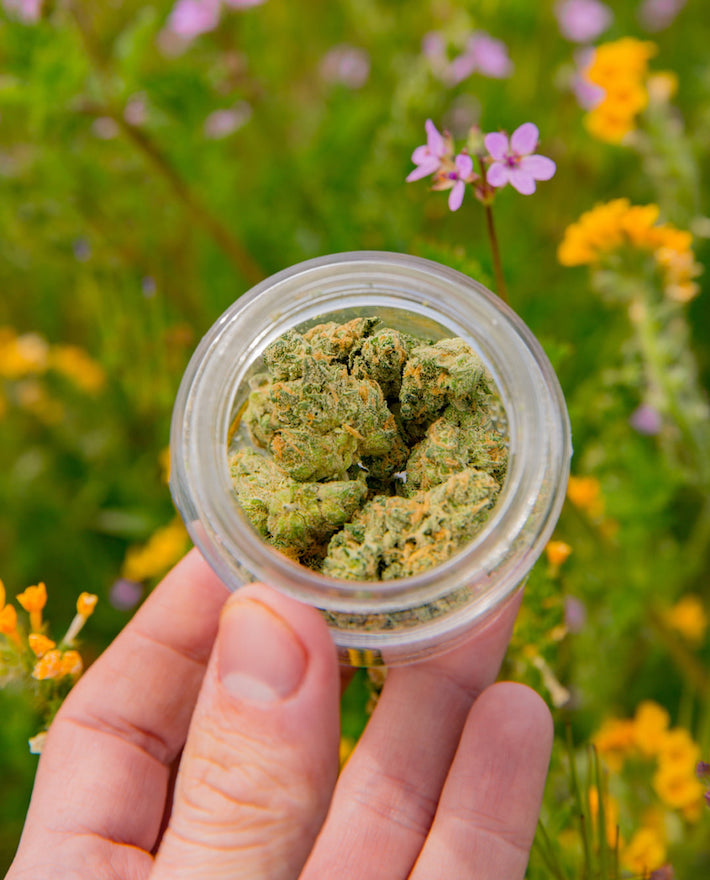
While there are a lot of claims about the benefits of CBD, it’s important to focus on what the evidence says when it comes to treating medical conditions.
Although more evidence is needed for CBD in most areas, there are some conditions where the evidence is either conclusive or consistent enough that it’s very likely that CBD is helpful. Here’s a brief run-down.
CBD vape pens run the whole gamut from affordable to shockingly expensive, and from as simple as puffing on a cigarette to as complex as a vape mod, but there’s something in there for everyone. It’s often better to think about suitability for different purposes rather than what are the “best” CBD vapes, but once you really drill down on what you’re looking for, you can rest assured this list will point you in the right direction.
Editor’s note: We updated this list on April 28th, 2026, to include all-new product recommendations based on our expert-backed Cannabinoid Product Quality Evaluation Framework.
The post The Best CBD Vape Pens to Help You Stay Calm On-The-Go appeared first on CBD Oracle.
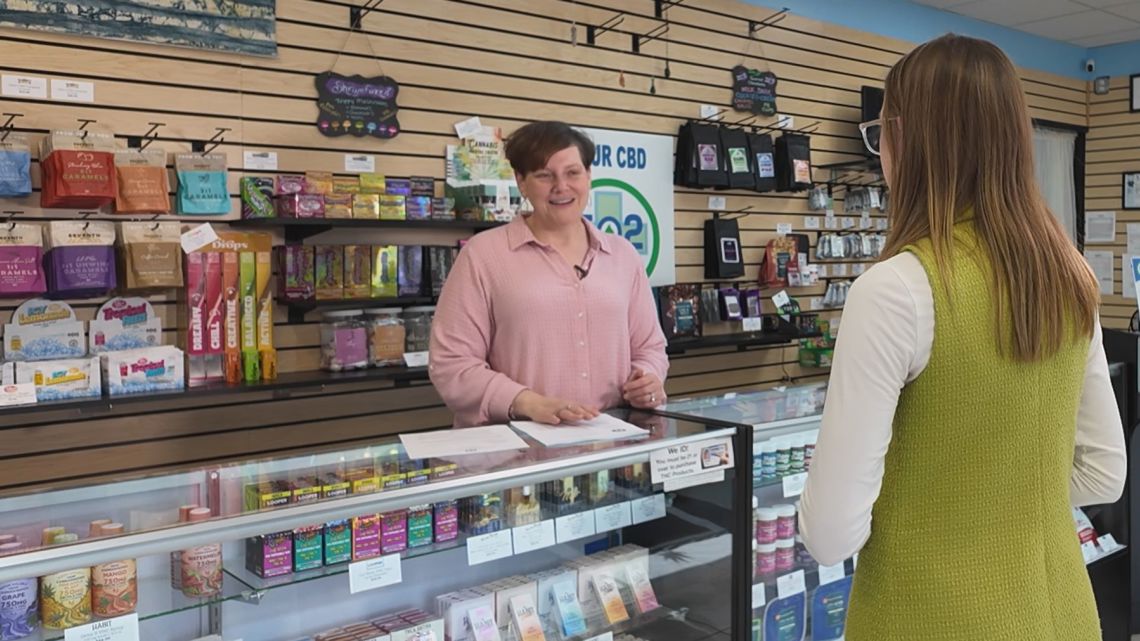

Dr. Peter Grinspoon’s new book “Aging Well with Cannabis” reframes the plant as what one geriatrician calls an “exit drug”: a tool for helping older Americans reduce their reliance on the prescription medications stacking up in their medicine cabinets. With 60 million Americans over 65 and twice that over 50, the book targets the fastest-growing cannabis demographic in the country.
The senior cannabis audience finally has a book written for it.
Dr. Peter Grinspoon’s Aging Well with Cannabis: Feel Better, Sleep Better, and Live Better with Marijuana and CBD hit shelves on May 5, 2026, from Sterling Ethos. Grinspoon is a primary care physician and cannabis specialist at Massachusetts General Hospital, an instructor in medicine at Harvard Medical School, a certified addiction medicine specialist and a contributing editor to Harvard Health Publications. The book is the first major mainstream guide aimed squarely at what its publisher calls the “canna-curious senior.”
The framing is what makes it interesting.

Dr. Mikhail Kogan, the chief medical officer of GW Center for Integrative Medicine and an associate professor of medicine at George Washington University, wrote one of the book’s most striking endorsements.
“In my work as an integrative geriatrician, I have seen firsthand that, when used thoughtfully, cannabis can serve not as a ‘gateway drug,’ but as an exit drug, helping many older adults reduce reliance on polypharmacy.”
Dr. Mikhail Kogan, GW Center for Integrative Medicine
“Polypharmacy” is the medical term for what happens when a patient is on five or more prescription medications at once. It’s the standard condition for a meaningful share of Americans over 65, and it carries documented risks: drug interactions, cognitive decline, falls, hospitalizations and worsening quality of life. The pharmaceutical alternatives commonly prescribed for chronic pain, anxiety and insomnia (the three conditions Grinspoon’s book addresses most directly) are also among the most likely to drive that polypharmacy spiral.
Grinspoon’s argument, supported by Kogan’s geriatric framing and Dr. Donald Abrams’s blurb on cannabis in oncology and palliative care, is that cannabis offers a lower-toxicity option for many of those exact conditions. Used carefully, it can help simplify medication regimens rather than complicate them. Used carelessly, it can do real damage. The book exists because nobody had written the guide that splits the difference.
Seniors are the fastest-growing cannabis demographic in the United States, and most cannabis marketing is still pointed at people half their age. The information available to older adults online has been described by Dr. Donald Abrams, professor emeritus of medicine at the University of California San Francisco, as essentially “fake news promulgated on the internet and social media.” Family caregivers trying to help an aging parent navigate cannabis for the first time have had almost nowhere to turn for vetted, doctor-written guidance.
Grinspoon’s book covers the practical questions older adults and their caregivers actually ask. Dosage. Drug interactions. Product types. How to talk to your doctor about cannabis. How to become a certified medical patient. How to buy from a dispensary. What to expect from edibles versus tinctures versus smoking. The science behind why cannabis helps with specific conditions and where the evidence is still thin.
Chapter 4 covers potential health benefits. Chapter 5 covers potential harms. The structure is honest about both, which is what separates evidence-based guidance from advocacy.
Grinspoon is one of a small number of physicians publishing on cannabis from inside the medical mainstream rather than around it. He sits on the board of Doctors for Drug Policy Reform and advises the Parabola Group, which works on social justice in cannabis. He spent two years as an associate director of the Massachusetts Physician Health Service, treating physicians with addiction. His memoir Free Refills: A Doctor Confronts His Addiction documented his own opioid recovery.
That biography matters here. He’s not selling cannabis as a miracle. He’s a Harvard-trained doctor who has worked extensively in addiction medicine and who is also clear-eyed about the legitimate medical applications of a plant the establishment has spent decades demonizing. Foreword by Dr. Staci Gruber, who runs the Marijuana Investigations for Neuroscientific Discovery program at McLean Hospital and is one of the country’s leading neuroscientists studying cannabis.
The credential stack is the point. The book exists to be the resource a primary care physician can recommend to a 72-year-old patient without worrying about what that patient is going to encounter when they go look for information themselves.
Aging Well with Cannabis: Feel Better, Sleep Better, and Live Better with Marijuana and CBD is available now in trade paperback ($19.99) and ebook ($9.99) from Sterling Ethos. Available through the publisher, Amazon, Barnes & Noble, Books-A-Million, Bookshop, Target and Walmart.
<p>The post Harvard Doctor’s New Book Reframes Cannabis As A Senior’s Way Out Of Pharmaceutical Overload first appeared on High Times.</p>
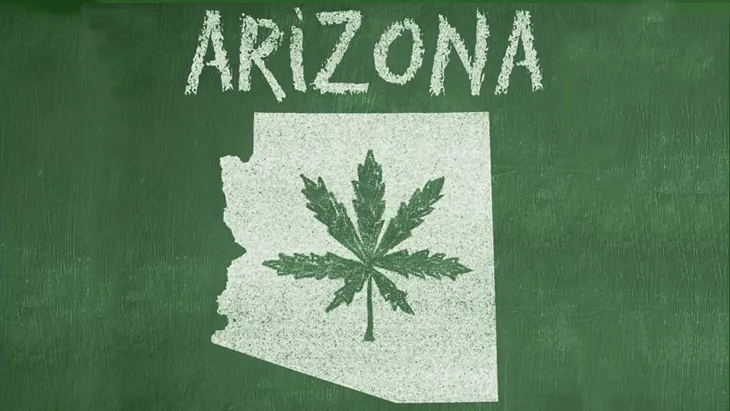

 “Regulation works. That is among the many reasons why voters prefer these policies over a return to criminal prohibition and why there exists little to no appetite among the public to reverse these voter-approved adult-use legalization laws.”
The post Arizona: Campaign Abandons Effort to Place Marijuana Repeal Measure on November’s Ballot appeared first on NORML.

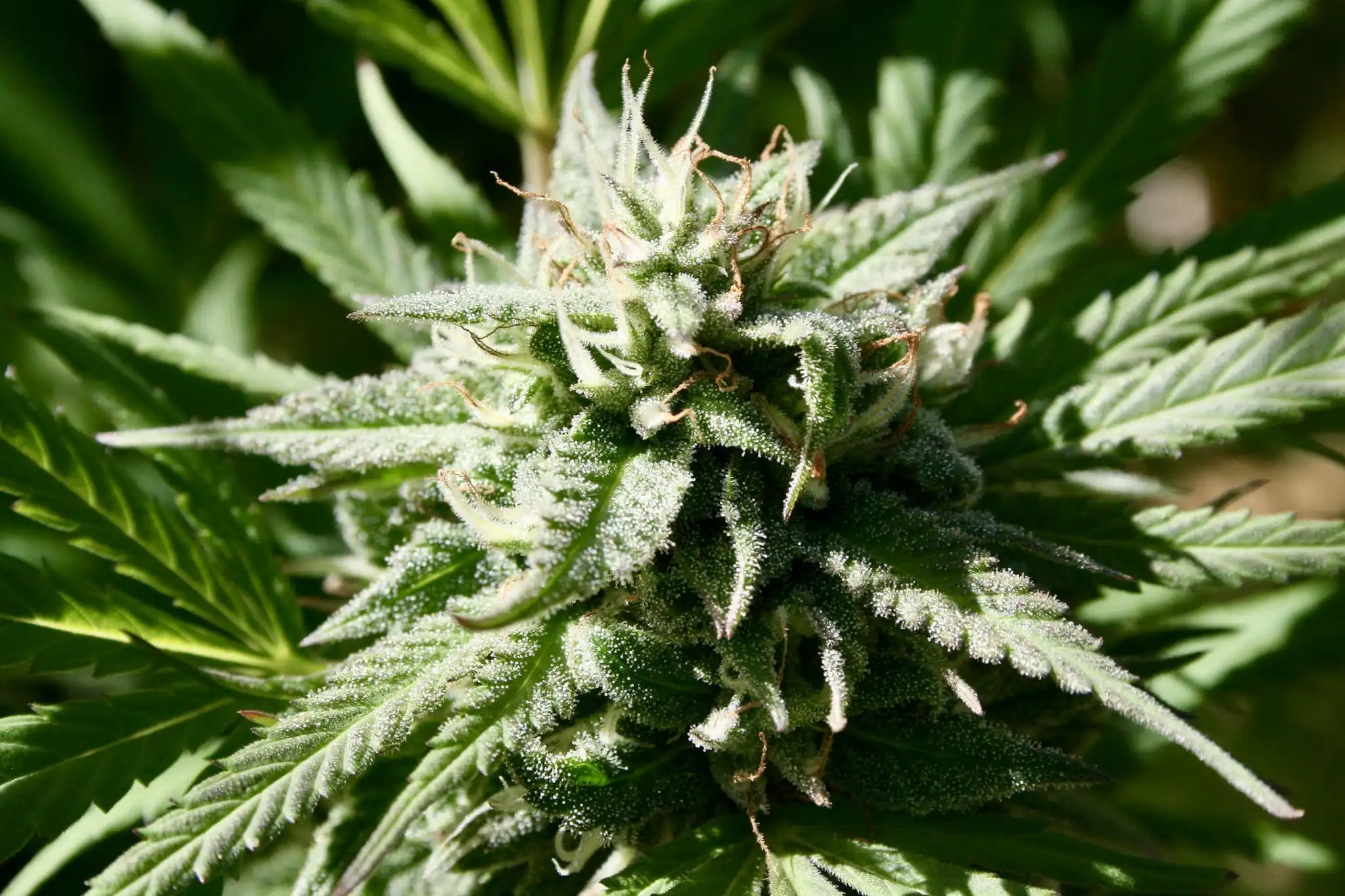
“I still think it doesn’t make a whole lot of sense to have a cap. But if people felt strongly about it, we agreed to it.”
By Emilia Otte, CT Mirror
The House and Senate voted Tuesday to reinstate a cap on the amount of THC content in cannabis flower after an attempt to remove that limitation a few weeks ago was met with pushback from lawmakers.
Prior to this year’s legislative session, Connecticut law capped the THC content in cannabis flower at 35 percent. A bill passed in April removed that cap.
At the time, Rep. Roland Lemar, D-New Haven, said cannabis plants have their own natural limits on THC concentration and that “watering down” the cannabis could actually be more dangerous because it would involve substances that have not been tested or regulated.
But Rep. David Rutigliano, R-Trumbull, argued that higher concentrations of THC would make it easier for people to become addicted. He noted that public health professionals who appeared at a public hearing on the bill also brought concerns about THC levels.
House Majority Leader Jason Rojas told the Connecticut Mirror Wednesday that the caps were replaced after members of the Senate expressed concern.
“I still think it doesn’t make a whole lot of sense to have a cap. But if people felt strongly about it, we agreed to it,” Rojas said.
Lemar said that while the legislature overall appeared willing to loosen some regulations on the cannabis industry that created challenges for business owners, removing the THC cap on flower was a sticking point.
“ I think it puts [businesses] at a competitive disadvantage vis-à-vis some other states. But at the end of the day, the regulators and the legislators who were tasked with making the responsible choice didn’t feel comfortable in that space moving to an uncapped system,” he said.
Rojas said he didn’t believe restoring the cap on flower would cause problems for the industry, since the difference between natural THC limits in flower and the caps in the bill were minimal.
Sen. James Maroney, D-West Haven, said there were similar concerns in the Senate about the removal of the THC cap for flower. The original bill that removed the caps passed 18-17 with a promise that an imminent bill would restore those caps.
During a Senate debate on the bill removing the caps, several senators—Republican and Democrat—expressed concern about how increased THC potency could affect public health, particularly for children.
“This is not fun and games. This is life and death. This is life changing, family changing, family destroying when we eliminate these caps,” said Sen. Jason Perillo, R-Shelton.
Sen. Christine Cohen, D-Guilford, also expressed “strong reservations” with the THC potency levels and their impact on mental health.
Aside from the THC flower cap, the original bill eliminated caps on THC concentrates and increased the amount of THC allowed in infused drinks from 3 mg to 5 mg. Drinks sold in dispensaries or retailers may now have up to 10 mg of THC. The bill also expanded the cannabis marketplace to include topicals, tablets and capsules and allows patients who come from out-of-state to purchase cannabis for medical reasons.
Those changes are still in place.
Sen. Paul Cicarella, R-North Haven, said he hoped the legislature next year could consider setting limits to THC in other forms of cannabis, like edibles or tinctures.
“Marijuana is a concern. Increasing these levels is a concern of multiple people around this circle, regardless of party,” he said.
This article first appeared on CT Mirror and is republished here under a Creative Commons Attribution-NoDerivatives 4.0 International License.
PARSELY = { autotrack: false, onload: function() { PARSELY.beacon.trackPageView({ url: “https://ctmirror.org/2026/05/06/ct-lawmakers-reinstate-cap-on-thc-in-cannabis-flower-after-pushback/”, urlref: window.location.href }); } }
Photo courtesy of Brian Shamblen.
The post Connecticut Lawmakers Pass Bill To Reinstate THC Limits For Marijuana Flower appeared first on Marijuana Moment.








We use cookies to improve your experience on our site. By using our site, you consent to cookies.
Manage your cookie preferences below:
Essential cookies enable basic functions and are necessary for the proper function of the website.
Drag & drop or click to select
JPEG, PNG, GIF, WebP, MP4, WebM · Images max 30 MB · Videos max 100 MB