
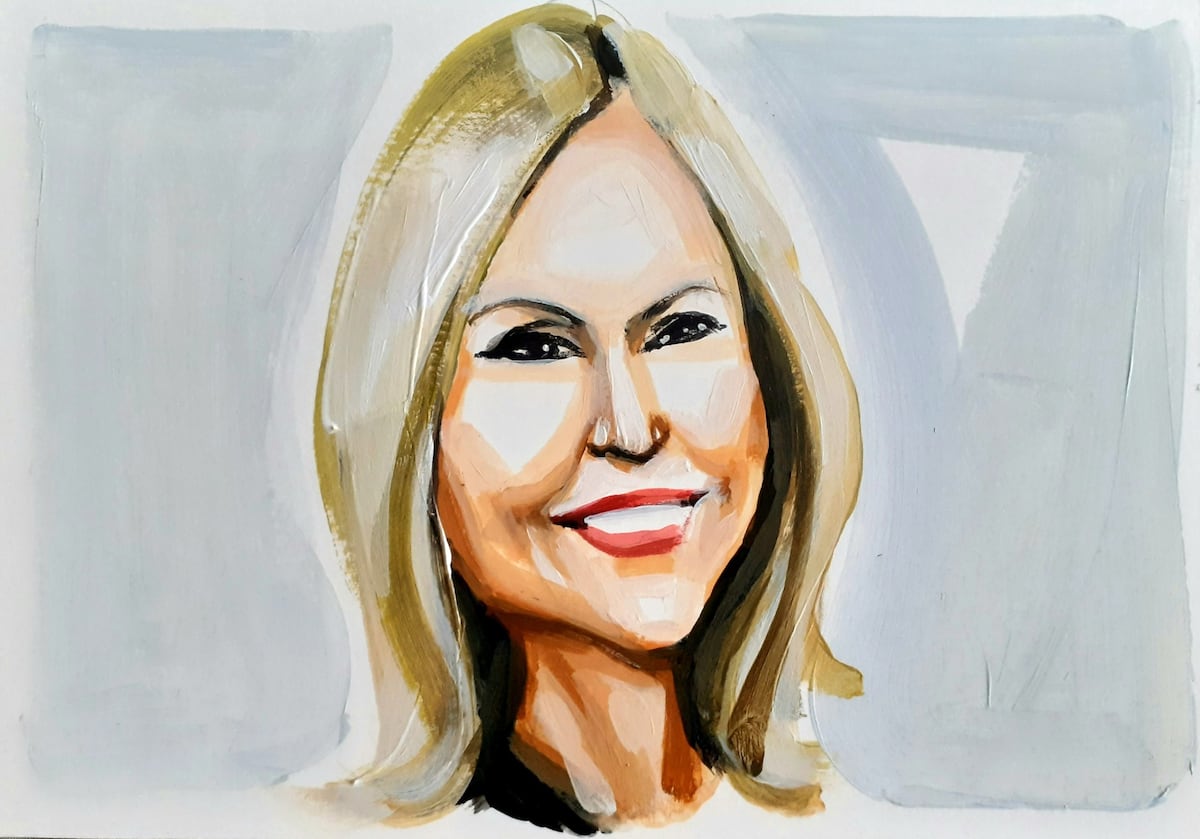
Kim Rivers, the ‘queen of marijuana’ who rewrote the industry’s rules | Economy and Business
May 9, 2026
Published by toker

In 1994, Melanie Dreher published a study showing that cannabis-exposed babies thrived. The medical establishment went silent. Thirty years later, she’s still trying to finish the work — and pregnant women are still being jailed.
More than 25 years ago, a landmark study quietly challenged one of modern medicine’s most deeply rooted assumptions: Cannabis use during pregnancy is inherently harmful. The findings were striking. The response was silence. And today, while cannabis laws liberalize across much of the world, pregnant women and mothers remain among the most vulnerable to punishment and stigma.
“It’s very disappointing,” says Melanie Dreher, the nurse-anthropologist and public health scholar who worked on the original study. “There are so many women in this country who could benefit from cannabis therapy during and post-pregnancy. Instead, they are reported to the authorities, often jailed and even separated from their newborns, depriving them of breast milk.”
She cited one such case of a woman whose hair tested positive for cannabis during labor and delivery in a Michigan hospital. “The infant was immediately placed into foster care and the parents left the hospital without their newborn,” she says. “Friends recommended me and I contacted the State Attorney’s office to better understand a policy that required the removal of children from their parents. I was told: ‘In Michigan, we believe that there is an inherent danger for children in homes where there is exposure to ‘harmful substances’ and who need to be protected by the state.’”
Melanie Dreher’s path into cannabis research was purely accidental. Initially trained as a registered nurse, she was encouraged early in her career to pursue a PhD in anthropology at Columbia University in the late 1960s. Her professors, Dr. Lambros Comitas and Dr. Margaret Mead, invited her to participate in a federally funded comparative study of cannabis in Jamaica, where the plant was widely used by working class men. She demurred with a cordial “Thank you very much, but I don’t think so.” Her professors asked why. Her response: “I’ve never been to Jamaica. I’ve never done ethnographic fieldwork, and I’ve never smoked marijuana.”
Mead’s reply: “You’re perfect.”
“I’ve never been to Jamaica. I’ve never done ethnographic fieldwork, and I’ve never smoked marijuana.”
Melanie Dreher — to which Margaret Mead replied: “You’re perfect.”
Dreher landed in Jamaica, where she soon realized that cannabis is not criminalized or glamorized. It is medicine, nourishment and community. Sugarcane workers take ganja breaks — not coffee breaks — to sustain themselves through grueling labor. Mothers prepare cannabis tea for children to promote health, prevent illness, and improve learning.
One evening, while sitting in the yard of a sugar cane worker who participated in her study, Dreher noticed that he was smoking a spliff while holding his young daughter in his lap. Dreher watched him inhale deeply and exhale the smoke directly into the little girl’s face. Somewhat alarmed, she gently suggested that his daughter may be inhaling the smoke he was producing.
He responded (smiling) that she has asthma and he was curing her with ganja. Within minutes, the child’s breathing eased and regulated. As she dug a little deeper, she stopped studying the men and began her study of the women who use cannabis for health-related purposes and who grow, prepare and sell the plant as medicine.

By the late 1960s and early 1970s, concerns about pregnancy and medication safety were widespread, particularly in the wake of pharmaceuticals prescribed for morning sickness that resulted in birth defects. Jamaican women, by contrast, were managing nausea with cannabis tea, not pills, and reported little to no morning sickness. So Dreher proposed a formal study.
Working with Harvard-affiliated pediatrician Kevin Nugent and drawing on the Brazelton Neonatal Assessment Scale, the team conducted the first systematic study of cannabis use during pregnancy. Thirty women who already used cannabis were matched by age and parity with non-using mothers. All were rural, healthy, and from similar socioeconomic backgrounds.
Babies were assessed at two days, five days, and one month after birth.
The results stunned the researchers. “The babies with the most cannabis exposure did the best,” says Dreher. “Across measures of alertness, motor development, and social engagement.” Still, the team hesitated to publish. At the time, the medical consensus — unsupported by data — was that cannabis exposure was dangerous. But the study was ultimately published, thanks largely to Nugent’s persistence.
Then they waited for backlash.
Nothing happened.
No outrage.
No replication.
No follow-up funding.
No public debate.
“Either nobody read it, or nobody wanted to touch it.”
Melanie Dreher, on the response to the 1994 study
Now in her eighties and a grandmother of 10, Dreher remains undeterred. Today, she’s trying again to fund a small, modern study on cannabis and pregnancy. “It wouldn’t even cost that much,” she says. “With $100,000, we could do something meaningful.” She has already contributed $25,000 herself.
$100,000
What Dreher says it would cost to conduct a meaningful modern follow-up study on cannabis and pregnancy. She has already contributed $25,000 of her own money. Federal funding has not materialized.
Nevertheless, funding remains elusive. Dreher claims previous NIH proposals scored well scientifically — until legislators intervened after seeing a photo of a healthy Jamaican cannabis mom and her baby girl. It was taken by Dreher and featured in an NIH publication sent to US legislators, accompanied by a caption noting cannabis use and healthy babies. “The lawmakers went nuts,” claims Dreher. “They said they would never fund the follow-up study. Ever. NIH had to comply.”
This is why she’s teaming up with physician Genester Wilson-King, MD FACOG, a board-certified obstetrician and gynecologist, and longtime collaborator Rebekah Hudgins, an anthropologist and epidemiologist whose work focuses on women’s and children’s health and the community systems that shape well-being.
Hudgins explains that the study needs to be revisited since their combination of qualitative and quantitative data provides a rich portrait of the Jamaican households and children. “Surveys and testing alone simply cannot uncover the kind of data needed to understand any social issue,” says Hudgins, “and I think this is especially true with cannabis use.” During her two years in Jamaica, Hudgins conducted ethnographic observations of the 60 children in a case-control study.
Observations covered all waking hours for each child within one week of their 5th birthday. She was with families all day, following children during play, school, church. Wherever they went, “I was there with my notepad,” remembers Hudgins. “These 60 children had been in the study since birth, so they knew Melanie and had met other research assistants who were in the field before me. I believe I lived in Jamaica longer than any of the field researchers, so I got to know the families very well.”

Photo by Brooke Balentine on Unsplash
The team also completed the standardized McCarthy Scales of Children’s Abilities, as well as other standardized tests with each child around their 5th birthday, and collected information about weight and height. The observations around the children’s 5th birthday were the most intensively documented period, but Hudgins stayed in contact with the families throughout her time there. “In fact,” she says, “more than 30 years later, I still occasionally get a call from one of the children or a mother.”
For her part, Dr. Wilson-King — a nationally recognized speaker on women’s health and cannabis — focuses on the plant’s use in gynecology and, where appropriate and responsible, in obstetrics. She serves on the Experts Board of Doctors for Drug Policy Reform and as President of the Society of Cannabis Clinicians, where she leads its first female-majority executive board. She has also served as an expert witness in dozens of cases. “I have provided written testimony contributing to the complete dismissal of charges in several of them,” she says. Her approach is evidence-based, patient-centered and openly advocates for women’s rights across all spaces — including testifying before a medical board to support the inclusion of a specific diagnosis for women to qualify for cannabis use.
In the Jamaican study, children of mothers who use cannabis did not differ from others regarding motor skills, attention, or general behavior. They were more likely to attend school and have multiple trusted adults who cared for them. Further, children exposed to cannabis in utero weighed slightly more and were slightly taller. Overall, the households of cannabis-using families had greater resources to support and care for their children.
“These findings are important,” says Hudgins. “The Jamaican study is the only study of its kind with a predominantly single drug-use population that collected extensive ethnographic data and standardized testing data and found no detrimental effects even within the highest consumption households.”
More research is clearly needed, and the team is interested in continuing to learn about cannabis use from women in this country to help inform social policy and practice and shift the public view of the plant.
New research, same direction. A study published in April 2026 in Alcohol: Clinical & Experimental Research followed more than 11,000 adolescents from age 10 through 14 and found no negative associations between prenatal cannabis exposure and cognitive development once sociodemographic factors were accounted for. “Little evidence emerged for negative effects of low-level prenatal alcohol, cannabis, or combined exposure on adolescents’ cognitive development after accounting for sociodemographic factors,” the researchers concluded. The findings add to a growing body of literature aligned with Dreher’s 1994 results — and reinforce her argument that the silence around that work was never about the science.
Decades later, the study lives on. Underground. Pregnant women find it and share it. Cannabis-using mothers quietly pass it through private networks. Calls continue to pour in. Mothers write. Now, some judges listen when Dreher testifies on behalf of women facing incarceration. “I once got recognized by a tech support worker,” Dreher laughs. “She said, ‘We’re not supposed to comment on what’s on your screen, but…are you the one who did that study?’ She told me it was their moms’ group’s bible.”
Still, in medical institutions, skepticism remains entrenched. At a presentation to neurologists and psychiatrists at a major Chicago medical center, Dreher was told cannabis could never be endorsed without double-blind clinical trials. Her response was blunt: “It’s a good thing women don’t need you to prescribe it.”
“It’s a good thing women don’t need you to prescribe it.”
Melanie Dreher, to neurologists and psychiatrists at a major Chicago medical center
Physicians, argues Dreher, occupy a comfortable middle ground: unwilling to study or teach cannabis medicine, unwilling to treat patients directly with it and yet happy to charge hundreds of dollars for medical cannabis cards. “They make money without accountability,” she says. “And very few even teach the endocannabinoid system in medical school. That should tell you everything.”
780,000+
Cannabis charges expunged in Illinois since 2019, per the state’s Cannabis Regulation Oversight Office. According to Dreher, pregnant women remain largely excluded from those reforms.
Even in states with progressive cannabis laws, pregnancy remains a line that doctors and lawmakers refuse to cross. According to Dreher, in Illinois, hundreds of thousands of cannabis-related convictions have been expunged — yet pregnant women remain largely excluded from those reforms. “This is not about documentation,” she says. “It’s about convincing the public. And about misogyny. About control.”
Cannabis use by women, particularly mothers, provokes moral panic. In Dreher’s view, the plant threatens multiple power structures at once — pharmaceutical, medical, and cultural narratives about “good motherhood” — partly because it can’t be patented, packaged or controlled.
Change won’t come from science alone. “We need parallel paths,” says Dreher. “Scientific validation and lived experience. Anecdotes matter, but the world demands data.” Until then, mothers remain silent, fearful and criminalized.
“There are so many women with secrets,” she says. “Underground, because they have to be. Because they’ll go to jail.” Still, Dreher is hopeful — especially in collaboration with artists, filmmakers, and storytellers who can reach hearts where academic journals have failed.
“More people will listen,” she says. “And we need that. We need all of it.”
“Cannabis is not harming mothers and babies. The system is.”
Melanie Dreher
After more than half a century of evidence, observation, and resistance, Dreher’s message remains unwavering: Cannabis is not harming mothers and babies. The system is.
This article reports on the research and views of Melanie Dreher, Ph.D., and her collaborators. It does not constitute medical advice. Readers with questions about cannabis use during pregnancy should consult a healthcare provider.
<p>The post The Study Nobody Wanted: Cannabis, Pregnancy, and the Women Still Paying the Price first appeared on High Times.</p>

“You’re a constituent. Let’s see what is in the realm of possibility.”
By Charlotte Rene Woods, Virginia Mercury
“We needed this rain,” farmer and entrepreneur Graham Redfern said from his front porch in Caroline County Wednesday as U.S. Rep. Eugene Vindman (D-VA), who represents Virginia’s 7th District in Congress, approached.
The lawmaker was there to learn about the crops and products at Redfern Hemp Co., one of the state’s small businesses whose future hangs in the balance between soon-to-start federal restrictions on hemp THC products and Virginia’s not-yet-finalized retail cannabis market.
The rain was one certainty for Redfern, and a welcome one at the start of his planting season. But another, he said, is that most of his products will become illegal later this year, when the federal hemp crackdown kicks in.
“It’s scary,” Redfern said of thinking six months forward. He added that some of his staff members are thinking about looking for other jobs.
Redfern’s company, which employs 14 full-time staff and 5 part-time staff, makes body creams, dog treats, chocolates and gummies from hemp. His products offer calming and pain management effects for customers, while other parts of the hemp plant help create oils, birdseed and fibers.
The post Congressman Pledges To Help Virginia Hemp Farmers As Federal THC Product Ban And State Marijuana Changes Loom appeared first on GrowCola.com.
The safety and consistency of THC beverages remain a top priority for adult consumers. Independent verification strengthens trust in product quality and ensures accurate, safe formulations. Clear information on ingredients, dosage, and lab results supports …
Continue reading “Why Third-Party Testing Is Essential for THC Drinks”

Oklahoma drug officials have issued guidance warning medical marijuana businesses that they must register with the federal government in order to avoid facing punishments, including potentially having their state registrations revoked.
Donnie Anderson, director of the Oklahoma Bureau of Narcotics and Dangerous Drugs Control (OBNDD) said in a letter to cannabis industry operatives on Friday that they are required to fill out a new Drug Enforcement Administration (DEA) registration form that was launched in conjunction with the Trump administration’s move to federally reschedule cannabis.
Citing state laws, he said that “every registrant who is a distributor or manufacturer of medical marijuana products must comply with federal law and, as such, shall be required to obtain a DEA registration.”
“Failure to obtain a DEA registration could result in OBNDD administrative sanctions up to and including the potential revocation of an registrant’s OBNDD registration(s),” the letter says. “This is consistent with the requirements in place for other Schedule Ill registrants currently regulated by OBNDD.”
“To ensure compliance with these federal regulations and minimize any impact on lawfully operating entities, OBNDD will not consider pursuing administrative action on medical marijuana businesses registered with OBNDD for the manufacturing or distribution of marijuana without the required DEA registration until January 1, 2027. It is strongly recommended that all OBNDD registrants authorized to manufacture or distribute medical marijuana apply for the appropriate DEA registration within the sixty-day period after the April 28, 2026, publication of the Final Order. By timely submitting an application to the DEA, a registrant will not be subjected to OBNDD administrative action for the manufacturing, or distribution of marijuana without a DEA registration while the DEA application filed within the sixty-day period remains pending. Failure to timely submit an application to the DEA would render any manufacturing or distribution of medical marijuana products without a DEA registration to be in violation of the Final Order. These activities could subject a registrant to OBNDD administrative sanctions up to and including the potential revocation of an registrant’s OBNDD registration(s).”
Anderson concluded by saying that “nothing included in this letter is intended to be taken as legal advice concerning the obligations of a registrant set forth in either federal law or Oklahoma statutes.”
“This letter is merely being provided to inform medical marijuana businesses of their administrative responsibilities,” he wrote. “If there are additional questions concerning compliance with either federal, state, or administrative law, a registrant should consult with an attorney.”
The Oklahoma Medical Marijuana Authority (OMMA), which licenses and regulates medical cannabis businesses in the state, separately released guidance earlier this week on federal rescheduling and a recently filed lawsuit challenging the reform.
“This is an evolving federal conversation, but our focus remains the same: protecting patient health and safety and responsibly regulating the industry,” OMMA Executive Director Adria Berry said. “These announcements have created a lot of questions, but very few answers have been received. OMMA will continue to relay information as released by the DEA and federal government, but, ultimately, we encourage licensees to seek professional counsel as they determine the best decisions for their business.”
Oklahoma Gov. Kevin Stitt (R), meanwhile, has suggested recently that lawmakers should put a measure on the ballot to roll back the state’s medical cannabis program. He said during his State of the State address in February that voters should “shut it down,” arguing that “liberal activists” conned the state and “opened up Pandora’s box” with legalization.
Legislative leaders have pushed back on that idea, however.
Senate President Pro Tempore Lonnie Paxton (R), for example, initially expressed openness to the idea—but he ultimately determined it’d be “really hard to completely undo” legalization and unfair to licensed medical cannabis operators who “invested their life savings into this program” and are “trying to do this for the Oklahomans that need that product—not for recreational, but for actual medicinal purposes.”
“It’s hard to unring that bell,” he said. “What I’m going to suggest to the governor is that we don’t run a state question on that, but instead we continue to push the regulations [and] we continue to regulate the industry.”
—
Marijuana Moment is tracking hundreds of cannabis, psychedelics and drug policy bills in state legislatures and Congress this year. Patreon supporters pledging at least $25/month get access to our interactive maps, charts and hearing calendar so they don’t miss any developments.
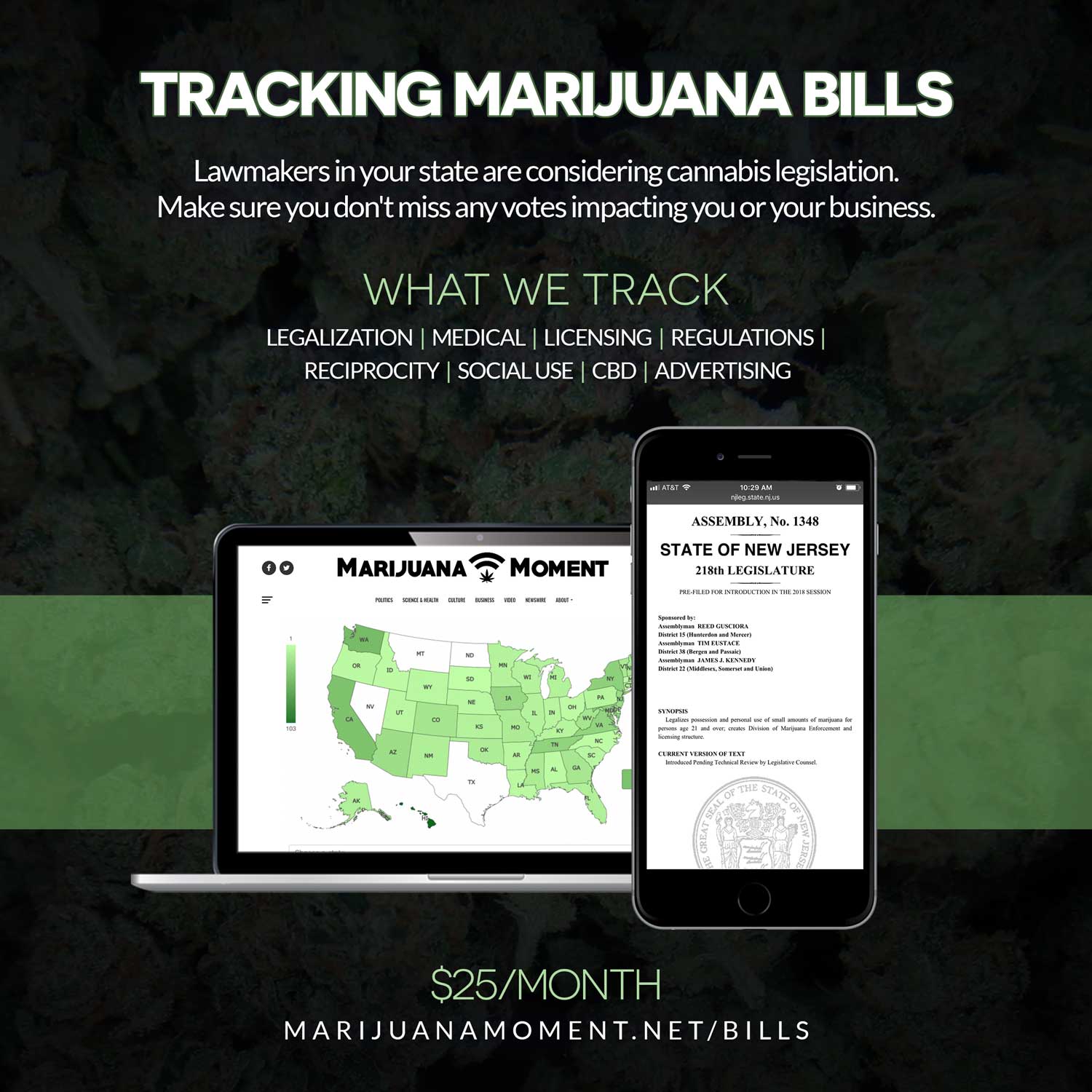
Learn more about our marijuana bill tracker and become a supporter on Patreon to get access.
—
House Speaker Kyle Hilbert (R) has also largely dismissed the prospect of upending the state’s medical cannabis program. He said Oklahomans have already drawn a clear distinction: They support medical marijuana and “resoundingly” oppose adult-use legalization, based on past election results.
Stitt is undeterred, however, claiming in a recent interview that he’s had “some great conversations with the House and the Senate.”
“They know it’s a problem. Oklahomans all over are calling our offices saying it’s a problem,” Stitt said. “So I think we’ll get something back to the people.”
Oklahoma Attorney General Gentner Drummond (R) was asked about the governor’s call to have voters revisit the state’s medical marijuana program, and he said he’d “love” to see the state’s medical marijuana program wiped out.
However, he cautioned that doing so would mean reimbursing the hundreds of licensees participating in the market because the state would be “taking” a revenue source away from them.
Back in 2022, Stitt similarly used his State of the State address as an opportunity to dig at the voter-approved medical marijuana law, arguing that residents were misled by proponents of the ballot initiative.
Meanwhile, in November, Oklahoma activists withdrew an adult-use marijuana legalization initiative that they’d hoped to place on the state’s 2026 ballot.
After a short but aggressive signature push to secure ballot placement, Oklahomans for Responsible Cannabis Action (ORCA) ultimately did not turn in its petitions by the deadline, according to the secretary of state’s office.
The post Oklahoma Officials Say Medical Marijuana Businesses Must Register With Federal DEA To Avoid Punishment appeared first on Marijuana Moment.

Laganja Estranja’s first cannabis line drops May 16 at SWAY Dispensary in Chicago. The launch comes a decade after her first attempt to break into the industry, in partnership with Illinois’ first queer and Black-owned recreational dispensary, cultivated by two-time Cannabis Cup winner nuEra Cannabis. The whole package lands just in time for Pride Month.
Laganja Estranja has been trying to launch a cannabis brand for ten years. This is the one that finally landed.
The drag artist, choreographer and longtime cannabis advocate is releasing her first official cannabis line on May 16, 2026, in partnership with Chicago’s SWAY Dispensary. The line is called Laganja: Her Bold Sativa Blend, available in two SKUs: 3.5-gram whole flower eighths and 3.5-gram pre-roll 5-packs. Cultivated by nuEra Cannabis, the brand drops first at SWAY on May 16, then expands statewide to all nuEra dispensaries and select Illinois retailers on June 1, kicking off Pride Month.

The choice of partner is the story underneath the story.
SWAY Dispensary opened in April 2024 as Illinois’ first queer and Black-owned recreational cannabis dispensary, located in Chicago’s Northalsted neighborhood. It was co-founded by Edie Moore, Art Johnston and Pepe Peña under the state’s social equity licensing program. A second SWAY location is in development for South Shore.
For Laganja, partnering with SWAY made the decade of failed attempts make sense in retrospect. The deal isn’t with a multi-state operator using her as a marketing asset. It’s with the dispensary that mirrors her own positioning in the industry.
“After a decade of trying and more failed attempts than I’d like to admit, I’m finally launching my own seed-to-flower cannabis brand. As a trans woman, it’s empowering to do this with SWAY, a queer and Black-owned dispensary in a city that has fought so hard for our community, a space where you come as you are, or as you’ve always wanted to be.”
Laganja Estranja
Edie Moore, SWAY’s co-founder, framed the development process around translating Laganja’s vision into product specs.
“She knew the experience she wanted to create: bright, citrus-forward, uplifting, something that sparks creativity and feels good in your body. Our role was to translate that into a terpene profile and a product that actually delivers. We partnered with nuEra Cannabis to source and cultivate the strains she selected, and built the blend from there. This is her vision, executed with intention, and it shows up in both the flower and the brand.”
Edie Moore, co-founder, SWAY Dispensary

The product is described as a “strain salad,” meaning multiple sativa cultivars selected by Laganja and blended into a single flavor and effect profile rather than a single-strain release. The team isn’t naming the genetics in the public materials. The terpene direction is bright, citrus-forward and uplifting, with a flavor that the brand describes as “strawberry candy meets fresh-squeezed citrus.”
The Laganja x SWAY launch extends beyond the cannabis itself. A limited run of branded merchandise drops at SWAY on May 16, including rolling trays, tote bags and enamel pins. A second wave of accessories is scheduled for later in the summer, including lighters with holders and ashtrays.

Two launch events anchor the rollout. On May 15 from 7:00 to 9:30 PM, Laganja hosts a “soft launch” at Sidetrack (3349 N Halsted St, Chicago), centered on a RuPaul’s Drag Race All Stars viewing party followed by a red carpet meet and greet. On May 16 from 4:20 to 7:00 PM, the official launch happens outside SWAY (3340 N Halsted St, directly across the street). A green carpet, a meet and greet with Laganja and her dog Lil Dabbers, and a Weed Bus parked out front.
Laganja has been a visible trans cannabis advocate for over a decade. She broke through on Season 6 of RuPaul’s Drag Race, has performed in 14 countries across five continents, and has shared stages with Madonna, Sabrina Carpenter, Jennifer Lopez, Christina Aguilera and Miley Cyrus. She holds a Bachelor of Fine Arts in dance and choreography from CalArts and was a U.S. Presidential Scholar in The Arts before her drag career took off.
The cannabis advocacy has run alongside all of it. Multiple attempts to translate that platform into a brand of her own kept stalling out, for reasons that mirror the broader story of the industry: capital flowing toward MSOs, social equity licensing held up in court, queer and trans operators consistently sidelined from operator deals. Pride collabs with cannabis brands tend to last one June and disappear by July. Rainbow packaging, limited drops, no commitment to the operators or communities the marketing borrows from.
The SWAY partnership is structurally different. SWAY is the operator. nuEra is the cultivator. Laganja is the brand. All three pieces stay in Illinois, all three pieces remain attached to communities the cannabis industry has historically extracted from rather than partnered with. The launch is a Pride Month drop, but the architecture suggests something built to outlast it. The flower expands statewide on June 1 and stays on shelves after the month ends. The merch capsule extends into late summer. The infrastructure is already pointing past July.
<p>The post Pride Month Cannabis Collabs Disappear Every July. Laganja Estranja Built One That Won’t. first appeared on High Times.</p>



The post Mint Drops Jay & Silent Bob’s Banana Hammock Today – Plus Tacos, Cheese Cake & Mom’s Free Pre-Roll appeared first on AZ Marijuana.













We use cookies to improve your experience on our site. By using our site, you consent to cookies.
Manage your cookie preferences below:
Essential cookies enable basic functions and are necessary for the proper function of the website.
Drag & drop or click to select
JPEG, PNG, GIF, WebP, MP4, WebM · Images max 30 MB · Videos max 100 MB