

Tommy Chong On Prison 🤯🤯🤯#shorts #short #joerogan #amazing #Tommychong #prison #jail #crazy #wild
December 30, 2025
(updated December 30, 2025)
Published by toker

In every country where medical cannabis has been legalized, decisions of this scale don’t happen overnight. They’re shaped by years of pressure, debate, and persistence. In Bosnia and Herzegovina, that process culminated this week when the Council of Ministers approved a decision that legalizes cannabis for medical purposes at a regulatory level. That said, practical implementation will still require additional and specific rules, according to Vijesti.
Let’s be clear from the start: this is a real legal shift, but it’s not the finish line.
For patients, activists, and political actors who have long called for a clear and accessible framework, the move represents a long-awaited turning point. It signals a change in public health policy and opens the door for cannabis-based therapies to be developed legally under state oversight.
Until now, cannabis was classified as a prohibited substance in Bosnia and Herzegovina. That reality pushed patients toward the gray market or forced them to seek treatment abroad, often at great personal and financial cost. With this decision, the country takes a concrete step toward a legal, regulated, and supervised model of medical use.
This decision does not mean medical cannabis will be immediately available to patients. What it does is establish a legal foundation for future regulation. In practical terms, cannabis moves away from being treated exclusively as a prohibited substance and toward a strict health-control framework, similar to those already in place across much of Europe.
What typically follows a shift like this is not improvisation, but regulation. That includes defining key elements such as:
For thousands of people who have relied on informal solutions or medical exile for years, this decision marks something important: the first institutional acknowledgment of a long-standing demand to access safe, legal, and regulated treatments at home.
The announcement was shared by lawmaker Saša Magazinović of the Social Democratic Party (SDP), one of the most visible advocates for the issue within Parliament. As he explained, the process unfolded through public debates, legislative hearings, and firsthand testimonies from people demanding access to alternative treatments for serious medical conditions.
Within that context, Magazinović welcomed the decision while stressing that the work is far from over. “The most important step has been taken, but the work is not finished. Now comes the fight over the details, because the devil is always in them. Still, from today on, it’s much easier,” he said.
Policy shifts rarely happen in a vacuum. In this case, personal testimonies helped move the debate from theory to urgency. Magazinović highlighted the case of Irfan Ribić, a student at the Sarajevo Academy of Dramatic Arts, who said his multiple sclerosis symptoms improved through the use of cannabis oil. His experience was described as a turning point that helped solidify political commitment to the initiative.
The lawmaker also acknowledged the role of Minister of Civil Affairs Dubravka Bošnjak, crediting her with overcoming administrative roadblocks and submitting the draft decision for formal approval by the Council of Ministers.
This decision doesn’t immediately solve access to medical cannabis, but it does break a long-standing inertia. For the first time, the state formally recognizes a sustained demand from patients and communities who have operated outside the system for years. What comes next matters: turning recognition into public policy, without forcing people back into illegality.
<p>The post Bosnia and Herzegovina Legalizes Medical Cannabis—Now What? first appeared on High Times.</p>
An intensive, high-yielding cannabis training method called monster cropping lets producers revive fresh, bushy plants from flowering clones. Applied precisely, the advanced method can greatly increase the canopy density and yields. From biological concepts to exact cloning techniques and integration with other training systems, we cover all important aspects of monster cropping across this whole book.
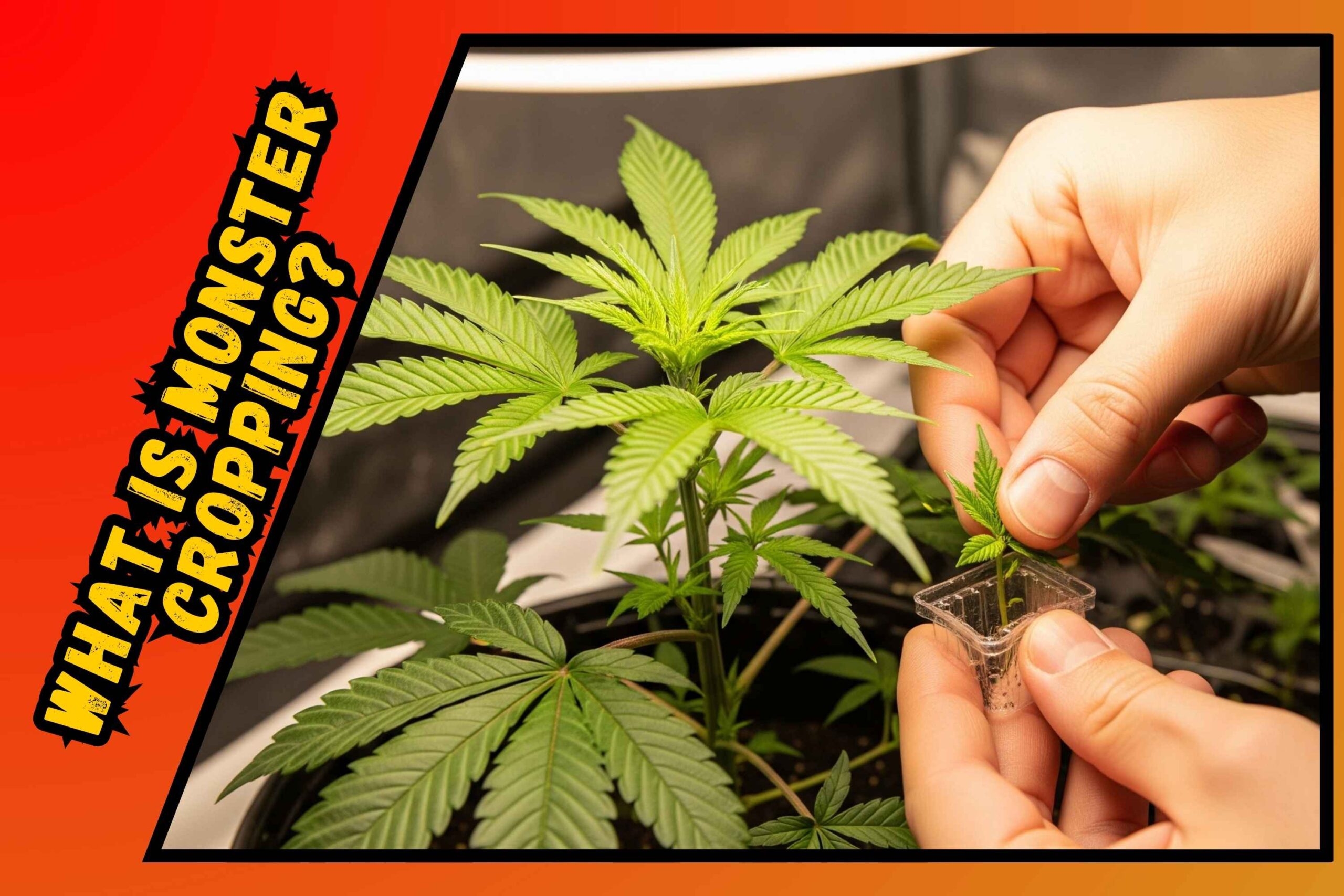
Usually, at week three or four of a flowering cannabis plant, monster cropping is a specialist technique of growing cannabis when clones are removed from a flowering plant and subsequently re-vegetated. Unlike the conventional cloning flowering plants, whereby cuttings are collected from the vegetative stage, monster cropping entails a significant degree of stress. This approach causes hormone swings that stimulate plenty of lateral expansion and bushing growth and strains the plant back to vegetative growth from flowering. The resulting branches are suitable for obtaining a sturdy, high-yielding canopy able to support large crops.
Plants put out as clones in the flowering phase will have strong branching and a “Monster” sort of development that would otherwise not be felt if cloning were carried out in the vegetative phase, returning to vegetative growth. Growers who want to produce the best crop without constantly tending mother plants will find great demand for this quality. Re-vegging creates a new, bushy structure that significantly increases the number of sites for buds, thereby improving the overall efficiency and production of the plant.
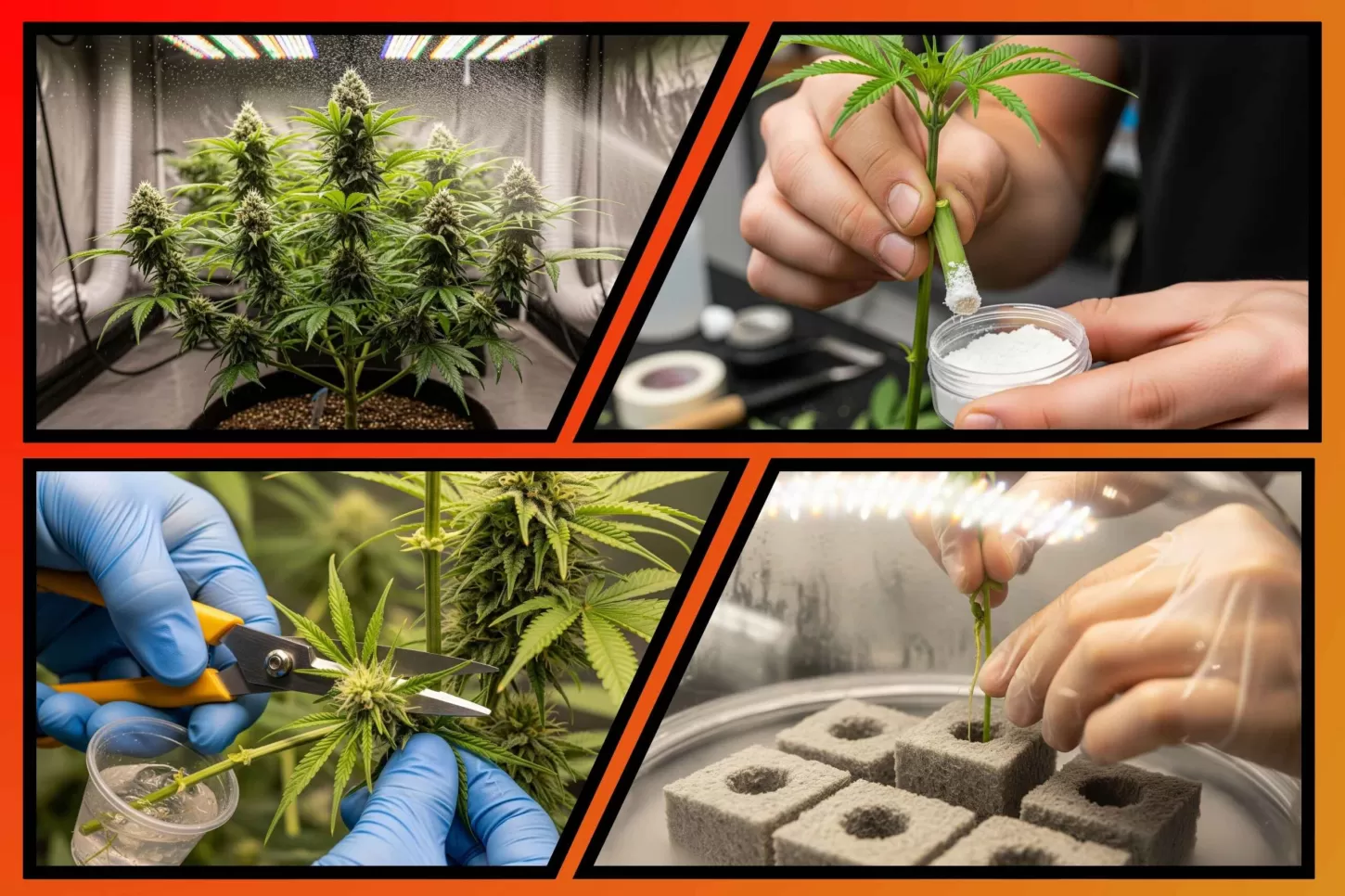
Timing for the flowering clones for monster cropping is critical. Monster clones must be collected during week three or four of the blooming phase, after the plant has completed its vegetative development transition but before it reaches the stage of strong resin production. The plants are then in their best stage, with a known hormonal profile that will cause amazing branching when reversed.
Cloning Monster Crops Step-by-Step Method
Select a healthy donor plant. Look for a strong, pest-free flowering female with outstanding lateral development.
A bonus technique is spraying the cuttings with plain water for the first few days to reduce wilting and preserve turgidity while roots grow. Steer clear of nutrient water at this point; until roots grow, use distilled or pH-balanced water. Once roots have established, progressively add a mild vegetative nutrition solution to encourage early leaf development and chlorophyll production.
Explosive Branching and Canopy Coverage
Re-vegetated clone flowers will have a natural compact growth habit and a thick, bushy canopy with high densities of lateral branches. This habit generates the optimal light penetration structure and the most possible bud locations.
Increased Yield Potential
Growing monster-cropped plants in combination with low-stress training (LST), topping, or SCROG procedures results in a more balanced canopy and better light use, therefore outyielding conventional plants.
Continuity of Genes
Monster cropping lets farmers perpetuate the life cycle of a photoperiod strain without moms. Monster cropping offers a sustainable source of clones with the same phenotype after blooming has started.
Ideal for Constant Harvesting
Using a two-tent arrangement, growers can alternate flowering and vegging monster-cropped clones to get endless harvests without separate mothers.
Still another big benefit is space saving. Especially for farmers following legal plant counts, monster cropping offers a consistent approach to fleshing out the grow space without raising plant numbers for those with limited horizontal or vertical space. Furthermore, monster cropping helps to conserve exceptional genetics that farmers would otherwise throw away following harvest.
Another issue is the higher chance of failing in the re-vegging and rooting techniques. Environmental changes affect monster-cropped cuttings more sensitively than typical vegetable clones. More readily, these delicate clones can be damaged by root rot, humidity swings, and nutrient imbalances. To succeed, growers have to keep a relatively constant microenvironment over the first few weeks.
Using Monster Cropping with Other Training Methods
Green Screen of Vision (SCROG)
Intercropping busy monster-cropped stems on a screen helps gardeners guarantee a flat canopy and promote light efficiency.
LST, or low stress training
Under LST, opening monster-cropped plants reveals bud sites and encourages lateral growth. It improves air circulation and light penetration, thereby reducing excessive stress.
Super-cropping
Combining monster cropping with super cropping produces thick, gnarly plants with stronger internal structure and higher terpene expression from concentrated stress on them.
Topping and FIMing
Once a veg-stabilized monster clone has been produced, topping or FIMing helps to repeat the previously rich branches, hence promoting manic top-site development.
Once the clone is completely re-vetted, growers could wish to multiply or mainline. These disciplined methods provide great control over symmetry and canopy expansion and fit the runaway branching of monster-cropped plants. Timing is critical when training monster-cropped plants; if you start too early, the plant may become stunted; if you start too late, you can miss the opportunity to properly affect development.
Given their high branch genetics and stress tolerance, some cannabis strains are more suited to respond to monster cropping. Perfect strains are
Strong indica or hybrid profiles will display the most active regrowth and branching following re-veg. Excellent for monster cropping are also cultivars with strong cloning yields and disease resistance. If you are a novice, pure sativas or types with long blooming times are not advised since their slower rate of re-vegging can greatly postpone your grow cycle.
Establishing clones and preparing for vegetative development depend on particular environmental conditions for their survival. To maintain a natural habitat for a plant in vegetative development, there must be a minimum of 18 hours of light and 6 hours of dark kept. Temperature and humidity must be regularly watched since fluctuations significantly affect clones in the re-vegging process.
The growers should use nutrient solutions developed vegetatively to promote good root development and vigorous growth; nitrogen is preferred since it stimulates branch and leaf development. To prevent nutrient burns, we supply the nutrients sparingly and progressively, on the other hand. As the plants settle, we can raise the fertilizer levels with time.
New growers unfamiliar with monster cropping could run across many difficulties, compromising the effectiveness of this method. Among the most common errors are overfeeding, re-vegging by taking clones too far into the flowering cycle, and neglecting to keep environmental parameters equal. These errors can impair general yield, diminish plant health, and impede root development.
Monitoring the health of the plants and guaranteeing they get the greatest treatment at every level helps one prevent these problems. Growers can fully enjoy monster cropping and have strong, high-yielding cannabis plants by carefully timing, controlling the environment, and controlling nutrient levels.
For serious cannabis gardeners, monster cropping is a difficult but quite profitable method. Done right, it generates bushy, high-yielding plants that shine in trained systems like mainlining or SCROG. It clones, maximizes canopy efficiency, and uses space—all without a mother plant needed. Growers that have a strong awareness of the timing and technique can reach hitherto unheard-of levels of plant management efficiency and production.
The post Monster Cropping Cannabis: A Grower’s Complete Guide appeared first on Crop King Seeds.


In 2025, cannabis policy did not move in a straight line toward legalization. It got stranger.
A bunch of governments went after the edges of the cannabis universe. Not the plant, not the users, not the actual harms. They went after the accessories, the imagery, the loopholes, the chemistry, the entire culture.
Some of these bans were predictable if you follow the politics. Others were so strange you almost have to reread the headline.
Taken together, they reveal something bigger. A global shift toward regulating cannabis by controlling its interfaces: what it looks like, how it is sold, how it is advertised, what molecule it “counts as,” and which marketplace is allowed to touch it.
In mid December, Gujarat announced an immediate ban on the storage, sale, and distribution of rolling papers and pre-rolled cones, citing health risks and concerns about youth use, including claims that the papers were being used to smoke narcotics such as weed and charas.
This is not a cannabis ban. It is a ban on a tool that can be used for tobacco or cannabis, and it lands like a moral panic wrapped in public health language.
The message is simple: if you cannot stop the behavior, remove the object that makes the behavior easy.
In Galicia, a new law framed as protecting minors and preventing addictive behaviors includes sweeping restrictions touching alcohol, energy drinks, vaping, tobacco, and cannabis, but the cannabis piece gets unusually punitive in a very specific way.
Among the behaviors deemed punishable are promoting cannabis in spaces accessible to minors and giving away or selling merchandise with cannabis imagery such as lighters, shirts, or other items. Reported penalties can reach well into six figures.
Whatever one thinks about youth protection, the proportionality is what stands out. The law does not simply regulate use. It polices symbols.
If Gujarat banned papers and Galicia targeted imagery, the United States went after a category.
In November, Congress and President Trump enacted the FY2026 Agriculture appropriations act, quietly rewriting the federal definition of hemp in ways that reimpose restrictions on a wide range of hemp-derived products.
The impact is massive. The booming market for intoxicating hemp products that emerged after the 2018 Farm Bill now faces an uncertain future. This was not a public debate about legalization. It was a technical change buried inside a must-pass bill, with consequences that extend into 2026.
It fits the pattern perfectly. Not banning cannabis directly, but redefining what hemp is allowed to be.
Ireland offers a different variation of the same approach. In mid 2025, the government moved to classify HHC and related compounds as controlled drugs through a fast-track scheduling process.
This is what happens when regulators feel they are losing the naming game. If the market keeps inventing cannabinoids that are not technically THC, governments respond by banning entire chemical families.
Italy’s crackdown on hemp flower escalated sharply in 2025, with new restrictions treating legal hemp inflorescences as a public safety concern. The move triggered legal questions at the EU level and threatened an entire sector that had operated in a gray but tolerated zone.
This was not about recreational cannabis legalization. It was about collapsing the narrow space where hemp flower and CBD-adjacent commerce had been allowed to exist.
Thailand provides another telling example. After its high-profile move toward decriminalization, the country began pulling cannabis back into a tightly regulated framework.
In 2025, cannabis flower was reclassified as a controlled herb, with new restrictions on sales, advertising, and access. Penalties now include fines and potential jail time.
It was not a return to the old war on drugs language. It was something quieter and more administrative. Control without the rhetoric.
If all of this feels familiar, it should.
In the 1990s and early 2000s, the United States ran a similar playbook. When direct enforcement against cannabis stalled, authorities turned their attention to paraphernalia. Head shops were raided. Glass was seized. Rolling papers became legal liabilities. Mail-order businesses were prosecuted.
Operation Pipe Dreams culminated in arrests across the country and sent Tommy Chong to prison for selling bongs. It was an era defined not by the plant itself, but by the effort to erase the culture around it.
Josh Kesselman built RAW in the shadow of that period. High Times survived it. The industry adapted, even as the law tried to suffocate the tools that made cannabis visible.
The difference now is not the tactic. It is the language. What was once called a war on drugs is now framed as public health, youth protection, or regulatory clarity.
By the end of 2025, a pattern had emerged.
The logic is consistent. As cannabis becomes more normalized socially, governments attempt to shrink the space around it, especially the parts that are visible, cultural, or difficult to control.
They are not always banning weed.
They are banning the idea of weed.
Photo: Shutterstock
<p>The post 2025 Was the Year Governments Went to War With Weed Without Saying So first appeared on High Times.</p>

Among the many bong styles available today, none is as iconic or widely loved as the beaker bong. Recognisable for its scientific-style base and sturdy shape, this design has become a staple for smokers who value stability, smooth hits, and easy maintenance. Whether you’re new to smoking or exploring different bong styles, this guide explains […]
The post Beaker Bongs: Everything You Need to Know About the Classic Bong Design appeared first on Stoner | Pictures | Stoners Clothing | Blog | StonerDays.


There’s something primal about growing your own plant. It’s independence and freedom in a pot. A small act of rebellion in a red Solo cup. The quiet magic of planting a seed and watching life emerge from soil and light—and the satisfaction of knowing exactly what went into the flower you’ll one day hold between your fingers and share with your friends and family. Plant medicine grown at home is a small but mighty revolutionary act of independence and artistry.
But while legalization has swept much of the country, home cultivation still lives in a confusing patchwork of laws. Some states invite you to plant your seeds and grow freely; others threaten fines or felonies for doing the same thing. The rules are constantly shifting, and for a community that values freedom and autonomy, that uncertainty can be maddening.
This guide breaks it down into three key areas :
Let’s start with the law—not the kind that harshes your mellow, but the kind that protects you from losing your crop, your cash, or worse.
Every state sits somewhere on the spectrum between fully free and completely forbidden. Some allow a handful of plants for personal use, others only permit licensed medical patients, and a few still consider home cultivation off-limits altogether.
Below is a simple, visual snapshot — our best understanding of home-grow legality across the U.S. as of November 2025. Laws change frequently, so treat this as a starting point, not a gospel truth. Before you pop that first seed, do your own due diligence: check your state’s current cultivation guidelines to make sure you’ve got a legal path forward.
And for reference, here in Oregon, adults 21+ can legally grow up to four plants per household for personal use—a model that strikes a balance between freedom and responsibility.

Once you’ve confirmed you can legally grow, the next question is what you should grow. Here we really have two categories: autos and photos.
Auto-flowering strains (autos) are the set-it-and-forget-it option for beginners and busy growers. They flower automatically after a few weeks, don’t depend on light cycles, and finish fast. You sacrifice some control—and often a bit of yield—but you gain predictability. We have experimented with auto-flowering genetics in our cultivation setup on our farm, and we have found a few genetics that we find very compelling.
One breeder in particular has made auto-flower breeding his calling card is James Loud Genetics (JLG). The variety and quality of cultivars James has folded into his breeding techniques have raised the bar on auto-flowers. The other huge advantage to autos is that they are almost always feminized seeds. This means the risk of males—to be avoided unless you are interested in breeding—is eliminated, so you can feel confident you will end up with a female flower.
Photoperiod genetics (photos), on the other hand, is where artistry comes in. They respond to light and timing, letting you decide when to flip them into flower. They’re slower, bigger, and reward patience with higher yields and broader expression of terpenes. Until you change your light cycle from an 18/6 to a 12/12, photos will continue to grow in a vegetative state. Once you change the light cycle to 12 hours of light and 12 hours of dark, the hormonal shift begins, and the plants begin their 9-12 week flower cycle.
Depending on how large a space you have, you will only want to manage your veg time so that by the time you flip your plants into flower they are not too large. And unless you get a cutting from a female plant, starting with photos mostly means regular non-feminized seeds.
The risk here is that you don’t know if it will be a male or female. Yes, of course, there are feminized photos you can find from seed banks and this helps reduce the possibility of male expression. However, it is not a guarantee that you won’t end up with a male expression. So be mindful of the fact that male and female expressions are possible.

Cultivation tip: match your genetics to your lifestyle, not your ego. If you travel a lot or can’t check your tent daily, autos will treat you better than finicky photos that demand routine and patience.
Forget the grow bibles and online debates—the best cultivators master the basics and repeat them consistently. We manage thousands of square feet of canopy—veg and flower—and produce thousands of pounds of cannabis annually on our farm. Running large rooms, greenhouses and full-term outdoor gardens for the past decade has shown us the complete range of issues and challenges that inevitably emerge.
In preparation for the launch of our online course, we decided to invest in a 4 x 8 Gorilla grow tent in order to understand the challenges of cultivation on that scale. If nothing else, it has demonstrated the challenges of growing in a tent set up. But what it has also demonstrated is that you can absolutely grow fire in a tent if you are focused and present with the process.
Here are the (5) non-negotiables for any successful grow, whether you’re running a small tent or a backyard greenhouse:
If you lock down these five, you’re most of the way to a great foundation for your home grow setup. The rest is just refinement—dialing in feed, pruning technique, and the rhythm that suits your space. There is artistry in the details here, and it can be overwhelming if you’re doing it for the first time.
When I looked around a few years ago to determine what resources were available to provide clarity on some of the basic blocking and tacking of cultivation, I was surprised to find very little in the way of clear online education. With nearly a decade of experience cultivating at scale, I hope to share some of my earned wisdom and insights to help newcomers get their start in craft cannabis. It’s truly a rewarding process, whether you’re growing for fun or making your own medicine.
Home cultivation isn’t just about saving money or flexing genetics—it’s about the relationship between you and the plant; between the light and soil.
Even in a world of corporate cannabis and dispensary convenience, the passionate home grow remains the heartbeat of the culture. It’s where knowledge is passed hand-to-hand, where independence still sprouts under lights and in basements, where the love of the plant stays personal.
So check your laws, respect your limits, and grow something worth tending to.
Because when it’s your hands in the soil, that flower hits different.
This article is from an external, unpaid contributor. It does not represent High Times’ reporting and has not been edited for content or accuracy.
<p>The post Can I Even Grow? A Guide for the Aspiring Home Cultivator first appeared on High Times.</p>
Sesh by Sherlocks has grown to North Carolina’s top destination for THCA flower after beginning as a glass museum.
The post Meet Sesh by Sherlocks Glass—North Carolina’s leading THCA flower and live rosin brand, born from a glass museum appeared first on Leafly.