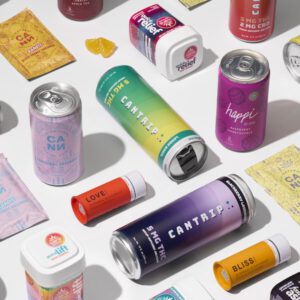
Inside the “Amazon of THC”: Edibles.com Reinvents Cannabis E-Commerce

Inside the “Amazon of THC”: Edibles.com Reinvents Cannabis E-Commerce


Inside the “Amazon of THC”: Edibles.com Reinvents Cannabis E-Commerce

With the nationwide launch of Edibles.com last spring, Edible Brands, the company behind Edible Arrangements, is entering bold new territory: THC. Yes, that Edible Arrangements — the name behind the flower-shaped pineapples and chocolate-covered strawberries gracing teachers’ desks and mother-in-laws’ kitchen islands since 1999.

The idea of transitioning to THC had been percolating for a while, with the brand acquiring the domain name a year ago after settling a cybersquatting lawsuit to release the name from World Media Group, an entity that had acquired the site with the hope of turning a profit by reselling it. Soon after, Edible Brands hired cannabis business professional Thomas Winstanley as executive vice president and general manager of the new venture, Edibles.com. Later that year, Somia Farid Silber stepped up as CEO after eight years with the company.

The synergy comes not only from the name, but also from the brand’s trusted reputation. In a market dominated by gas station grams and poorly labeled edibles in prohibition states, Edible Arrangement’s trusted reputation is a salve for those seeking regulation and reliability.
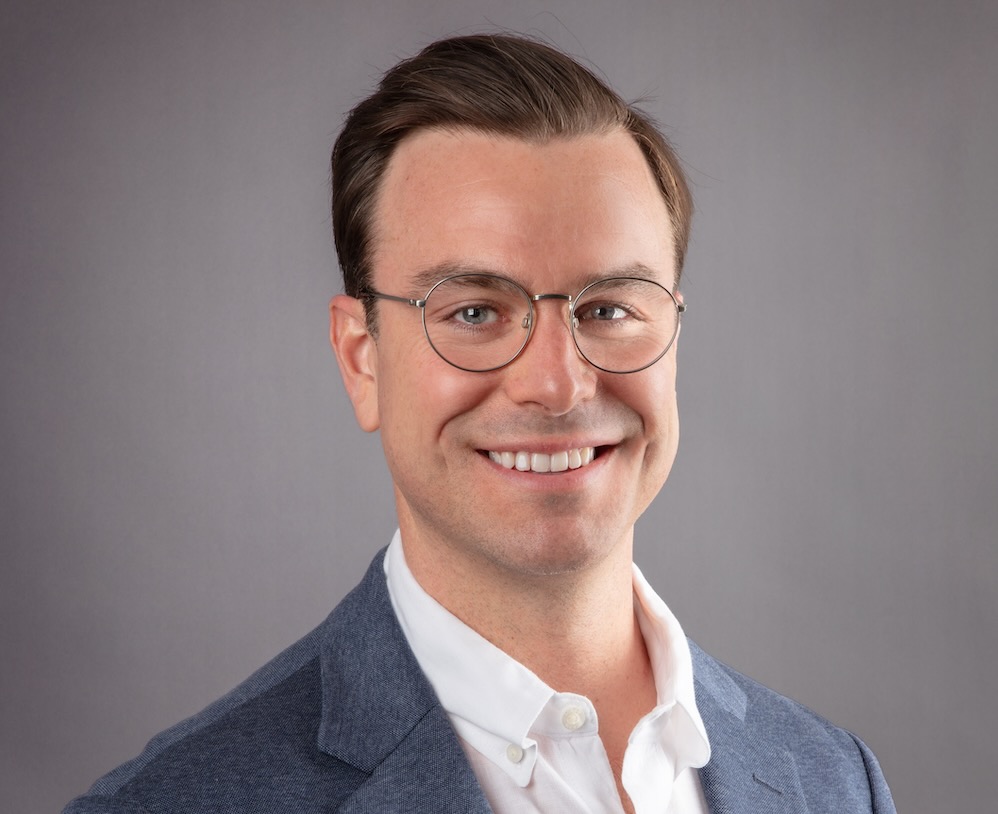
Thomas Winstanley

Edibles.com now reaches more than 65% of Americans with lab-tested, federally compliant THC products, offering same-day delivery in select markets. It’s a first-of-its-kind e-commerce network built for a category that, until recently, was defined by patchwork regulation, consumer uncertainty and underground connections.

Cannabis Now recently spoke with Winstanley to understand how this new model came to life, and what it means for the new era of cannabis commerce.

Building the “Amazon of THC”

Winstanley has described his ideal model as “The Amazon of THC.” In the same way Amazon helped build trust and ease in e-commerce, Edibles.com seeks to educate and serve as a central hub for THC nationwide.

“We shied away from that moniker initially, but the parallels are there.” Winstanley says. “Amazon started with one category, books, that made sense for e-commerce. For us, that entry point is functional ingestibles: products that are safe, tested and outcome-driven.”

But Winstanley’s ambitions go beyond product aggregation. “Amazon built an ecosystem that educated consumers about online shopping. We’re trying to do the same for cannabis,” he explains. “Our goal is to demystify the access point—to help people understand what they’re buying, why it’s legal and how to shop by outcome rather than just strain or potency.”

At the end of the day, Edibles.com’s is focused on consumer health and wellness—helping people enhance their wellbeing through hemp while being able to skip the hassle of going to the store. “Wellness is our guiding principle: highly categorized products that focus on outcome,” Winstanley says. “We have a lot of folks who are purchasing products online for the first time and having them delivered to their door.”

Even within such a massive framework, starting a new business is never easy. “In some ways, we’re beginning a business within a company. This is not an extension of more ways to sell strawberries, but a whole new portfolio of substances,” he says, adding that Edibles.com is currently primarily speaking to Edible Arrangements’ existing audience.  

Designed for Function

Edibles.com’s UX/UI mirrors the company’s mission to deliver outcome-driven products. Rather than overwhelming users with a dispensary-style menu of hundreds of SKUs, Edibles.com organizes its offerings by need: sleep, stress, pain management, energy and mood uplift.

That health-forward lens, he notes, aligns more with Target’s vitamin aisle than a traditional cannabis shop. “My wife and I love Olly Sleep Gummies,” he says. “Our products belong in that same conversation. We’re not marketing ‘getting high’; we’re marketing better sleep, less stress and overall functional outcomes. That’s the bridge between cannabis and wellness.”

This framing places THC as a nootropic along the lines of ashwagandha, demystifying the ingredient as a part of the larger wellness landscape. Winstanley describes their framing as “more aligned with nutraceuticals than controlled substances.”

The Compliance Maze

With each state comes a new set of laws, bylaws and risk assessments, along with a separate set of legal reviews and ongoing vetting. “We move fast, but we’re also cautious,” he says. “Every day involves balancing innovation with compliance. You want to grow quickly, but you can’t jeopardize consumer trust or partner integrity.”

That trust is earned through curation and transparency. Edibles.com only features brands with established reputations, such as Wyld, Wana, Kiva, and Cann—all of which undergo rigorous compliance audits before being listed. “This is our varsity lineup,” Winstanley says. “It sets us up to reach further outside the margins.”

Restoring Confidence in a $28B Market

While the U.S. hemp-derived THC market now exceeds $28 billion, consumers remain skeptical of its legality. “We get asked all the time: ‘How is this legal?’” he says. “We’re talking about the same molecule, just different extraction processes due to regulation.”

Since hemp plants legally contain less than 0.3% THC, industry practice requires hemp-derived THC to take the route of using CBD to convert into THC. This process requires more sophisticated techniques, such as isomerization. “Marijuana” plants, however, have a naturally higher THC content, lending themselves to a more straightforward extraction process (including solvents, ethanol or CO2). 

“Hemp leveled the playing field,” he says. “It allows for a vibrant, more diverse community of entrepreneurs and businesses that are no longer locked out of the market and can pursue their goals, finding a manufacturing contract with a brewery or gummy company, rather than in a regulated market.”

However, in November, President Trump signed a spending bill to end the 43-day government shutdown, which included a ban on all hemp-derived THC products. While nothing has taken effect yet—and industry professionals are pushing back—it remains a very real threat. Winstanley is one of those professionals, pledging to use the one-year grace period to organize resistance: “Farmers, brands, and consumers, once fragmented, are now mobilizing together to defend what they’ve built and to finally push for the federal framework the hemp industry has long demanded.”

“We’re executive directors of the US Hemp Roundtable. We’re aiming to ensure that federal laws don’t eliminate the $28 billion industry, 3,000 jobs, and revenue for farmers that they currently generate from soy and corn production. I’m fortunate to have to solve these problems; I think there’s a major generational shift happening – the issues we’re arguing about now will be so far in the rearview mirror in the next ten years. The pain will be worth it in the end.”

A Responsible Revolution

For Winstanley, the stakes go beyond business. “We’re not just selling THC, we’re proving we can do it responsibly at scale,” he says.

He’s candid about the risks that keep him up at night, the first concern being the very real consumer health threat posed by unregulated products. “I have a four-year-old and one-year-old, and if my son saw a Nerd’s Rope-infused gummy, he’s more likely to try something he shouldn’t. That’s why we self-regulate, use age gates, and push for better policies.”

Amid the challenges, Winstanley remains optimistic. “THC can help our country,” he says. “It’s grown, processed and sold here: a true homegrown supply chain. What excites me most is that we’re finally bringing cannabis into the same conversation as wellness, health and happiness.”

The post Inside the “Amazon of THC”: Edibles.com Reinvents Cannabis E-Commerce appeared first on Cannabis Now.
Source link

Woody Harrelson and Matthew McConaughey’s Mom Got Chased for Smoking Weed in Bars (Twice)

Woody Harrelson and Matthew McConaughey’s Mom Got Chased for Smoking Weed in Bars (Twice)

Woody Harrelson and Matthew McConaughey’s Mom Got Chased for Smoking Weed in Bars (Twice)

woody harrelson Matthew McConaughey

No, this isn’t a stoner comedy scene from a Woody Harrelson or Matthew McConaughey movie (or better yet, starring McConaughey’s mom). It’s not a dream, and it’s definitely not an AI-generated clip making the rounds online.

It’s a real story, straight from the mouths of the actors themselves, shared on Where Everybody Knows Your Name, the podcast hosted by Harrelson alongside Ted Danson. The show is basically an excuse for longtime friends and Hollywood insiders to sit down, loosen up, and swap stories about their careers, their lives, and the kind of behind-the-scenes moments that don’t usually make it into press junkets. And this one is as vivid as it gets.

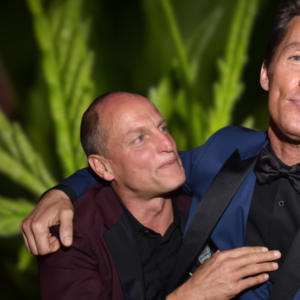
Picture it: Woody Harrelson—chaotic by nature, even stone-cold sober—and Matthew McConaughey’s mother, both very high, setting off smoke detectors in a bar and having to make a run for it while staff chased them down the hallway. Twice.

Harrelson and McConaughey have one of those friendships that goes way beyond co-stars, usually seen (and felt by themselves) as siblings. A full-on bromance. In fact, they’ve leaned into that dynamic so much that they’re starring together in an upcoming comedy series, Brother From Another Mother. There, they play exaggerated versions of themselves, going through life, friendship, and family chaos under the same Texas ranch roof.

So no, it’s not shocking that weed has been part of the picture at some point. What is a little more unhinged is the fact that McConaughey’s mother was right there with Harrelson, sharing the puff-and-pass.

Things take an even better turn when Ted Danson, between laughs, whiskey, and compliments, brings up McConaughey’s dimples. Harrelson immediately runs with it.

Is Woody Harrelson In Love With Matthew McConaughey’s Mom?

I love her,” Harrelson says as McConaughey watches him.

The episode stars laughter, whiskey, and compliments. Then, at some point, Ted Danson brings up McConaughey’s dimples, and Harrelson immediately jumps on the comment. “The dimples… where the f*** did you get those dimples?” McConaughey laughs, perhaps sensing there might be more behind the question, given the long and slightly mysterious history shared by both families (more on that later) and shrugs it off with a casual, “Come on.” Then he adds, “They’re from mom.”

Here, the conversation takes a sharp turn. “Him and my mom have a major crush on each other”, McConaughey says. Harrelson doesn’t deny it for a second. “I do love her,” he says. “I love her.” And that’s when things get interesting.

McConaughey explains that his mother and Woody were kicked out of two bars for smoking weed. “Setting a fire alarm was one, and the other one was just like: ‘That’s illegal. What the hell y’all doing? Get out of here.’ And they ran.”

Harrelson confirms every detail. “We ran. But we ran the first time too, when that fire alarm went on. Both times we got out of trouble”. Just the two of them: high, defiant, and sprinting away from the rules. “She’s fun, man. She is fun,” Harrelson adds. McConaughey says he wasn’t there. He was in another room, probably drinking a beer.

And then Ted Danson asks the question everyone is thinking. Does Matthew McConaughey smoke weed? 

“Do you smoke ever, but just not now, or…?” Harrelson cuts in before McConaughey can answer. “No, no. You don’t want him smoking”. McConaughey explains why: “The new stuff really does not agree with my constitution or my mental makeup,” he says. “It goes the other way. Time speeds up for me. I’ve chipped front tooth three times, falling out of a tree on a full moon, smoking the stuff Woody has”. Harrelson bursts out laughing.

Woody Harrelson, Weed Activist

Of course, Woody Harrelson does smoke pot and has never hidden his relationship with cannabis. The Californian actor has been an outspoken advocate for the legalization of cannabis and hemp for decades. He even participated in public actions such as planting hemp seeds in Kentucky in protest against outdated laws, which led to his arrest for possession.

In recent years, Harrelson took that commitment a step further by opening The Woods WeHo, a cannabis dispensary and lounge in West Hollywood, designed as a social, community-oriented space rather than a traditional retail experience.

His activism has also touched on politics. Over the years, he has spoken out about the different cultural perceptions of marijuana, advocating for its responsible use and the need to reform laws that penalize users and hemp farmers indiscriminately.

Are Woody Harrelson and Matthew McConaughey Actually Brothers?

Officially, no. But could they be? The connection gets deeper and more intriguing when McConaughey reveals that his mother once said she knew Woody Harrelson’s father, Charles Harrelson, at a time when she was separated from McConaughey’s own father.

The way she phrased it left little room for innocence, McConaughey recalls. “Woody, I knew your father,” she said, pausing just long enough for that “knew” to carry a lot more weight than it should have. Especially given that, at that exact moment, she was separated from McConaughey’s father. “Everyone was aware of the ellipsis my mom left after “knew”… was a loaded K-N-E-W”.

Woody Harrelson’s father was allegedly a hitman, a contract killer who murdered a federal judge for $250,000. Said crime sent him to prison in the 1970s, years after he had already abandoned his family, including Harrelson himself. During one of his releases from prison, he is said to have crossed paths with McConaughey’s mother. That was the moment she later shared—mysteriously, ambiguously, but with unmistakable implication.

So let’s pause for a second. Could Matthew McConaughey and Woody Harrelson actually be related? Like, genetically related?

It doesn’t really seem like it. There’s no DNA test, no proof to support the theory. But that doesn’t seem to matter much to either of them. The brotherhood they share is undeniable, and it goes far beyond being biologically related or not.

Cover photo: VOA News, Public domain, via Wikimedia Commons // Edit: background added

<p>The post Woody Harrelson and Matthew McConaughey’s Mom Got Chased for Smoking Weed in Bars (Twice) first appeared on High Times.</p>

Source link

South Dakota Senate Rejects Debate On Banning Intoxicating Hemp And Kratom

South Dakota Senate Rejects Debate On Banning Intoxicating Hemp And Kratom

South Dakota Senate Rejects Debate On Banning Intoxicating Hemp And Kratom

A committee had advanced the bills without a recommendation to pass them.

By John Hult, South Dakota Searchlight

State senators voted against discussions on banning hemp-derived consumables and kratom on Thursday at the South Dakota Capitol in Pierre.

Separate bills to ban the use, possession, sale or consumption of those intoxicating substances advanced out of a Senate committee on Wednesday, but the committee voted to send them to the Senate floor with no recommendation, rather than a recommendation to pass them.

By Senate rules, bills that land on the full chamber’s calendar without a recommendation need the support of a majority of senators before they’re eligible for a debate, and ultimately for a vote.

Sen. Kevin Jensen, R-Canton, moved to put the bills on the Senate’s calendar for Monday. He said both bills had drawn spirited debate and survived attempts by some committee members to defeat them.

On the bill to ban hemp-derived intoxicants for anyone without a medical marijuana card, Senate Bill 61, Jensen said there are amendments in the works to address its opponents’ concerns.

He offered similar comments, without referencing possible amendments, when he moved to place Senate Bill 77’s ban on kratom products on the Senate calendar.

“It’s

The post South Dakota Senate Rejects Debate On Banning Intoxicating Hemp And Kratom appeared first on GrowCola.com.

Source link

Make your voice heard and help protect Texans’ right to hemp

Make your voice heard and help protect Texans’ right to hemp

Make your voice heard and help protect Texans’ right to hemp

This January, the Texas Department of State Health Services (DSHS) is considering a proposed ruling that could restrict the rights of Texans to access hemp products that they have come to rely on. Even after a similar ban was vetoed by the governor last year, new proposed regulations would effectively ban smokable hemp products entirely […]

The post Make your voice heard and help protect Texans’ right to hemp appeared first on Leafly.

Source link

Is Europe Moving Away From Cannabis Flower?

Is Europe Moving Away From Cannabis Flower?

Is Europe Moving Away From Cannabis Flower?

Spain’s medicines agency has published the first official guidance for medical cannabis preparations, confirming that its incoming market will exclude raw cannabis flower in favour of ‘standardised’ oral solutions prepared exclusively in hospital pharmacies. 

Since proposals for this more restrictive approach were first made public in February 2024, advocates have challenged its limited scope, arguing it will limit access for thousands of Spaniards who could potentially benefit from medical cannabis treatment. 

It comes as its neighbour, France, edges towards the final stages of implementing its own national medical cannabis framework, which also omits raw flower in favour of measured, pharmaceutically focused dosing methods. 

As amendments to Europe’s largest medical cannabis market, Germany, are still being hammered out in its parliament, even Drug Commissioner Hendrik Streek suggested that banning flowers could be on the table. While unlikely, it highlights the growing association between medical cannabis flower and ‘pseudo-recreational’ consumption in Germany, also being seen in the UK and Australia. 

For Curaleaf International, the first to bring both cannabis pastilles and a CE-certified liquid medical cannabis inhaler to the UK market, this growing shift is more a result of a maturing European market than a rejection of flower itself. 

“I don’t see this as a wholesale move away from flower across Europe,” Juan Martinez, CEO of Curaleaf International, told Business of Cannabis. “It’s better understood as how newer frameworks choose to establish themselves.”

“But this does not mean Europe is abandoning flower. In mature markets like Germany and the UK, flower continues to play an important role and will do so for the foreseeable future. It offers fast onset, familiarity, and clinical value for many patients. What we’re seeing is divergence based on regulatory starting points — not a rejection of flower as a medical option.”

What Spain’s formulary reveals

The AEMPS formulary, published in Spain’s official state gazette (BOE) as reference FN/2026/FMT/043, provides the most detailed picture yet of how Spain’s medical cannabis market will operate in practice.

The guidance mandates that all cannabis medicines be dispensed as oral solutions containing standardised THC-dominant (5-150 mg/ml) or CBD-dominant (10-150 mg/ml) preparations, mixed with medium-chain triglycerides (MCT oil) as a carrier. Hospital pharmacists will prepare individualised formulations based on physician prescriptions, with patients receiving glass bottles with dosing mechanisms.

It also specifies maximum daily doses, with adults prescribed up to 32.4mg of THC and 25mg/kg of CBD, while pediatric patients face stricter limits due to concerns about THC’s effects on neurocognitive development.

The four approved indications are consistent with those published in the Royal Decree approved last October, including spasticity due to multiple sclerosis, severe refractory epilepsy, nausea and vomiting caused by chemotherapy, and chronic refractory pain. 

Cannabis preparations can only be prescribed ‘as a last resort’ after patients have demonstrated that other authorised medications, including Sativex, have proven ineffective.

While the decree technically permits cannabis flower, it restricts it to sealed, single-use vape cartridges for use with CE-approved medical devices. 

The formulary’s publication means Spain is pressing ahead despite two separate Supreme Court appeals filed in December and January by pharmacy associations challenging the hospital-only dispensing model. Those appeals argue the restriction violates existing pharmaceutical law and creates unnecessary barriers to patient access, particularly in rural areas.

Why are Europe’s emerging markets excluding flower? 

Martinez argues that the shift away from flower is a natural evolution in a market focused purely on cannabis as a medicine, helping grease the wheels of integration into existing healthcare models. 

“Both France and Spain have launched highly restrictive, hospital-oriented programmes,” he explained. “In that setting, excluding flower is a cautious choice. Flower introduces variability in dosing and administration that can be difficult to reconcile with pharmaceutical norms.

“Standardised formats – oils, capsules, or device-delivered extracts – are easier for clinicians to prescribe, monitor, and integrate into existing clinical workflows.”

Spain’s detailed preparation instructions, standardised cannabinoid concentrations and strict dosage requirements illustrate this focus on pharmaceutical consistency, which is far harder to achieve with dried flower where cannabinoid content can vary from batch to batch and can be influenced by a myriad of factors. 

Juan Martinez, CEO of Curaleaf International.
Juan Martinez, CEO of Curaleaf International


“France, for example, is entering 2026 in a transitional phase from a pilot program to a permanent system,” he continued. 

“It’s a tightly controlled environment aligned with pharmaceutical standards, focused on consistency and clinical oversight rather than rapid scale. In that context, regulators tend to prioritise formats that look and behave like conventional medicines: standardised preparations, controlled dosing, and delivery systems that fit within existing hospital and pharmacy models.”

“That naturally drives interest in alternative formats, and it’s where Curaleaf has been leading. We were first to market with cannabis pastilles in the UK, and we’ve introduced Europe’s first CE-certified medical inhalation device, with more form factors coming.”

The ‘perception issue’

While dried flower remains dominant in almost every established medical cannabis market, these products are often lifted directly from recreational markets like Canada and the US, carrying the same names and branding, and with them the lingering stigma. 

This association is seeing politicians, medical professionals, and even patients become increasingly uncomfortable with its use as an everyday treatment. 

“Perception matters. In many countries, an inhaled cannabis flower still carries the stigma of recreational use. Martinez acknowledged. 

“A medical-grade device helps draw a clear line between therapeutic use and that legacy stoner image. When a patient uses a rigorously tested vaporiser or liquid inhaler, it looks and feels more like a legitimate medical treatment.”

Australia, Germany, and the UK all face ongoing challenges managing the perception that their medical cannabis programmes serve as de facto recreational access, particularly given flower’s dominance. 

As we’ve discussed previously in coverage of the incoming French market, by opting for a more pharmaceutically focused market from the get-go, this dynamic can be largely avoided. 

“This distinction is often what allows medical cannabis frameworks to gain political acceptance in the first place. So yes, the devices solve a clinical need for precision and safety, but they also solve a perception problem by signalling that we’re not just handing out joints to patients. In doing so, they give regulators and clinicians confidence that cannabis can be administered in a ‘doctor-friendly’ and socially acceptable way.

“In early-stage medical programs, regulators are keen to avoid anything that looks recreational. Inhaled flower still carries that association in many countries. Starting with non-flower products allows policymakers to frame these systems as strictly medical and build legitimacy before potentially broadening access.”

With this in mind, however, Martinez suggests that ‘regulatory change doesn’t eliminate underlying patient need, and demand doesn’t disappear by decree’. 

As such, these incoming frameworks will ‘test’ whether alternative treatment forms ‘truly meet patient need’, or whether they prove to be merely a ‘marginal solution for a narrow group of patients’. 

“In other words, the approach is understandable for a cautious rollout, but its practicality and inclusivity will need to prove themselves over time.”

While patient demand for flower, a familiar and reliable form of treatment, remains dominant in the majority of medical cannabis markets, its becoming increasingly clear that pharmaceutical-grade delivery devices will define the next phase of European market growth.

In the second part of this series, we’ll examine the technical requirements behind CE-certified medical devices, the clinical case for liquid inhalation, and what Curaleaf’s multi-year device investment says about the direction of Europe’s market.

The post Is Europe Moving Away From Cannabis Flower? appeared first on Business of Cannabis.

Source link

Durian Fuel Strain Feminized Seeds

Durian Fuel Strain Feminized Seeds

Durian Fuel Strain Feminized Seeds

Description

Durian Fuel earns its name with a pungent and polarizing aroma that demands attention. The scent is a wild mix of tropical fruit and deep, earthy skunk that resembles its namesake fruit. As you exhale, the flavor shifts from the sweet berry and creamy vanilla of Runtz to a heavy, gassy diesel finish. The effects kick in fast, delivering an immediate cerebral uplift that feels like a wave of motivation and focus. It provides a great deal of “espresso-like” energy, making it a top choice for getting through a busy day or sparking a creative session. Because of the Runtz influence, the high remains smooth and manageable, keeping you feeling relaxed and social without the racy edge found in some sativas.

The post Durian Fuel Strain Feminized Seeds appeared first on Crop King Seeds.

Source link

New Florida Bill Would Legalize Recreational Marijuana And End 'Monopolies' In Medical Cannabis With Expanded Business Licensing

New Florida Bill Would Legalize Recreational Marijuana And End 'Monopolies' In Medical Cannabis With Expanded Business Licensing

New Florida Bill Would Legalize Recreational Marijuana And End 'Monopolies' In Medical Cannabis With Expanded Business Licensing

A Florida lawmaker has introduced a new bill to legalize recreational marijuana that also aims to break up what he calls “monopolies” in the state’s current medical cannabis program by revising the business licensing structure.

The legislation, filed by Sen. Carlos Guillermo Smith (D), comes as the state Supreme Court reviews the constitutionality of proposed adult-use legalization initiative that an industry-funded campaign is seeking to place on the November ballot.

Under the new bill, adults over 21 years of age could legally possess up to four ounces of smokable marijuana or cannabis products containing up to 2,000 milligrams of THC. Medical cannabis patients would be allowed to grow up to six flowering plants at home for personal use.

Medical marijuana businesses that apply for adult-use licenses could begin selling cannabis for recreational purposes beginning next January.

“We can’t call ourselves the ‘Free State of Florida’ while continuing to criminalize cannabis use by grown adults,” Smith told Marijuana Moment on Thursday, adding that a majority of voters approved a legalization initiative at the ballot in 2024 that wasn’t enacted after “falling just short of the state’s arbitrary 60 percent threshold.”

“The message from voters was unmistakable: they want change,” he said. “Senate Bill 1398 answers that call by legalizing cannabis for adults 21 and over in a safe, responsible, and tightly regulated way.”

“It also ends state-created medical marijuana monopolies by opening the market to small businesses and gives Floridians the freedom to cultivate their own cannabis if they choose,” the senator said. “It’s time for the Legislature to stop ignoring the will of the people, end draconian criminalization laws, and finally deliver a fair, legal, and accountable cannabis system for Florida.”

Under the new bill, current medical cannabis dispensaries—known as medical marijuana treatment centers (MMTCs)—could apply for retail licenses to sell recreational marijuana. And only cannabis purchased from licensed businesses would be legal to possess.

People with prior convictions for activity made legal under the bill would also be given an opportunity for resentencing and expungement.

The legislation stipulates marijuana and paraphernalia would be exempt from being taxed—but only for medical cannabis patients and caregivers. Additionally, local governments would be able to levy a business tax on dispensing facilities.

There’s been some criticism among advocates about the current medical marijuana system, specifically around the idea that vertical integration and licensing caps have effectively created a marijuana monopoly in the state.

In an attempt to address that issue, the bill would break out licensing categories. In contrast to the current system of seed-to-sale businesses, regulators would offer individual licenses to cultivate, manufacture, transport and sell cannabis products.

There isn’t a specific mandate for an increase in the number of licensed marijuana businesses, but the measure would direct the state Department of Health to adopt rules on “procedures and requirements for…the registration and registration renewal of MMTCs.” Depending on the outcome of that rulemaking process, new businesses could enter the market.

Also, registered cultivator and processors would be able to do wholesale transactions with other MMTCs, which is not currently permitted under Florida’s medical cannabis program.

The legislation would also task the Department of Agriculture and Consumer Services to adopt rules adopt “regulating the cultivation of marijuana by members of the public for their private use, including rules regulating the use of a cooperative model for cultivation.”

Here’s an overview of additional Florida marijuana developments:

In the background, a campaign is working against the clock to collect enough signatures to again put the question of adult-use marijuana legalization to voters at the ballot. But there have been complications.

Most recently, the Republican attorney general of Florida and several business and anti-marijuana groups urged the state Supreme Court to block the legalization initiative, calling it “fatally flawed” and unconstitutional.

The attorney general’s office last month asked the state Supreme Court to review the constitutionality of the legalization initiative. The court accepted the request and set a schedule for state officials and the cannabis campaign to file briefs this month. Proponents of the measure have until January 12 to submit response briefs, then the opposition has until January 20 to reply.

The briefs were filed days after Smart and Safe Florida filed a new lawsuit against state officials, alleging that they improperly directed the invalidation of about 71,000 signatures as a turn-in deadline approaches.

In March, meanwhile, two Democratic members of Congress representing Florida asked the federal government to investigate what they described as “potentially unlawful diversion” of millions in state Medicaid funds via a group with ties to Gov. Ron DeSantis (R). The money was used to fight against the 2024 citizen ballot initiative, vehemently opposed by the governor, that would have legalized marijuana for adults.

The lawmakers’ letter followed allegations that a $10 million donation from a state legal settlement was improperly made to the Hope Florida Foundation, which later sent the money to two political nonprofits, which in turn sent $8.5 million to a campaign opposing Amendment 3.

The governor said last February that the newest marijuana legalization measure is in “big time trouble” with the state Supreme Court, predicting it would be blocked from going before voters this year.

“There’s a lot of different perspectives on on marijuana,” DeSantis said. “It should not be in our Constitution. If you feel strongly about it, you have elections for the legislature. Go back candidates that you believe will be able to deliver what your vision is on that.”

“But when you put these things in the Constitution—and I think, I mean, the way they wrote, there’s all kinds of things going on in here. I think it’s going to have big time trouble getting through the Florida Supreme Court,” he said.

In 2023, the governor accurately predicted that the 2024 cannabis measure from the campaign would survive a legal challenge from the state attorney general. It’s not entirely clear why he feels this version would face a different outcome.

While there’s uncertainty around how the state’s highest court will navigate the measure, a poll released last February showed overwhelming bipartisan voter support for the reform—with 67 percent of Florida voters backing legalization, including 82 percent of Democrats, 66 percent of independents and 55 percent of Republicans.

Separately, Florida medical marijuana officials are actively revoking the registrations of patients and caregivers with drug-related criminal records. The policy is part of broad budget legislation signed into law last year by DeSantis. The provisions in question direct the state Department of Health (DOH) to cancel registrations of medical marijuana patients and caregivers if they’re convicted of—or plead guilty or no contest to—criminal drug charges.


Written by Kyle Jaeger for Marijuana Moment | Featured image by Gina Coleman/Weedmaps

The post New Florida Bill Would Legalize Recreational Marijuana And End 'Monopolies' In Medical Cannabis With Expanded Business Licensing appeared first on Weedmaps News.

Source link

Bipartisan Lawmakers Warn That Even One Mistake In Push For Psychedelics Access Could Derail Progress

Bipartisan Lawmakers Warn That Even One Mistake In Push For Psychedelics Access Could Derail Progress

Bipartisan Lawmakers Warn That Even One Mistake In Push For Psychedelics Access Could Derail Progress

Bipartisan congressional lawmakers are stressing the importance of strategically advancing psychedelics reform in a way that mitigates bureaucratic conflict and the influence of outside interests. Even just one misstep could threaten to upend the movement, they say.

At a public forum in Washington, D.C.—hosted by the Psychedelic Medicine Coalition (PMC) and Mission Within Foundation (MWF) last week—Reps. Lou Correa (D-CA), Jack Bergman (R-MI) and Morgan Luttrell (R-TX) spoke about the work ahead to provide access to psychedelics for patients.

Much of the focus centered around the need to give military veterans alternative treatment options for serious mental health conditions such as post-traumatic stress disorder (PTSD). Psychedelics like MDMA and ibogaine could help fill that gap, the legislators said.

Luttrell said a key challenge supporters are up against is the inaccessibility of data from private research institutions that could demonstrate the therapeutic efficacy of psychedelics—something that he argued would likely move the needle for members who are on the fence on the issue.

The congressman said he and colleagues have pressed agencies such as the Department of Defense (DOD), U.S. Department of Veterans Affairs (VA) and U.S. Department of Health and Human Services (HHS) about the problem.

“How do you get inside those organizations, use the data to conduct research, push that out longitudinally and make changes that actually improve people’s lives?” he said they’ve asked of the agencies.

“When we talk about the effects of ibogaine, it’s amazing,” Luttrell, a veteran himself who has been open about his experience going abroad to use the psychedelic to treat conflict-related mental health conditions, said.

“The results of these medications are profound in the veteran community, and the very entities responsible for caring for our veterans are not moving on this,” he said. “So yes, there is a problem.”

“How do we fix it? We’re working on it every day, but the United States government keeps getting in its own way,” he said. “Until the day I leave, I will keep talking to my colleagues on the left, right and center—because they are trying to get this done. Make no mistake, this is a delicate lane we’re walking in. If we push hard and screw this up, it’s gone just like that.”

Correa, who alongside Bergman co-chairs the Congressional Psychedelics Advancing Therapies (PATH) Caucus, also slammed the government for dragging its feet on moving the issue forward given the prevalence of suicides within the veteran population.

Considering the relationship between mental illness and homelessness, substance misuse and other societal issues, the congressman said it’s unacceptable that more isn’t being done to promote psychedelics therapy to support those who stand to benefit from the novel drugs. And that makes it all the more impressive that lawmakers across the aisle on Capitol Hill are making incremental progress.

“To see what is before us today, I think, is nothing less than a miracle,” Correa said. “We’ve come up with a cure—a cure for a major challenge we have in society.”

But like the other panelists at the public forum, he added a word of caution: “We can’t mess it up.”

“We have to move forward very aggressively, because constituents need it. Our veterans needed it yesterday, not today. And again, I’m going to use the statistic: 20 to 40 lives lost to suicide every day. We’ve got to move,” he said.

Bergman, for his part, said that “if the system, if bureaucracies, compete against themselves, we have a problem.”

“What we face here as a legislative body is a series of bureaucratic silos built over time—silos that not only don’t know what’s happening in the others, but quietly compete for resources and funding so they can keep doing what that bureaucracy does,” he said. “Our role as members of Congress is to ensure that the natural competition—the healthy competition—exists where it should.”

“The challenge is bureaucracies competing for limited resources. It’s up to us, as the legislative branch, to pass good laws and fund appropriations that support research—to find better ways, breakthrough therapies, and actually implement them for the betterment of patients. The subtle part for us is making sure we don’t waste time and money unnecessarily competing within the government itself.”

Luttrell added that a “majority of members of the House of Representatives don’t know what this is,” referring to psychedelics therapy.

“For those who do, it’s very taboo,” he said. “We’ve had conversations with members of Congress who, not that long ago, were putting people in prison for this. That’s the history. And now here we are taking this stance—that’s not the case anymore.”

“As we talk with members of Congress, explain it, show them the numbers, show them the testimony and the results, some of them have an ‘aha’ moment. And that helps us move legislation,” the congressman said.

But again, he emphasized: “If we screw this up—if one member blows up on this—it’s gone.”

“Do you hear me? If one member of Congress absolutely goes off on this, we’re going to push a new low. That’s how dangerous this is,” Luttrell said. “If you’re not beating yourself against the wall saying this is the most profound medication on the planet that can literally change lives—especially under this cognitive umbrella and these addiction problems we have—then you’re missing it. It’s amazing. Literally amazing.”

Bergman agreed with his colleague’s broader point, saying “some of our fellow members are very risk-averse,” and that applies to psychedelics despite the growing bipartisanship around the issue.

“When you combine that with bureaucracies that are naturally risk-averse, you get one piece of the puzzle. But you also have to consider who loses—or feels like they lose—if we succeed and these breakthrough therapies move forward,” he said.

The congressman seemed to be hinting at the idea that special interests outside of the psychedelics space have a vested interest in maintaining the status quo of prohibition and research restrictions for the novel therapeutics.

“So you have natural opposition. I’m not going to name names, but it’s there—and they will try to influence the process. Most of us here are old enough to remember those cartoons where you had a little character on one shoulder whispering in your ear, and another character on the other shoulder whispering something else, trying to influence you.”

“That’s part of the reality you have to consider. Our role is more than a team effort. It’s about overcoming the concerns of people who don’t know, but want to give this a chance,” Bergman said, adding that he’s still “confident that we’re on the right path, especially with the research.”

“This is about perseverance over time. I’m not going to quit,” he said. “One by one, something is going to happen that creates an ‘aha’ moment for people who are on the fence right now—and that’s okay. We’ll get there. We just can’t quit. We have to keep moving forward.”

Other speakers at the event included MWF chief executive Jay Kopelman, PMC co-founder Melissa Lavasani and Crossroads Treatment Center founder Martín Polanco.

Meanwhile, Attorney General Pam Bondi recently missed a congressionally mandated deadline to issue guidelines for easing barriers to research on Schedule I substances such as marijuana and psychedelics.

The Drug Enforcement Administration (DEA), for its part, has separately finalized quotas for legal production of controlled substances in 2026—further raising the amount of certain psychedelics that can be made for research purposes this year.

Late last year, VA faced criticism after rejecting a grant application from an organization that helps connect veterans to programs abroad where they can receive psychedelic therapy to treat serious mental health conditions.

A former U.S. senator said recently that she’s personally spoken to the heads of both VA and HHS about the therapeutic potential of psychedelics like ibogaine—and both members of Trump’s cabinet were receptive to reform on the issue.

While former Sen. Kyrsten Sinema (I-AZ) mentioned that Collins wasn’t especially familiar with psychedelics therapy before joining the Trump administration, the secretary has since become one of the most vocal proponents of advancing reform to facilitate access for veterans.

In July, for example, the VA secretary touted his role in promoting psychedelics access for veterans with serious mental health conditions, saying he “opened that door probably wider than most ever thought” was possible.

Image courtesy of CostaPPR.

The post Bipartisan Lawmakers Warn That Even One Mistake In Push For Psychedelics Access Could Derail Progress appeared first on Marijuana Moment.

Source link