
Saturday Party at Mint – This Weekend’s Loaded


The post Saturday Party at Mint – This Weekend’s Loaded appeared first on AZ Marijuana.

The post Saturday Party at Mint – This Weekend’s Loaded appeared first on AZ Marijuana.

A single stoner can stand in for all stoners. Within an environment centered around education, science, data, and health—that is, within a certain formality, thoroughness, and rigor—Weedy Won K is what is commonly known as “comic relief,” a comical flourish that alleviates the “tension” of the plot. For Educannabis, the 420 educational project led by the Mexican Luis Fer Alpha, Weedy Won K serves as an antagonist: “I represent the figure of the stoner, which could be any unseasoned stoner, like that irresponsible dopehead who needs a little educational guidance,” Weedy himself confesses to High Times.
The starting point for his content is basically being out of weed: a fertile ground for Weedy, since we’ve all been there at some point in our lives, without pot, without a single leaf to smoke. It’s that exact moment that Weedy captures to create his internet alchemy.


“Hacks are the most popular, many of which are ridiculously silly. So ridiculous, in fact, that you might say, ‘Dude, I’m not going to do this, it’s too stupid.’ That’s the humor behind the hacks: they end up being ridiculous but effective. Ultimately, if you apply them, they’ll work, no matter how silly they seem,” he assures.
In that sense, the first funny recommendation that went viral was, in fact, about something totally absurd: weed stems and what to do with them (instead of throwing them in the trash, by default). There, Weedy recommended not throwing them out, but storing them in a container, decarboxylating them, and then infusing them with butter. Today, that video has almost 1.5 million views.

And behind the character, there’s the man. Beneath that pop-rock persona, the flesh, bones, and mind of Pedro Daniel Cabrera Costeño, the creative director and digital strategist at Educannabis. Pedro is a 24-year-old who, about four years ago, started embodying Weedy, a character that quickly took off. “I didn’t go to parties much or talk to people much. I was very shy. Being Weedy forced me to become a little more extroverted. And when I’m Daniel, I act more introverted.”
Originally from Zumpango de Ocampo, in the State of Mexico, Pedro Daniel Cabrera Costeño was the typical slacker who spent his time playing video games and smoking pot. That’s why Weedy Won K also became a passport to productivity and recognition. “I feel very grateful to people. And I try to make them think of me as my friends, that they can tell me anything, because I always remember where I come from. My life was very different, and I’m very grateful for all of this.”
Likewise, in his civilian role, his Clark Kent phase, when he lets his weed-fueled Willy Wonka self rest, he works at Educannabis promoting content-driven creativity, collaborations, and brands. “I like to share what I know with others, so they can understand it and know how to do it too. What I enjoy most about my work is being able to be myself. I’d like to be an inspiration to someone else and be able to share messages. Well, and give a voice to other stoners.”


And among his audience, there’s a perfect alchemy between those who watch him while being super high just to get a laugh and those who truly see Weedy as the ultimate stoner, like that dope friend who knows all the ins and outs. “Ultimately, the point is for people to have fun watching it. Not to see it so critically. There are some who tell me, ‘Bro, I got kicked out of my house because of you.’ It’s content, have fun!”
In fact, all that recognition that resonates on social media often translates into real life, like when the Educannabis team attends the 420 rallies and, there, amidst swirls of smoke, they receive firsthand the affection of the public. “That closeness made me realize that the message we’re sharing is reaching the right people and that we’re doing things the right way.”
But not everything is sunshine and roses in the 420 cosmos. Content creators like Weedy Won K often face censorship. Therefore, one way to evade this pushback from social media platforms was renaming cannabis as “magic broccoli,” a concept that the industry has embraced without question. “It felt super nice that everyone received that and started using it. We often have to play with the algorithm: say one thing and show another. We try to get people to complete the jokes by themselves and make them part of it. It’s also a bit of a censorship trip, you know?” jokes Weedy Won K.
Indeed, Weedy smokes all the time. Sleeping is the only time he’s not smoking. In fact, just minutes before this interview, he was dabbing away, and in the morning, he says, he smoked some big blunts. “I’ve been smoking daily for two and a half years. I’m almost always smoking. I even smoke before my food arrives. I also do it at night, when the hustle is over, that’s the time to smoke properly,” he says. What about the best joint he’s ever had? Ugh, he’s smoked so much that the experience itself makes him doubt. Although he thinks “the best” was one he tried recently, an indoor flower. He put some hash rosin on that joint and, he says, “it was delicious.”

Meanwhile, his days are a mix of 420 marketing, social media strategy, and a focus on numbers. Virality is his main objective. And the substrate? The cannabis universe, of course. Regarding the future of Weedy, Pedro Daniel Cabrera Costeño, the civilian, the man, the creative director, the Clark Kent of flesh, blood, and mind, casts a veil of mystery: “I don’t know if I can keep being Weedy all the time. I don’t know if I can keep doing this forever.”
Will these be the last videos of the lovable stoner character? He doesn’t know. Nor will we know for now. But don’t worry: everything seems to indicate that there’s still some time left for Weedy. Because, suddenly, Pedro’s new horizon lies in an old dream: to be a film director. Time will tell. We’ll see what life has in store. “I want to transcend in art, in something that can remain in the world, even if I cease to exist. That was always my goal as a kid,” dreams the hack guy, the genius of viral jokes, the man who plays the character who plays one stoner, hence all stoners.
<p>The post Meet Weedy Won K, the Viral Stoner Turning Bad Weed Ideas Into Comedy first appeared on High Times.</p>

At the start of a new year, it is always worth taking a moment to reflect on the past 12 months. In 2025, the tensions and contradictions at the heart of international drug policy became even harder to ignore. Despite the ever-expanding support for human rights standards and health-centred approaches at the UN level, political momentum in many […]
Source link
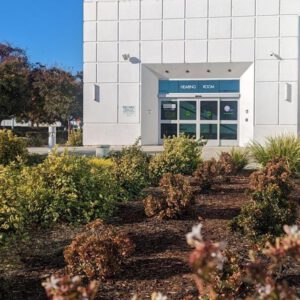
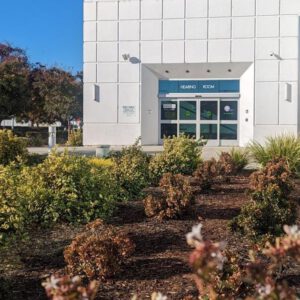

Care demand does not arrive neatly organized by department. A single patient encounter can move quickly from intake to diagnostics, into treatment, and then into recovery or discharge planning. Each step depends on the one …
Continue reading “Managing Care Demand Across Multiple Departments”
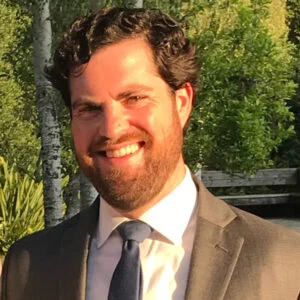
LOS ANGELES – Infused beverage brand Nowadays hired Christopher Forster-Smith as director of regulatory affairs. Forster-Smith previously served in a senior capacity with the U.S. Department of the Treasury’s Alcohol and Tobacco Tax and Trade Bureau (TTB).

In the newly created position, he will leverage his TTB experience in alcohol regulation, compliance, and taxation. During his more than eight years at the government agency, he managed all cannabis and hemp related policies and issues for the Regulations and Rulings Division.
The addition of Forster-Smith comes at a critical time for the company, as hemp regulation has taken center stage at both the state and federal levels. Working closely with Nowadays’ general counsel and head of regulatory affairs, Michelle Bodian, he will be crucial in advancing the company’s regulatory strategy for the longevity of the category. His work will also involve leveraging best practices from alcohol regulations, creating a reasonable tax structure for THC beverages, and advocating cross-functionally alongside supply chain partners, alcohol trade associations, and other industry stakeholders.
Forster-Smith holds a PhD in political science from The Johns Hopkins University.

Strain Overview Brand: Byron BioceuticalsType: Indica-dominantTHC: 28%CBD: <1%Total Terpenes: ~3%Primary Terpenes: Caryophyllene, Limonene, LinaloolCultivar: Project 33Price: $149 RRP (10g) — $129 with concessionOrigin: Grown in Australia, Cymra (Superbly) facility Appearance Crystalbrook Cream presents well-structured, evenly cured buds that reflect careful cultivation and handling. Trichome coverage is consistent across the flower, giving it a frosted, resin-rich […]
Source link

As CEO and co-founder of Innexo, Dominique van Gruisen leads one of Europe’s most advanced cannabis research and development facilities, where cultivation science meets pharmaceutical precision. Innexo is a Dutch cannabis contract research organization that designs and conducts cultivation and technology trials for clients across the cannabis sector, helping companies test innovations under controlled, data-rich conditions.
His impressive career in cannabis spans two decades and encompasses Belgian patient advocacy and clinician networks, as well as European biotech lobbying and cultivation consulting on both sides of the Atlantic. Van Gruisen’s goal is ambitious: to take cannabis beyond cultivation and into a world of validated data, reproducible genetics and true pharmaceutical reliability, which demands consistency. So, how do you do that?
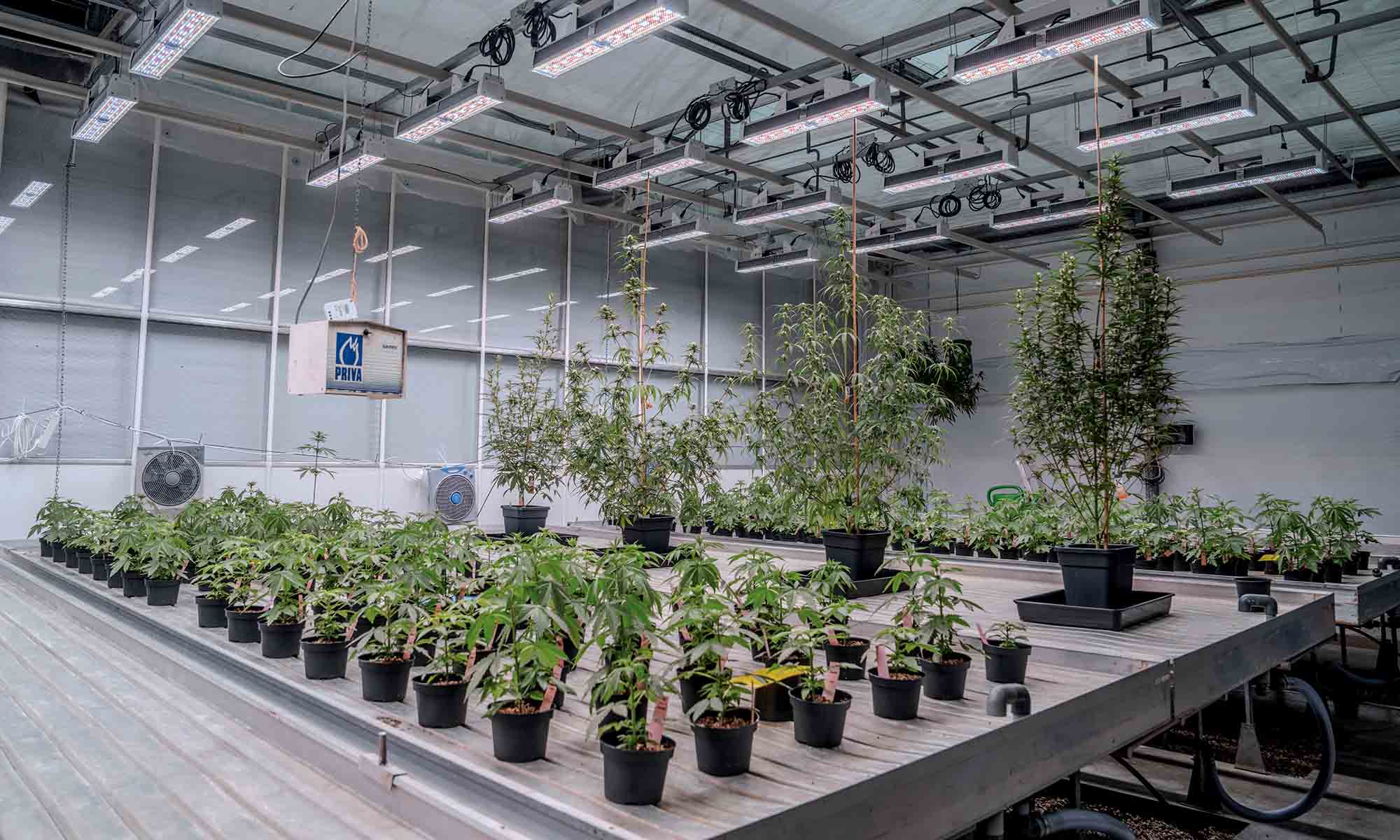
Based in Meterik, a village in The Netherlands, Innexo is conducting independent trials on lighting, nutrients and genetics in an effort to generate measurable, reproducible data that brings cultivation closer to pharmaceutical standards. And through some key partnerships, they’ve come up with some profound techniques. The research center is currently working with Las Vegas-based lighting company Fohse, examining how precision lighting from their Cobra LED system affects plant structure, cannabinoid expression and energy efficiency.
“We’re using the Cobra Pros, and soon we’ll have tunable-spectrum models from Fohse,” van Gruisen says. “They have sensors that constantly read the natural light in the greenhouse and adjust automatically. If we can work with a dynamic spectrum that mirrors the sun, we can replicate the same conditions anywhere on Earth, in any season.”
The study benchmarks a range of metrics—from cannabinoid and terpene expression to morphology and energy use—to quantify how light affects consistency. “Their system fills your stack with data,” van Gruisen says. “That’s what we’re after: information that lets us build validated cultivation models rather than assumptions.”
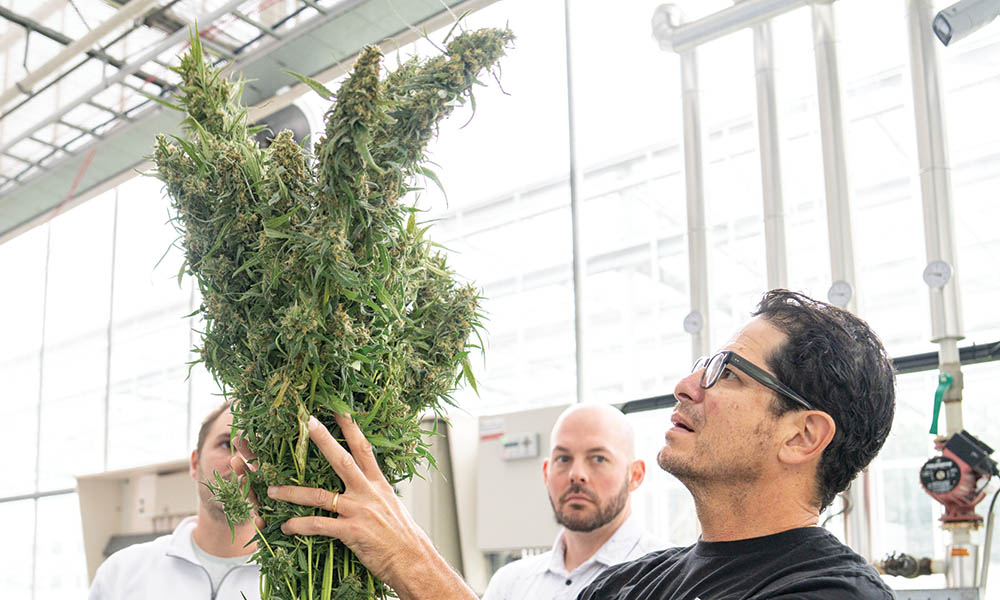
Lighting defines the environment; genetics define the foundation. To address that, Innexo partnered with sister companies Innoveins Seed Solutions and SeQso to develop—wait for it—the world’s first AI-driven seed-sorting system for cannabis.
“They collect the spectral data of each seed in a non-destructive way,” van Gruisen says. “Then they grow that seed, record its traits, feed those traits back into the system and the algorithm learns which spectral patterns predict which plant characteristics.”
When he first heard of the technology, van Gruisen says, “I literally pulled my car over to call people.” Tests confirmed it worked for cannabis, opening the door to non-destructive quality-control certification at the seed level. “If there’s something you can distinguish, you can design a seed-sorting algorithm and push a batch through to separate the good from the bad,” he says.
The implications of this technology stretch beyond yield. AI analysis can detect pathogens such as hop latent viroid and certify genetic quality before cultivation begins. “Companies are developing F1 hybrids—stabilized lines,” van Gruisen says. “By scanning the seeds, you can fine-tune even further so your starting material is as robust as it can be.”
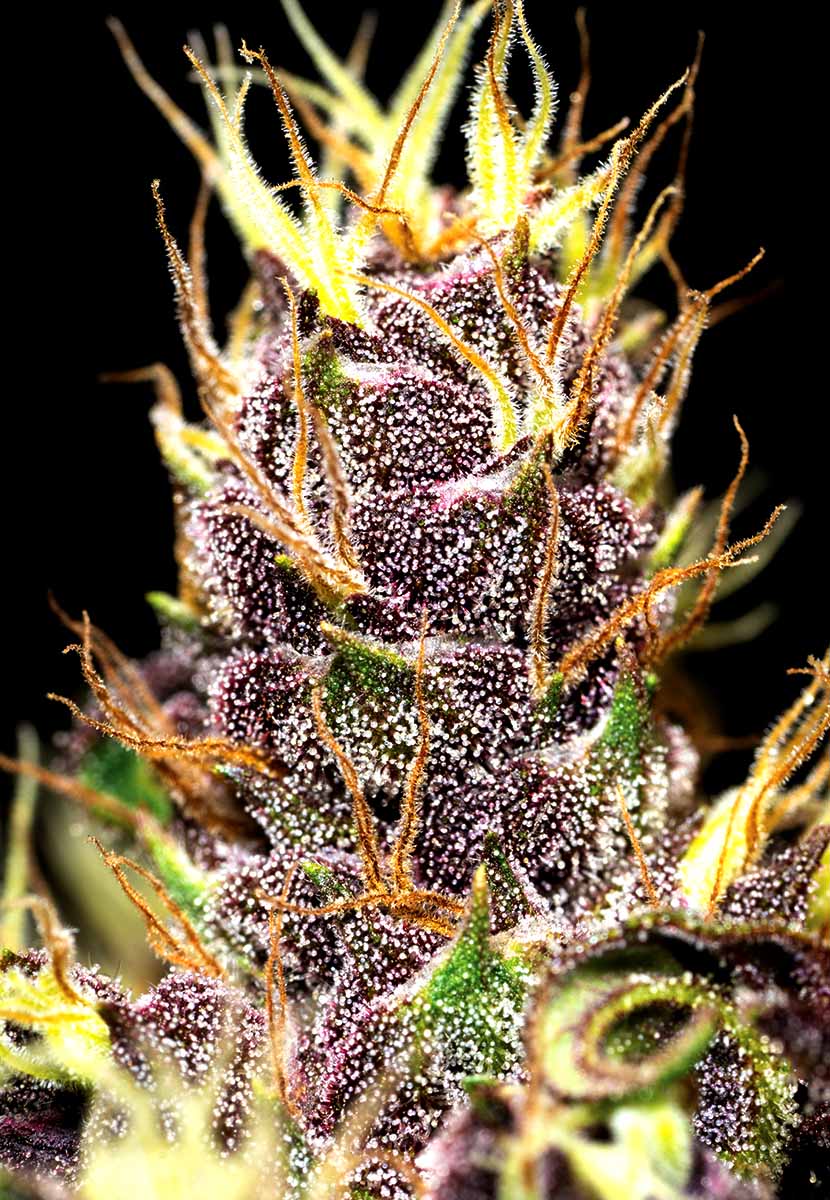
Van Gruisen believes AI-based seed fingerprinting could also reduce the industry’s dependence on cloning. “Even when you use clones, you still find big deviations in secondary metabolites depending on the season or humidity,” he says. “It’s very difficult to provide a consistent product in flower form.” Regulatory frameworks, he notes, demand pharmaceutical precision.
“When regulators say cannabis has to be a medicine, they mean it should be 98 to 102 percent consistent with what’s on the label,” he says. “That’s almost impossible with a natural product. But with solid F1 hybrid genetics that start from seed, you add another quality-control checkpoint.”
For cultivators, F1 seeds offer cleaner starts, lower costs and easier scalability. For patients, they promise reliability—the same genetics, the same relief—every time.
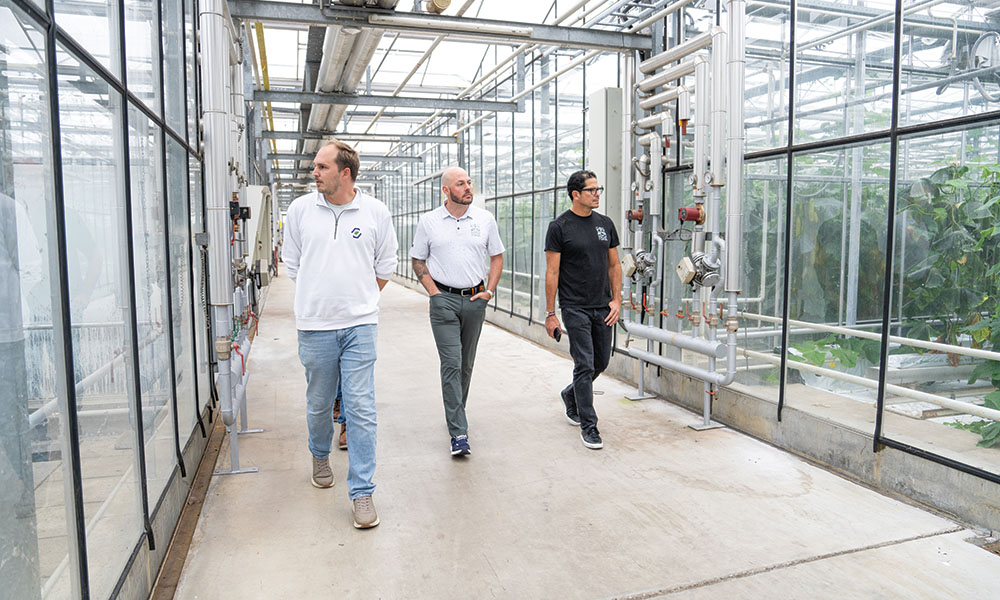
Van Gruisen describes Innexo as a link between two sectors that rarely speak the same language. “Growers talk in grams per square meter,” he says. “Pharma talks in validated datasets and deviation tolerances. We sit in the middle, making those conversations possible.”
That bridge extends beyond technology. Innexo is also reviving iconic legacy cannabis genetics—long-flowering, terpene-rich cultivars—and reintroducing them through advanced lighting and AI-guided cultivation. He aims to right some of the wrongs the industry has made. “We took a lot of wrong turns with cannabis in the last 20 years,” he says. “It’s time to rediscover what made this plant valuable in the first place and do it with proper science.”
The post The World’s First AI-Driven Cannabis Seed-Sorting System Is Here appeared first on Cannabis Now.










We use cookies to improve your experience on our site. By using our site, you consent to cookies.
Manage your cookie preferences below:
Essential cookies enable basic functions and are necessary for the proper function of the website.
Drag & drop or click to select
JPEG, PNG, GIF, WebP, MP4, WebM · Images max 30 MB · Videos max 100 MB