

Two Rochester smoke shops padlocked after state seizes $1.3 million in illegal cannabis products
April 26, 2026
Published by toker

From tip fatigue to tip theft, the humble dispensary tip jar has become a window into some of the cannabis industry’s biggest unresolved labor questions.
It’s just a jar on a counter, but the tip jar at the dispensary has a way of making things complicated. Some consumers happily toss a few dollars in appreciation of product knowledge and recommendations from the employee. Others feel that budtenders should be paid a living wage, and with multiple added taxes to each purchase, asking for even more dollars out of the wallet is just too much.
Generally, the idea is that a shopper quizzes the budtender on products, resulting in sometimes a lengthy customer interaction. The shopper then throws a few bucks in the jar in appreciation for the time spent. However, some dispensaries greet customers with a large tablet to place orders, and the budtender simply retrieves the bag from the back, checks ID, and rings up the sale. In those cases, customers often feel a tip isn’t warranted because the budtender is acting more like a cashier than a product expert.

More broadly, consumers report tipping fatigue as tap-and-pay terminals increasingly prompt for gratuities even when little service is provided. An annual study of 1,000 U.S. consumers conducted in September 2025 by restaurant tech company Popmenu found two-thirds (65%) of consumers say they are fed up with tipping, up from 60% last year and 53% in 2023. Consumers estimate they are asked to tip for different services about ten times a month on average, and 43% say they are tipping less this year.
“Americans are besieged with tipping requests at every turn, often when an employee provides little to no actual customer service,” said Jeffrey Miller, CEO of HoneyProjects. His venture, HoneyGrove, was named 2024 Dispensary of the Year by Cannademix.
Tips for budtenders also appear lower than what consumers pay restaurant staff. Hard point-of-sale data was unavailable, but anecdotal interviews suggest small amounts are common. Danielle Stella, general manager of the medical dispensary GÜD Essence in Clearwater, Florida, who also works the counter, said, “I would not expect any of my customers to come in and hit 15% or more. Standard is just a couple of bucks.”
“Americans are besieged with tipping requests at every turn, often when an employee provides little to no actual customer service.”
Jeffrey Miller, CEO, HoneyProjects
The term “budtender” was officially recognized by Merriam-Webster in 2018, but the role emerged when California legalized medical use in the late 1990s. As the adult-use cannabis market grew, so did the growth of new products beyond flower. Even regular consumers needed help navigating various edibles, concentrates, THC levels, terpenes and more. This necessitated product expertise from budtenders, and according to a report from New Frontier Data, this “dwell time” averages between 15 and 20 minutes.
“In Colorado, tipping budtenders is pretty commonplace,” said Blythe Huestis, VP of Retail for Sun Theory. “The interaction is often consultative and customer-service driven. Budtenders help customers navigate potency, formats, terpene profiles, and effects, so many customers treat it as a service experience and tip when someone takes the time to guide them well.” Huestis oversees 13 retail locations in Colorado.
“We also set the bar high for our budtenders. We look for strong product knowledge, genuine hospitality, and the ability to guide customers confidently through the menu,” she added.
Miller’s approach also leaned towards budtender specialization. He said, “Our stores are different. They’re built on interactive, personalized service from true product experts who speak with genuine knowledge and guide guests toward memorable, impactful cannabis experiences. A great budtender recommendation can deliver benefits lasting weeks, far outlasting even the finest restaurant meal. For that reason, we encourage tipping. It creates a direct bond of appreciation between customer and service professional, and it rewards expertise in real time. The high proportion of customers who tip our staff tells us this philosophy is working.”
“A great budtender recommendation can deliver benefits lasting weeks, far outlasting even the finest restaurant meal.”
Jeffrey Miller, CEO, HoneyProjects

While tip jars are ubiquitous in adult-use stores, medical operations vary. After all, you wouldn’t tip your family doctor following a physical. In some states, medical cannabis programs are tightly regulated with limited approved conditions. In other states, medical programs can closely resemble an adult-use program, which may be why tip jars remain.
“I’ve also operated in medical-only states, and in those environments, we’ve generally moved away from tipping. When the transaction is strictly medical, it doesn’t feel appropriate to anticipate gratuity. The focus is on patient care and access rather than a retail-style service interaction,” Huestis said.
However, Jasmine Johnson of Florida’s medical dispensary GÜD Essence said, “There is a hospitality to cannabis that can change someone’s complete experience and change their life. Applied knowledge and a personal experience for the guest matter.”
“There is a hospitality to cannabis that can change someone’s complete experience and change their life.”
Jasmine Johnson, GÜD Essence
Then there is the question of whether managers should participate in the tip pool. Stella of GÜD Essence is a manager who does take tip money because she says she also works the counter like a budtender. However, in most stores, managers are typically paid much higher wages than budtenders and aren’t allowed to keep the tip money.
“At Stoops NYC, tips directly support our front-of-house team,” said Chris Kuilan, founder and owner of Stoops NYC in Flatiron. “Budtenders keep their tips and managers do not participate in tip pooling.”
“Managers stealing tips has often come up as a key issue for workers looking to start a union. Through collective bargaining, unionized workers can enforce tip distribution policies and make sure managers aren’t pocketing what they’ve earned,” said Megan Carvalho, UFCW’s National Cannabis Campaign Coordinator.
Carvalho’s concern is supported by multiple lawsuits. In 2023, four dispensary employees asked an Illinois judge to certify a class in a suit against Curaleaf, alleging managers pocketed more than $125,000 in tip jar money meant for workers. Curaleaf asked a federal court to dismiss the claims, saying tip earnings were never part of the employment agreement and were disclosed during hiring. Maryland Curaleaf employees sued again in 2025 with similar allegations, according to the Baltimore Sun.
A review of public records turned up additional cases:
@import url(‘https://fonts.googleapis.com/css2?family=Bebas+Neue&family=IBM+Plex+Mono:wght@400;600&family=IBM+Plex+Sans:wght@400;500;700&display=swap’);
* { box-sizing: border-box; margin: 0; padding: 0; }
body {
background: #0a0a0a;
color: #f0ece0;
font-family: ‘IBM Plex Sans’, sans-serif;
padding: 0;
}
.wrapper {
max-width: 780px;
margin: 0 auto;
padding: 48px 32px 56px;
}
.header {
border-top: 4px solid #b8f000;
padding-top: 20px;
margin-bottom: 10px;
}
.eyebrow {
font-family: ‘IBM Plex Mono’, monospace;
font-size: 11px;
font-weight: 600;
letter-spacing: 0.18em;
color: #b8f000;
text-transform: uppercase;
margin-bottom: 10px;
}
h1 {
font-family: ‘Bebas Neue’, sans-serif;
font-size: clamp(36px, 6vw, 62px);
letter-spacing: 0.02em;
line-height: 0.95;
color: #f0ece0;
margin-bottom: 14px;
}
.subhead {
font-size: 13px;
color: #888;
line-height: 1.5;
max-width: 520px;
margin-bottom: 36px;
border-left: 2px solid #333;
padding-left: 12px;
}
.total-bar {
background: #141414;
border: 1px solid #222;
border-left: 4px solid #b8f000;
padding: 16px 20px;
margin-bottom: 32px;
display: flex;
align-items: baseline;
gap: 12px;
}
.total-amount {
font-family: ‘Bebas Neue’, sans-serif;
font-size: 42px;
color: #b8f000;
letter-spacing: 0.02em;
}
.total-label {
font-size: 12px;
color: #666;
letter-spacing: 0.08em;
text-transform: uppercase;
}
.cases {
display: flex;
flex-direction: column;
gap: 2px;
}
.case-row {
background: #111;
border: 1px solid #1e1e1e;
padding: 16px 20px;
display: grid;
grid-template-columns: 1fr auto;
gap: 12px;
align-items: center;
transition: border-color 0.2s, background 0.2s;
cursor: default;
}
.case-row:hover {
background: #161616;
border-color: #333;
}
.case-row.settled {
border-left: 3px solid #b8f000;
}
.case-row.ongoing {
border-left: 3px solid #444;
}
.company {
font-family: ‘IBM Plex Sans’, sans-serif;
font-weight: 700;
font-size: 15px;
color: #f0ece0;
margin-bottom: 4px;
}
.meta {
font-family: ‘IBM Plex Mono’, monospace;
font-size: 11px;
color: #555;
letter-spacing: 0.06em;
}
.allegation {
font-size: 12px;
color: #777;
margin-top: 5px;
line-height: 1.4;
}
.case-right {
text-align: right;
min-width: 120px;
}
.amount {
font-family: ‘Bebas Neue’, sans-serif;
font-size: 24px;
letter-spacing: 0.04em;
line-height: 1;
}
.amount.settled-amt { color: #b8f000; }
.amount.ongoing-amt { color: #444; }
.status-tag {
font-family: ‘IBM Plex Mono’, monospace;
font-size: 9px;
font-weight: 600;
letter-spacing: 0.12em;
text-transform: uppercase;
margin-top: 4px;
}
.status-tag.settled-tag { color: #b8f000; }
.status-tag.ongoing-tag { color: #444; }
.bar-wrap { margin-top: 6px; }
.bar {
height: 3px;
background: #1e1e1e;
border-radius: 1px;
overflow: hidden;
}
.bar-fill {
height: 100%;
background: #b8f000;
border-radius: 1px;
transition: width 1.2s ease;
}
.legend {
display: flex;
gap: 24px;
margin-top: 24px;
padding-top: 16px;
border-top: 1px solid #1e1e1e;
}
.legend-item {
display: flex;
align-items: center;
gap: 8px;
font-family: ‘IBM Plex Mono’, monospace;
font-size: 10px;
color: #555;
letter-spacing: 0.08em;
text-transform: uppercase;
}
.legend-dot {
width: 10px;
height: 10px;
border-radius: 1px;
}
.footer-note {
font-family: ‘IBM Plex Mono’, monospace;
font-size: 10px;
color: #3a3a3a;
margin-top: 20px;
line-height: 1.5;
}
A pattern of lawsuits alleging dispensary managers pocketed tip money meant for budtenders — with confirmed settlements topping $763,000 across known cases, and additional suits still unresolved.
Settled
Ongoing / Unresolved
Sources: Chicago Business Journal, Baltimore Sun, public court records. Settlement amounts reflect publicly reported figures. Cases where no settlement amount was disclosed are marked as ongoing.
const cases = [
{
company: “Schwazze / R. Greenleaf”,
states: “NM · CO”,
year: “2024”,
allegation: “Supervisors improperly included in tip-sharing”,
amount: “$525,000”,
rawAmount: 525000,
status: “settled”
},
{
company: “Timber Cannabis Co.”,
states: “MI — 7 locations”,
year: “2025”,
allegation: “Management retention of tips across seven locations”,
amount: “$205,000”,
rawAmount: 205000,
status: “settled”
},
{
company: “Curaleaf”,
states: “IL”,
year: “2023”,
allegation: “Managers allegedly pocketed $125,000+ in tip jar money. Curaleaf contested the claims. Case unresolved.”,
amount: “Unresolved”,
rawAmount: 0,
status: “ongoing”
},
{
company: “Bud’s Goods & Provisions”,
states: “MA”,
year: “2022”,
allegation: “Tips withheld from workers”,
amount: “$33,000”,
rawAmount: 33000,
status: “settled”
},
{
company: “Story Cannabis”,
states: “AZ · OH · MD”,
year: “2025”,
allegation: “Tips used to cover register shortages; managers in tip pool”,
amount: “Undisclosed”,
rawAmount: 0,
status: “ongoing”
},
{
company: “Curaleaf”,
states: “MD”,
year: “2025”,
allegation: “Similar allegations to 2023 Illinois suit”,
amount: “Undisclosed”,
rawAmount: 0,
status: “ongoing”
},
{
company: “Nirvana Cannabis”,
states: “AZ · MI · IL”,
year: “2026”,
allegation: “Systematic withholding; supervisors taking tip pool shares”,
amount: “Pending”,
rawAmount: 0,
status: “ongoing”
}
];
const maxAmount = 525000;
const container = document.getElementById(‘cases’);
cases.forEach(function(c) {
var isSettled = c.status === ‘settled’;
var pct = c.rawAmount > 0 ? Math.max(8, (c.rawAmount / maxAmount) * 100) : 0;
var row = document.createElement(‘div’);
row.className=”case-row ” + (isSettled ? ‘settled’ : ‘ongoing’);
row.innerHTML =
‘
‘ +
‘
‘ +
‘
‘ +
‘
‘ +
‘
‘ +
‘
‘ +
(c.rawAmount > 0 ? ‘
‘ : ”) +
‘
‘;
container.appendChild(row);
});
setTimeout(function() {
document.querySelectorAll(‘.bar-fill’).forEach(function(el) {
el.style.width = el.getAttribute(‘data-pct’) + ‘%’;
});
}, 200);
There’s little hard data on budtender tips, but base pay for budtenders can be low. Even in expensive cities like New York, budtender jobs are often advertised at $17–$20 an hour, little more than fast-food wages. This has caused huge turnover in the industry when the cool factor of the job wears off and the rent is due. For many workers, tips are essential to making a livable income. On a positive note, there are dispensary owners who recognize this and strive to pay their employees well.
“We position tips as a bonus rather than something employees rely on, and we focus more on competitive wages and recognition tied to customer experience and key performance metrics,” said Huestis.
Johnson noted her company prioritizes a livable wage and treats tips as additional income.
“While budtenders appreciate tips, they shouldn’t have to rely on the generosity of customers to pay their bills. The cannabis industry is still maturing, and there’s a major opportunity to solidify it as an industry that provides stable, well-paying jobs,” said Carvalho, UFCW’s National Cannabis Campaign Coordinator.
“While budtenders appreciate tips, they shouldn’t have to rely on the generosity of customers to pay their bills.”
Megan Carvalho, UFCW National Cannabis Campaign Coordinator
So the next time you see the tip jar, know that these workers don’t always make a lot of money, and the extra income is appreciated. It’s hard to know which stores pay well, and if you’re already willing to pay the huge taxes, step it up and throw in a few greenbacks as well for the trusty budtender.
<p>The post Counter Culture: The Tip Jar at Your Dispensary Has a Problem. Several, Actually. first appeared on High Times.</p>

DRKDREAMZ is an American production duo comprised of Eric Finnegan & Candra DrkDreamz. They’re gearing up for their debut EP, Sinnerz, slated for release this summer. In the meantime, they are warming up the fans with fresh flips every week. We’ve enjoyed quite a few of them, but this 21 Savage “No Heart” flip really

Meet ALTERD: the new app to help you explore higher states of mind.
The post How ALTERD helps you expand your mind through intentional cannabis consumption appeared first on Leafly.

As the European cannabis conference season gets started, industry experts, lawmakers, regulators and business owners are facing greater mainstream scrutiny than ever before.
From police raids in Portugal and North Macedonia, to a media backlash in the UK, operators are facing increasing questions about the industry’s resilience in the face of coordinated pushback.
Europe’s largest medical cannabis market, once again, finds itself at the very centre of this debate. Delegates at this year’s ICBC Berlin were offered insights from Germany’s most informed voices to get the latest picture on where the thriving market currently stands, and whether regulatory headwinds will push capital toward neighbouring markets.
Here are our key insights from across the event…
For investors and founders, the clearest shift of the past twelve months has been structural. David Hyde, M&A specialist and ICBC panellist, argued in an interview with Krautinvest ahead of the event that the current uptick in deal activity reflects long-overdue valuation normalisation.
The ‘hope premium’ has been stripped from founder expectations, with performance-based earn-outs and milestone-driven closings now the dominant deal architecture. A shift, he argues, that is increasingly drawing the attention of international operators and domestic consolidators.
These generally fit into a handful of distinct categories, including US MSOs seeking operators with existing patient data, Canadian LPs focused on supply chain efficiency, and European consolidators seeking pharmacy partnerships and similar bolt-on deals.
Furthermore, legacy players such as pharmaceutical distributors are seeking acquisitions that are EU-GMP compliant, while family offices and private equity firms are similarly targeting asset-light, profitable companies for M&A.
Those at the top of the M&A wishlist, he suggests, are operators with well-established pharmacy and prescriber relationships, with extensive patient behaviour data and a trusted reputation.
Attorney Judith Heimbürger of Gunnercooke was more cautious on the broader state of the widely-cited consolidation wave.
The inherent regulatory uncertainty associated with the industry, she says, is impacting valuations while driving risk-sharing deal structures. As such, companies that retain development potential under regulatory changes are currently at an advantage when it comes to M&A targets.
The most immediate legal development discussed at ICBC was the German Federal Court of Justice ruling of 26 March 2026 (I ZR 74/25), which Heimbürger said carries direct compliance implications for telemedicine operators.
The BGH found that platforms engage in impermissible advertising if condition-specific information is used to facilitate or trigger treatment requests to cooperating physicians. The practical effect is elevated cease-and-desist risk and rising compliance costs, as operators revise online presence and referral processes to remove advertising-driven demand triggers.
A panel on international regulatory harmonisation, taking place on day two of the conference, touched on the persistent fragmentation running through every level of the cannabis supply chain.
Moderator Daniel Haymann, a Swiss attorney, gave a clear example of the fragmentation operators face: a producer holding full EU-GMP certification still faces German auditor re-qualification; a Berlin pharmacist cannot necessarily prepare the same magistral formulation as one in Madrid; a Zurich patient has no guarantee of consistent product availability in six months.
The panel’s most concrete illustration involved an Australian cannabis shipment rejected at the German border over a drying-step classification discrepancy, despite a mutual recognition agreement between the two jurisdictions.
As such, the panel agreed that GACP and GMP represent the most achievable near-term harmonisation targets, with the Swiss accreditation model, where state authority underwrites third-party certification, cited as a possible workable path forward.
Discussions of the scientific landscape reflected an industry increasingly aware that long-term legitimacy depends on evidence generation.
Panellists pointed to the regulatory anomaly of CBN and CBG remaining prohibited in Germany while high-THC flower is legally dispensed as emblematic of the inconsistencies still complicating the minor cannabinoids sector.
“It breaks my heart to hear people in Germany talk to me about how CBN and CBG is banned while they’re smoking high THC flower,” one panellist noted.
The argument for industry-funded, collaborative research, modelled in part on lessons from the psychedelics sector’s more coordinated approach to evidence-building, found clear support.
“Unfortunately, in Canada, some of us did have tens of millions of dollars, but ended up giving it to executive salaries rather than putting it into research.
“Without the research and education, we will not prosper as we could”.
The post Berlin 2026: European Cannabis M&A Finds its Footing appeared first on Business of Cannabis.
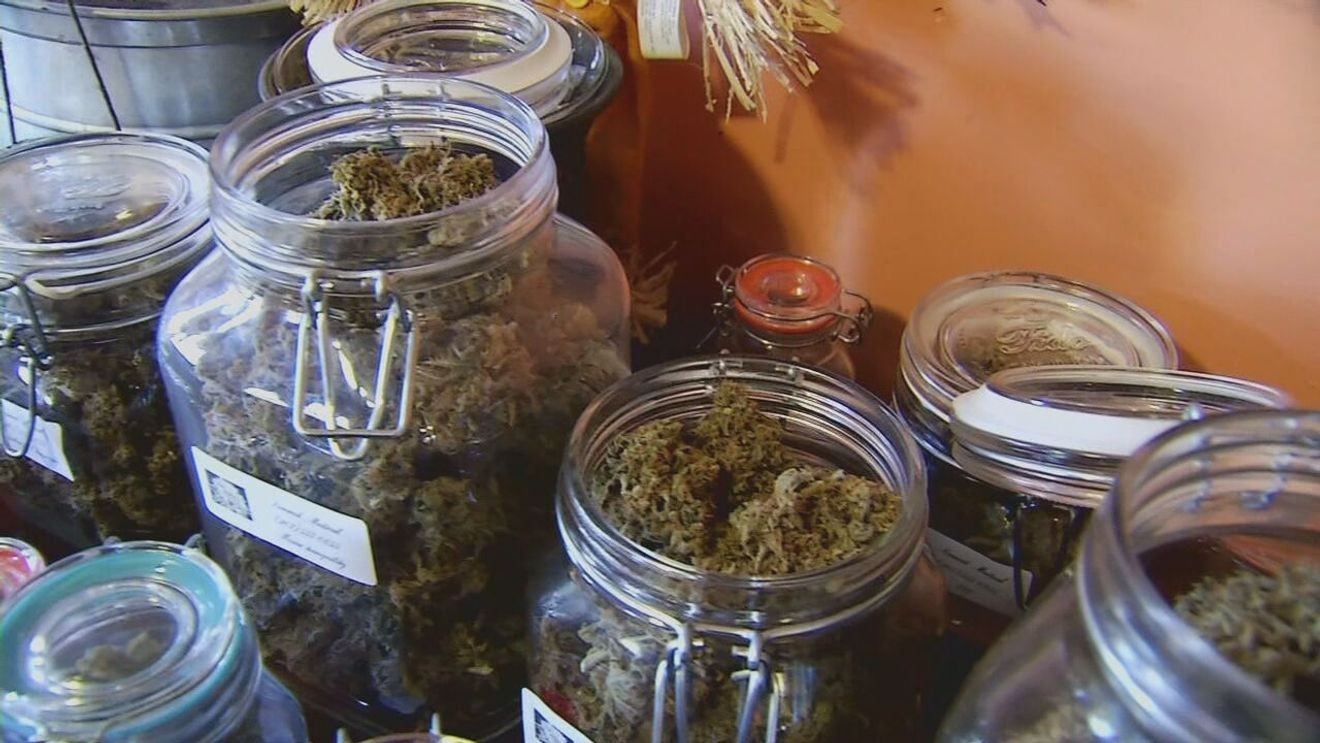

As federal cannabis rescheduling looms on the horizon and more states across the country begin rolling out regulations for legal psychedelic therapy, health officials have increasingly been targeting a centuries-old psychoactive plant from Southeast Asia with newly introduced measures of prohibition.
Kratom is a leafy green botanical native to Southeast Asia that acts on the opioid receptors and is noted for its ability to offer pain relief and euphoria to the more than 2 million Americans who are estimated to use it each year. It is this ancient plant medicine that is being increasingly scrutinized as a key issue in the often contradictory framing of drug policy reform.
While many have looked to the current administration for movement on federal cannabis rescheduling and broader natural medicine policy reform, increasing restrictions on hemp products and rising scrutiny of kratom suggest that drug policy may be shifting in more complex—and in some cases more restrictive—directions. Since it has not been federally scheduled under the Controlled Substances Act, kratom has emerged as a prominent product in the legal psychoactive plant market.
Kratom contains several active alkaloids, most notably mitragynine and 7-hydroxymitragynine (7-OH). While 7-OH occurs naturally in trace amounts, regulators have raised concerns about newer products that concentrate or synthesize this compound at much higher levels.
Over the last year, health authorities have launched a crackdown against 7-OH products in the wake of a series of unsettling reports about the addictiveness and potential dangers of the synthetic opioid. In communications from federal agencies, 7-OH has been described as significantly more potent than morphine in certain contexts, particularly when isolated or synthetically enhanced.
While 7-hydroxymitragynine occurs naturally in trace amounts in kratom, many of the products drawing regulatory scrutiny are synthetically concentrated versions.
The rising pushback against synthetic 7-OH products has cast a pall upon the kratom market itself, with health authorities across various counties currently considering restrictions against the sale and distribution of kratom products alongside their synthetic derivatives.
As of March 25, 2026, the state of Connecticut has implemented a ban against kratom products and required stores to remove any remaining inventory from shelves. The domino effect of prohibition is poised to spread across state lines, signaling an escalation of the war on plant medicine.
Kansas has a similar bill that has passed legislation and is awaiting the governor’s action to be signed into law. Several other states and counties are also currently moving the needle on the natural leaf kratom market regulation or proposed prohibition in the wake of the 7-OH product bans.
“The press often conflates 7-OH with kratom, and as a result, we’re seeing increasing prohibition against natural leaf kratom,” says kratom industry operator Soren Shade of Top Tree Herbs.
“If existing kratom regulations can be overturned and replaced with bans, it’s actually easier for marijuana regulations to get overturned and replaced with bans too,” he continues.
Such is also the case in Nassau County, New York, where lawmakers passed a bill banning the sale of all kratom products and synthetic counterparts in March. As of last week, new legislation has been introduced in neighboring Suffolk County—a district that makes up two-thirds of Long Island—to potentially ban kratom products, signaling a domino effect in the region.
“The propaganda surrounding natural kratom leaf is reaching ‘Reefer Madness’ levels again,” says Travis Doupe of The Mock Pit, a non-alcoholic bottleshop that sells kratom in Huntington Station, New York.
Kratom is a staple of the kava bar scene in New York that serves as a ‘third space’ for people to congregate together and enjoy alternatives to alcohol. Kava is a mild psychoactive root traditionally used in the South Pacific islands to induce relaxation and promote social bonding. Together, kava and kratom have become the backbone of a rising trend towards public venues offering alcohol alternatives for people who want to socialize and relax without the hangover.
While New York public health officials have raised concerns about the addictiveness of kratom and its reported potential liver toxicity, a community of kratom users and small business owners is working to educate the public about the utility of the plant and its role in helping to shape the alcohol alternative market.
“What we’ve built is a beautiful community of people who can meet, work, and relax away from a bar setting. In 2026, it’s sad to think they are suppressing this vibe and trying to ban a safe and natural plant,” continues Doupe.
Other members of the kratom community in New York see the potential ban of kratom as classic government overreach. For these small business owners who have helped shape the alcohol alternative movement by creating ‘Third Spaces’ offering legal psychoactive plants like kratom and kava tea, the specter of a crackdown on kratom products poses the threat of undermining the local community connections and values they champion.
“Nassau County’s ban on the sale of kratom supersedes both state and federal regulations. County Executive Bruce Blakeman is threatening up to one year of jail time for selling a plant that is 100 percent legal in the rest of New York State,” says Eric Ott of Roots Kava Bar in Long Island.
“In a state where cannabis was legalized, and psilocybin therapy frameworks are being considered, one of the biggest counties in the state is considering a ban on kratom. The war on plants that we thought was over is actually coming back masked as public safety in an overreach response to cracking down on totally unnatural synthetic drugs like 7-OH,” says Robert Lattig of Roots Kava Bar.

Recent political movements have signaled potential openness to expanding access to natural medicines and alternative therapies. However, the evolving regulatory landscape around kratom suggests that progress may not be uniform across all substances.
The crackdown against 7-OH, being extended to potentially ban the sale and distribution of kratom at large in various counties, showcases the domino effect of shifting public and political opinion on natural healing modalities.
In an era when the War on Drugs has faced increasing criticism for its historical and political implications, kratom has become, for some, a test case for how governments approach emerging and existing psychoactive substances.
Whether these developments represent a temporary course correction or a longer-term shift remains to be seen. But as cannabis legalization expands and psychedelic policy evolves, the trajectory of kratom regulation may offer an early signal of where broader drug policy is headed next.
This article is from an external, unpaid contributor. It does not represent High Times’ reporting and has not been edited for content or accuracy.
<p>The post Kratom Crackdown Signals New Drug Policy Shift first appeared on High Times.</p>

Its genetics are unknown, but Waffle Womper leans into a smooth, dessert-like profile that stands on its own. This strain typically falls between 20 percent and 24 percent THC, giving it a noticeable but manageable potency. The high builds gradually, letting you gauge your limits while staying steady. Lighter use keeps the mood lift gentle and happy, while higher amounts bring a more pronounced body effect without overwhelming. Once it sets in, Waffle Womper maintains a consistent, relaxed feel, avoiding sudden peaks or drops.
A sweet dough note leads, with syrup underneath and a light earthy touch to balance it out. Myrcene enhances the calming, body-centered effects, while caryophyllene adds a subtle spice and structure to the profile. The smoke remains smooth, with a soft, slightly dry finish that fades clean. While the flavor fades a bit sooner, the effects hold, keeping you relaxed, happy, and settled for a while.
Waffle Womper grows with a balanced structure that is easy to manage indoors or outdoors. It does not stretch aggressively, making height easier to control. Light training like topping or pruning helps airflow and ensures even bud development, though it performs well with minimal intervention. Flowering generally takes 8 to 9 weeks, producing dense, resin-coated buds with a sweet, dessert-like aroma as harvest nears. Indoor growers may want basic odor control late in the cycle. Consistent feeding, steady airflow, and careful watering toward the end of flowering will support a clean, high-quality finish.
The post Waffle Womper Strain Feminized Seeds appeared first on Crop King Seeds.


For patients seeking safe, legal access to cannabis medicine, obtaining a medical marijuana card through trusted online services like ours is often the first step toward better health management. But many cardholders take it further …










We use cookies to improve your experience on our site. By using our site, you consent to cookies.
Manage your cookie preferences below:
Essential cookies enable basic functions and are necessary for the proper function of the website.
Drag & drop or click to select
JPEG, PNG, GIF, WebP, MP4, WebM · Images max 30 MB · Videos max 100 MB


