
Board of Health tackles cannabis delivery concerns, housing complaint
April 28, 2026
Published by toker
Indiana state officials are holding a series of meetings with medical marijuana advocates at the direction of the Republican governor.
One day after the Trump administration announced that federal cannabis rescheduling is moving forward, officials from the Indiana Department of Veterans Affairs, the Department of Health and other state agencies sat down with Hoosier Veterans for Medical Cannabis and Indiana NORML to discuss potential next steps at the state level.
The meetings, activists said, came at the request of Gov. Mike Braun (R).
“The governor has reached out to us to meet with other heads within his department to get their intake on this move,” military veteran Jeff Staker, one of the advocates, told Fox 59. “Our next step, hopefully, will be in the governor’s office.”
Lucy Luman, who is also a veteran and serves as chair of Indiana NORML, said that federal reform “does address the major challenges that our legislators have put forward previously.”
The advocates previously met with Indiana Secretary of Business Affairs Mike Speedy, they told WHTR-TV.
“It tells you that the governor’s really taken a close look at this, and I’m hoping that our organization and others can get in the governor’s office and have that discussion with him and brainstorm further,” Staker said. “You got to realize that a lot of our state legislators have been waiting for exactly this to happen.”
“The feds have made their move, and now it’s time for Indiana to make ours,” he said. “And of course, we want to do it right.”
State Rep. Jim Lucas (R) said that federal marijuana rescheduling “takes away the arguments that the opposition had in our state.”
State Sen. Rodney Pol (D) agreed, saying the Trump administration’s action “has helped move the ball.”
Last month, the governor said the “crescendo will rise” in the call to legalize marijuana, with regional dynamics and even law enforcement buy-in favoring reform down the line. But for now, he said GOP legislative leadership is “not interested in doing anything soon,” even if “over half of Hoosiers probably smoke it illegally.”
Braun said at the time that he thinks lawmakers should take “an additional look at” medical cannabis and that, while he’s personally “agnostic” on legalization, the reality is that Indiana is “surrounded now by four states” that allow either medical or adult-use cannabis.
“Over half of Hoosiers probably smoke it illegally,” he said, noting that neighboring Kentucky permits patients to access medical cannabis, while Illinois, Michigan and Ohio have recreational marijuana laws on the books.
“I’m going to listen to law enforcement. Even they have changed their opinion in terms of legalizing it and regulating it,” Braun said, adding that he’d compare cannabis to gambling. The state was late in the game to adopt laws allowing adults to gamble, he said, but now it ranks in the top three states nationwide in terms of revenue per capita from the vice.
“Some people aren’t going to want it, just out of principle. A lot of our state police and sheriffs are tolerating people going across the border [to buy cannabis]. It’ll be an increasing issue that, so far, our state legislature has kind of dug in against it,” he said. “I’ve been more agnostic about it. I can see points of view, and I’ve seen law enforcement move on it somewhat.”
“So that would give you the best description of where the dynamic is in our state,” the governor told WOWO. “I think the leader of the Senate especially, and the Speaker of the House, are pretty—and they control the legislative agenda—not interested in doing anything soon. But I think the crescendo will rise, and that describes in a snapshot where we’re at.”
Braun similarly talked about the issue in another recent interview, saying the state is “probably going to have to address” the issue and likening cannabis reform to sports betting.
Lawmakers in the state had already signaled that marijuana legalization isn’t in the cards in the 2026 session, meaning another year where Indiana will be an outlier as one of the few remaining states without effective medical or adult-use cannabis laws.
The governor separately said in January that he’s “amenable” to the idea of legalizing medical cannabis in the state. Instead, Indiana legislators this session have been focused on efforts to ban hemp THC products—though it seems that fight is over for 2026 after a last-minute push failed late last month.
Braun has previously said that federal marijuana rescheduling could add “a little bit of fire” to the local push for cannabis legalization in his state.
Among Indiana residents, a survey released in January found that nearly three in five back legalizing cannabis for medical and recreational use.
Specifically, the annual Hoosier Survey from the Bowen Center at Ball State University (BSU) found that 59 percent of residents are in favor of legalizing cannabis for both medical and recreational purposes. An additional 25 percent back only allowing patients to access medical marijuana, raising the total support for that reform to 84 percent.
—
Marijuana Moment is tracking hundreds of cannabis, psychedelics and drug policy bills in state legislatures and Congress this year. Patreon supporters pledging at least $25/month get access to our interactive maps, charts and hearing calendar so they don’t miss any developments.
Learn more about our marijuana bill tracker and become a supporter on Patreon to get access.
—
Braun, for his part, previously said that “it’s probably time” to allow access to therapeutic cannabis among patients in the state. Those comments came alongside a separate poll indicating that nearly 9 in 10 Indiana adults (87 percent) support marijuana legalization.
Top Republicans in the legislature, however, have openly opposed marijuana reform.
“It’s no secret that I am not for this,” Senate President Pro Tem Rodric Bray (R) said in late 2024. “I don’t have people coming to me with really compelling medical cases as to why it’s so beneficial. And any state that I’ve seen pass medical marijuana is essentially passing recreational marijuana.”
House Speaker Todd Huston (R) doubted any medical benefits associated with marijuana, calling the substance “a deterrent to mental health.” He and others suggested that lawmakers supportive of the reform merely want to boost state revenue.
The post Indiana GOP Governor Directs State Agencies To Meet With Medical Marijuana Advocates As Federal Rescheduling Takes Effect appeared first on Marijuana Moment.

The Trump administration’s rescheduling order moved FDA-approved marijuana drug products and certain state-regulated medical marijuana products from Schedule I to Schedule III. But for Americans who grow their own at home, the most basic question, did anything actually change for me?, depends entirely on which cannabis attorney you ask. We asked four. They disagree.
On April 23, Acting Attorney General Todd Blanche signed an order rescheduling two specific categories of marijuana from Schedule I to Schedule III: FDA-approved drug products containing marijuana, and marijuana products regulated under qualifying state medical marijuana licenses. It was the biggest federal cannabis shift in decades. For the commercial medical marijuana industry, it was a landmark moment. For home growers, the picture is considerably murkier.
We put the same core question to four of the country’s leading cannabis attorneys: Does the rescheduling order cover home growers? They read the same order. They cited the same language. They landed in different places.
The disagreement turns on a deceptively small distinction: whether a state patient cultivation card is a “license” in the federal sense, or merely a state-level permission slip that still sits outside the Controlled Substances Act. That distinction, business versus person, commercial supply chain versus backyard grow, is doing enormous legal work in a document that doesn’t spell out the answer.
The relevant language is specific. The order moves into Schedule III: FDA-approved drug products containing marijuana, and marijuana “subject to a qualifying state-issued license.” It then defines “state medical marijuana license” as “a license issued by a state entity authorizing the licensee to manufacture, distribute, and/or dispense marijuana or products that contain marijuana for medical purposes.”
Everything else remains Schedule I. “Any form of marijuana other than in an FDA-approved drug product or marijuana subject to a state medical marijuana license remains a Schedule I controlled substance,” the order states, subject to all applicable “administrative, civil, and criminal sanctions.”
So the question is: does your home grow qualify as marijuana “subject to a state medical marijuana license”? Bob Hoban, one of the country’s most recognized cannabis attorneys and a longtime fixture in federal drug policy debates, says ordinary personal home grow remains outside the framework. Michael McQueeny, Partner and Co-Chair of the Cannabis and Hemp Group at Foley Hoag, agrees. Steven Schain, Of Counsel at Malkin Law and a cannabis law professor at Stockton University, takes the opposite view: state-licensed patient cultivation drops to Schedule III. Marshall Custer, who co-leads Husch Blackwell’s cannabis team of more than 80 attorneys, lands somewhere more complicated: personal-use home growers remain federally illegal, but state medical cultivation permit holders may now face Schedule III obligations rather than freedom.
Does your home grow qualify under the rescheduling order?
Covered by the order
FDA-approved drug products containing marijuana
State-licensed medical marijuana operators
Caregiver cultivation licenses (contested)
State-licensed patient cultivation (contested)
Remains Schedule I
Personal-use home cultivation
Adult-use home cultivation in any state
Patient cards and statutory home grow rights
Unlicensed bulk marijuana of any kind
Items marked contested reflect genuine legal disagreement among attorneys. Hoban and McQueeny say ordinary personal cultivation stays Schedule I. Custer agrees personal-use home growers remain federally illegal, while Schain says state-licensed patient cultivation qualifies. None say adult-use home grow is protected.
Source: April 23, 2026 rescheduling order | Analysis: Hoban, McQueeny, Custer, Schain
Hoban draws the line clean.
“Home cultivation lives on that other side. It doesn’t fit within an FDA-approved framework, and it doesn’t clearly fall within the definition of products containing marijuana subject to a qualifying state-issued license. A patient card, a statutory right, a backyard grow — those are not the same as a licensed, regulated entity operating within a closed system.”
Bob Hoban, cannabis attorney
Hoban traces the reasoning back to the international treaty framework underpinning the entire order. The Single Convention on Narcotic Drugs, the 1961 UN treaty that Blanche used as legal authority for the rescheduling, requires centralized government control over cannabis production. No decentralized cultivation. No backyard supply chains.
“That treaty doesn’t leave room for ambiguity. It requires nations to tightly control medical cannabis through a government-supervised structure, effectively a monopoly over production and distribution. No home grows. So when you ask whether a patient card equals a license, the answer under this framework is almost certainly no. One is participation. The other is permission to operate within a controlled system.”
Bob Hoban, cannabis attorney
McQueeny agrees and points to the order’s own regulatory text as the clearest evidence.
“The federal legal risk for home growers is therefore the same as it was the day before this order. Marijuana they grow, possess, or use without a qualifying state license to manufacture, distribute, or dispense remains Schedule I as a matter of federal law.”
Michael McQueeny, Partner, Foley Hoag
McQueeny notes that the order’s expedited DEA registration pathway contemplates applicants seeking federal registration as marijuana “manufacturer, distributor, or dispenser,” commercial language built for institutional infrastructure. A patient growing six plants under a state patient card doesn’t fit that description.
Also read: Hidden in the Rescheduling Order: Could the DEA Become the Nation’s Biggest Weed Dealer?
He flags one genuine gray area: caregiver cultivation licenses, state-issued licenses that authorize a designated individual to grow and supply cannabis to patients, could theoretically qualify under the order’s language, depending on how a state structures the permit. But personal cultivation for personal use is clearly outside the framework, in his reading.
“The most dangerous misconception is that rescheduling means broad and unfettered legalization, or that if your state says you can grow, the federal government now agrees. For home growers specifically, it would be a mistake to read the April 23 order as extending any federal protection to personal cultivation.”
Michael McQueeny, Partner, Foley Hoag
Schain gave the most direct pro-home-grow reading of the order. His position is concise and categorical: if a state has issued a license for patient cultivation for medical purposes, those plants qualify.
“State-licensed patient cultivation or home grow for medical cannabis drops to Schedule III.”
Steven Schain, Of Counsel, Malkin Law
In his reading, a state-issued patient cultivation license is enough. He also noted that the practical federal enforcement risk for home growers hasn’t changed either way, because federal enforcement of home cultivation was already minimal before the order. States were the primary enforcers of these rules, not the feds.
Where the attorneys stand
Hoban + McQueeny
Personal home cultivation remains Schedule I. Patient cards and home grow rights are not commercial licenses. The order targets institutional operators within a regulated supply chain, not individuals.
Schain
In his reading, a state-issued patient cultivation license is enough. State-licensed patient cultivation for medical purposes drops to Schedule III.
Custer
Personal-use home growers remain federally illegal. State medical cultivation permit holders may qualify for Schedule III, but that could mean DEA registration requirements and federal compliance obligations, not freedom.
“For personal-use home growers, you’re just as federally illegal today as you were two weeks ago. Celebrate that information how you wish.”
Marshall Custer
Partner, Husch Blackwell
Custer offers the most complicated answer of the four and, in some ways, the most important one for home growers to hear.
On personal-use home cultivation, he is unambiguous, as that pull quote makes clear. But when it comes to crops produced under a state medical permit, his reading is closer to Schain’s than to Hoban’s, with a crucial twist. He says marijuana crops produced under a state medical permit may now be Schedule III. But that is not necessarily good news. If you qualify, you may now be required to register with the DEA as a Schedule III handler, a significant federal compliance obligation that most individual patients and caregivers are completely unprepared for.
“If you are growing as a licensed medical caregiver, the DOJ order requires that you register with the DEA to handle Schedule III substances. This is going to be a heavy lift for most caregivers. Perhaps DEA will issue additional guidance to address the administrative burden of this process, but I would not count on it.”
Marshall Custer, Partner, Husch Blackwell
That is the twist buried in the rescheduling order that almost nobody is talking about. Qualifying for Schedule III doesn’t mean freedom from the federal system. It may mean entry into it, with all the registration, compliance, record-keeping and DEA oversight that entails. A system built for pharmaceutical manufacturers, not patients growing medicine at home.
Custer’s broader warning goes further. For years, the federal government largely stayed out of state-regulated marijuana, while Congress barred the DOJ from using certain funds to interfere with state medical marijuana laws. That era, he says, is ending.
“In general, the federal medicalization of marijuana is not good news for small companies and home growers. In the long run, federal requirements are almost certain to be stricter than state programs. And as the federal government ramps up oversight and control of medical marijuana, enforcement will follow.”
Marshall Custer, Partner, Husch Blackwell
He draws an analogy that lands hard. There is a place for home brewers in a world where alcohol is commercially regulated. There may eventually be a place for home growers in a world where cannabis is federally medicalized. But it is not guaranteed, and the path there runs through a federal regulatory framework that was not designed with the backyard grower in mind.
This needs to be said plainly. None of the four attorneys, including Schain, who gave the most favorable reading of the order for medical home growers, said the rescheduling order helps adult-use home cultivation in any way. Schain was explicit: the order “creates no complications nor protections for adult-use cannabis home growers.” Adult-use home grow remains Schedule I under every reading of this order.
McQueeny is direct about what real federal protection for home growers would require. The June 29 hearing, which will consider broader rescheduling of all marijuana, could theoretically help if it results in all marijuana moving to Schedule III. But even then, Schedule III still means controlled substance. Still means federal registration requirements not designed for someone growing a few plants at home.
“True protection for home growers would most likely require either descheduling marijuana entirely, removing it from the Controlled Substances Act, or enacting legislation that creates an express federal safe harbor for personal cultivation consistent with state law. Neither of those steps is on the immediate horizon.”
Michael McQueeny, Partner, Foley Hoag
Hoban frames the longer-term tension clearly. Two systems are now running on parallel tracks: federal medicalization on one side, state home grow rights on the other. When those tracks collide, it won’t be theoretical.
“While Schedule I was a blanket prohibition, messy and unevenly enforced, Schedule III could become something different: a structured system with defined participants and defined outsiders. Home growers may find themselves not just illegal in theory, but increasingly incompatible with the economics and politics of a regulated market.”
Bob Hoban, cannabis attorney
Here is what the attorneys collectively make clear. For ordinary personal-use home growers, the federal answer is mostly unchanged: you remain outside the framework this order created. For medical patients and caregivers with state-issued cultivation permits, the answer is genuinely contested, and even if your grow qualifies for Schedule III, that may mean new federal compliance obligations rather than freedom. For adult-use home growers, nothing in this order helps you.
The most dangerous thing you can do right now is assume that because your state says it’s legal, the federal government now agrees. It doesn’t, at least not clearly, and not for most home growers under any reading of this order.
The fight for home growers runs through descheduling. And descheduling is not on the immediate horizon.
Rescheduling is movement. It is not freedom.
High Times, December 2025
This article is legal analysis and reporting, not legal advice. Home cultivation rules vary by state, and anyone facing legal risk should consult counsel in their jurisdiction.
<p>The post Does Rescheduling Help Home Growers? Even Cannabis Lawyers Are Split first appeared on High Times.</p>

Last week’s rescheduling announcement came as a surprise to many, not least to us here at Business of Cannabis.
Despite the flurry of reporting from multiple sources that an announcement was imminent, the last two years of stock swings, ambiguous or outright hollow promises, and bureaucratic red tape meant it was a bet we were reluctant to take.
But the surprise wasn’t just because it had finally happened, but, perhaps naively, because it wasn’t what we were expecting.
Acting Attorney General Todd Blanche’s order rescheduling state-licensed medical cannabis to Schedule III is a genuine, durable legal development, but reading the commentary that has flooded in from lawyers, analysts and compliance professionals in the days since, it’s clear that the battle is far from over.
The most immediate practical reality for state-licensed medical operators is a deadline that has received almost no coverage in the initial wave of reporting.
Operators who file for DEA registration within 60 days of the order’s publication in the Federal Register, a window that closes around June 22, qualify for an expedited review process and, critically, may continue operating under their existing state licences while that federal application is pending.
The DEA has committed to processing early applications within six months. CRB Monitor analyst Paul Cheveriat noted that there are currently 18,444 active medical cannabis licences across the US.
Processing all of them within six months would be, as Cheveriat puts it, ‘a major feat.’
What’s more, not all state medical cannabis programmes are created equal, and it remains unclear whether the DEA will treat all state licensing regimes as meeting its standard for ‘robust protections against diversion, requirements for record-keeping and reporting, and safety and inspection measures.’
CRB Monitor’s market analysis shows that only 32% of active licences are medical-only. The remaining 68%, covering operators in adult-use states, are entirely unchanged by Thursday’s order.
For those operators, and for the large MSOs that hold both medical and recreational licences in the same states, the question of how to separate medical and recreational revenues for 280E purposes is unresolved and will require IRS guidance that has not yet arrived.
While much of the commentary has focused on the tax and market implications of rescheduling, regular Business of Cannabis contributor Deb Tharp highlights a compliance issue that has, so far, flown under the radar.
By validating state medical cannabis certifications at the federal level, Tharp argues, the order has simultaneously brought them under federal jurisdiction, and with that comes the ‘corresponding responsibility’ doctrine, the same enforcement mechanism the DEA used to dismantle telehealth platforms in the ADHD medication space.
Under Schedule III, a cannabis sale only has federal protection if it serves a ‘legitimate medical purpose.’ The order preserves the existing state recommendation model for now, but the DEA’s data pipeline, connecting federal registrant records, state seed-to-sale systems, and certification records, creates exactly the kind of audit infrastructure the agency has used previously to identify and prosecute what it considers ‘pill mills.’
“The ‘Wild West’ of medical recommendations is over,” Tharp writes. “The federal sheriff is in town, and he’s using your own data to track you.”
For dispensaries with high-volume telehealth platform relationships, for practitioners issuing certifications at scale, and for operators who claimed 280E relief on revenues that might not survive scrutiny as genuinely medical, the coming months are likely to be a compliance sprint rather than a victory lap.
For investors, the timing of Thursday’s announcement produced a rare natural experiment. ATB Cormark Capital Markets’ Spring 2026 Cannabis Investor Sentiment Survey, conducted April 13-21, the day before rescheduling was first reported as imminent, provides a clean pre-announcement baseline against which to measure market expectations.
The survey found investors had assigned only a 55% probability to rescheduling occurring in the next twelve months, down from 60% in the previous survey and representing the second-lowest probability recorded across six surveys conducted since 2023.
Just 17.6% of respondents had increased their net exposure to MSOs in the previous six months, while 35.3% had decreased it. The ATB analysts described this dynamic as ‘fatigue increasing as regulatory catalysts have yet to materialise.’
ATB’s analysis suggests that with full rescheduling, Tier 1 MSO EV/EBITDA multiples could trend toward 14.1x from a current average of 5.8x. The firm’s equity fair value modelling, combining tax savings from 2026 to 2030 and a two percentage point reduction in discount rates, suggests potential upside to current market prices, averaging 240% across the major MSOs, with Ascend and Verano showing the most dramatic potential moves given their current depressed multiples.
The MSOS ETF closed Wednesday at $5.11. ATB’s survey found 46.2% of investors expected it to reach $10 or above upon rescheduling. But those projections were based on full rescheduling, and what has been delivered is partial.
With a hearing now set for June 29 to discuss Phase 2 of rescheduling, expected to explore expansion of rescheduling to the adult-use market, we’re likely to see continued turbulence in the markets as projections are recalculated based on the latest developments and sentiment.
Foley Hoag‘s Jeff Schultz, whose analysis of the order is among the most rigorous published so far, notes that opposition has been organised and well-resourced.
More than 20 Republican senators and 26 House Republicans have formally urged the administration to abandon rescheduling before the December executive order, and Smart Approaches to Marijuana (SAM) has reportedly retained former Attorney General Bill Barr to litigate against any final rescheduling action.
The treaty pathway Blanche used to bypass notice-and-comment rulemaking, while legally grounded in DEA precedent, is likely to face challenges on Administrative Procedure Act grounds.
Opponents may argue that the treaty exception was improperly invoked or that the evidentiary record is insufficient. Courts may be asked for stays or injunctions, and the order’s express severability provision signals that DOJ anticipated partial challenges and structured the document to survive judicial narrowing.
There is also the Congressional Review Act to consider. Following publication of a final ruling in the Federal Register, there is a 60-day period before it becomes fully effective, during which time Congress could, in theory, act to block it, though that would require a majority in both chambers and a presidential signature.
The broader question hanging over everything is what the June 29 hearing can actually achieve for the 68% of the industry that is not yet covered by Thursday’s order. The answer, as the Foley Hoag analysis makes clear, depends on whether the Phase 2 process follows the full rulemaking route rather than the treaty pathway used for Phase 1.
The Single Convention’s limitation of cannabis to medical and scientific purposes is precisely why Phase 1 could only reach state-licensed medical operators, extending Schedule III to recreational cannabis sits outside what the treaty mechanism can do. A second final rule covering adult-use cannabis would require the full administrative process, with all the litigation exposure that entails.
If that process proceeds on the DOJ’s stated timeline, a final rule could be published as soon as late 2026. Litigation could extend that horizon materially. As such, the fight for the majority of US cannabis operators is far from over.
The post The Fight for Cannabis Rescheduling Is Far From Over appeared first on Business of Cannabis.
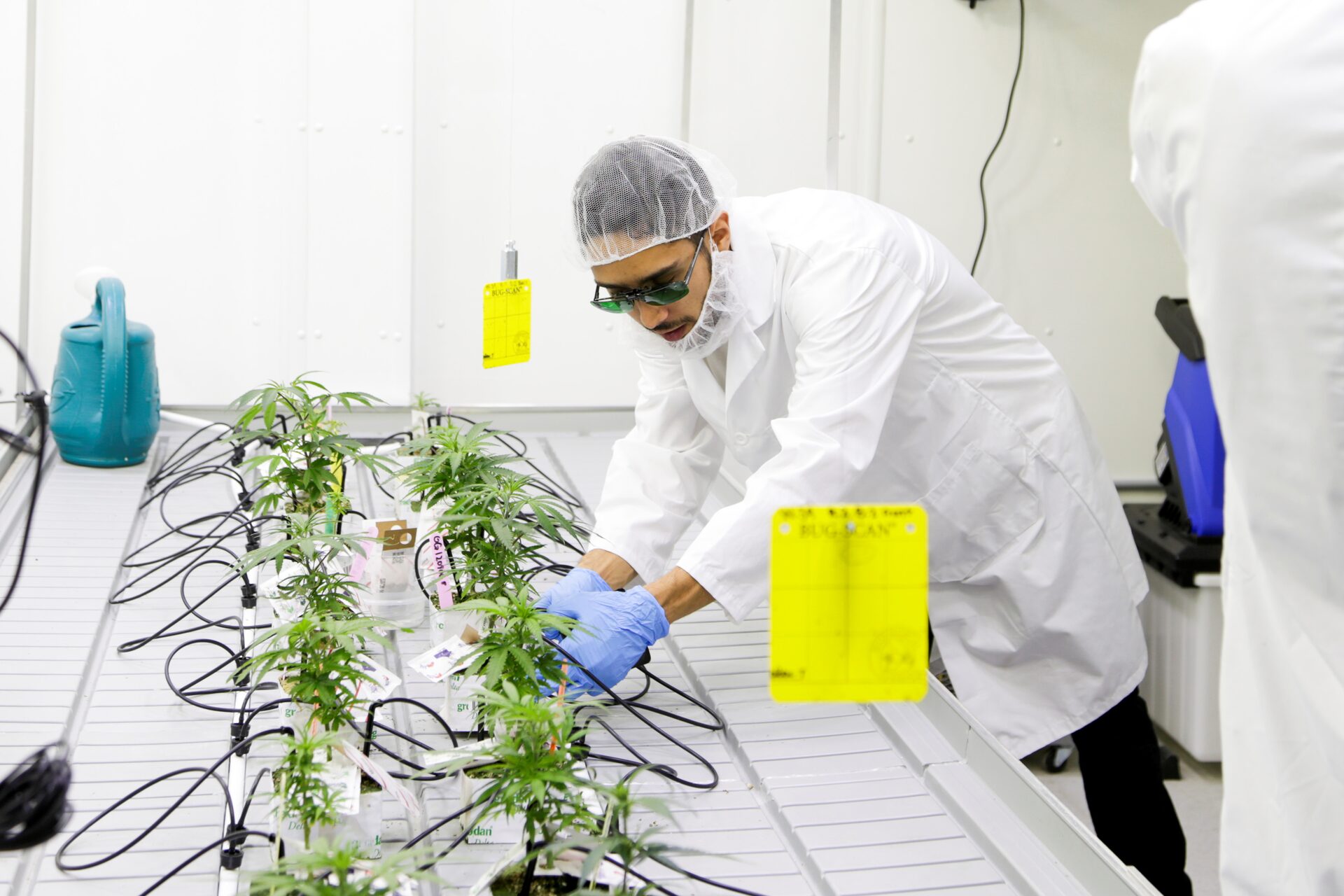


The journey from a tiny, unassuming speck of a seed to a glass jar overflowing with premium, aromatic flower is one of the most deeply rewarding experiences a cannabis enthusiast can undertake. There is a…
The post The Anatomy of a High-Yield Harvest: From Seed Selection to Curing appeared first on Greencamp.
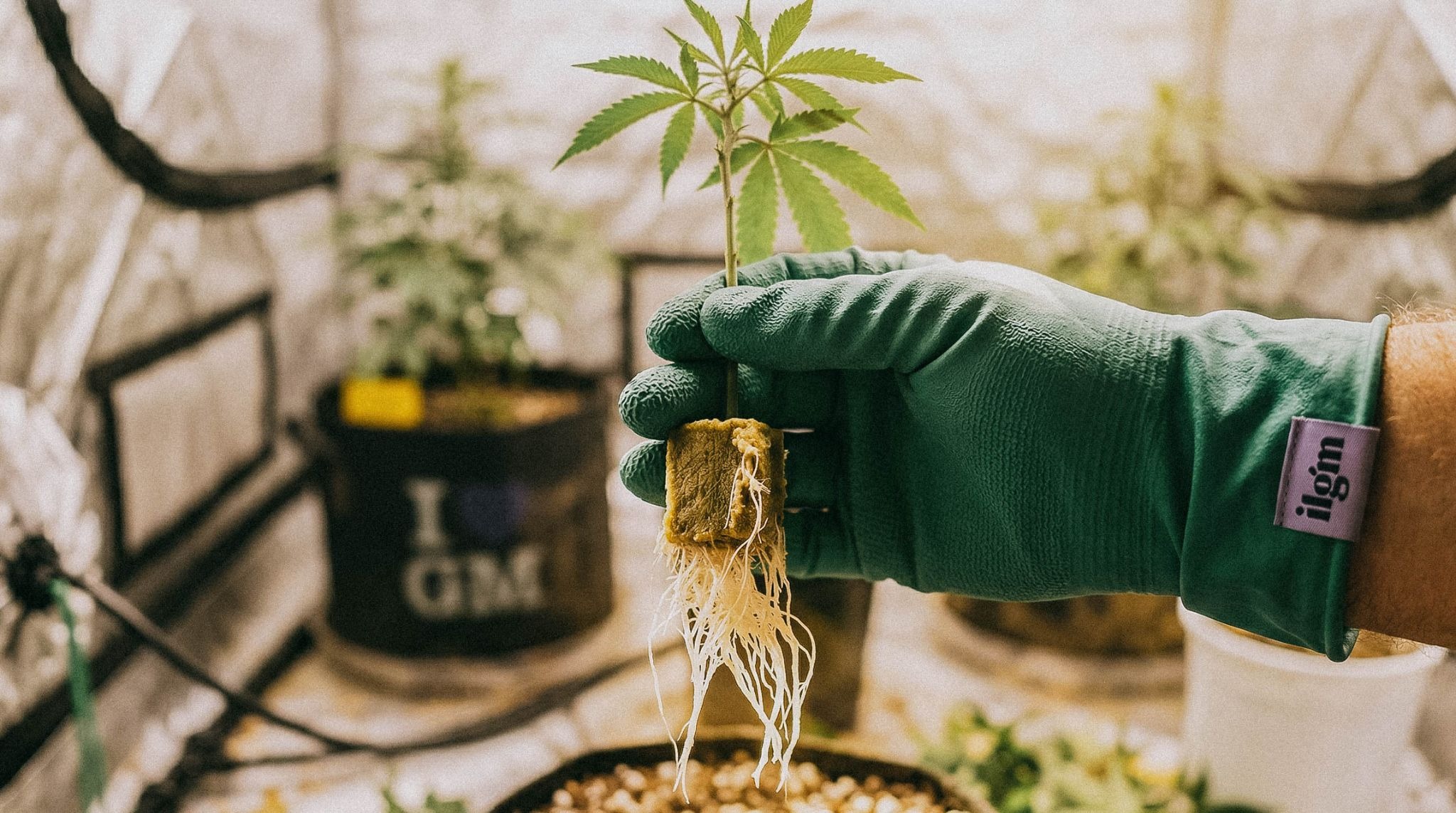
Why wait for seeds when you can root cannabis clones in as little as 7 to 14 days and produce identical plants in a …












We use cookies to improve your experience on our site. By using our site, you consent to cookies.
Manage your cookie preferences below:
Essential cookies enable basic functions and are necessary for the proper function of the website.
Drag & drop or click to select
JPEG, PNG, GIF, WebP, MP4, WebM · Images max 30 MB · Videos max 100 MB


