

Sheriff Releases Identity of One Suspect in Robbery of Carpinteria Cannabis Facility
February 7, 2026
Published by toker


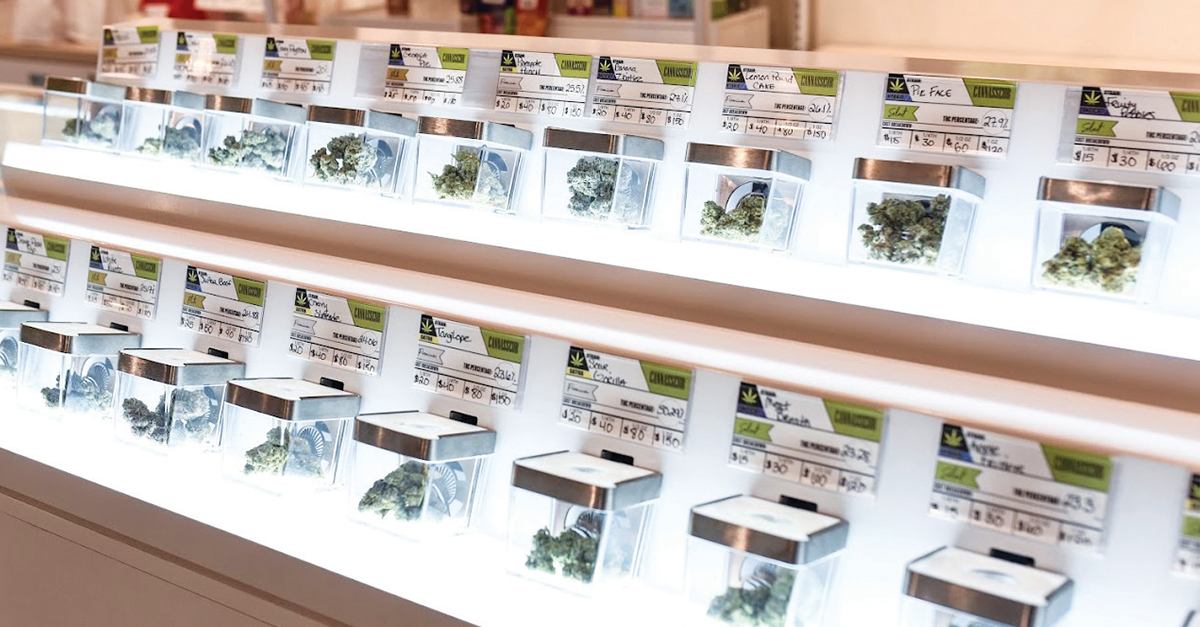
A cannabis retail fixture and display specialist offering turnkey design solutions and custom manufacturing for dispensaries nationwide, backed by parent company Econoco Corporation’s century of retail display expertise.




Sponsored
Display Dispensary is a cannabis-focused retail fixtures and displays provider headquartered in Hicksville, New York. Founded in 2019 as a subsidiary of Econoco Corporation, the company emerged to address a gap in the rapidly growing cannabis retail market where operators lacked access to professional, affordable display solutions tailored to cannabis product merchandising and regulatory compliance. Display Dispensary draws on its parent company’s 100 years of retail fixture manufacturing experience, adapting mainstream retail concepts to the unique needs of cannabis dispensaries.
The company’s product portfolio includes cannabis-specific display solutions such as FlowerBox and PlanterBox systems for showcasing flower products, FlowerVase display units, concentrate displays, countertop acrylic displays and risers, retail showcase counters, shelving systems, and slatwall accessories. Display Dispensary specializes in both stock fixtures available for immediate shipment and custom-designed solutions that can be manufactured and installed within weeks rather than months. The company’s signature offering is Dispensary123™, a turnkey system that combines inventory fixtures with custom accents to outfit complete retail spaces cost-efficiently while maintaining design flexibility and brand identity.
Display Dispensary operates a design team that provides consultation services, 3D rendering, and engineering support to create compliant retail environments. With access to Econoco’s manufacturing capabilities and more than 2,000 inventoried display products, Display Dispensary positions itself as a comprehensive solution provider for cannabis retailers seeking to provide their customers with a unique shopping experience.
/* 1. HIDE ALL THEME JUNK INCLUDING AUTO-ADS */
h1.entry-title, .byline, .td-post-author-name, .td-post-date, .td-post-meta,
.td-post-category, .td-category, .td-post-featured-image, .advertisement,
.td-a-rec, .td-a-rec-id-content_inline, .td-a-rec-id-content_bottom {
display: none !important;
height: 0 !important;
margin: 0 !important;
padding: 0 !important;
visibility: hidden !important;
}
/* 2. FIX FOOTER OVERLAP */
.td-main-content-wrap + div:not([class]) {
display: none !important;
}
/* 3. FORCE FOOTER POSITION */
.td-footer-wrapper,
.td-sub-footer-container {
margin-top: 0 !important;
position: relative !important;
z-index: 999 !important;
display: block !important;
}
/* 4. CLEAN UP BOTTOM OF CONTENT */
.td-container-wrap {
padding-bottom: 0 !important;
border-bottom: none !important;
}
/* Hide default post title */
h1.entry-title {
display: none !important;
}
/* Full-bleed hero image section */
.cover-feature .hero-image-container {
width: 100vw;
position: relative;
left: 50%;
transform: translateX(-50%);
margin: 0;
overflow: hidden;
}
.td-post-content .cover-feature .hero-image-container,
.container .cover-feature .hero-image-container {
max-width: 100vw !important;
width: 100vw !important;
margin: 0 auto !important;
}
/* Hide author, date, and meta */
.byline,
.byline-block,
.byline-author,
.byline-detail,
.td-post-author-name,
.td-post-date,
.td-post-meta,
.entry-meta {
display: none !important;
margin: 0 !important;
padding: 0 !important;
height: 0 !important;
overflow: hidden !important;
}
/* Hide category label */
.td-post-category,
.td-category,
.td-post-header .td-post-category,
.td-post-header .td-category {
display: none !important;
margin: 0 !important;
padding: 0 !important;
height: 0 !important;
overflow: hidden !important;
}
/* Hide theme featured image */
.td-post-featured-image,
.wp-post-image,
.post-thumbnail,
.td-post-header .entry-thumb,
.td-post-header img.wp-post-image,
.td-post-header .td-post-featured-image img,
.entry-featured-image,
.featured-media {
display: none !important;
height: 0 !important;
margin: 0 !important;
padding: 0 !important;
overflow: hidden !important;
}
/* Hide inline ads and related content */
.td-a-rec,
.td-post-content .td-a-rec,
.td-a-rec-id-content_inline,
.td-a-rec-id-content_bottom,
.td-a-rec-id-content_after,
.td_block_related_posts,
.td-post-content .td-a-rec-container,
.td-a-rec-container,
.advertisement,
.td_block_ad_box,
.td-related-title,
.td-post-related,
.td-post-next-prev,
.td-related-bottom {
display: none !important;
height: 0 !important;
margin: 0 !important;
padding: 0 !important;
overflow: hidden !important;
}
/* ✅ FIX: Remove rogue white spacer ABOVE footer only */
.td-main-content-wrap + div:not([class]) {
display: none !important;
height: 0 !important;
margin: 0 !important;
padding: 0 !important;
overflow: hidden !important;
}
/* Prevent horizontal scroll */
html,
body {
overflow-x: hidden;
}
.tdc-row[style*=”height:50px”],
.tdc-row > .vc_column[style*=”height:50px”] {
height: 0 !important;
margin: 0 !important;
padding: 0 !important;
overflow: hidden !important;
display: none !important;
}
.vc_column.tdi_27.wpb_column.vc_column_container.tdc-column.td-pb-span12 {
display: none !important;
height: 0 !important;
margin: 0 !important;
padding: 0 !important;
overflow: hidden !important;
}
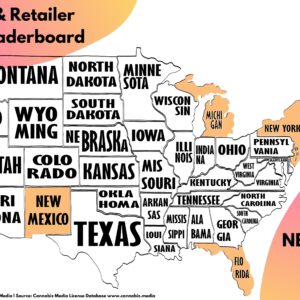
Now that Q2 has wrapped up we want to share our quarterly round-up of which states issued the most dispensary/retailer licenses and get a sense of the number of stores in the US. © CNB Media LLC dba Cannabiz Media
Source link
In the last of our Q2 license recaps, we turn to manufacturing, the least volatile of the three activities we cover in these quarterly posts – cannabis manufacturing licenses are issued at a slower pace than cultivation or retail licenses but, unlike license assets, these brands can cross state lines and help well-established companies thrive and build market share. © CNB Media LLC dba Cannabiz Media
Source link


Cannabis has never been a single experience. It was never one molecule, one effect, one intention, or one lane. It has always been plural—used for healing, ritual, relief, escape, communion, and survival, sometimes all at once. The plant made room for contradiction long before regulators tried to flatten it into categories that could fit on a spreadsheet.
Somewhere along the road to legitimacy, that plurality got lost. Hemp became something else. Medical became a loophole. Adult use became a market. Pharmaceutical became a threat. Culture became collateral damage.
What we call cannabis now often says more about who’s allowed to sell it than what it actually does.
Adam Rosenberg has lived inside every one of those boxes—and spent most of his career trying to explain why none of them actually make sense on their own.
Rosenberg isn’t a talking head parachuting in with a theory. His perspective was shaped by work in urine-testing labs, caregiver collectives, hemp fields, dispensaries, classrooms, boardrooms, and policy meetings. He’s worked with patients, farmers, investors, students, regulators, and brands. Today, he serves as chairman of the board of the National Cannabis Industry Association (NCIA), but his worldview was shaped long before titles entered the picture.
What he keeps coming back to is simple, and deeply inconvenient for modern cannabis discourse: the plant never asked to be divided this way.
One of the quiet casualties of legalization has been language. Consumers are expected to navigate THC, CBD, THCA, Delta-8, hemp-derived, marijuana-derived, full spectrum, isolate, medical, recreational, pharmaceutical—often without the education to tell one from the other. That confusion isn’t accidental. It’s structural.
Walk into enough dispensaries or scroll enough online menus and you start to see it: the plant reduced to acronyms, percentages, and disclaimers. The problem isn’t that cannabis education has been dumbed down or exaggerated; it’s that it exists in fragments, with no shared language or throughline holding it together.
“I agree completely that this bifurcation of hemp and marijuana has resulted in more confusion,” Rosenberg said. “And at the end of the day, the solution is to focus policy on the end product’s safety profile and intoxicating potential, not whether it comes from a hemp or a marijuana plant, because that’s a subjective definition in and of itself.”
When cannabis is chopped into opposing identities, the people using it are forced to pick sides they don’t actually belong to. Patients become consumers. Consumers become liabilities. Culture becomes a compliance problem.
Rosenberg continued, “Let’s prioritize responsible policy and move past this artificial divide that has drained resources on internal conflict rather than advocacy for the plant.”
What gets lost in these fights isn’t just regulatory clarity, it’s the momentum. Every internal argument over labels, lanes, and legitimacy is energy not spent protecting access or educating the people actually using the plant.
Rosenberg’s conviction around education didn’t come from branding decks or white papers. It came from conversations with patients—many of them young, many of them desperate, many of them failed by conventional medicine.
While interning at a pain management clinic, he was assigned to the urine testing lab. That’s where he noticed something no syllabus had prepared him for.
“As I was drug testing patients, I discovered many of them were testing positive for THC,” he said. “As I learned more, I came to understand that they were receiving incredible relief from this natural, non-toxic gift of nature without the risks and downsides associated with the opioids that they were being prescribed.”
That experience rerouted his entire life. It also hardwired a belief that still defines how he talks about cannabis today: access without education is incomplete, but education without access is cruel.
Cannabis culture used to teach itself through proximity. Patients talking to patients, growers talking to consumers, budtenders translating lived experience into guidance. As those relationships give way to regulation-first systems, knowledge becomes transactional rather than communal.
When culture loses the ability to pass down knowledge about the plant—how people actually learn it, use it, and make sense of it through experience—it gets replaced by marketing shorthand and regulatory jargon. The result is a public that’s overwhelmed and an industry that argues with itself instead of teaching.
“Consumers aren’t yet informed enough to know how to thoroughly vet cannabis products,” Rosenberg acknowledged. “And that’s not their fault.”

One of the most persistent cultural myths in cannabis is that medical, recreational, and pharmaceutical uses are mutually exclusive. Rosenberg rejects that outright—not philosophically, but practically.
“My principle is that nature provided us with an absolutely perfect gift,” he said. “And the only problems we have ever had are in how we use it or misuse it and in how we enforce against it.”
Personally, he gravitates toward full-spectrum products and traditional preparations. “If I’m using it personally, therapeutically, or for people in my life, I’m going to recommend something like a Rick Simpson oil,” he said. “That is also just my belief that our bodies are meant to eat whole foods and use nature in its natural form.”
But he’s also realistic about where culture meets reality. Not everyone wants flower. Not everyone will ever smoke. Not everyone will accept cannabis unless it looks like something they already trust.
“The other opportunity that the more biopharmaceutical side offers is in healing people that would not otherwise use cannabis,” Rosenberg said. “The grandmas that would say, well, I’m not touching the devil’s lettuce, but they’ll take a pill that’s prescribed by their doctor.”
That tension between purity and pragmatism has always existed in cannabis culture. The mistake is pretending it’s new or pretending it has to be resolved by choosing one side.
The deeper cannabis pushes into legitimacy, the more it mirrors the fractures of every other American industry. Hemp versus marijuana. Legacy versus licensed. Patients versus profits. Each group is responding to real pressures, but rarely sitting in the same room long enough to recognize shared stakes.
“To me, it starts with patient access,” Rosenberg said. “But patient access is meaningless without the tools to provide the products, and that’s the industry. And that’s why we need to also support growing a healthy industry.”
That belief has guided his work inside NCIA, where he works to bring competing factions together.
“We hold a responsibility that’s greater than our own individual business or our own individual position,” he said. “We’re all part of this greater movement that is going to help save a lot of lives and improve a lot of lives just by making progress together.”
It’s not a kumbaya sentiment. It’s a warning. When cannabis culture collapses into silos, it becomes easier to regulate, easier to exploit, and easier to forget why legalization mattered in the first place.

Cannabis is not a brand category. It’s not a loophole. It’s not a single compound or a political football. It’s a plant that has survived decades of misuse, prohibition, and misunderstanding—largely because people kept using it anyway.
The cultural challenge now isn’t whether cannabis will be accepted. It’s whether it will be understood.
“There’s a misperception for the vast majority of people that medical cannabis is one entity,” Rosenberg said. “When actually, cannabis is a series of thousands of individual components.”
Culture has always been cannabis’ best teacher. When that culture fractures, education becomes transactional and access becomes conditional. The plant doesn’t change—but the meaning does.
If cannabis is going to move forward without losing itself, it may need to remember something deceptively simple: it was never one thing to begin with.
Cannabis culture has never been fragile, but it has become fragmented.
The plant survived prohibition because people understood it intuitively, shared knowledge freely, and trusted each other more than the system. What threatens it now isn’t backlash or regulation alone. It’s the slow erosion of common ground from inside the house.
When the industry can’t agree on language, when hemp and marijuana are treated as opposing identities instead of expressions of the same plant, when internal squabbles consume more energy than collective progress, we make it easier for outsiders to define cannabis for us, and harder to protect it from being overregulated into something unrecognizable.
Federal legalization, however it arrives, will not be gentle. If cannabis can’t present itself as a coherent culture with shared priorities, it risks being carved up by regulatory frameworks that were never designed to respect nuance, history, or lived experience.
Cannabis was never one thing. That was its strength. Pretending it’s many unrelated things—with no obligation to each other—may be the fastest way to lose control of its future. Remembering that shared strength just might give the culture a way forward together.
All photos courtesy of Elsa Olofsson via Unsplash.
<p>The post Cannabis Culture Can’t Afford to Keep Fighting Itself first appeared on High Times.</p>


Let me show you what state-sponsored propaganda looks like in 2025. Singapore’s Central Narcotics Bureau recently published an infographic titled “Understanding Medical Cannabis” that’s so packed with cherry-picked data, misleading claims, and deliberate omissions that it deserves a thorough dissection