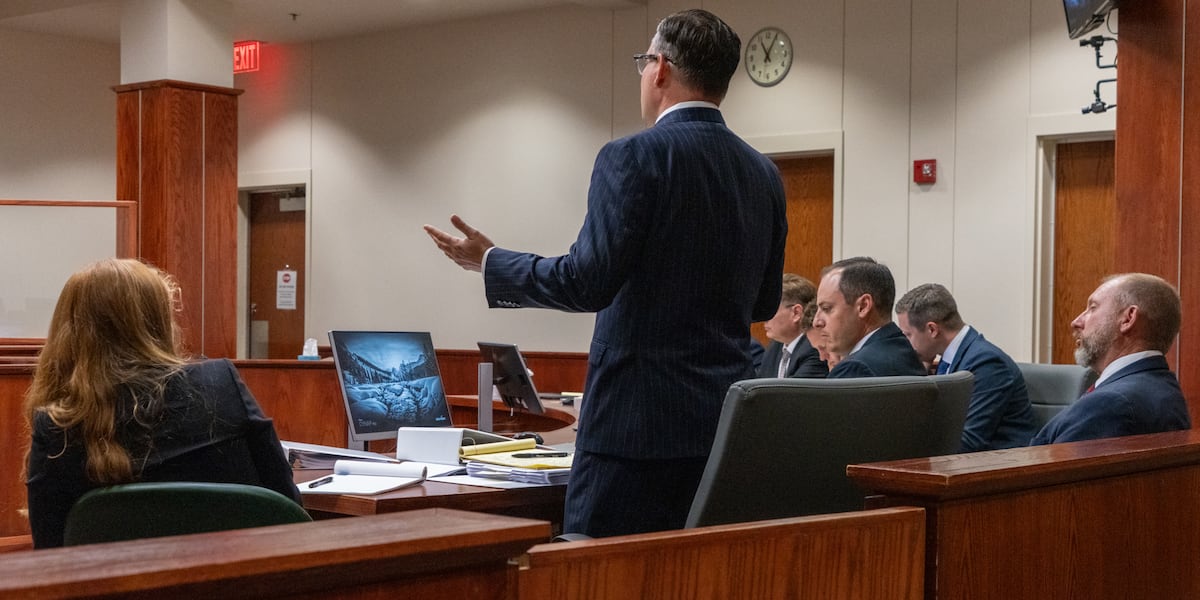
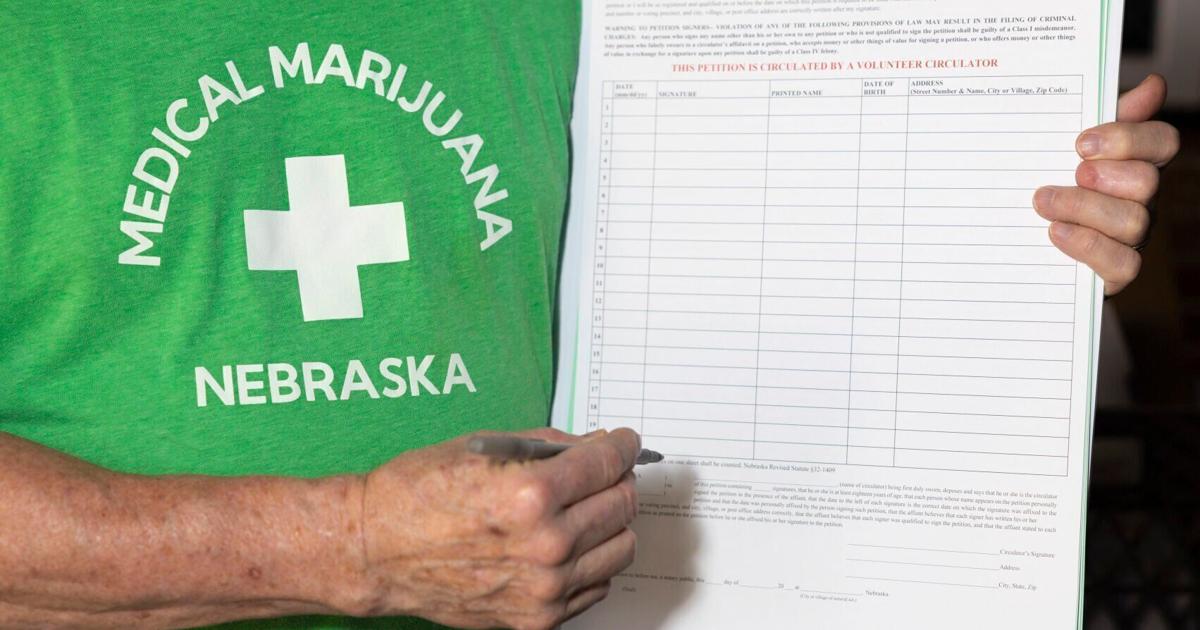
LINCOLN, Neb. (Nebraska Exaxminer) – A Lancaster County district judge is reviewing whether to dismiss a lawsuit alleging that Nebraska’s voter-approved medical cannabis laws violate federal law after in-person arguments Tuesday.
This is the second medical cannabis case to reach District Judge Susan Strong, who in late November ruled against a preelection lawsuit challenging that the ballot measures shouldn’t have been placed on the ballot because of allegedly fraudulent notarizations. Strong rejected those arguments. In the latest case, Strong must first decide whether to let the federal preemption case proceed based on whether a longtime marijuana opponent, John Kuehn, has the necessary “standing” to sue.
That’s the legal term of art required for cases to proceed, meaning that Kuehn, a former state senator and former member of the State Board of Health, must show injury as a result of the new medical cannabis laws legalizing and regulating the drug.
The ballot measures overwhelmingly passed in November, with 71% approval for legalization and 67% approval for a regulatory law. Tuesday’s arguments came on the same day state lawmakers are consideringLegislative Bill 677, a separate effort to create a clearer regulatory scheme around medical cannabis to assist in the program’s implementation.
‘He couldn’t wait’
Many of the arguments in court Tuesday mirrored legal briefs filed earlier. Largely, they argue that Kuehn is not the right party to challenge the measures under “taxpayer standing,” or that, as a taxpayer, he should get to challenge “illegal” taxpayer spending.
All 11 defendants named in the case from Kuehn have filed to dismiss the case. Attorney Jason Grams, for the three members of the new Nebraska Medical Cannabis Commission that voters’ regulatory law established, told Strong no taxpayer funds had been spent by Jan. 10, when Kuehn amended his lawsuit to include the commissioners.
“He couldn’t wait to take the time to meet the demand requirement for taxpayer standing,” Grams said.
Grams represented the Nebraskans for Medical Marijuana campaign in 2020 against a lawsuit brought by Lancaster County Sheriff Terry Wagner. The Nebraska Supreme Court ruled against the campaign and removed the measure from the 2020 ballot.
A ‘recycled argument’
Attorney Daniel Gutman, who is now representing the three sponsors of the 2024 cannabis ballot measures, said the “ship has long sailed” for election-related challenges against his clients. Gutman continues to defend the sponsors as Kuehn and the Attorney General’s Office appeal the earlier notarization case, also from Kuehn, to the Nebraska Supreme Court.
Gutman said the sponsors didn’t agree to be “sued in perpetuity” for any challenge from Kuehn.
Of the dozens of states that have legalized medical cannabis, Gutman and Grams said no court has tossed the laws.
Gutman said states are meant to be “labs of democracy” and that the federal government and Congress do not preempt the Nebraska laws. He also noted a provision in annual federal spending bills prohibiting the U.S. Department of Justice from spending federal money to prosecute people following state medical cannabis laws.
“We would literally be here all day if I cited all the cases rejecting this recycled argument,” said Gutman.
Deputy Solicitor General Zach Pohlman, defending Gov. Jim Pillen, Secretary of State Bob Evnen, Treasurer Tom Briese and two other state defendants in the case, summed up morning arguments that someone should challenge the laws, but Pohlman said it shouldn’t be Kuehn.
“Just because that statute is on the books doesn’t mean that Kuehn can run around the normal standing requirements,” Pohlman said.
Instead, the AG’s staff has said Nebraska Attorney General Mike Hilgers and his staff should be the ones to challenge the law, which they’ve pledged to do if and when the Medical Cannabis Commission issues any dispensary licenses under the new laws.
‘Snip this off at the bud’
Attorney Eddie Greim of Kansas City, representing Kuehn, said the challenge should proceed in part because public records requests indicate that staff for the Liquor Control Commission, which the regulatory law voters passed and tied closely to the Nebraska Medical Cannabis Commission, have discussed how to implement the laws and estimated possible costs.
“If we can snip this off at the bud, and we can enjoin the NMCC from doing anything,” Greim said, “then the harms will never flow down to the other defendants.”
Some of the records received include fiscal or lobbying requests related to pending legislation just down the street from the courthouse at the Nebraska State Capitol, which Greim said show regulatory steps being taken. Grams said the records are “utterly irrelevant” to the lawsuit.
Grams also filed affidavits from each of the three commissioners on the Nebraska Medical Cannabis Commission stating that the commissioners had taken no regulatory action as of Jan. 10, when the commissioners were added to the lawsuit.
Greim objected to that evidence, saying he needed to be able to “look behind the veil” and challenge the commissioners’ statements.
Strong said she would take the evidence challenges and the motions to dismiss from all defendants under advisement and rule at a future date.
Nebraska Examineris part of States Newsroom, a nonprofit news network supported by grants and a coalition of donors as a 501c(3) public charity. Nebraska Examiner maintains editorial independence. Contact Editor Aaron Sanderford for questions:info@nebraskaexaminer.com.
Click here to subscribe to our 10/11 NOW daily digest and breaking news alerts delivered straight to your email inbox.
As nature flourishes and energies rise, May is often seen as a potent month for renewal and transformation. It’s no wonder that spiritual practitioners and mystics embrace May for rituals that harness intention, clarity, and deep reflection. One increasingly popular fusion in the metaphysical community is combining cannabis and tarot—a pairing that enhances introspection and intuitive insight. Whether you’re a seasoned reader or a curious seeker, this mystical match can help you tap into hidden layers of consciousness.
Why May?
May carries the essence of Beltane, a Gaelic festival celebrating fertility, creativity, and abundance. Occurring on May 1st, Beltane marks the halfway point between the spring equinox and summer solstice. It’s a time to manifest desires, clear energetic blockages, and invite passion and purpose into life. Using this seasonal energy as a foundation, blending cannabis and tarot becomes an intentional act of alignment with both Earth and spirit.
Cannabis as a Spiritual Tool
Far beyond recreational use, cannabis has historically been used in sacred rituals across cultures. The Scythians, ancient shamans of Central Asia, burned cannabis as a ceremonial incense. In India, sadhus (holy men) consume it during meditation to quiet the mind and deepen spiritual connection. Today, many modern practitioners turn to cannabis to enhance practices like yoga, journaling, and of course—divination.
According to a 2018 study published in Frontiers in Pharmacology, cannabis, especially strains rich in CBD and low to moderate in THC, can help reduce anxiety, encourage focus, and foster open-minded thinking—ideal for tarot sessions where clarity and presence are key.
How to Combine Cannabis with Tarot
Set the Space Create a calm, sacred atmosphere. Use candles, incense, crystals, or natural elements like flowers or herbs (mugwort and lavender pair beautifully). Choose a strain that supports your intention—uplifting sativa for insight, calming indica for emotional processing, or a balanced hybrid.
Ground and Meditate Before reaching for your deck, take a few conscious breaths. Use cannabis mindfully—one puff or edible dose is often enough. Close your eyes, ground yourself, and visualize your energy syncing with the universe.
Ask Meaningful Questions Rather than yes/no queries, ask open-ended questions like:
“What energy should I focus on this month?”
“What inner wisdom am I ignoring?”
“How can I move past fear right now?”
Pull Cards Intuitively Let the cannabis heighten your sensory awareness. Notice card imagery, colors, and any intuitive messages that arise. Journal your insights or speak them aloud.
Close with Gratitude Whether your reading brought clarity or more questions, always close with thanks—to yourself, the cannabis plant, and the wisdom of the tarot.
Resources for Deeper Exploration
Leafly.com – A trusted source for exploring cannabis strains and effects
BiddyTarot.com – Beginner to advanced tarot interpretations and spreads
“The Body Keeps the Score” by Bessel van der Kolk – For those exploring the emotional release aspect of rituals
MAPS.org – For research into plant medicines and mental health
Bill that would regulate medical marijuana in Nebraska failed in the legislature on Tuesday. This will put the rules and regulations in the hands of the commission.Gov. Jim Pillen appointed two people to the new commission, and there will be a hearing on Thursday to approve his choices.READ MORE: Gov. Jim Pillen appoints individuals to the Medical Cannabis Commission ahead of legislative debateThe dead bill would have placed more restrictions than the ballot language, limiting up to 2 ounces of the flower and prohibiting smoking. In addition, it listed 15 ailments that a doctor or nurse practitioner can recommend a patient to use the drug for. That doctor needed to be in Nebraska or has to have seen the patient for at least six months. It also set up a tax and fees.Since the failure, the current regulations abide by what voters approved last November. People can have up to 5 ounces, and any part of the flower can be used. The new commission will have until July 31 to come up with regulations, so patients could start getting licenses by the end of October. NAVIGATE: Home | Weather | Local News | National | Sports | Newscasts on demand |
CLOQUET — The Cloquet City Council was split Tuesday on where cannabis can be sold in the city, narrowly voting to allow cannabis dispensaries to operate only in the business district on Minnesota Highway 33.
After failing to pass two resolutions that would have allowed cannabis to be sold in more areas of the city, the council voted 5-2 to confine the sale of cannabis to the regional commercial district along Highway 33; councilors Kerry Kolodge and Lyz Jaakola were opposed. That’s even more restrictive than the proposal the council deadlocked over at its last meeting.
“We have a starting point and recognizing that we can revisit the parameters at any time, I would anticipate down the road,” Councilor Lara Wilkinson said.
The zoning ordinance was passed with urgency because the Minnesota Office of Cannabis Management license lottery
The lottery could grant licensure to cannabis businesses hoping to operate in Cloquet. But, before it can do so, the Office of Cannabis Management requires businesses to receive a local government’s certification of zoning compliance after being vetted.
The ordinance divides cannabis businesses into three categories:
Cannabis retail business, which sells cannabis and other products.
Non-retail cannabis business — a facility for cannabis production or distribution.
Lower-potency hemp retail business, which includes edibles and beverages.
The ordinance will allow for non-retail cannabis businesses to operate in areas zoned for industrial uses and lower-potency hemp to be sold across the city. Where cannabis retail businesses can operate drew most of the concern from council members.
The initial proposed ordinance would have allowed cannabis retail businesses to operate in downtown Cloquet and along Highway 33; however, it failed with councilors Iris Keller, Kolodge, Jaakola and Wilkinson voting against it.
Iris Keller, who represents downtown Cloquet, was concerned about allowing dispensaries to operate in one of the city’s most populated areas, even if it is downtown.
“We can’t have it next to residential areas, and yet, the city center is one of the most populated residential areas in the city,” she said.
Jaakola proposed a second resolution that would have allowed retail cannabis shops to operate in the West End business district, which has struggled in recent years to attract businesses, but that, too, failed to pass, with Mayor Roger Maki and councilors Chris Swanson, Sheila Lamb and Kolodge opposed.
City Administrator Tim Peterson urged the council to pass something just to get the ordinance on the books before the Office of Cannabis Management begins approving licenses and to amend it later.
“A tweak here and there is certainly something that I think that most of us can live with,” Peterson said.
Swanson agreed with Peterson.
“As we go, we can, I was going to say grow that, but that may not be the right metaphor,” he said.
Peterson said approving the ordinance is one of multiple decisions the council must address as the city prepares for legal cannabis sales. He noted that by the council’s next meeting, the council will likely have to address licensing, buffer zones from where cannabis shops can operate and background checks.
The city plans to follow Carlton County’s cannabis consumption ordinance, which the
LINCOLN — A legislative proposal seeking to help implement Nebraska’s voter-approved medical cannabis laws failed Tuesday, facing a tougher floor fight than four years ago despite widespread support in November.
The latest measure, Legislative Bill 677, failed to garner the 33 votes needed to shut off a filibuster, with the bipartisan effort to stop debate falling 23-22. The regulatory push secured the support of eight Republicans, 14 Democrats and one nonpartisan progressive in the officially nonpartisan 49-member body (State Sen. Ashlei Spivey of Omaha, the only other Democrat, was absent from the final vote but had supported the bill).
Republican State Sens. John Arch of La Vista, Carolyn Bosn of Lincoln and Merv Riepe of Ralston declined to take a position and were “present, not voting.”
State Sen. Ben Hansen of Blair, at right, speaks to attendees of a lawmaker-hosted public forum on medical cannabis at the University of Nebraska at Omaha on May 4, 2025, that he co-hosted with State Sens. Rick Holdcroft of Bellevue and John Cavanaugh of Omaha, from left. (Zach Wendling/Nebraska Examiner)
State Sen. Ben Hansen of Blair, a Republican with a Libertarian bent who sponsored LB 677, sought to appeal to his conservative colleagues that “on a limb,” everyone could agree that medical cannabis could at least help someone.
“If that’s the case, you believe in medical cannabis, and that’s OK,” Hansen said. “I know sometimes that scares some of us.”
Freshman State Sen. Glen Meyer of Pender was one Republican who heeded Hansen’s call.
“I would hope, and hope’s not a plan, but I do have faith in this body, I would expect intelligent people with good hearts, which I believe this body is, can find a way to provide relief with some medical marijuana,” Meyer said.
The other six Republicans joining Hansen and Meyer were State Sens. Tom Brandt of Plymouth, Stan Clouse of Kearney, Myron Dorn of Adams, Rick Holdcroft of Bellevue, Jana Hughes of Seward and Dave Wordekemper of Fremont.
But at the end of the day, Gov. Jim Pillen, Attorney General Mike Hilgers and Nebraska’s junior U.S. Sen. Pete Ricketts, R-Neb., Pillen’s predecessor, prevailed in their public calls against passing LB 677, peeling off enough Republican senators to stop the bill.
Voters legalized medical cannabis with 71% approval in November, for up to 5 ounces of cannabis with a physician’s recommendation. A separate regulatory law secured 67% approval.
‘We can always come back’
Leading the charge against LB 677 was freshman State Sen. Jared Storm of David City, who echoed the calls of Hilgers and Ricketts that legislation wasn’t needed to help implement the state’s new medical cannabis laws.
State Sen. Jared Storm of David City. May 12, 2025. (Zach Wendling/Nebraska Examiner)
Storm and multiple Republicans said the new Nebraska Medical Cannabis Commission, which voters created and charged with “exclusive” regulatory authority, should be left to act on its own first, without legislative changes.
“If we have any issues, we can always come back as a body and tweak those issues, not jump off the cliff,” Storm said of Hansen’s LB 677 and an accompanying amendment.
He added: “I don’t want anybody to think that I’m some cold-hearted monster here that does not have sympathy for children and adults that are suffering through pain. But we have to get this right.”
The hesitation also came as Hilgers’ office continues challenging whether the ballot measures were properly placed on the 2024 ballot and an expected future state-led challenge arguing the voter-approved laws violate federal law. The AG’s Office was in court earlier Tuesday asking for a citizen-led lawsuit alleging the same legal challenge to be tossed so Hilgers’ staff can sue.
State Sen. John Fredrickson of Omaha, a mental health practitioner, said cannabis would not “leap off the shelves” and corrupt Nebraska youth, as some opponents contended. He said senators sometimes needed to go outside and “touch some grass and just think about what the world is like outside of this room.”
“Let’s not get too concerned about ‘fighting against the will of the people,’” Fredrickson said. “Let’s help shape it. Let’s help put in the right guardrails in place, and let’s help build a system that we can be proud of and puts our patients first.”
Hansen said a strong regulatory system could also save lives from over-reliance on opioids, which State Sen. Dan Quick of Grand Island echoed.
State Sen.-elect Dan Quick of Grand Island. Dec. 13, 2024. (Zach Wendling/Nebraska Examiner)
Quick said he thought medical cannabis might one day be able to help his son who has struggled with opioid, drug and alcohol addiction for about 25 years. In that time, Quick said he and his wife have administered life-saving meds to reverse overdoses.
“I think this is an important bill that could help a lot of people, and we need to take that into consideration in what we’re doing,” Quick said.
State Sens. Megan Hunt and Dunixi Guereca, both of Omaha, said opponents also needed to grow up and embrace the modern acceptance of medical cannabis.
“The 1990s have called, and they want their ‘Reefer Madness’ back,” Guereca said. “It is the year of our Lord 2025. Medical marijuana is not controversial.”
‘The will of the people’
Multiple opponents targeted Democrats for their support of LB 677 but opposition to other measures this year to water down voter-approved laws related to paid sick leave and minimum wage. In those cases, 32 of 33 Republicans support changing what voters approved, including Hansen. State Sen. Jane Raybould of Lincoln is the lone Democrat in favor of the sick leave and minimum wage changes, and she proposed the minimum wage tweaks.
“This bill’s unnecessary, inappropriate, undermines the will of the people and implements recreational marijuana,” State Sen. Bob Andersen of north-central Sarpy County said.
State Sens. Merv Riepe of Ralston and Danielle Conrad of Lincoln. April 22, 2025. (Zach Wendling/Nebraska Examiner)
Hansen and State Sens. John Cavanaugh of Omaha, Danielle Conrad of Lincoln and George Dungan of Lincoln repeatedly pushed back and noted that backers of the medical cannabis ballot measure asked for LB 677, unlike supporters of the sick leave and minimum wage changes.
Public support for medical cannabis was widespread in November, with majority approval in all 49 legislative districts for legalization and 46 of 49 districts favoring a regulatory system.
Cavanaugh and Dungan said LB 677 was stricter than they would have liked but helped voters whose will Dungan said would “once again be stifled” if LB 677 failed.
Cavanaugh, who offered amendments to make the bill less restrictive, said its negotiated constraints were “in the interest of accessibility, safety, reliability.”
‘Let’s cool our jets’
State Sen. Tanya Storer of Whitman called out “political theater” and said part of the urgency for passing LB 677 was an effort by supporters of medical cannabis to get around legal challenges.
“Don’t be fooled about the why, about the panic, about why the marijuana proponents are playing on your fear and emotion that we’re going to have mayhem and chaos if we don’t pass 677. If we pass it, we put it in state statute,” Storer said.
State Sen. Tanya Storer of Whitman, center, talks with State Sen. Wendy DeBoer of Omaha. April 10, 2025. (Zach Wendling/Nebraska Examiner)
Some senators, as well as Hilgers, have said LB 677 could weaken his office’s pending appeal before the Nebraska Supreme Court alleging improper notarizations during the ballot measure process, which a Lancaster County District Court judge widely rejected in November, after the election. Ballot sponsors have also consistently denied wrongdoing.
Some opponents flaunted that decision and said they hope the Nebraska Supreme Court “gets it right,” including State Sen. Mike Jacobson of North Platte, who asked whether LB 677 would incentivize people to “dummy up a bunch of signatures.”
Jacobson and State Sen. Bob Hallstrom of Syracuse, a lawyer, repeatedly pointed to the fraud-focused case and said Hilgers was protecting the ballot measure process.
“Let’s cool our jets. Let’s slow down the pace,” Jacobson said.
‘This issue isn’t going away’
Conrad and the ballot sponsors have said it is Hilgers and Secretary of State Bob Evnen’s alleged fraud case who are threatening the petition process and seek to “ruin the lives of grassroots activists who peacefully petitioned their government for change.”
Despite opponents’ best efforts, Conrad said, the Legislature had already affirmed the ballot measures with an earlier cleanup bill passed Feb. 21 in a 48-0 vote: LB 1.
Nebraska Attorney General Mike Hilgers, center, leads a news conference against Legislative Bill 677 that seeks to help implement medical cannabis regulations in the state. About a dozen law enforcement officials joined him in standing against the legislation as it awaits full legislative debate. May 7, 2025. (Zach Wendling/Nebraska Examiner)
Conrad also blasted some opponents for drumming up the very evidence that Lancaster County District Judge Susan Strong, a Ricketts appointee, had rejected, including texts among campaign volunteers. Conrad, citing Strong, said she found them “completely out of context, legally irrelevant and cherry-picked.”
“To regurgitate them here on the floor of the Legislature, again, out of context, again, to sling mud, again, to drag moms of sick kids who are petitioning their government to try and find a cure, that says a lot about you,” Conrad said.
Meyer said that even if signatures are ultimately tossed, and the state Supreme Court sides with Hilgers’ appeal, voters’ strong approval would still carry weight.
Many of the same campaign volunteers, including all but one of the main notaries being targeted by the AG’s Office, showed up for the debate. In the early hours of debate, one of the long-time advocates had seven seizures. Her mom helped start the legislative push more than a decade ago.
Some volunteers said that while the defeat of LB 677 was a loss, they wouldn’t stop fighting and would keep showing up.
“This issue isn’t going away. I don’t believe the people will let it go away,” said Crista Eggers, executive director of Nebraskans for Medical Marijuana, who described the defeat as an “absolute failure.”
Hansen predicted that LB 677’s defeat could accelerate the push for recreational marijuana, as early as the 2026 election. That would come at the same time Pillen, Hilgers, Evnen, Ricketts and half of the seats in the Legislature are up for reelection.
‘Choke it to death’
Another major theme of the debate was whether the Legislature should step in before the Medical Cannabis Commission has a chance to, as the Legislature has not yet considered or confirmed two final gubernatorial appointees.
Both of those Pillen picks — Dr. Monica Oldenburg of Lincoln and Lorelle Mueting of Gretna — have a confirmation hearing Thursday. Each has consistently opposed the same measures that Eggers and other long-time supporters have fought for. Mueting opposed LB 677 but was “neutral” on a much stricter bill from Storm.
“Why would we as a Legislature start messing with the commission that hasn’t even started doing its work yet?” State Sen. Rob Dover of Norfolk asked during debate.
Nebraska advocates for medical cannabis have worked for more than 12 years, and continue to wait, for a safe, regulated system in Nebraska, after winning voter approval in November. Pictured are many longtime advocates for the effort. (Photos courtesy of Nebraskans for Medical Marijuana)
“If they take the reins, they can choke it to death,” Hansen said of the commission.
Four years ago, an earlier medical marijuana bill failed 31-18 in face of Republican opposition. Hilgers, a former state senator, opposed the 2021 bill, too.
But unlike that narrow defeat, LB 677 faced one of the toughest fights for advocates in a decade, even as the 2025 debate came at a different political moment than in 2021. That includes Ricketts no longer being governor. He had said legalized marijuana would “kill your kids.” It also includes overwhelming approval of the ballot measures.
“I think you know in your hearts that people deserve this, and you know in your hearts what’s going to happen if we don’t,” Hansen told his colleagues. “The people voted for you to make a decision, not to push it off to somebody else.”
An agreement between the state of Minnesota and White Earth Nation gives the tribal nation the green light to open cannabis dispensaries across the state.
According to Minnesota’s Office of Cannabis Management (OCM), the agreement allows the White Earth Nation to open up to eight dispensaries outside of Tribal lands.
The 2023 law greenlit recreational marijuana with a gross receipts tax of 10% on sales at licensed businesses. A budget agreement announced May 15 would raise it to 15%.
The approved tax hike would be in addition to the state sales tax rate of 6.975% and any local sales taxes. This applies to low-dose, THC edibles derived from hemp, too.
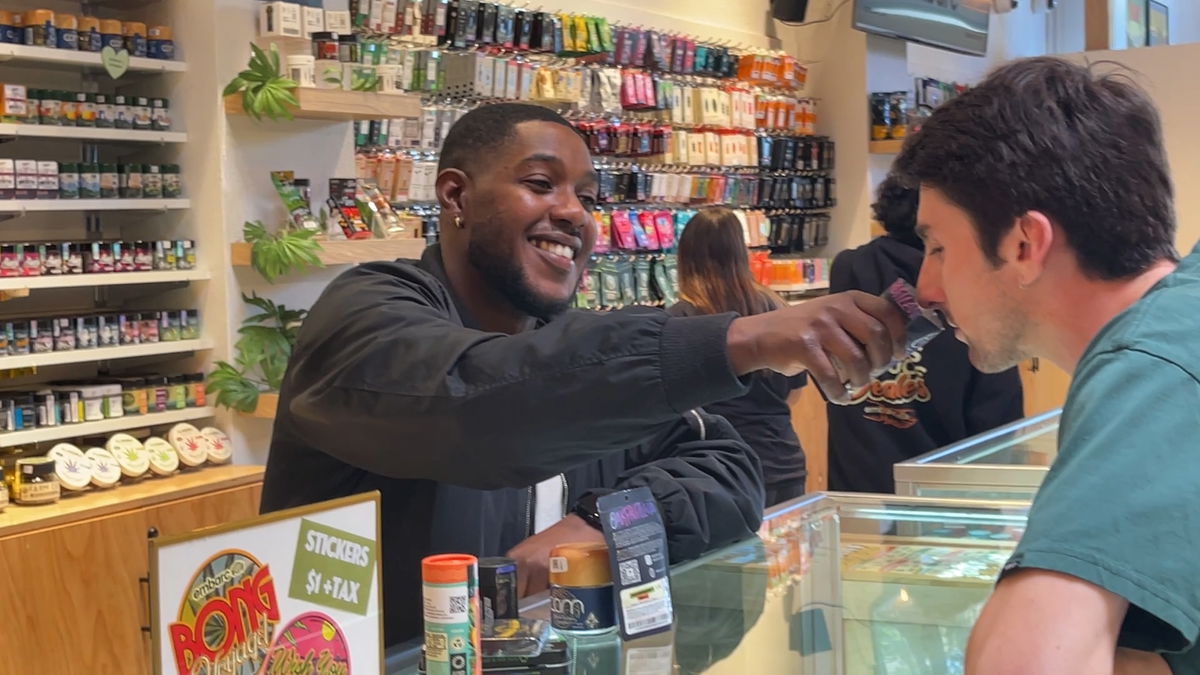
SANTA BARBARA COUNTY, Calif.—Tuesday was a fairly busy day at Embarc in Ventura.
But that all could change come July due to a scheduled tax increase.
“I think it’s just going to make it harder for the industry to thrive and therefore it will be less taxes for the county. So but again, I don’t think it’s just because of that, that one tax. I think it’s an overall problem with the market and the fact that there’s a glut and we have too much cannabis being grown,” said Santa Barbara County Supervisor Laura Capps.
Cannabis dispensary owners are urging the California legislature to freeze the excise tax increase at its current 15% rate.
If they fail, the tax is scheduled to increase to 19% on July 1st.
Embarc Co-Founder Dustin Moore says more taxes could crush retailers.
“Even if we suffered a 10% reduction in sales as an industry, that at 19% tax, the state would actually end up losing money. And we feel with almost near certainty that an increase in the tax rate will further push folks from shopping in the licensed and legal market to the illicit, unlicensed market,” said Moore.
“When you’re trying to find the right products to help you with real issues and you’re trying to get off of alcohol or you’re trying to get off of opiates or things of the like, increasing that difficulty is never a good thing,” said Embarc Assistant General Manager Sean Smith.
The California Cannabis Operators Association says more than 60% of cannabis sales come from the illicit market, which Moore says is a big risk to consumers.
“We saw just a couple of years ago in the Central Valley that there was an epidemic. It was called the vape crisis, where untested vape products were poisoning people,” said Moore.
There are signs California’s legal cannabis market is declining.
More than 10,800 cannabis licenses are now inactive or surrendered, exceeding the number of active licenses statewide.
Malta’s government has passed a string of controversial new regulations imposing stricter controls on cannabis users and associations, causing uproar from proponents.
On May 16, the third and final reading of Bill 128 saw the bill passed unanimously, meaning that, among other measures, users can be fined for complaints of cannabis odour, all cannabis infractions will now go through the courts, and association members will no longer be able to remain anonymous.
In response, pro-cannabis groups and many media outlets have strongly criticised this unexpected crackdown in one of Europe’s most liberal territories in regards to drug prohibition.
ReLeaf Malta, in a joint statement with activist group Moviment Graffitti, said: “In the case of cannabis users, the right to equality is being violated, and the reform is working against the very people it is supposed to protect-namely, us, the consumers and personal cultivators of cannabis.”
What happened?
Last month, Business of Cannabis reported that Malta’s Parliamentary Secretary for Reforms, Rebecca Buttigieg, announced a raft of proposed changes to the country’s cannabis framework after it became one of the first in the European Union to decriminalise cannabis consumption for adult-use purposes in 2021.
In late December 2021, cannabis was effectively decriminalised under a new law that permits adults to possess up to 7gs of cannabis for personal use, cultivate up to four plants at home and secure cannabis supplies from regulated clubs, so-called Cannabis Harm Reduction Associations (CHRAs).
Now that Bill 128 has been waved through seemingly without any meaningful scrutiny or resistance, many of the freedoms brought about by the law change are faced with an existential threat, and many of the founding principles of the Authority on the Responsible Use of Cannabis (ARUC) appear to have been forgotten.
Here’s what has changed:
Public Use and Smell
Individuals emitting a ‘strong smell’ of cannabis in a public place, where it is ‘obvious’ the smell is coming from them, can face an administrative fine between €50 and €100.
A person who causes or allows a smell of cannabis to emanate from a property and disturb the public peace shall be liable to an administrative fine (ammenda amministrattiva) not exceeding €235.
CHRAs
Stricter location restrictions: Cannabis associations must be at least 250 metres away from:
Schools
Youth centres
Sports facilities
Allowing anyone under 18 to enter a cannabis association can result in fines of €3,000 to €10,000, even if unintentional.
The Minister may now impose limits on the amount of cannabis that can be possessed or cultivated by associations (though specifics are not detailed in the bill).
Member Privacy and Registration
Associations are now required to maintain a register of all members, including personal information.
The register cannot be accessed or shared with other entities or authorities.
It cannot be used as evidence in court unless in relation to the investigation or prosecution of a criminal offence.
A previous provision allowing members to join associations without giving personal details has been removed.
Enforcement and Penalties
Cannabis-related offences must now go through the Court of Magistrates, removing the option for administrative fines through the Commissioner for Justice.
The Authority on the Responsible Use of Cannabis now has expanded enforcement powers, including:
Conducting inspections
Initiating legal proceedings
Imposing fines where authorised
Direct contravention of ‘Harm Reduction Principles’
ARUC’s website lists several ‘Harm Reduction Principles’, intended to provide a foundation for its policymaking decisions moving forward.
These new amendments not only fly in the face of these foundational principles, but are also likely to be entirely unworkable.
Among the most controversial of the new amendments is the introduction of new penalties for ‘nuisance cannabis odour’.
Speaking to Times of Malta, ARUC’s executive chairperson, Joey Reno Vella, said this new law followed ‘multiple complaints’ from residents after their neighbours were ‘smoking on their balconies’ or cultivating plants.
“The right to consume cannabis in your private residence will remain, but you cannot exercise that right by being a nuisance to others,” Vella said.
With this law also extending to public odours, many questions have been raised regarding how police intend to prove an odour is a nuisance, let alone enforce it effectively. With consumption banned in public and CHRA’s, many have questioned where they will be left to consume cannabis if they can no longer consume in their own houses.
Crucially, this would also directly contravene several of these principles, which promise to ‘reduce legal and social risks for people who use cannabis’, ‘combat stigma and discrimination suffered by people who use cannabis’.
Other key principles include freeing up ‘law enforcement capacity and resources to better focus on organised crime’, something diverting police attention towards cannabis odours and routing minor infractions through the courts will surely contradict.
As pointed out in an opinion piece in Lovin Malta, these measures will impact those who can afford expansive private properties far more than those living in multi-story blocks of flats.
Once again, this directly contradicts promises to ‘recognise the negative unintended consequences of punitive drug policies and adopt appropriate restorative social justice tools to address injustices and abuses.’
Though ARUC has often come under scrutiny over its policy choices, its latest punitive measures seem to mark a far more significant rollback on policies that were once a standard bearer for the rest of Europe.