
Green Thumb Industries Reports 0M in Q1 Revenue

Green Thumb Industries Reports $280M in Q1 Revenue


[PRESS RELEASE] – CHICAGO and VANCOUVER, British Columbia, May 7, 2025 – Green Thumb Industries Inc., a leading national cannabis consumer packaged goods company and owner of RISE Dispensaries, reported its financial results for the quarter ended March 31, 2025. Financial results are reported in accordance with U.S. generally accepted accounting principles (GAAP) and all currency is in U.S. dollars.

Highlights for the first quarter ended March 31, 2025:

  • Revenue of $280 million, an increase of 1% over the prior year period
  • Cash flow from operations of $74 million
  • Cash at quarter end totaled $211 million
  • GAAP net income of $8 million or $0.04 per basic and diluted share
  • Adjusted EBITDA of $85 million or 31% of revenue
  • Opened two RISE Dispensaries: one in Nevada and one in Ohio.

See definitions and reconciliation of non-GAAP measures below.

Management Commentary

“The Green Thumb team delivered a respectable quarter with revenue and Adjusted EBITDA of $280 million and $85 million, respectively, and cash flow from operations of $74 million. We ended the quarter with a strong balance sheet including $211 million in cash,” Green Thumb Founder, Chairman and CEO Ben Kovler said. “The impact of our brands continues to grow as we elevate RYTHM, Beboe and incredibles into new spaces. RYTHM has a strong market presence in the music scene, and events like RYTHM’s Bud Ball—a celebration of all the hard-working people in the cannabis industry—are driving affinity for our lifestyle brand. In April, we introduced Bud Ball to New York City for the first time, kicking off the event’s three-city summer series. RYTHM is literally and figuratively on a roll with more exciting developments coming soon. Stay tuned!”


Green Thumb President Anthony Georgiadis said, “We are off to a great start in 2025. During the first quarter, we opened two new stores, including RISE Whitehall, which serves the greater Columbus, Ohio, area and further cements our presence in one of the fastest growing markets in the country. Our outstanding retail and CPG teams are hard at work preparing for the launch of adult-use sales in Minnesota, which is expected to commence before year end. While we anticipate ongoing near-term headwinds from pricing compression, increased competition and consumer softness, we are confident in our team’s ability to navigate these challenges and continue delivering strong results for shareholders.”

First Quarter 2025 Financial Overview

Total revenue for the first quarter was $280 million, up 1.4% from the prior year period. Overall retail revenue decreased 2.5% versus the first quarter of 2024. The decrease was primarily due to price compression in existing markets, including Illinois, Pennsylvania, New Jersey and Connecticut, partially offset by continued growth in Ohio and New York. First quarter 2025 comparable sales (stores open at least 12 months) decreased 5.3% versus the prior year on a base of 90 stores.

Gross revenue for consumer packaged goods (CPG) for the first quarter increased 13.6% versus the same period in the prior year. This increase was driven by continued growth in our existing markets of Minnesota, New York and New Jersey, and the addition of adult-use sales in Ohio which began in August 2024.

Gross profit for the first quarter 2025 was $143.3 million or 51.3% of revenue compared to $144.9 million or 52.5% of revenue for the first quarter 2024. The decrease in gross profit and gross margin was primarily driven by price compression.

Total selling, general and administrative expenses (SG&A) for the first quarter were $100.8 million or 36.1% of revenue, compared to $74.3 million or 26.9% of revenue for the first quarter 2024. The increase in total SG&A expenses was primarily associated with last year’s benefit of $15.9 million non-cash credit for the settlement of a contingent liability.

Net income attributable to the company for the first quarter was $8.3 million or $0.04 per basic and diluted share, a decrease from net income of $31.1 million, or $0.13 per basic and diluted share in the prior year period.

In the first quarter of 2025, EBITDA was $71.9 million or 25.7% of revenue, versus $98.4 million or 35.7% of revenue for the comparable prior year period. Adjusted EBITDA, which excluded non-cash stock-based compensation of $10.3 million and other non-operating adjustments of $3 million, was $85.2 million or 30.5% of revenue, down from $90.5 million or 32.8% of revenue for the first quarter 2024.

For additional information on the non-GAAP financial measures discussed above, see “Non-GAAP Financial Information” below.

Balance Sheet and Liquidity

As of March 31, 2025, current assets were $444.9 million, including cash and cash equivalents of $210.6 million. Total debt outstanding was $252.4 million, consisting of approximately $150 million in senior secured debt and approximately $100 million of real estate mortgages.

Total basic and diluted weighted average shares outstanding for the three months ended March 31, 2025, were 236.1 million shares and 236.8 million shares, respectively.

Capital Allocation

During the first quarter, the company repurchased approximately 160,000 subordinate voting shares for approximately $1 million.

First Quarter 2025 Business Developments

During the quarter, the company opened two retail stores:

  • RISE Dispensary Henderson, Nev., on Boulder; profits from the grand opening were donated to Veterans Action Foundation.
  • RISE Dispensary Whitehall in the Columbus, Ohio, area; profits from the grand opening were donated to Home for Families.

Subsequent to quarter end, the company opened RISE Dispensary Ocala, Fla., on April 29, 2025.

Non-GAAP Financial Information

This press release includes certain non-GAAP financial measures as defined by the U.S. Securities and Exchange Commission. Reconciliations of these non-GAAP financial measures to the most directly comparable financial measure calculated and presented in accordance with GAAP are included in the financial schedules attached to this press release. This information should be considered as supplemental in nature and not as a substitute for, or superior to, any measure of performance prepared in accordance with GAAP.

Definitions

EBITDA: Earnings before interest, taxes, other income or expense and depreciation and amortization.

Adjusted EBITDA: Earnings before interest, taxes, depreciation, and amortization, adjusted for other income, non-cash stock-based compensation, one-time transaction related expenses, or other non-operating costs.

A line-by-line breakdown of the company’s balance sheet is available here.



Source link

Date set for lottery to determine Minnesota cannabis business licenses – Twin Cities

Date set for lottery to determine Minnesota cannabis business licenses – Twin Cities


The Minnesota Office of Cannabis Management has announced the date for the first lottery to decide who will get cannabis business licenses from the state.

The license lottery will be June 5 for cannabis cultivators, manufacturers and “mezzobusinesses” — which are essentially all-in-one operations that can grow and buy cannabis, and make and sell cannabis products.

There’ll also be a June 5 lottery for cannabis retailer licenses for social equity applicants, including veterans, people who live in high-poverty areas and those historically harmed by the war on drugs.

A second lottery of cannabis retailer licenses — for general applicants as well as social equity applicants not selected in the June 5 lottery — will be held in July.

The announcement and sequence of lottery dates “reflects the office’s goal to license the supply chain from the starting points in order to foster an equitable cannabis market that prioritizes public health and safety, consumer confidence, and market integrity,” said Eric Taubel, interim director for the state’s Office of Cannabis Management, in a news release. He said the office “has prioritized the review of applications for the license types necessary to successfully stage the market.”

The state said hundreds of applicants have qualified for the lottery for a set number of licenses for various categories. More applications remain under review.

The Office of Cannabis Management said the June 5 license lottery will be livestreamed and available for the public to watch.

In November of 2024, lawsuits over the social equity lottery forced a judge to halt the Minnesota cannabis business license lottery.

Recreational marijuana became legal in 2023 in Minnesota.


Source link

Ohio Lawmakers Hear Testimony Against Marijuana Bill That Critics Say Would Undermine Voter-Approved Legalization Law

Ohio Lawmakers Hear Testimony Against Marijuana Bill That Critics Say Would Undermine Voter-Approved Legalization Law


Lawmakers in Ohio heard testimony on Wednesday in opposition to a bill that would make major changes to the state’s marijuana legalization law that was passed by voters in 2023. Among other adjustments, it would create new criminal penalties, eliminate equity programs and set additional limits on legal products.

At a hearing of the House Judiciary Committee, members heard comments from advocacy groups, local governments, businesses and individuals who spoke out against the proposal, HB 160, from Rep. Brian Stewart (R).

Stewart said at a separate panel hearing last month that he’d like to see the bill passed by June.

HB 160 is one of several pieces of legislation so far that could amend Ohio’s voter-approved marijuana law. A bill already passed by the Senate—SB 56, from Sen. Steve Huffman (R)—contains provisions that are even more restrictive.

Reform advocates have said the efforts represent an attempt to undermine the will of voters.

Among other provisions, the House bill would limit THC in cannabis products to 70 percent and prevent state regulators from adjusting or eliminating THC limits. Regulators also could not approve any new forms of adult-use marijuana under the bill.

It would further cap the number of active dispensaries statewide at 350.

The measure would also outlaw the use and possession of cannabis not purchased from a licensed retailer or grown at home in accordance with state law. And it would prohibit the sharing of homegrown cannabis as well as cultivation on behalf of another person.

Advocates have said the restrictions could put consumers at risk if they don’t have receipts, original packaging or other ways to prove that they obtained their marijuana legally—or if they simply hand a joint to another adult friend at home.

At Wednesday’s hearing, Gary Daniels, chief lobbyist for ACLU of Ohio, said voters “can be forgiven if they assumed any changes by the legislature would be minimal and complementary to the overall goals of Issue 2,” the 2023 ballot measure that legalized marijuana in the state.

“HB 160 imposes a litany of negative changes on cannabis users, consumers, growers and professionals to dismantle key parts of current Ohio law enacted by your constituents,” Daniels said.

“At worst, these changes can be interpreted as purposeful, designed to kneecap Issue 2,” he added. “At the least, these changes fundamentally handicap the purchase, use, transportation and sale of cannabis in the state.”

Daniels’s comments centered mostly on increased criminal penalties and what he called the bill’s “cynical scrapping of the social equity and jobs program.”

For example, the measure “makes a criminal out of someone who shares a joint with another or gives a small amount of cannabis as a birthday or Christmas or other type of gift,” he noted. “Of course, no such restrictions exist for alcohol.”

Another provision, meant to reduce impaired driving, is “so radically broad, it applies even to a passenger in the back seat of a non-moving car on private property,” Daniels said. Repeat offenses for violations of that restriction would carry a mandatory minimum jail sentence of between 10 days and five years.

Daniels pointed out that lawmakers could have acted ahead of the ballot measure to pass their own legalization law but didn’t.

“I realize the ship has sailed,” he said, “but again, I have to mention: There were four months to do this before Issue 2. There were no bills, no hearings, no nothing with regard to tackling Issue 2 before it got on the ballot—or even saying, ‘Hey, legislators in that campaign, let’s work together.’”

Karen O’Keefe, director of state policies for Marijuana Policy Project, told lawmakers that HB 160 “has so many exceptions that they swallow the rule” of legalization.

The bill, for example “removes Issue 2’s language that legalizes the use of cannabis,” O’Keefe pointed out. “That needs to be restored.”

“HB 160 also removes Issue 2’s language that legalizes adult transfer of cannabis. That would be as ridiculous as prohibiting sharing Tylenol, a bottle of wine or homebrewed beer,” she continued. “That also needs to be restored, whether it’s homegrown or otherwise.”

MPP also strongly objects to the bill’s prohibition on marijuana that came from a neighboring state or another source.

“This provision would would result in intrusive interrogations as to where people obtain their cannabis, demands for receipts and an overall air of suspicion,” O’Keefe said. “There is no similar prohibition for any other legal product, including alcohol.”

Other complaints raised by MPP are the bill’s prohibition on smoking or vaping marijuana only in residential or agricultural spaces and its allowance for landlords to penalize tenants who vape marijuana products indoors.

“Issue 2 already prohibits smoking in a rental home if the landlord prohibits it,” O’Keefe noted. “This goes too far.”

ACLU, MPP and other advocates also urged lawmakers to restore funding for equity and jobs programs.

The Drug Policy Alliance (DPA), for example, pointed out that HB 160 eliminates certain cultivation and dispensary licenses that were to be set aside for equity applicants.

“These licenses were designed to lower barriers to entry for small entrepreneurs and ensure that communities harmed by criminalization had a stake in the legal market,” Cat Packer, DPA’s director of drug markets and legal regulation, wrote in submitted testimony. “By removing them, HB 160 would shutting out exactly the Ohioans who most deserve a chance to benefit from legalization.”

Packer also noted that instead of putting money toward social equity and jobs funds, local governments, substance abuse treatment and program administration—as Issue 2 had established—”HB 160 would sweep these funds into the general fund, effectively stealing millions from local governments, community health programs, and initiatives including bail, parole, sentencing reform, expungement and sealing of records, legal aid, and community policing related to marijuana and education, entrepreneurism, legal aid, youth development, violence prevention, and the arts.”

“House Bill 160 is not a minor adjustment,” she wrote. “It is a betrayal of public trust, a rollback of social justice reforms supported by Ohioans, and a re-weaponization of cannabis laws against communities that voters intended to uplift.”

As for local governments, Lexi Lausten, chair of the Anderson Township Board of Township Trustees requested in submitted testimony that lawmakers “ensure that funding for host communities as was originally approved by voters is included” in the bill.

“Those who voted in favor of Issue 2 and local government officials who choose to allow dispensaries in their communities did so with the understanding that they would receive 36 percent of the 10 percent tax levied on the sale of adult use cannabis,” Lausten wrote. “This funding was slated to support communities who have adult use dispensaries in their jurisdictions.”

Anderson Township, for example, had expected to receive $1.5 million annually in marijuana host community fees. “That revenue would be used to support our diminished General Fund,” the municipality said, “which has experienced significant reductions since 2011 and allow us to stretch our existing property tax levies thereby reducing the burden on our taxpayers.”

A survey in March of 38 municipalities across the state found that localities are “unequivocally opposed” to the proposed changes to tax revenue allocation.

Though Wednesday’s hearing consisted mostly of opposition testimony, the panel also heard from commenters identified as “interested parties,” such as the Ohio Prosecuting Attorneys Association and the Ohio Association of Criminal Defense Lawyers (OACDL).

Louis Tobin, executive director of the prosecutors association, said the bill “largely addresses what our association believes to be some of the priority issues with adult-use marijuana.” The group supports limits on advertising and strict penalties for open containers in vehicles, he said, but would also like to see the current 12-plant homegrow limit reduced and penalties stiffened for growing more than the allowed limit.

“The fear is that his creates the environment and the opportunity for the black market to grow in Ohio,” he warned.

The defense attorneys group, meanwhile, said that while it understands lawmakers’ interest in preventing marijuana consumption in a vehicle, the bill as written is “vastly overbroad and unduly punitive, especially as compared to alcohol.”

“There is a vastly different degree of culpability between a person who is operating a vehicle while impaired, and a person sitting in a backseat of a car parked in a private driveway,” wrote Blaise Katter, OACDL’s president and public policy chair.

“I would suggest that homegrown marijuana, upon harvest, be required to be placed in a clearly marked container that specifies it is homegrown,” Katter wrote, “and that the yield and any harvested marijuana from the homegrown section be specifically authorized to be possessed.”

While the House bill would in general take a more restrictive approach to legalization than the voter-approved law, it also includes a few provisions that reformers might find welcome.

For example, it would establish a program allowing individuals to request the expungement of criminal records for past marijuana possession cases—a request that would cost applicants $50. It would also remove a prohibition on marijuana retailers providing products samples to customers.

Tobin, from the Ohio Prosecuting Attorneys Association, told lawmakers that provision is redundant, however, arguing that current law “allows a person convicted of a misdemeanor to apply for final record expungement six months after the offender’s final discharge.”

As for the separate Senate proposal to amend Ohio’s marijuana law, SB 56 cleared a Senate floor vote in February on a 23–9 vote. In addition to many of the same restrictions in the House bill, that measure would also pare down the allowed homegrow limit from 12 plants to six.

A separate budget measure from Gov. Mike DeWine (R) is also a potential vehicle for changes to the state’s marijuana law. As proposed, it would remove local tax allocations of medical marijuana revenue and double the state cannabis tax rate to 20 percent—though legislative leaders have said they will be removing the tax increases.

Meanwhile, DeWine in March announced his desire to reallocate marijuana tax revenue to support police training, local jails and behavioral health services. He said funding police training was a top priority, even if that wasn’t included in what voters passed in 2023.

“First of all, we respect the voters. With a pretty big margin, they said that marijuana should be legal in the state of Ohio,” he said. But he added a word of “caution” to parents that THC potency is “much higher” in today’s products, which he called a “big issue.”

Ohio’s Senate president has also pushed back against criticism of the Senate bill, claiming the legislation does not disrespect the will of the electorate and would have little impact on products available in stores.

Separately in the legislature this month, Huffman and Sen. Shane Wilkin (R) introduced legislation that would impose a 15 percent tax on intoxicating hemp products and limit their sales to adult-use dispensaries—not convenience stores, smoke shops or gas stations

DeWine has repeatedly asked lawmakers to regulate or ban intoxicating hemp products such as delta-8 THC.

Researchers Announce They’ve Discovered A New Cannabinoid In Marijuana

Marijuana Moment is made possible with support from readers. If you rely on our cannabis advocacy journalism to stay informed, please consider a monthly Patreon pledge.

Become a patron at Patreon!


Source link

Marijuana-related ER visits up on Long Island

Marijuana-related ER visits up on Long Island


Since the state of New York legalized recreational marijuana in 2021, some Long Island hospitals said they have noticed an increase in emergency room visits from cannabis-related incidents.

At Stony Brook Hospital, some doctors said that they have felt this growth, especially among underage users.

“In my opinion, we see an increasing frequency of marijuana and cannabinoid related visits in both children and adolescents, and young adults,” said Dr. Carl Kaplan, the Chief of Pediatric Emergency Medicine at Stony Brook Children’s Hospital. “It’s something we see every day.”

Six years ago, New York saw over 58,000 cannabis-related emergency room visits in 2019. Four years later, the state saw a significant increase in marijuana-related ER visits, with over 135,000 incidents in 2023, according to state data obtained by the USA TODAY Network.

Kaplan said that at Stony Brook Hospital, the highest rate of children coming to the ER was in 2021– it still had a significant amount of visits in 2022, but slightly fewer. However, Kaplan highlights that the ER visits from cannabis-related issues among adolescents and young adults have been steadily increasing.

Common causes for these ER visits include cannabis poisoning, overdosing and the overconsumption of marijuana.

Symptoms of acute cannabis poisoning include a decreased level of consciousness, sedation, vomiting, and changes in a person’s speech pattern.

Young children and adolescents are at risk of overconsumption and cannabis poisoning because of their exposure to cannabis edibles. While cannabis gummies can look like candy gummies, young children are vulnerable to accidentally consuming cannabis gummies and overdosing.

Kaplan described the signs when emergency care is necessary.

“I think that when someone notices another individual who is unresponsive and can’t be woken easily and/or they are repeatedly vomiting,” Kaplan said, “then those are signs that they should seek emergency care.”

Kaplan recommends that marijuana be used only by those who’ve reached the legal age of 21, for new users to start with a small dosage, and to safely store the cannabis so children are not exposed to it. For individuals with significant behavioral health problems, such as anxiety, depression, and schizophrenia, he recommends not ingesting cannabinoids without the permission of their mental health provider.


Source link

Douglas County judge sets bond for cannabis store owner

Douglas County judge sets bond for cannabis store owner


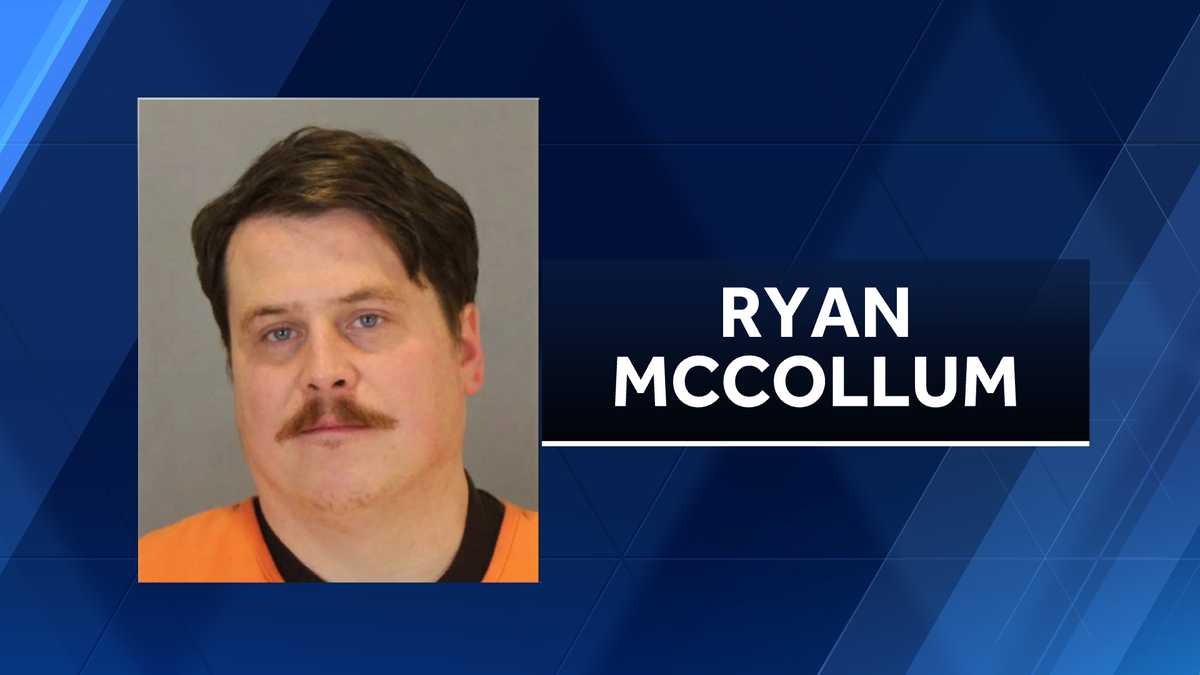
A DOUGLAS COUNTY SHERIFF ANNOUNCES HE’S ARRESTED LOCAL STORE OWNERS IN RELATION TO TWO OVERDOSES. OVERDOSES WERE BELIEVED TO BE CAUSED BY LOCALLY BOUGHT THC PRODUCTS. KETV NEWSWATCH SEVEN SAMANTHA PASTORINO LIVE IN THE NEWSROOM WITH MORE SAMANTHA. WAVERLE THOSE OVERDOSES HAPPENED OVER EASTER WEEKEND. POLICE SAY THEY RESPONDED TO SEPARATE, BUT NEARLY IDENTICAL CALLS INVOLVING MEN SHOWING SIGNS OF DELIRIUM. IN ONE CASE, OFFICIALS SAY THE MAN REACHED FOR A DEPUTY’S GUN AS HE WAS BEING DETAINED. LAW ENFORCEMENT TOOK BOTH MEN TO THE HOSPITAL AND FOUND THE MEN HAD CONSUMED PRODUCTS FROM A LOCAL DISPENSARY. MEDICAL PROFESSIONALS SAID THEIR SYMPTOMS MIRRORED THE USE OF PSILOCIN, ALSO KNOWN AS PCP. THIS MORNING, SHERIFF AARON HANSEN ANNOUNCED THAT ON MAY 5TH, HIS OFFICE ARRESTED 36 YEAR OLD RYAN MCCOLLUM AND 34 YEAR OLD ROSS PLUMB. IN RELATION TO THIS INVESTIGATION. THEY’RE BOTH OWNERS OF GREENSTAR GLASS AND GOODIES, A DISPENSARY ON 156TH AND WEST MAPLE, WHICH IS RIGHT ACROSS THE STREET FROM THE DOUGLAS COUNTY SHERIFF’S BUILDING. PRIOR TO THIS ARREST, DEPUTIES SEARCHED THE STORE. DURING THAT SEARCH WARRANT, DEPUTIES RECOVERED 487 TOTAL MUSHROOM PRODUCTS OF 23 DIFFERENT PRODUCTS. VARIETIES. BUT THIS IS AN EXAMPLE OF THE VARIOUS DIFFERENT TYPES OF PRODUCTS THAT WERE SEIZED THAT TESTED POSITIVE FOR PSILOCIN. BOTH MEN WHO OVERDOSED ARE IN STABLE CONDITION NOW, HANSEN SAYS THE PRODUCTS WERE TESTED POSITIVE FOR A OF HALLUCINOGENICS.

Douglas County judge sets bond for cannabis store owner charged in overdose case

A Douglas County judge sets bond for a cannabis store owner charged in an overdose case.Ryan McCollum appeared in court Wednesday on a charge of possession with the intent to deliver. He was held on $10,000 bond.Investigators said several items from McCollum’s store, Greenstar Glass and Goodies, tested positive for psilocin, a controlled substance, and other hallucinogens. Previous coverage: Omaha dispensary owners arrested by Douglas County Sheriff’s Office in relation to overdosesThey said two separate overdoses kicked off the investigation last month.Deputies said in both cases the men were naked and acting erratically. Council Bluffs police also arrested the co-owner, Ross Plum, at his home in Pottawattamie County.NAVIGATE: Home | Weather | Local News | National | Sports | Newscasts on demand |

A Douglas County judge sets bond for a cannabis store owner charged in an overdose case.

Ryan McCollum appeared in court Wednesday on a charge of possession with the intent to deliver. He was held on $10,000 bond.

Investigators said several items from McCollum’s store, Greenstar Glass and Goodies, tested positive for psilocin, a controlled substance, and other hallucinogens.

Previous coverage: Omaha dispensary owners arrested by Douglas County Sheriff’s Office in relation to overdoses

They said two separate overdoses kicked off the investigation last month.

Deputies said in both cases the men were naked and acting erratically.

Council Bluffs police also arrested the co-owner, Ross Plum, at his home in Pottawattamie County.

NAVIGATE: Home | Weather | Local News | National | Sports | Newscasts on demand |


Source link

One Small Step for Cannabis, One Long City Council Meeting

One Small Step for Cannabis, One Long City Council Meeting


Kris Stach speaking on behalf of his business and Sugar High. (City of Fergus Falls YouTube)

Fergus Falls, MN – After over an hour of discussion and debate at this week’s City Council Meeting, Sugar High and Elevate have made it to the next step on their way to selling full, legal cannabis.

At the previous Committee of the Whole on April 30th, Councilmember Scott Rachels stated that he wished to rescind the votes the council made that turned down the interim use permits (IUP’s) for these companies for being too close to potential kids’ attractions. Councilmember Rachels brought this proposal to Monday night’s meeting, saying that after looking back at previous meetings and discussions about the zoning ordinances in question, he felt that the companies did fit the criteria as discussed by last year’s council. He said, “After sitting back and thinking of all this; I was wrong. They followed every rule that we set, every ordinance we set out. And Mr. Mortenson didn’t think it was right, and that’s his opinion, but I was wrong.”

In a vote of 5-4, with Mayor Anthony Hicks breaking the tie, the original votes that struck down the IUP’s were rescinded, and with that, both permits were back up for discussion. Once the motions were made, Councilmember Mortenson had a new concern. While conditions for these permits require the permission of any neighbors above the businesses to give written consent that the business is okay to move in, Mortenson raised concerns for neighboring businesses that share an adjacent wall, like Midwest Printing, and felt that Sugar High and Elevate should have their consent as well.

After back and forth discussion between the council, the public was encouraged to speak, and many did, with multiple speaking in support of Sugar High and Elevate, and a few speaking against them.

While some residents and councilmembers referred to the debate as an issue on distances, City Administrator Andrew Bremseth reminded all those in attendance that is not the issue, saying, “The distances are irrelevant if these sites don’t have an attraction that is aimed towards children within them. The distances don’t mean a thing; it’s definition. Does this council feel the definition of attraction for children meets these two sites?”

Owner of Sugar High Emily McCune said that despite the fight for cannabis being over, she feels like the councilmembers are using their personal opinion on the substance to make these zoning decisions, “This is an unnecessary delay in a rapidly approaching industry. We are poised, and we are ready.”

Kris Stach, co-owner of Elevate, spoke to the concerns that Spies Park could be considered a kid’s attraction, saying, “They sell beer down there all the time and that isn’t talked about, so how do you say that’s a children’s attraction and allow beer to be sold at that children’s attraction?”

Kevin Anderson, owner of Midwest Printing, said that while he is not against people being in favor of cannabis, he is against it being next to his business, saying, “We’re very concerned about this and it needs to be moved to a different spot, other than where they’re proposing.”

By the end of the nearly 69 minute discussion, both businesses’ interim use permits were approved. Sugar High received yes votes from councilmembers Rachels, Kilde, Fish, and Job, and no votes from councilmembers Kremeier, Mortenson, Kvamme, and Leighton, with Mayor Hicks breaking the tie (5-4). Elevate received yes votes from councilmembers Rachels, Kilde, Fish, Job, and Kvamme, and no votes from Kremeier, Mortenson, and Leighton (5-3).

The companies now await the results of the State’s cannabis license lottery on June 5th.


Source link

Recreational marijuana legalization proposal advances out of Pa. House committee

Recreational marijuana legalization proposal advances out of Pa. House committee


A proposal that would legalize the recreational use of marijuana advanced out of the Pennsylvania House Health Committee along party lines this week.

House Bill 1200, sponsored by Rep. Rick Krajewski (D-Philadelphia), would include a number of reforms to marijuana policy, including allowing the purchase for recreational use by those 21 years and older, mainly through publicly owned stores overseen by the Pennsylvania Liquor Control Board.


RELATED: As Pennsylvania weighs marijuana legalization, competing interests shape how it could work


Krajewski said the proposal creates a “balanced, responsible, and robust framework to legalize and regulate” cannabis use by adults. He crafted the legislation along with Pennsylvania House Health Committee Chairman Dan Frankel (D-Allegheny).

“Right now, Pennsylvanians who use cannabis are either crossing state lines to purchase from other legal markets or buying from the illicit market,” Krajewski said Monday. “The reality is, criminalization of cannabis does not work. It does not deter usage, it does not promote safety, and it is not in the best interest of our commonwealth.”

A co-sponsorship memo for the proposal notes that five of the six states that border Pennsylvania have legalized marijuana. Krajewski said that although the Keystone State is “late to the game in terms of legalizing cannabis, this timing allows us to learn from the mistakes of other frameworks.”

Legalization, he added, will impose regulations on potency, content and labeling.

“We can promote public health, while bringing hundreds of millions of public dollars that can be directed to the communities hit hardest by past criminalization,” he said.

The co-sponsorship memo of the bill notes that the proposal would reinvest “funds into communities disproportionately harmed by the war on drugs.”

Gov. Josh Shapiro’s budget proposal estimates that a 20% tax on the wholesale price of recreational marijuana products would generate $15.6 million plus an additional $11.4 million in sales tax revenue for the 2025-26 budget.

Republicans opposed the measure, citing a wide range of issues, starting with the legislative process.

Rep. Charity Grimm Krupa (R-Fayette) complained that House Democrats formally introduced the 173-page bill Sunday and then scheduled the vote for Monday.

“It’s appalling, it’s offensive, and frankly, it was done because it’s widely known that there is broad opposition to this bill in the manner in which the language is being presented,” she said. “This scheme is a slap in the face of every member of this committee, to the public and to the very concept of representative government.”

Frankel disagreed, contending that the committee held six hearings on the matter last session.

Republicans made an attempt to table the vote, but that failed along partisan lines.

Other concerns expressed by Republicans who voted against the proposal included the impact legalization of recreational marijuana could have on the state’s workforce and public safety, including that cannabis is still considered a Schedule I controlled substance by the federal government.

“There’s nothing healthy or safe about legalizing the recreational use of marijuana,” said Pennsylvania House Health Committee Minority Chair Kathy Rapp (R-Warren).

The bill advanced out of the committee by a 14-12 vote and advanced to the state House for consideration.

Many Democrats have expressed support for passing marijuana legalization, although they hold a narrow majority in the House and are the minority party in the state Senate.


Pennsylvania Capital-Star is part of States Newsroom, a nonprofit news network supported by grants and a coalition of donors as a 501c(3) public charity. Pennsylvania Capital-Star maintains editorial independence. Contact Editor Tim Lambert for questions: info@penncapital-star.com.


Source link

Cannabis study finds legalization reduces problematic consumption, especially among those using other drugs

Cannabis study finds legalization reduces problematic consumption, especially among those using other drugs


cannabis
Credit: Unsplash/CC0 Public Domain

As part of the Weed Care study, researchers in Basel, Switzerland, are investigating how the legal supply of cannabis affects consumption and mental health among participants. In a recent publication, the study team has now reported on the direct comparison of the substance’s legal versus illegal procurement.

The paper is published in the journal Addiction.

In Switzerland and several other countries, debates about the legalization of cannabis use have been ongoing for years. They are shaped by various hopes and concerns. On the one hand, there are the aims of curbing the black market, making it easier for consumers to access safer products, facilitating access to counseling, and promoting lower‐risk consumption. On the other hand, there are fears that legal sales could normalize consumption, possibly even encouraging it and leading to more cases of addiction and mental disorders.

An interdisciplinary research team aims to provide a scientific basis for the debate: The Weed Care study started in January 2023 as a collaboration among the Addiction Department of the Department of Health of the Canton of Basel-Stadt, the University of Basel, the University Psychiatric Clinics Basel (UPK) and Psychiatric Services Aargau.

The first academically designed study

During the first six months, the allowed for a direct comparison of two randomized groups: Half of the approximately 370 participants were able to buy legal cannabis in one of the nine participating pharmacies and were offered counseling in the process. As a , the other half continued to use the black market as a source. The participants reported on their consumption and their mental state via questionnaires at regular intervals.

“There has never been a controlled, randomized study like this before,” emphasizes Dr. Lavinia Baltes-Flueckiger, deputy head of the study at the Psychiatric Services Aargau and lead author of the study. Previous results were based on purely observational studies.

A decline in problematic consumption

As the team reports, problematic consumption decreased slightly in the group with legal access to cannabis. Consumption is considered problematic if it causes or exacerbates health, social or psychological difficulties—even without dependency in the classic sense.

In particular, a more substantial positive effect through legal access was seen in people who used other drugs in addition to cannabis.

“In this subgroup, problematic cannabis use experienced a significant drop,” says Baltes-Flueckiger.

Furthermore, the study was able to dispel fears that legalization could exacerbate the psychopathological symptoms associated with cannabis consumption in addition to itself: after the first six months, there was no difference between the two study groups in terms of depression, anxiety or other symptoms.

After this period, the control group, which had previously obtained cannabis on the , also obtained legal access to the substance through one of the participating pharmacies. According to Baltes-Flueckiger, they had been assured of this at the beginning of the study as motivation for taking part.

The interim assessment after two years of study shows a significant improvement in the of the approximately 300 or so participants who are still taking part.

“Legal access eases the burden on consumers,” explains head of the study Professor Marc Walter from the University of Basel and Psychiatric Services Aargau.

More information:
Lavinia Baltes‐Flueckiger et al, Effects of legal access versus illegal market cannabis on use and mental health: A randomized controlled trial, Addiction (2025). DOI: 10.1111/add.70080

Citation:
Cannabis study finds legalization reduces problematic consumption, especially among those using other drugs (2025, May 7)
retrieved 7 May 2025
from https://medicalxpress.com/news/2025-05-cannabis-legalization-problematic-consumption-drugs.html

This document is subject to copyright. Apart from any fair dealing for the purpose of private study or research, no
part may be reproduced without the written permission. The content is provided for information purposes only.


Source link

Kenilworth medical cannabis campaigner Hannah Deacon dies

Kenilworth medical cannabis campaigner Hannah Deacon dies


Andrew Dawkins

BBC News, West Midlands

CLC PORTRAITS A woman on the left with brown hair behind a boy with his mouth open. A light blue background is behind them.CLC PORTRAITS

Hannah Deacon recently said she was stepping back from some responsibilities to focus fully on her health

A campaigner who fought for permission to treat her son’s epilepsy with cannabis has died aged 45, after being diagnosed with cancer.

Hannah Deacon’s son Alfie, from Kenilworth, Warwickshire, would have 150 seizures a week before he started taking medical cannabis.

In 2018, his family celebrated with other campaigners as the government legalised the use of the drug.

Ms Deacon’s website said: “We are heartbroken to share that Hannah Deacon died on Tuesday 6 May, surrounded by those who loved her, after a short and brutal illness.”

It added she was “remarkable, determined, tenacious, and fiercely compassionate”.

“Her fight to find treatment for her son Alfie’s rare and severe epilepsy led to a breakthrough that changed his life and ultimately changed the law.”

Nearly six weeks ago on Instagram, Ms Deacon said in order to focus fully on her health, she was stepping down as chair and trustee of Medcan Family Foundation, which works on behalf of families to access “life-saving cannabis derived medications”.

She said she was also temporarily stepping back from her responsibilities with Maple Tree Consultants, which describes itself as a group of UK medical cannabis experts, and the Medical Cannabis Clinicians Society.

CLC PORTRAITS A boy with dark hair and his mouth open is looking at the camera. He is wearing a red top.CLC PORTRAITS

Alfie would have 150 seizures a week before he started taking medical cannabis

Alfie became front and centre of campaigns for the use of cannabis oil when he was aged seven.

It came about when Ms Deacon petitioned the government in March 2018 after she found his condition improved when he was given a cannabis-based medication in the Netherlands, where it was legal.

In 2022, Ms Deacon said her son, then 10, had been free of seizures for two years since using medical cannabis.

The statement on her website said she transformed the lives of “thousands of patients and families, never stopping in her work to push for better access, better care, and a better understanding of medical cannabis”.

It added: “More than anything, Hannah’s most proud and important role was being a mum.”

The website also said the “devastating loss” to her partner, Drew, and children was “impossible to put into words”.


Source link

Marko Glisic on How Cannabis Rescheduling is Reshaping the Finance Industry | Affiliate Links

Marko Glisic on How Cannabis Rescheduling is Reshaping the Finance Industry | Affiliate Links


Meta Description: Marko Glisic explains how cannabis rescheduling and 280E repeal will transform finance, boost valuations, improve banking access, and reshape tax strategy.

Feature Image: Marko Glisic Cannabis Rescheduling.png


Hannah Madison Publications-Anchor pic.jpg

A million dollars vanished into thin air, or so it seemed at a California cannabis company where $1,148,320 separated actual cash from accounting records. This financial nightmare required a seasoned expert to resolve, someone who understood both traditional accounting and the unique complexities that cannabis businesses face in navigating crushing tax regulations. Enter Marko Glisic, who implemented financial controls that eliminated such discrepancies while steering another cannabis client from $4 million in revenues with negative EBITDA to $50 million with 25% profitability, culminating in a $60 million exit.

With potential rescheduling of cannabis from Schedule I to Schedule III on the horizon, Marko Glisic leverages his dual background, eight years at Deloitte & Touche LLP, followed by pioneering work at GreenGrowth CPAs, to map out how this regulatory shift would transform every aspect of cannabis finance. “Cannabis businesses have faced effective tax rates exceeding 60% due to their inability to deduct ordinary business expenses,” Glisic explains, highlighting the core financial hardship Section 280E imposes on the industry.

The accounting & finance strategist who leads a 50+-person professional services team serving public and private cannabis companies has educated operators nationwide through hundreds of videos and articles produced with his team. Now, Marko Glisic turns his attention to how rescheduling would remake the financial structures underpinning the entire industry.

Financial Straitjacket Removal

Cannabis companies have twisted themselves into unnatural organizational shapes, attempting to survive 280E restrictions. Many built elaborate operational structures that maximize the cost of goods sold while artificially minimizing non-deductible expenses, creating operational inefficiencies that stifle growth potential.

Tax Strategy

“Companies that have structured their operations to maximize cost of goods sold while minimizing non-deductible expenses will need to fundamentally rethink their strategies,” Marko Glisic notes. His firm successfully implemented a 471 tax strategy, yielding $4,500,000 in tax deductions for a single client. “The post-280E landscape will require entirely new tax planning approaches. Rather than focusing on COGS maximization, businesses will need to reevaluate entity structures, compensation plans, and capital expenditure timing.”

These adjustments extend far beyond theoretical tax planning. Glisic recalls resolving $1,150,000 in cash discrepancies and $875,000 in inventory discrepancies through proper financial controls, inefficiencies created directly from operating in a distorted regulatory environment where normal business practices remained unavailable to cannabis operators.

Cash Management Transformation

The tactical financial approach Marko Glisic employs includes setting up “a process for filling Form 8300 for $10,000 in cash taken in, thus reducing the risk of penalties that can add up to $3,000,000.” Such attention to regulatory detail demonstrates the multilayered tax complexity cannabis businesses face, and how rescheduling would simplify operational finance considerably.

When cash management procedures are combined with proper inventory tracking, the results can be transformative. Glisic’s team “set up controls around inventory purchasing, intake/receiving, cycle counts, and sales, resulting in no inventory discrepancies, thus removing over $872,640 in unaccounted inventory discrepancies that would occur each year.” The elimination of 280E restrictions would allow cannabis companies to focus resources on these operational efficiencies rather than tax avoidance strategies.

Banking Barriers Dismantled

Rescheduling effects will echo most dramatically through banking access improvements. Marko Glisic’s experience guiding cannabis operators through financing arrangements while developing specialized cash management frameworks offers a valuable perspective on this critical shift.

Reduced Financial Institution Risk

“Banking access represents another significant shift on the horizon. Though rescheduling won’t immediately solve all banking challenges, it will substantially reduce financial institutions’ perceived risk in servicing cannabis businesses,” explains the CPA who designed “cannabis-specific cash internal control frameworks” reflecting his understanding of operational burdens created by limited banking access. “This could dramatically lower operational costs for companies currently paying premium fees for basic banking services or functioning primarily in cash.”

Capital Markets Acceleration

The monthly market reports Marko Glisic oversees consistently track cannabis investment trends, documenting the industry’s difficulty attracting institutional capital despite substantial growth potential. The January 2023 GreenGrowth Cannabis Market Report analyzed how macroeconomic factors influence cannabis stock performance, noting that “in the first two quarters of 2022 the volume of M&A transactions dropped” due partly to “lack of progress in federal legalization of cannabis in the US.” Rescheduling addresses this fundamental barrier, accelerating investment timelines for expansion and innovation.

According to data Glisic compiled, “EUR/USD has shown a path of rebound, placing the parity around 1.05:1/1.09:1 level,” demonstrating how macroeconomic factors continue influencing cannabis capital markets. His expertise in tracking financial indicators allows cannabis businesses to position themselves advantageously ahead of regulatory changes, a crucial skill during rescheduling.

Regulatory Compliance Expertise

The banking transformation would parallel Glisic’s experience at Deloitte, where he directed complex cross-border audits for multi-billion-dollar international companies and maintained a perfect inspection record during internal PCAOB inspections. For example, Glisic’s work coordinating audit teams across multiple countries for a $4 billion revenue business demonstrates the level of regulatory expertise that will prove invaluable for cannabis operators navigating the transitional banking landscape post-rescheduling.

Valuations Surge Imminent

New financial conditions following rescheduling would accelerate market consolidation, a trend apparent in recent cannabis history but hampered by valuation challenges tied to 280E’s impact on EBITDA calculations.

EBITDA Enhancement

“We’ve already seen how properly structured cannabis businesses can achieve impressive valuations despite regulatory headwinds,” says Marko Glisic, referencing his work helping a vertically integrated operator grow “from $4 million in revenues with negative EBITDA to $50 million in revenues with 25% EBITDA, ultimately achieving a $60 million exit at 1.2x revenues.” “Post-rescheduling, these valuations could increase substantially as improved cash flow and normalized tax situations make cannabis businesses more comparable to companies in other industries.”

The elimination of 280E would dramatically enhance EBITDA for most operators, triggering widespread revaluation throughout the industry. “We identified $1,250,000 in add-backs to EBITDA, which at a 5x multiple resulted in $6,250,000 in added value,” the financial expert explains. Tax normalization alone could substantially increase valuations industry-wide.

M&A Multiple Stabilization

Glisic’s analysis of industry-specific valuation multiples found that “median enterprise value (EV) to revenue multiple in the chosen sample of M&A transactions is 2.48x. Targets with lower revenue (and higher growth prospects) receive higher valuation.” This data suggests smaller cannabis businesses might benefit disproportionately from rescheduling-driven valuation improvements.

His market research also revealed that “revenue multiple fluctuates between 0 and 10x, and sporadically jumps outside of this band in the covered period of analysis.” Marko Glisic predicts these valuation metrics will stabilize post-rescheduling as cannabis businesses operate more like traditional retail and agricultural enterprises.

Post-Rescheduling Preparation

While rescheduling represents a major advancement, complications will persist. “State-level taxation adds another layer of complexity, as the elimination of 280E at the federal level doesn’t automatically resolve state restrictions,” warns the cannabis finance veteran. Multi-state operators must continue adapting to regulatory inconsistencies across different markets.

Cannabis businesses preparing for this watershed moment should implement comprehensive readiness strategies: financial audits, post-rescheduling scenario modeling, capital strategy development, and state-specific impact analysis. Marko Glisic’s integration of both traditional accounting rigor and cannabis-specific expertise offers an authoritative roadmap for operators preparing to capitalize on a fundamentally transformed financial landscape in one of America’s fastest-expanding sectors.


Source link