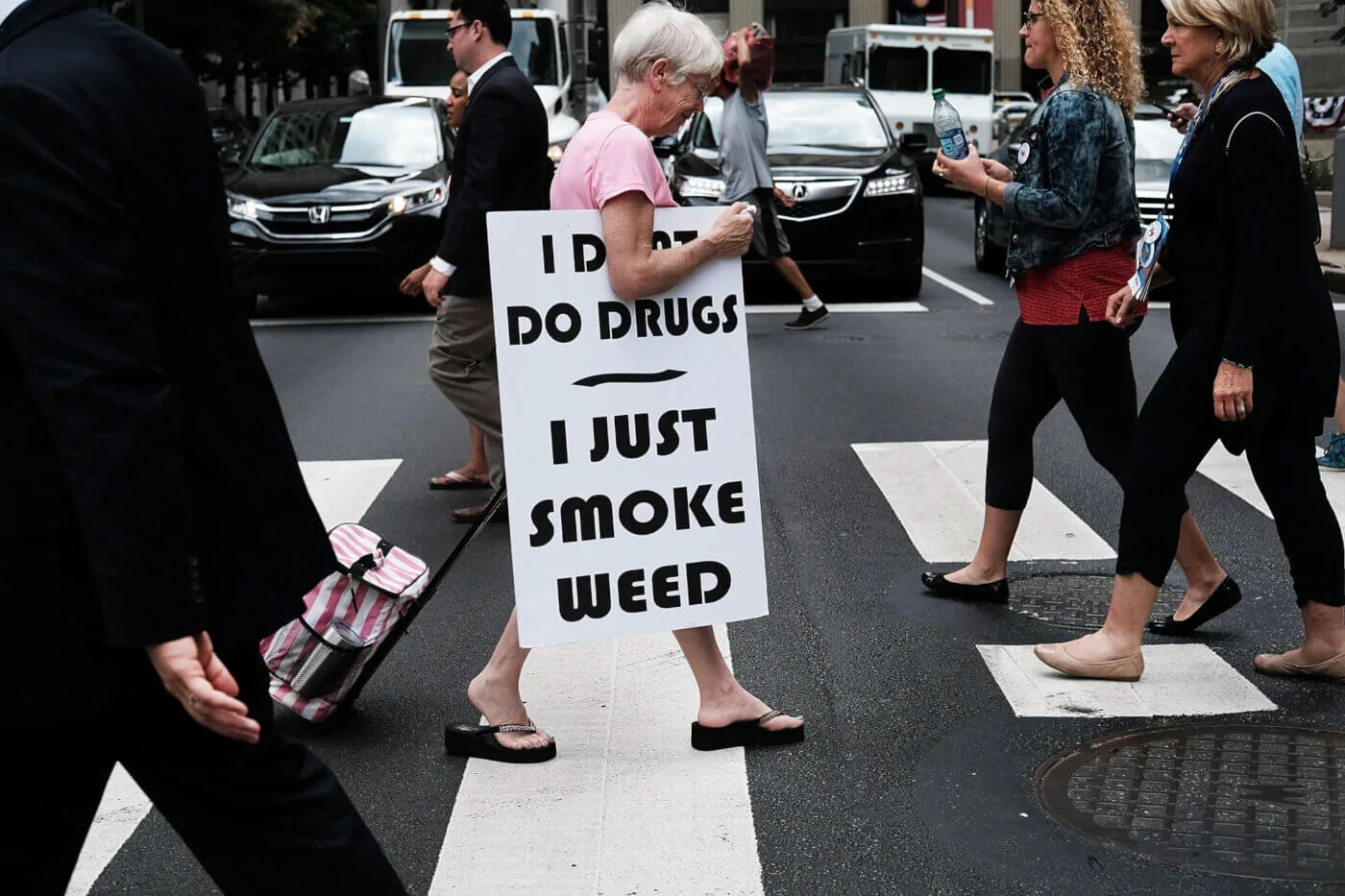
Protesters Demonstrate In Philadelphia During The Democratic National Convention

Where do you stand on the legalization of recreational adult-use cannabis in Pennsylvania?


While medical cannabis has been legal in Pennsylvania since 2016, legalization for recreational use remains a pipe dream despite strong public support across party lines, and bipartisan support in Harrisburg. We asked our newsletter readers how they feel about it.

While medical cannabis has been legal in Pennsylvania since former Democratic Gov. Tom Wolf signed it into law in April 2016, recreational use remains a pipe dream despite strong public support across party lines, and bipartisan support in Harrisburg.

The latest attempt to legalize adult-use cannabis in the state is a bill sponsored by Rep. Rick Krajewski (D-Philadelphia) that would include a number of reforms to marijuana policy, including allowing the purchase of marijuana for recreational use by those 21 years and older, mainly through publicly owned stores overseen by the Pennsylvania Liquor Control Board.

After advancing out of the Pennsylvania House Health Committee, the measure awaits a vote in the full House.

We recently asked our newsletter readers (subscribe here) where they stand on the legalization of recreational adult-use cannabis in Pennsylvania. 

Here’s what they had to say (answers have been edited for length and clarity):

“They should absolutely legalize (recreational) marijuana in Pa.—what are they waiting for, especially if it will benefit the state financially? Anyone who chooses to use it already is using their own resources in one way or another to get it, so it shouldn’t be that big of a deal.”

-Diane, Orangeville

“The legalization of recreational adult-use cannabis in Pennsylvania would be great! I wouldn’t have to hide in the woods in my backyard anymore!”

-TC Conner, Mercer

“Legalize it!”

-Dori McCarthy, Pittsburgh

“I’m not for legalizing (recreational) marijuana. I’ve seen how stupid users get after using. IMO, the effects are worse than alcohol.” 

-Tony McCurdy, Fairview Township

“Adult-use cannabis can’t be legalized fast enough. Every day, people are voting with their wallets by purchasing marijuana in bordering states. Keep that money in state to help raise up your Pa. people! People are going to purchase and use it whether or not you legalize it. Pa. might as well reap the profits over another state.”

Pamela Firster, Boyertown

“Why not? We’re losing tax money. Don’t care if (it’s sold) in state stores. If I can’t get what I want from the state store I’ll do what I do with alcohol and go somewhere else to find it.”

-Sandra Loeb, Mountain Top

“Still on the fence. Everyone’s so gung-ho about it, but A) a lot of work still needs to be done in terms of setting up a retail system, and B) what will be the legal limit for driving under the influence of pot? That’s an important point I don’t hear enough about.”

-Bernard Z., Ephrata

“When Ohio beats your state to something, you know you’re waaaaay behind the curve. Legalize it NOW. We’re losing way too much money.”

-Erica Fitzgerald, Uniontown

“It should have been made legal 10 years ago, when medical marijuana was passed by Gov. Wolf. Weed is so much less harmful than alcohol, which is basically poison, IMHO.”

-Pete, Montgomery County

“Pennsylvania should not legalize cannabis. It’s not about being a prude—it’s about recognizing the real dangers. Weed impairs cognitive function, increases anxiety and psychosis risks, and reeks like a skunk’s funeral. The push to normalize it echoes the cigarette scam of the 1950s, where “safe” smoking hooked millions. Legalizing this stuff just stinks up our streets and clouds our judgment.”

-DH, Erie

“As usual, Pa. remains behind the curve, including the cannabis issue. I can drive 15 minutes to Phillipsburg, N.J. and get recreational cannabis. Pa. is missing out on so much tax income from cannabis it’s ridiculous. And by the way, I don’t hear about too many guys beating up their significant others after smoking a doobie or two.”

-Mary Ann, Bethlehem 

“I’m all for medicinal marijuana. But not for recreational use. We already have too many impaired drivers around here. We certainly don’t need more driving under the influence of marijuana. States that have approved marijuana recreationally have higher instances of impaired driving. We don’t need that.”

-Sally, Lancaster County

“My take on legalizing cannabis: No, thanks. The last thing this fine state needs is another mind-altering vice. The other states are guinea pigs. Let the other states make revenue from the taxes, so they can have that money in their coffers to pay the first responders, the rehab facilities, judges, courthouses, lawyers, doctors, dementia facilities, hospitals, and any and all people and places who will have to clean up the mess.”

-Mary, Bedminster

“I am a medical marijuana patient in Pennsylvania. I live in a very small, conservative town. It is ridiculous that Pennsylvania has held out on legalizing marijuana use for adults, when there are bars and state stores all over the place. How do you justify alcohol being legal when it is responsible for destroying (and taking) so many lives every year!? Legalize adult-use marijuana already. No state stores either. People are hurting and this will provide gainful, small business employment to residents and tax money that is BADLY needed in this state! “

-Doris M. Butler, Mifflin County

  • Patrick Berkery

    Patrick Berkery is a reporter and editor based in the Philadelphia area who has covered Pennsylvania news for more than 25 years. Need a recommendation in Philly? He knows a place.

    Send all story tips to [email protected] and sign up for his newsletter
    here.


Source link

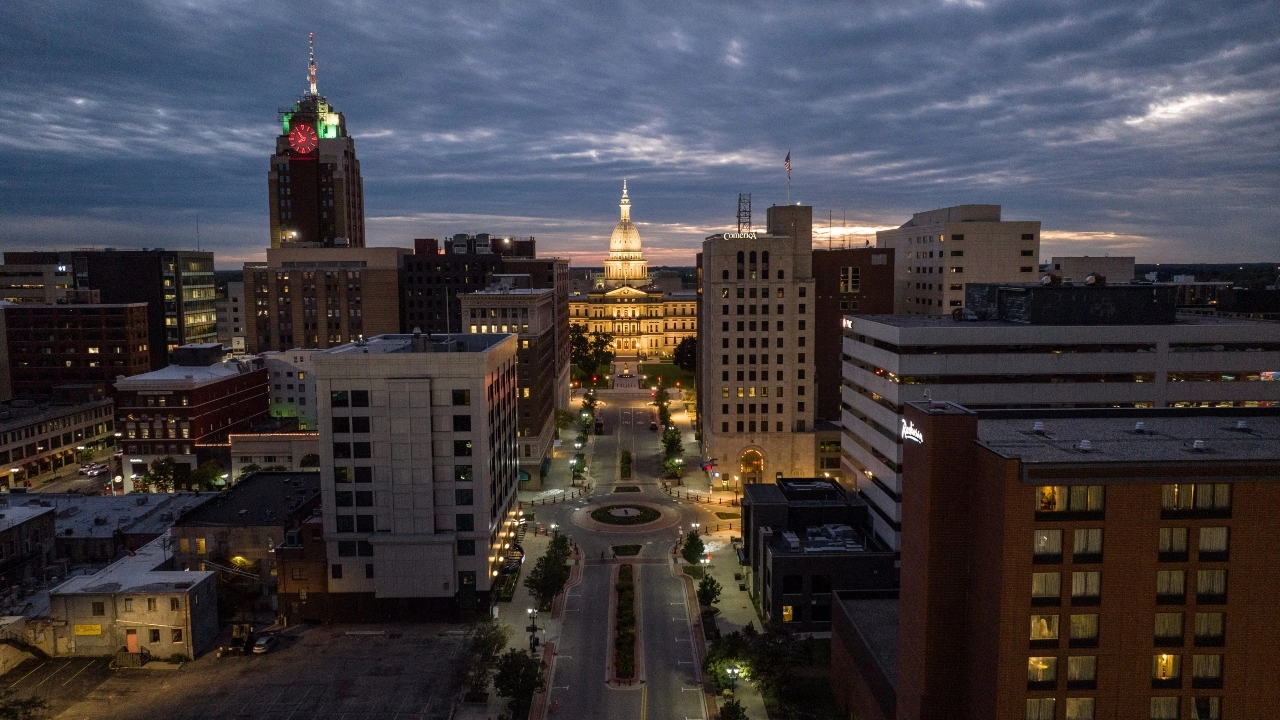
Aerial image of downtown Lansing, Michigan, including the state capitol building

Michigan issues lifetime ban to another marijuana business operator


The former operator of a Michigan marijuana store is banned for life from the state’s industry after a host of alleged violations, including selling unregistered cannabis to an underage buyer.

Youssef “Joseph” Barakat,  a co-owner of Tree House Club in Big Rapids and Bay City, is the first individual to be “involuntarily” excluded from participating in Michigan’s regulated cannabis industry by the state’s Cannabis Regulatory Agency (CRA), Crain’s Detroit Business reported.

The CRA lists 10 other individuals who previously were “voluntarily” excluded from participating in Michigan’s marijuana industry as the result of settlement agreements.

Not on that list are Hanna and Jaklin Shina, who agreed in March to a lifetime exclusion from the Michigan industry and to surrender the license of their marijuana processing business, Flavor Galaxy, which ceased operations.

According to the CRA, Barakat co-owned Tree House Club, with a 50% stake in retail locations in Bay City and Big Rapids.

At the Big Rapids location, store workers sold cannabis to a 20-year-old state police cadet working undercover during a February 2023 sting operation, the CRA noted.

Tree House Club sold the cadet 1.5 ounces of cannabis flower “in a clear sandwich bag” with no track-and-trace information, Crain’s reported.

An employee who was not registered with the state made the illegal sale.

Barakat later admitted to not completing background checks on staff, the Detroit Metro Times reported.

A subsequent CRA inspection in April 2023 found the location without electricity and operable alarm and video-surveillance systems, according to the agency.

State inspectors who visited the Bay City location in June 2023 found the store “unlocked and unattended,” with several pounds of cannabis left unattended.

The CRA first filed notice in December 2024 of its intent to exclude Barakat from the state’s cannabis industry.

While Barakat’s statewide ban became official Tuesday, Big Rapids city officials had revoked Tree House’s license in 2023.

The business was open for less than a year, according to the Midland Daily News.


Source link

medical dispensary NJ cannabis find Curaleaf Edgewater park medical New Jersey cannabis program

5 Steps First-Time Patients in NJ Take Before Visiting a Dispensary


Taking your first trip to a legal medical New Jersey dispensary as an official medical cannabis patient can be intimidating. Proper preparation irons out kinks preemptively.

Accessing medical cannabis requires making informed decisions, clear guidance, and compliance with state requirements. Every step matters when accessing relief through the medical cannabis program.

Here’s a step-by-step overview of everything you need to do.

Understanding New Jersey’s Medical Cannabis Program Requirements

New Jersey requires patients to qualify under specific medical conditions to access the program. Conditions like chronic pain, anxiety disorders, and cancer are included.


You must register with the state’s Medicinal Cannabis Program (MCP) through their official website. This process involves obtaining certification from a licensed healthcare provider and creating an online account.

A $10 registration fee applies for a medical cannabis card and is payable every 2 years. Digital medical cannabis cards are free.

Proper Documentation is Crucial

Medical cannabis dispensaries in New Jersey require specific documents to serve you. You’ll need your state-issued medical cannabis card and a valid government photo ID, like a driver’s license or passport.

Your healthcare provider’s certification confirming eligibility must also be up to date, as dispensaries verify this during visits.


Paperwork issues often create complications at check-in. Double-check everything before heading out to avoid delays or disappointment when visiting the dispensary for the first time.

Speaking with Your Healthcare Provider About Medical Cannabis

Discussing cannabis use with your doctor is a key step. Licensed medical marijuana doctors can evaluate whether this treatment suits your condition.

Prepare for the appointment by gathering details about symptoms, treatments tried, and how they’ve worked (or not). Honest communication ensures better recommendations.

If your primary care provider isn’t certified to recommend cannabis, ask them to refer you to someone who is. You’ll need their approval before applying for the state program, so clear this hurdle early on. If your doctor won’t recommend someone, it’s easy to find another doctor to help you.

Navigating State Laws and What They Mean for You

NJ’s medical cannabis laws are supposed to prioritize patient safety and proper use. Familiarize yourself with purchase limits, possession guidelines, and where consumption is allowed.

Patients may buy up to three ounces every 30 days. However, smoking or vaping in public spaces remains illegal. Consuming at home or on private property is safest to avoid legal issues.

You must understand the penalties for misuse. Knowing the rules protects you from fines. Reviewing state resources ensures compliance while using cannabis responsibly within legal boundaries as a first-time patient in New Jersey’s program.

How to Choose the Right Dispensary as a First-Time Patient

Selecting a dispensary involves more than proximity. Research options for quality, pricing, and product variety.

Check reviews to learn about customer experiences. Look for clear product labeling, knowledgeable staff, and compliance with New Jersey regulations. A helpful team can guide you through strains and consumption methods suited to your needs.

Visit dispensary websites or call ahead to confirm their menu matches your preferences. Some may specialize in edibles or offer discounts for new patients and seniors. There are even celebrity-backed dispensaries opening in New Jersey. So, you have many choices.

The Bottom Line

Tackling New Jersey’s medical cannabis program is simpler with preparation. From understanding state requirements to selecting the right dispensary, every step takes the sting out of the experience. Being thorough when gathering information and following guidelines helps you access relief confidently, responsibly, and without unnecessary setbacks as a first-time patient.


Source link

The Green Path will include cannabis and hemp

The Green Path will include cannabis and hemp


By Winona LaDuke

Our Anishinaabe prophecies speak of a choice between a scorched path and one which is green. This spring, a set of gatherings on cannabis and hemp informed and inspired tribal farmers and leaders to look at the potential of this plant and the green path for housing, medicine, paper, and healing the soils.

On February 25, the Sokaogon Chippewa Community hosted the Wisconsin Cannabis Summit, bringing together around l50 tribal and industry leaders. That community made the choice to follow the Green Path decades ago with an epic victory over a huge, proposed mine, and today Sokaogon looks towards a future.

Chairman Robert Vanzile points towards the deep woods behind the conference center on the left. “That is where they wanted to put in the mine.” There is no mine, only woods. Sometimes the people and the land win.   

It’s been fifty years since the battle over Crandon Mine began ­– that’s when the world’s largest mining companies set their sights on a l6 billion ton deposit which, if mined, would have destroyed the entire ecosystem of the tribe. “We cannot forget what happened here and what we had to do to stop the mine,” Tina VanZile told a reporter.

It was a 27-year battle between the big corporations and the tribes, Rio Tinto Zinc, Exxon and BHP Billiton to name a few. It was a time of “deep trauma” for the tribe, Richard Akeley would write.   But after years of regulations, ceremony, litigation, and a coalition of more than 30 organizations, the tribes prevailed. In this case, the Forest County Potawatami and the Sokaogon Chippewa bought the 5000 acre mine site and protected the watershed of the Wolf River and more.  They made their final payment on the purchase in 2003. That was a choice of a Green Path. Sometimes we pause and remember.

The February Wisconsin Cannabis Summit was attended by tribal government and community members as well as the cannabis and hemp industry – talking about regulations, science and  a different path. Wisconsin has not yet legalized marijuana, but is likely to, since both bordering states, Minnesota and Michigan, have emergent and robust recreational cannabis industries. As well, both adjoining  states are moving ahead with other hemp industries, particularly housing. (It was legalized in 2022 under building codes.) The summit brought in experts on a range of subjects, including  medicine, regulations, food and housing.  The tribal nations want to be at the table, not on the menu.

Indigenous Hemp Farmers gathering
The last week of March, fifty tribal farmers, tribal agriculture programs and students gathered at the Indigenous Hemp Farmers gathering at United Tribes Technical College in Bismarck.

“There’s a magic in this work, Elisha Yellow Thunder, conference organizer said “We are seeing the way people became hopeful… with this plant, and that we could become self-sustaining gives us all inspiration.”

Representatives from all tribal nations of North Dakota were in attendance, with interests ranging from food to housing.  The Turtle Mountain Anishinaabe have been active in hemp since 2000, and operate Chippewa Harvest, a successful food and supplement company. Other tribes like Cheyenne River are looking at solving their housing crises by growing and building their own hempcrete houses. Bringing together hemp farmers, processers, builders and Native people, this summit was intended to provide information before the growing season.

Among the presenters, Richard Silliboy (Mi’kmaq) talked about his work with hemp to bioremediate the Loring Military base, land returned to the tribe. The land was full of so-called forever chemicals. Hemp’s deep roots and quick growth are known to pull heavy metals out of soils and show promise.

Since many military bases adjoin or are within native lands (Badger Munitions, Gunnery Range, Pine Ridge, Ft. Wingate at Navajo and a myriad of Alaskan bases) tribes are increasingly interested in protecting ground water and healing those lands. Processors like Ken Meyer (Complete Hemp Processing) discussed decortication technologies and products, and Samantha Moreno illustrated the   pre-fabricated panel system of housing they’ve developed at Homeland Hempcrete in Bismarck.

NOCO Conference
A couple of weeks later, on April 11, some well-dressed young men from Wind River Shoshone and Arapaho nation walked into the NOCO Conference in Estes Park Colorado. I ask them why they came to learn about hemp. Their response? “Because we have mold in our houses, and hemp is mold resistant.” Seems  simple.

It’s basic, hemp or cannabis sativa is a plant of the past, and the future. In April. Prairie Band Potawatami debuted  their new hemp straw business, Mnokiwen Hemp, which addresses some of the plastic mountain created by straws and other non-biodegradable products.

What’s clear is that hemp is a problem-solving plant. Kunu Bearchum, a videographer and hemp researcher came to the NOCO Conference and interviewed tribal members who are ready to create this industry, the green path on their reservations. “I was really inspired by these stories, and see that hemp can solve tribal housing needs, and create new sustainable industries for our future.”

It’s time for hemp. It’s not just about making money, it’s about the potential of hemp to save some forests, provide safe affordable housing, sequester carbon and more. Our remaining forests are at risk. Today, roughly 3.8 million cords of wood fiber are harvested annually by Minnesota’s forest industries – a number comparable to the peak of the white pine logging era more than a century. That’s not good, because the amount of forest that existed a century ago was a lot more than what’s left today. The industry is clearcutting the remaining forests.

There is a solution. An acre of hemp can yield as much paper as 4 to 10 acres of trees over a 20-year cycle. It’s an annual crop that sequesters carbon at the highest rate of any field crop, and the bleaching process, often the most environmentally damaging phase in traditional paper production, is not needed. Hemp’s natural light color means less harmful chemical usage, resulting in less pollution. And hemp paper can be recycled up to seven times, while tree-based paper is limited to three. And that’s just the fiber of the plant. Not even the hurd, that’s what is used for hempcrete housing. For hurd, it takes about three acres of fiber hemp to provide the materials for a house – and it can be grown in the same year.

It’s thirty-two years after the final payment on the 5000 acres at Mole Lake- Sokaogon Chippewa. That big mining battle ended because people worked together. In 2006, BHP  Billiton, the world’s largest mining corporation, returned $8 million to the tribe,putting all their mortgage payments into a trust  fund for the tribe. That was a hard-fought battle to the green path.

Robert Vanzile and his community paid a big price and won. And today, that same tribe is looking to provide leadership into the next economy, the green path, which will include cannabis and hemp. That’s the future.

The White pine logging era info: https://fbmn.org/Article/Minnesota-Leading-the-Way-in-Forestry


Source link

Map Shows Where Marijuana Is Legal as Pennsylvania Bill Moves Forward

Map Shows Where Marijuana Is Legal as Pennsylvania Bill Moves Forward


Pennsylvania may become the next state to allow adults to use recreational marijuana as its state legislature moves forward with a bill to expand its legalization.

Why It Matters

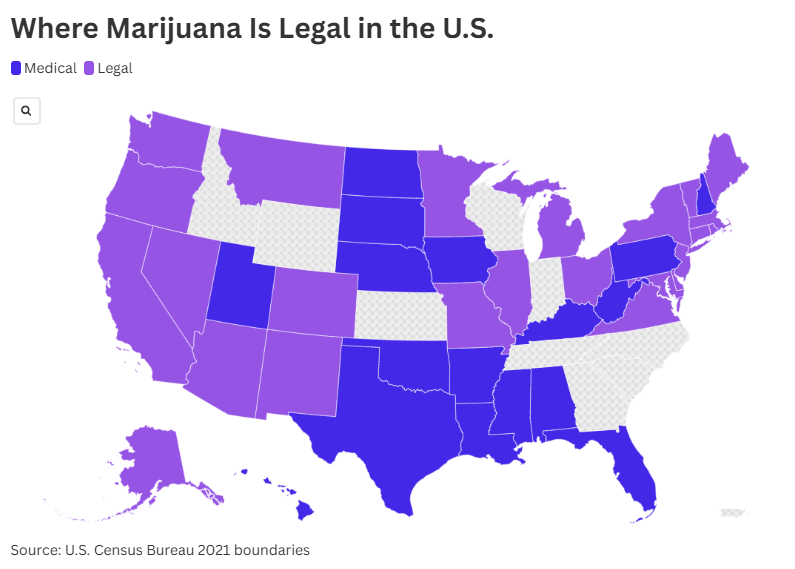
Recreational marijuana has been legalized in 24 states so far, and more than a dozen others allow adults to use medical marijuana in certain circumstances. Pennsylvania Democrats are pushing for the state to become the next to legalize recreational marijuana. Legalization has even spread to some GOP-leaning states like Missouri in recent years.

Proponents of marijuana legalization argue that Americans should be free to use marijuana products if they choose to do so, but critics have raised concerns about health and societal consequences of its legalization.

What to Know

Pennsylvania’s Cannabis Health & Safety Act passed the state House of Representatives on Tuesday on party lines, bringing it one step closer to allowing legal marijuana for recreational purposes. Medical marijuana has been legal in the Keystone state since 2016.

Governor Josh Shapiro, a Democrat, has been supportive of marijuana legalization but hasn’t commented on the specific bill, which would allow for its sale in state-run dispensaries.

Pennsylvania marijuana legalization
An illuminated cannabis sign sits outside a dispensary in Bangkok on November 22, 2022.

JACK TAYLOR/AFP via Getty Images

Newsweek reached out to Shapiro’s office for comment via email.

The battle to legalize marijuana has played out in state legislatures over the past decade. Colorado was the first state to legalize it in 2012, and a flurry of states has followed ever since.

Medical marijuana is legal in most, but not all, states, though each has specific limitations and requirements for its medical use. Some states, like Georgia, have legalized the possession of low-THC oils, but not the broader use of marijuana.

Here is a look at where its legalization stands in each state.

map visualization

What People Are Saying

Pennsylvania State Representative Rick Krajewski, a Democrat, said in remarks reported by WPMT: “We have listened carefully to public health experts, criminal justice reformers, small business advocates and community leaders. Our bill reflects what we’ve learned — that we can and must legalize cannabis in a way that is safe, equitable and beneficial to all Pennsylvanians.”

Pennsylvania State Representative Charity Grimm Krupa, a Republican, wrote on X (formerly Twitter): “This shady, rushed process is designed to ram through a massive policy change before members, stakeholders, and the public have had a chance to review, discuss, or understand the consequences. I am sounding the alarm because Pennsylvanians deserve a real voice and real transparency in decisions of this scale.”

What Happens Next

In Pennsylvania, the bill must now pass the Senate and receive the signature of Governor Shapiro to become law. The wider debate over marijuana legalization continues to play out both at the national level and in various states. Other states like Hawaii have also considered legalization this year, but it is unclear whether those bills will succeed.


Source link

Will Activision Blizzard Continue To Embrace Cannabis

Will Activision Blizzard Continue To Embrace Cannabis


They are one of the most popular game studios – and a voice in the mainstreaming of cannabis. But now they are merging…

Activision Blizzard, a titan in the gaming industry, has consistently demonstrated its ability to tap into cultural trends and connect with diverse audiences. But today Microsoft won the final appeal in a deal to merge them into the company. The acquisition has the potential to reshape competition in the video game industry, particularly in the cloud gaming and mobile gaming sectors. About 25% of the world plays some form of online game, give it a huge cultural relevance.  But will Activision Blizzard continue to embrace cannabis?

RELATED: Science Says Medical Marijuana Improves Quality Of Life

One of the most notable examples is the company’s playful and creative embrace of cannabis culture within its flagship franchise, Call of Duty. Over the years, Activision Blizzard has released a variety of cannabis-themed cosmetic items, such as the “Cannabush” skin and the “Stoner’s Delight” bundles, allowing players to express themselves and add a touch of humor to their in-game experience.

Will Activision Blizzard Continue To Embrace Cannabis

This year, the collaboration reached new heights with the introduction of Seth Rogen-a well-known cannabis enthusiast-as a free operator in Call of Duty: Black Ops 6. His arrival brought a suite of themed rewards and coincided with the “Blaze of Glory” event, where players can collect special in-game currency and unlock cannabis-inspired items, further enhancing the sense of community and fun. These initiatives not only reflect the evolving attitudes toward cannabis in society, but also highlight Activision Blizzard’s commitment to keeping its content fresh, relevant, and engaging.

RELATED: Marijuana Use And Guy’s Member

The gaming industry’s openness to cannabis themes mirrors broader trends in the United States, where cannabis legalization and normalization continue to gain momentum. As federal and state laws evolve, brands like Activision Blizzard are well-positioned to connect with new audiences and foster inclusivity by acknowledging diverse lifestyles and interests. The integration of cannabis culture into mainstream gaming demonstrates a forward-thinking approach, making Activision Blizzard a leader in both entertainment and cultural relevance.

The good news is Microsoft has emerged as a significant player in the cannabis business community, particularly through its partnerships and technology solutions tailored to the unique needs of this fast-growing, highly regulated industry. The company was one of the first major tech companies to enter the cannabis space, partnering with KIND Financial to provide government agencies with “seed-to-sale” tracking software. This software, hosted on Microsoft’s Azure Government cloud, helps state and local governments monitor legal cannabis sales, ensure compliance, and manage regulation.

Additionally, Microsoft’s Dynamics 365 Business Central platform has been customized for the cannabis industry by companies like 365 Cannabis. This enterprise resource planning (ERP) solution is designed for cultivators, processors, distributors, and retailers, offering features such as production management, inventory tracking, quality control, and compliance reporting.

So it seems Microsoft will continue to embrace the mainstreaming of cannabis in their new part of the company.


Source link

Recreational Marijuana Reaches New Milestone in Minnesota

Recreational Marijuana Reaches New Milestone in Minnesota


The rollout of recreational marijuana in Minnesota has been long and bumpy, but this next milestone is a big one, and it’s one many have been waiting for.

Minnesota’s Office of Cannabis Management has made slow progress after early delays due to a preapproval lottery, which was eventually scrapped. Now, the state is moving forward with a general licensing lottery.

READ MORE: 5 Minnesota Beers Named Among Best In The World At 2025 World Beer Cup

Over 400 Marijuana Stores Ordered To Close As City Regulates Industry

Getty Images

According to Cannabis Business Times, Minnesota now has the third-longest adult-use rollout in the nation, trailing only Vermont (1,713 days) and Maine (1,431 days). Governor Tim Walz signed the bill legalizing recreational marijuana on May 30, 2023.

First Licensing Lotteries Set for June in Minnesota

After nearly two years of waiting and rule writing, Minnesota is finally ready to conduct its first licensing lotteries for adult-use cultivators, manufacturers, and vertically integrated “mezzobusinesses” on Thursday, June 5.

On the same day, the Office of Cannabis Management will also hold a separate lottery for social equity applicants seeking a license to open a dispensary in Minnesota. The state says general applicants will have their opportunity for dispensary licenses later this year.

Over 400 Marijuana Stores Ordered To Close As City Regulates Industry

Getty Images

More Cannabis Licenses Still to Come in Minnesota

Beyond the initial licenses, the Office of Cannabis Management is also reviewing and preparing to issue licenses for testing facilities, wholesalers, and delivery services to create a stable supply chain.

Future lotteries are also planned for cannabis events and lower-potency THC edible manufacturers and retailers as Minnesota continues to build out its adult-use cannabis marketplace.

2025 Minnesota State Fair Grandstand Performers

Here is the schedule of all of the performing acts that will take the Grandstand stage at the Minnesota State Fair in 2025. As more acts are announced, we’ll update this schedule.

Gallery Credit: Nick Cooper – TSM Duluth

Minnesota’s 5 Shortest State Highways – Don’t Blink, Or You’ll Miss Them!

Don’t blink, or you’ll miss them! These state highways are pretty shockingly short!

For the purpose of this list, I decided to exclude the sizable list of short state highways that serve state institutions like correctional facilities and hospitals. These are just connections to those facilities, so they have a very specific purpose besides just being a stretch of road.

Let’s take a look at where these roads are and just how short they really are.

Gallery Credit: Nick Cooper – TSM Duluth


Source link

Recreational Marijuana Reaches New Milestone in Minnesota

Recreational Marijuana Reaches New Milestone in Minnesota


The rollout of recreational marijuana in Minnesota has been long and bumpy, but this next milestone is a big one, and it’s one many have been waiting for.

Minnesota’s Office of Cannabis Management has made slow progress after early delays due to a preapproval lottery, which was eventually scrapped. Now, the state is moving forward with a general licensing lottery.

READ MORE: 5 Minnesota Beers Named Among Best In The World At 2025 World Beer Cup

Over 400 Marijuana Stores Ordered To Close As City Regulates Industry

Getty Images

According to Cannabis Business Times, Minnesota now has the third-longest adult-use rollout in the nation, trailing only Vermont (1,713 days) and Maine (1,431 days). Governor Tim Walz signed the bill legalizing recreational marijuana on May 30, 2023.

First Licensing Lotteries Set for June in Minnesota

After nearly two years of waiting and rule writing, Minnesota is finally ready to conduct its first licensing lotteries for adult-use cultivators, manufacturers, and vertically integrated “mezzobusinesses” on Thursday, June 5.

On the same day, the Office of Cannabis Management will also hold a separate lottery for social equity applicants seeking a license to open a dispensary in Minnesota. The state says general applicants will have their opportunity for dispensary licenses later this year.

Over 400 Marijuana Stores Ordered To Close As City Regulates Industry

Getty Images

More Cannabis Licenses Still to Come in Minnesota

Beyond the initial licenses, the Office of Cannabis Management is also reviewing and preparing to issue licenses for testing facilities, wholesalers, and delivery services to create a stable supply chain.

Future lotteries are also planned for cannabis events and lower-potency THC edible manufacturers and retailers as Minnesota continues to build out its adult-use cannabis marketplace.

2025 Minnesota State Fair Grandstand Performers

Here is the schedule of all of the performing acts that will take the Grandstand stage at the Minnesota State Fair in 2025. As more acts are announced, we’ll update this schedule.

Gallery Credit: Nick Cooper – TSM Duluth

Minnesota’s 5 Shortest State Highways – Don’t Blink, Or You’ll Miss Them!

Don’t blink, or you’ll miss them! These state highways are pretty shockingly short!

For the purpose of this list, I decided to exclude the sizable list of short state highways that serve state institutions like correctional facilities and hospitals. These are just connections to those facilities, so they have a very specific purpose besides just being a stretch of road.

Let’s take a look at where these roads are and just how short they really are.

Gallery Credit: Nick Cooper – TSM Duluth


Source link

Cannabis law causes consternation in Becker County - Detroit Lakes Tribune

Cannabis law causes consternation in Becker County – Detroit Lakes Tribune


DETROIT LAKES

— Minnesota’s legal cannabis law on Tuesday had Becker County commissioners trying to find the sweet spot between residents who don’t like the new law at all, and locals who don’t see why cannabis production and sales should be treated any differently than liquor production and sales.

The catalyst for the discussion was a zoning request for a cannabis “micro-growing” facility in Hamden Township from Bryan and Marie Millms. The fenced, indoor-growing facility would be located on a five-acre lot with a house.

After much discussion, commissioners agreed to adjust setbacks from 500 feet to 100 feet from the property line for cultivation, manufacturing and wholesale facilities that grow and produce cannabis.

But there was no such easing of setbacks for retail cannabis sales — setbacks for those stores remain at 1,000 feet from a school, and 500 feet from a church, daycare, library, residential treatment facility, park, playground, or athletic field or a residence on an adjacent property.

“I do believe we need setbacks on retail,” said Commissioner Erica Jepson. “As this becomes more accepted, it can change,” she said. But at this point people in her large district feel quite strongly about it, and she said she will oppose any loosening of setback requirements for retail cannabis shops.

Commissioner Richard Vareberg said when it comes to cannabis opportunities, he wants to create a level playing field with White Earth, and for the county to require such large setbacks for retail makes it almost unworkable. He argued that the best approach should be to treat cannabis establishments in the same way as liquor establishments, with similar setbacks and licensing requirements.

Law enforcement officers have told him that drunk and belligerent people can be a lot more difficult to deal with than people who are high on marijuana — yet beer can be made, sold and consumed right in town, while cannabis facilities are treated much differently, Vareberg said.

“I would just like to see a common sense approach to this,” he said. “I’m just trying to figure out why these people are so against it.”

Roger Winter, president of the Becker County Township Association, said many of his members don’t like the whole legal cannabis situation and don’t want grow facilities or retail shops in their townships. He said he got calls from people wanting him to call an emergency meeting of the association, a request that he has so far declined.

“Townships are not liking this 100-foot setback,” he told commissioners. “I’m just bringing back what I heard from township people. They’re against it.”

County zoning administrator Kyle Vareberg said he has been getting angry phone calls about it and would be happy to hand over cannabis zoning to the townships, adding that townships have the authority, if they choose to exercise it.

He even suggested setting up a joint powers-type arrangement whereby the county would handle the paperwork for cannabis applications and the townships would have final approval. The county board would need to approve such an agreement as well.

“Townships aren’t willing to come in and take control of this — it would be very simple,” he said. “Why are these townships delegating this authority to the county when they are so opposed to it? Some of the calls I’m getting are far from friendly.” The county would help townships through the process if they needed it, he said.

The issue is divisive even within county government, with the county planning commission and the county ordinance review committee basically holding opposite viewpoints on cannabis policy, Kyle Vareberg said, suggesting that — for that reason — cannabis policy might best be set directly by the county board.

As for the “micro-growing” facility requested by Bryan and Marie Millms, at the April 30 Becker County Planning Commission, one man spoke in support and a half dozen or so people who live in the area opposed the micro-grow application for various reasons, from concerns about lower property values to increased traffic.

One man shared his concerns of pressure on townships to allow these operations, and a woman said she doesn’t feel like the county needs to be promoting cannabis. The planning commission recommended approval.

The half-acre micro-grow site will include an enclosed and fenced 30-foot by 40-foot greenhouse, an office trailer, and a small warehouse area, all of it designed to be moved easily if needed. It will be screened with plants and trees as much as possible from the road and from neighbors. Bryan Millms said they hope to locate it closer to unoccupied federal land on the north side of the lot, which would better screen the facility from the road and neighbors.

Commissioner Barry Nelson said the five-acre lot is not really big enough for the operation, which would have no room for expansion. “It’s a different type of use in an agricultural area,” he said. “I worry about negative effects on neighbors in that area.”

“It’s licensed, legitimate, secure,” Bryan Millms responded. “This is a plant — it’s not going to hop out of its pot and attack some kid — it is literally a garden.” The micro-grow facility will produce such a small amount of cannabis that a dozen individuals in Minnesota could legally grow “exactly what we’re trying to do,” he said. “It’s a micro-business.”

In the end, the county board voted 3-2 to approve the micro-grow facility, with 100-foot setbacks from the property line. Commissioners Nelson and Phil Hansen voted in dissent.

Bowe covers the Becker County Board and the court system for the Tribune, and handles the opinion pages for the Tribune and Focus. As news editor of both papers, he is the go-to contact person for readers and the general public: breaking or hard news tips, story ideas, questions and general feedback should be directed to him.


Source link

TerrAscend Acquires Ohio Dispensary, Entering 6th State Market

TerrAscend Acquires Ohio Dispensary, Entering 6th State Market


[PRESS RELEASE] – TORONTO, May 7, 2025 – TerrAscend Corp., a leading North American cannabis company, announced the closing of its previously announced acquisition of the assets of Ratio Cannabis LLC, a cannabis dispensary located in Goshen Township, Ohio.

The acquisition represents TerrAscend’s initial entry into its sixth state, Ohio, and is expected to be immediately accretive on an EBITDA and cash-flow basis. This acquisition increases TerrAscend’s retail footprint to 39 dispensaries across six U.S. states and Canada. The company intends to acquire additional Ohio dispensaries in the future.

“Ratio Cannabis is a strong performer, with no competition within a 20-mile radius, generating $9 million in annualized revenue. Entering Ohio has long been a priority for us,” TerrAscend Executive Chairman Jason Wild said. “This acquisition is a great first step in Ohio, and we will continue to aggressively pursue additional accretive dispensary acquisitions, up to the eight-dispensary state limit.”


Source link