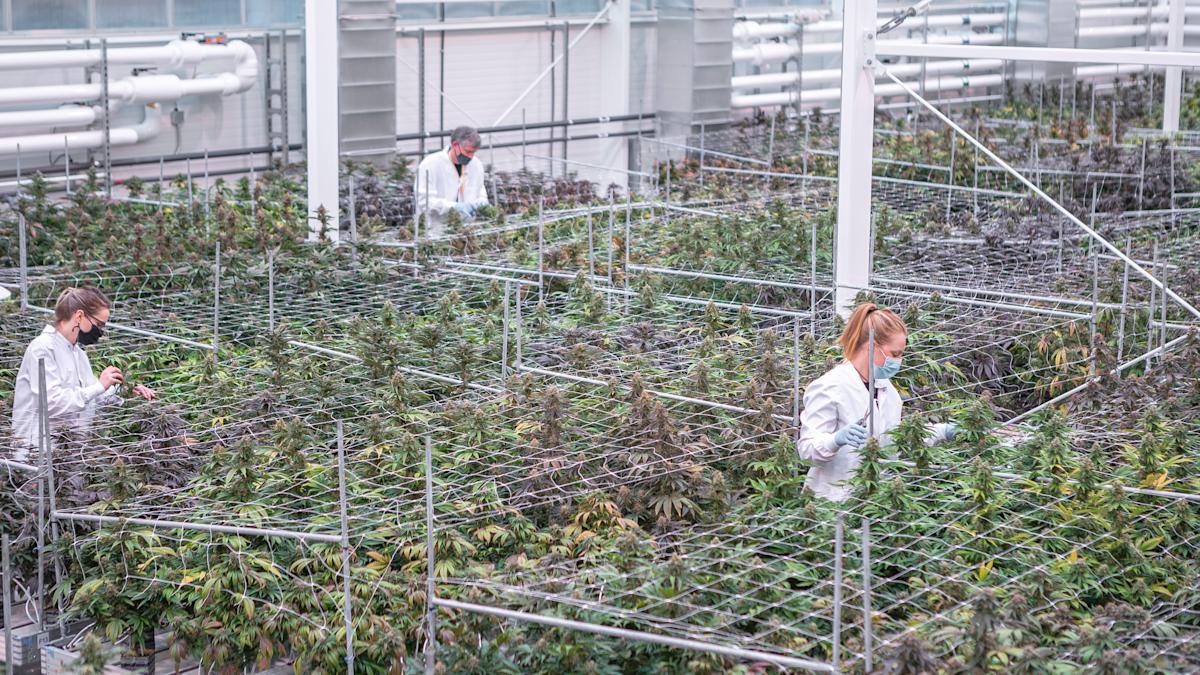

Mental health disorders tied to growing number of cannabis-related hospital visits

Mental health disorders tied to growing number of cannabis-related hospital visits


More people are landing in the hospital with cannabis-related problems-and for many, a mental health condition is the primary issue, according to a new study published in the Journal of Studies on Alcohol and Drugs.

The study, conducted in Arizona, found that between 2016 and 2021, cannabis-related hospital visits across the state rose by 20%. Among those visits, one quarter ended up with a primary diagnosis of a mental health condition, including bipolar disorder, depression, and psychotic disorder. That compared with only about 3% of visits unrelated to cannabis.

Overall, people with a cannabis-related hospital visit were nearly eight times as likely to have a primary diagnosis of a mental health disorder. And the link between the two grew stronger over the five-year study period.

The reasons for the rising rate of cannabis-related visits are unclear, according to lead researcher Madeline Meier, Ph.D., an associate professor of psychology at Arizona State University, in Tempe, Ariz.

But, she said, legalization of non-medical (recreational) cannabis use is not to blame: Arizona legalized non-medical use for adults in late 2020, with sales beginning in 2021-too late to explain the trends seen during the study period.

On the other hand, Meier said, medical use of cannabis was legal in Arizona throughout the study period. So it’s possible that easier access to the drug is partly responsible for the trends her team found. Meier noted that when states have less-restrictive policies on medical cannabis-such as making it available in dispensaries rather than pharmacies-that can make it easier for any adult to get the drug.

The findings also raise other key questions: Why do so many people with cannabis-related hospital visits have a mental health condition, and why is the connection between the two growing stronger over time?

“There are many possible explanations, and this study can’t address them,” Meier said. But based on other research, she said, one possibility is that cannabis use led to mental health conditions in some people. Another is that some people were using cannabis to treat mental health symptoms-and that tendency increased over time.

If that’s the case, Meier said, it points to a need for better public education. “I think it’s important for people to be aware that the science on using cannabis to treat mental health problems is really not there yet,” she said. “In fact, there is evidence suggesting that cannabis use can worsen mental health conditions, or even increase the risk of developing them.”

The study also found some interesting patterns related to age: Older adults (age 65 and up) showed a bigger jump in cannabis-related hospitalizations between 2016 and 2021, versus other adults. And the growing tendency for those hospitalizations to be linked to mental health conditions was most pronounced among older adults.

That’s not necessarily surprising, Meier said, given Baby Boomers’ permissive attitudes about cannabis use. But, she added, older adults may need particular education about the potential risks of using the drug-including the fact it is much more potent (and potentially intoxicating) these days, compared with the cannabis of decades ago.

Source:

Journal reference:

Meier, M. H., et al. (2025). Trends in cannabis-related hospitalizations in Arizona from 2016–2021 and associations with mental health-related hospitalizations. Journal of Studies on Alcohol and Drugs. doi.org/10.15288/jsad.23-00379.


Source link

New to Silly Nice Weed? Start Here in Farmingdale, Deer Park, and Riverhead | stupidDOPE

New to Silly Nice Weed? Start Here in Farmingdale, Deer Park, and Riverhead | stupidDOPE


Silly Nice just turned one year old, but in just 12 months, this Black- and Veteran-owned cannabis brand has already secured its spot as one of the Top 150 Cannabis Brands in New York State. With over 500 brands competing for attention in the state’s dynamic legal market, that’s no small feat. Even more impressive? Silly Nice’s Diamond Powder ranks in the Top 5 Best Selling Concentrates, according to HeadSet cannabis sales data.

For Long Island weed lovers, that means premium products are now within easy reach. Whether you’re in Farmingdale, Deer Park, or Riverhead, you’ll find Silly Nice stocked at top dispensaries like Happy Days, Planet Nugg, Strain Stars, and Long Island Cannabis Club. But before you grab your next eighth or cartridge, here’s a deeper look at what makes each Silly Nice product worth the visit.

Diamond Powder – Ultra-Pure THC Crystals for Maximum Potency

With a staggering 87.53% THC, Silly Nice Diamond Powder is one of the most potent and versatile cannabis products on New York dispensary shelves. These crystalline THC diamonds can be dabbed, sprinkled on flower, or used to craft potent edibles. Every batch is lab-tested, ensuring purity, potency, and consistency. What sets it apart is its clarity and strength—designed for seasoned consumers who want the cleanest high possible.

Frosted Hash Ball – A Hash Masterpiece

Hash aficionados won’t want to miss the 1G Frosted Hash Ball. Made using time-honored techniques and coming in at 52.70% THC, it delivers a rich, full-spectrum experience. This handcrafted ball of hash is perfect for slow-burning bowls or elevating any blunt or joint. Its terpene-rich smoke is smooth and flavorful, and each gram is made fresh once the dispensary places an order—nothing stale or sitting on shelves.

Bubble Hash – Solventless and Full-Spectrum

For those who value solventless extraction, Silly Nice’s 1G Bubble Hash offers 52.10% THC and 61.93% total cannabinoids. Made through a traditional ice-water extraction process, it preserves the original plant flavor and potency. This product is versatile enough for smoking, dabbing, or sprinkling into joints and bowls. Each batch is rigorously tested to ensure you’re getting a clean, terpene-packed experience.

Diamond-Frosted & Live Resin Infused Flower – Flavor and Potency in Every Hit

If you want flower that hits hard and tastes amazing, Silly Nice’s Papaya Wine strain is infused with live resin and then diamond-frosted, creating a 3.5g experience with 47.75% THC. It burns slow, tastes fruity, and delivers an unmatched full-spectrum high. Every bud is coated for maximum impact, and because Silly Nice only produces after dispensary orders, you’re guaranteed peak freshness.

1G Vape Cartridge (Runtz) – Full-Spectrum Hybrid Enjoyment

The 1G Runtz vape cart is perfect for hybrid lovers. With 81.96% THC and 100% cannabis-derived terpenes, it offers a sweet, fruity flavor that mirrors the legendary Runtz strain. The high is balanced, making it suitable for creative days or chill evenings. It fits all 510-thread vape batteries and contains no artificial additives.

1G Vape Cartridge (Northern Lights) – Classic Indica Power

Northern Lights lovers will appreciate this 1G vape delivering 84.66% THC and the classic earthy-sweet flavor profile. Infused with cannabis-derived terpenes and compatible with most 510-thread batteries, it offers strong relaxation and a smooth pull. Ideal for end-of-day unwinding.

2G All-In-One Vape (Tangerine Cookies) – Citrus Meets Power

This rechargeable, portable vape pen delivers 81.24% THC and the zesty flavor of Tangerine Cookies. It’s sweet, citrusy, and hits hard while staying smooth. The high is energizing, making it perfect for daytime sessions or creative inspiration.

2G All-In-One Vape (Pink Starburst) – Sweet, Potent, and Ready to Go

With 82.46% THC and a candy-sweet profile, the Pink Starburst all-in-one vape is a customer favorite for a reason. This rechargeable device is discreet, portable, and ready to elevate your session wherever you go. Expect smooth hits, euphoric vibes, and long-lasting satisfaction.

Made Fresh – No Warehouse Stale Weed

What really sets Silly Nice apart is their made-to-order production model. Every product is crafted only after a dispensary places an order. That means no degradation from sitting on shelves for weeks or months. It’s a level of freshness you can taste and feel.

Where to Buy Silly Nice in Long Island

  • Happy Days Dispensary – 105 NY-109, Farmingdale, NY 11735
  • Planet Nugg – 2043 Wellwood Ave, Farmingdale, NY
  • Strain Stars – Farmingdale – 1815 Broadhollow Rd, Farmingdale, NY 11735
  • Long Island Cannabis Club – 94 E Industry Ct, Deer Park, NY 11729
  • Strain Stars – Riverhead – 1871 Old Country Rd, Riverhead, NY

Silly Nice products are available at licensed dispensaries only. Find more info and current product availability at sillynice.com.

Final Thoughts

From concentrate connoisseurs to flower lovers and vape enthusiasts, Silly Nice has carved out a place among New York’s most respected weed brands. Their focus on freshness, potency, and small-batch care is evident in every product they make. If you’re on Long Island and looking for something worth your time and money, Silly Nice is the brand to try. And when visiting your local dispensary, if the service is great, don’t forget to ALWAYS TIP YOUR BUDTENDER.


Source link

Michigan permanently bans cannabis businessman Youssef Barakat, accused of serious violations

Michigan permanently bans cannabis businessman Youssef Barakat, accused of serious violations


Michigan regulators banned Youssef Barakat from working in the cannabis industry in the state follow several serious allegations. - Shutterstock

Shutterstock

Michigan regulators banned Youssef Barakat from working in the cannabis industry in the state follow several serious allegations.

State regulators have permanently banned Youssef Barakat from working in or owning any licensed cannabis business in the state, citing a series of serious violations at two marijuana dispensaries he co-owned and operated.

The Michigan Cannabis Regulatory Agency (CRA) found that Barakat violated numerous cannabis laws and administrative rules while employed at Big Rapids Tree House Club and Bay City Tree House Club, according to public records. The agency concluded that his actions posed risks to public health, safety, and welfare, which are grounds for permanent exclusion under the state’s marijuana laws.

Among the most alarming allegations, the CRA said Barakat’s Big Rapids dispensary sold cannabis to a 20-year-old Michigan State Police cadet during a February 2023 sting operation.

The cannabis, sold in a clear sandwich bag without proper labeling or tracking tags, was handed over by an unregistered employee not listed in the state’s monitoring system. Barakat later admitted that neither background checks nor employment records had been completed for the staff involved.

In the state’s adult-use market, residents must be 21 years or older to buy cannabis.

Regulators also said the dispensary lacked a printer to create legally required product labels, left surveillance cameras deliberately covered, and allowed marijuana to be sold in unsecured areas. During a routine inspection, CRA staff reported finding the business operating without electricity, security cameras, or a working alarm system. Barakat reportedly failed to notify the CRA that the city of Big Rapids had revoked his operating permit weeks earlier and admitted to using cannabis on site.

The Bay City location also raised red flags during a June 2023 inspection after a landlord found the dispensary unlocked and unattended. CRA investigators discovered nearly a kilogram of unsecured marijuana flower under a counter, as well as other inventory accessible to anyone entering the store.

As a result of these findings, the CRA formally issued a Notice of Intent to Exclude in December and recently finalized the decision to permanently bar Barakat from Michigan’s licensed cannabis industry. The decision means Barakat cannot be employed by, or serve as an applicant or owner in, any marijuana business regulated by the state.

Under Michigan law, all licensed cannabis businesses are required to check CRA exclusion lists before hiring or admitting new partners. The lists, which include both voluntary and involuntary exclusions, are publicly available on the CRA’s website.


Source link

Türkiye’s strategic product cannabis’ production, cultivation area on rise

Türkiye’s strategic product cannabis’ production, cultivation area on rise


The production and cultivation area of cannabis, one of the strategic products of Türkiye, is on the rise, following Turkish President Recep Tayyip Erdogan’s statements and efforts by the Agriculture Ministry.

Cannabis production and other processes for its use in pharmaceuticals began under the supervision of the Turkish Grain Board.

Türkiye’s cannabis seed production soared about 70 percent year-on-year in 2024, reaching 556 tons, according to data from the TurkStat statistical bureau, compiled by Anadolu.

The country’s cannabis seed production was 273 tons in 2020.

While cannabis seed production followed a fluctuating course over the years, it totalled 1,335 tons in the last five years.

Hemp fibre production, made out of cannabis, was 9 tons in 2020, 21 tons in 2021, 31 tons in 2022 and 359 tons in 2023. The country’s hemp fibre production jumped 238.7% on an annual basis to 1,216 tons in 2024.

The cultivation area for hemp fibre rose from 101,000 square metres in 2020 to 8,845,000 square metres in 2024.

Cannabis seeds’ cultivation area in the country increased from 4,252,000 square metres in 2020 to 7,206,000 square metres last year.

A cannabis project is underway by the General Directorate of Agricultural Research and Policies (TAGEM), universities, and the Turkish private sector to produce polymeric composite materials with thermoset and thermoplastic matrices, using flax (linen), hemp and nettle fibres as reinforcement in irrigation systems and drainage materials.

Another project in collaboration with TAGEM, the Scientific and Technological Research Institution (TUBITAK), and Ondokuz Mayis University in the northeastern province of Samsun, was initiated to develop two new cannabis species with low tetrahydrocannabinol (THC) content, namely “Narli” and “Vezir” via hemp breeding in 2021. New studies are underway to develop species with high fibre content.

The Turkish private sector is also working to produce products with more hemp, especially in the textile and automotive sectors.


Source link

High Court Steps in to Arizona ‘Consumable Hemp’ Battle, Offering Hope to Industry

High Court Steps in to Arizona ‘Consumable Hemp’ Battle, Offering Hope to Industry


Arizona’s hemp industry this week received a welcome reprieve from an overnight ban on all ‘consumable hemp products’, as the Court of Appeals agreed to consider a collaborative pushback from the industry.

The Hemp Industry Trade Association of Arizona (HITA) and its legal team, Full Spectrum Law Collective, announced yesterday that their ‘Petition for Special Action’ against last months ruling would be heard by the Arizona Court of Appeals.

A Petition for Special Action is a legal tool in Arizona to request a the Court of Appeals step in immediately, rather than wait for the usual snails pace of court proceedings to play out, used when the issue has immediate and widespread consequences.

In their filing, HITA argues that the move has already seen ‘businesses shuttering, workers being laid off, and families who depended on the industry for income, insurance and stability’ now caught in ‘legal crossfire they never saw coming’.

With the intervention of the higher court, a ‘stay’ has been granted, meaning the proceedings in the lower court, namely HITA’s legal actipn against the Arizona Attorney General’s Office have been postponed indefinitely.

“The stay we received strengthened our position. The hearing will no longer be held.  Our legal team will now be able to focus on the Special Action. By filing the Special Action, we’ve elevated the matter to a higher court that oversees lower-court decisions and the actions of executive agencies like the Attorney General’s Office,” said Sully Sullivan, Executive Director of HITA.

In late April, Business of Cannabis reported that Maricopa County Superior Court Judge Randall Warner denied HITA’s request for a temporary restraining order on the action.

As such, the case was set to be played out in a full hearing on May 09, where Judge Warner said he will explain his reasoning behind the denial, however this has now been delayed indefinitely while the Appeals court examines HITA’s petition.

The bill in question stems from an opinion declared by Arizona Attorney General Kris Mayes in March 2025, that hemp-derived products with intoxicating levels of THC should be treated the same as cannabis under state law, meaning they should only be sold through licensed dispensaries.

He gave Arizona retailers until April 24 to remove products from shelves, or potentially faces fines of up to $20,000 per item or criminal prosecution.

“The stay was granted over the strenuous objection of the Attorney General’s office, who argued the appeal was unlikely to succeed,” Sullivan continued.

The Attorney General’s office took this position because she hoped to force HITA-AZ to dismiss its special action and proceed with an ordinary appeal on a slower timeline. The court disagreed with the Attorney General’s office, announcing a delay that protects our position, enhances our leverage, and ensures our arguments are reviewed by judges with the mandate and vantage point necessary to correct governmental overreach.”


Source link

Four In Five Texas Voters Support Legalizing Marijuana In Some Form, Poll Shows

Four In Five Texas Voters Support Legalizing Marijuana In Some Form, Poll Shows


Four in five Texas voters say they want to see marijuana legalized in some form, and most also want to see regulations around cannabis relaxed, according to a new poll, which also shows a lack of support for efforts to crack down on intoxicating hemp-derived products in the state.

The University of Texas/Texas Politics Project Poll that was released on Wednesday found that 84 percent of registered voters in the state support allowing legal possession of cannabis under some circumstances. Thirty-five percent say small amounts of
marijuana for any purpose should be legal, 16 percent want to legalize possession of any amount for any purpose and 33 percent support legalization for medical purposes only.

Only 15 percent of respondents said that marijuana possession should be illegal under any circumstance.

As is the case in most polls, there is a partisan divide on the issue of legalization, with Democrats being more in favor of the reform than Republicans are.

“While 65% of Democrats thought that small (42%) or any amount of marijuana (23%) should be legal for recreational purposes, Republicans were more clearly divided, with the aforementioned 21% favoring a complete prohibition (in line with past results), 39% favoring the legalization of marijuana solely for medicinal purposes, and 40% allowing for recreational usage,” a Texas Politics Project blog post about the poll says.

The survey further asked voters about their opinion on the extent to which they feel various things should be regulated by the state. Of the six options—including guns, abortion, gambling, immigration and voting—marijuana came in second among issues that respondents said should be regulated less, at 43 percent.

Thirty percent of voters said cannabis should be regulated more strictly, while 18 percent said the laws should be kept the same and another 8 percent said they weren’t sure.

While Lt. Gov. Dan Patrick (R) has made it a priority this session to advance legislation to ban consumable hemp products containing any amount of THC, the new poll also shows that voters oppose such a move, 50 percent to 34 percent, with the largest share of respondents (35 percent) saying they “strongly” oppose legislation “outlawing the production and sale of cannabis-derived products in Texas, including consumable, hemp-based products.”

The survey involved interviews with 1,200 registered voters in Texas from April 18-28, with a +/-2.83 percentage point margin of error.

Meanwhile in Texas, a House committee last week approved a Senate-passed bill that would prohibit cities from putting any citizen initiative on local ballots that would decriminalize marijuana or other controlled substances—as several localities have already done despite lawsuits from the state attorney general.

Under the proposal, state law would be amended to say that local entities “may not place an item on a ballot, including a municipal charter or charter amendment, that would provide that the local entity will not fully enforce” state drug laws.

While several courts have previously upheld local cannabis decriminalization laws, an appellate court comprised of three conservative justices appointed by Gov. Greg Abbott (R) has recently pushed back against two of those rulings, siding with the state in its legal challenge to the marijuana policy in Austin and San Marcos.

Meanwhile, despite the ongoing litigation and advancement of the House and Senate bills, Texas activists have their targets set on yet another city, Kyle, where they hope put an initiative before voters to enact local marijuana reform at the ballot this coming November.

Abbott has lashed out against the municipal cannabis reform efforts.

“Local communities such as towns, cities and counties, they don’t have the authority to override state law,” the governor said last May “If they want to see a different law passed, they need to work with their legislators. Let’s legislate to work to make sure that the state, as a state, will pass some of the law.”

He said it would lead to “chaos” and create an “unworkable system” for voters in individual cities to be “picking and choosing” the laws they want abide by under state statute.

Abbott has previously said that he doesn’t believe people should be in jail over marijuana possession—although he mistakenly suggested at the time that Texas had already enacted a decriminalization policy to that end.

In 2023, Ground Game released a report that looked at the impacts of the marijuana reform laws. It found that the measures will keep hundreds of people out of jail, even as they have led to blowback from law enforcement in some cities. The initiatives have also driven voter turnout by being on the ballot, the report said.

Another cannabis decriminalization measure that went before voters in San Antonio that year was overwhelmingly defeated, but that proposal also included unrelated provisions to prevent enforcement of abortion restrictions.


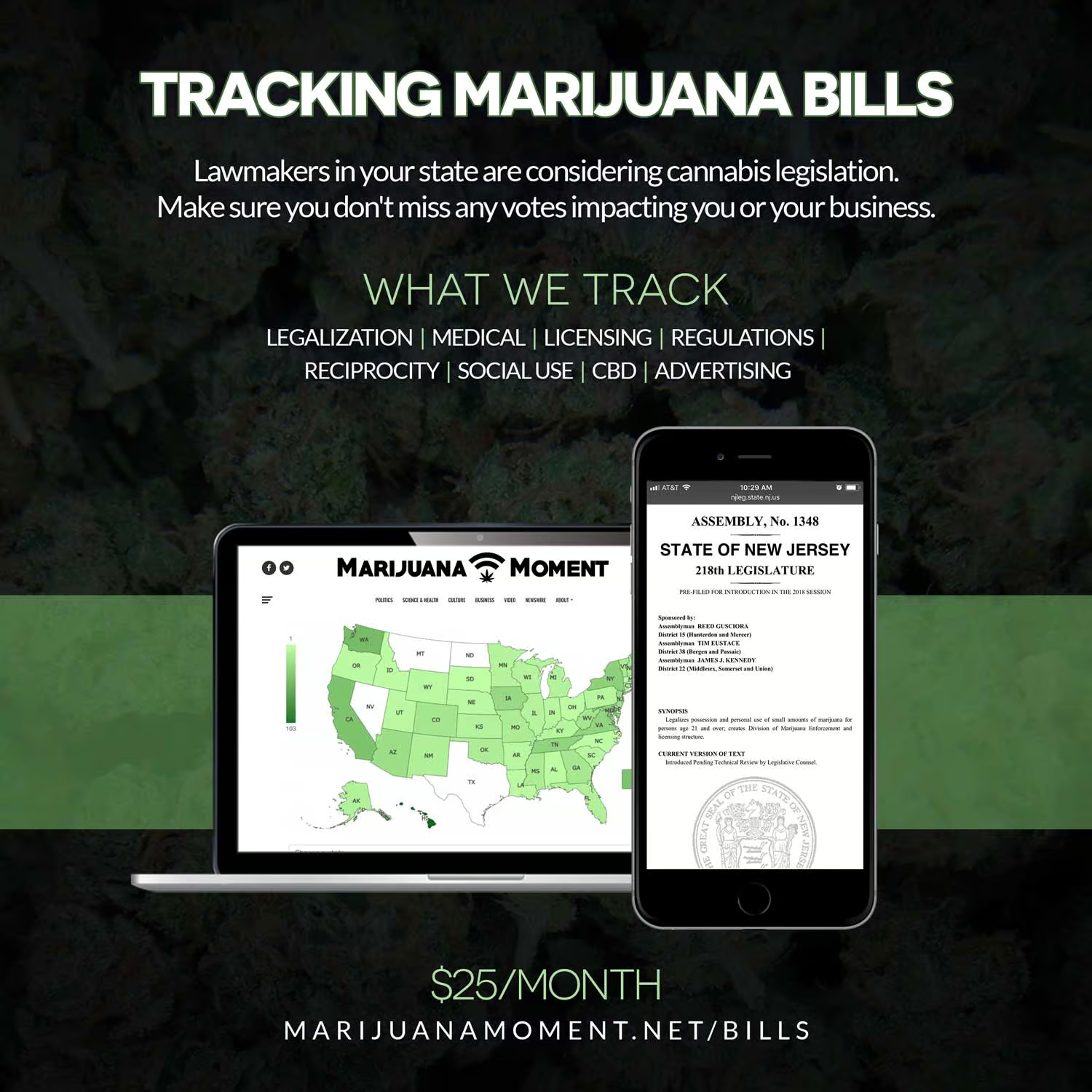
Marijuana Moment is tracking hundreds of cannabis, psychedelics and drug policy bills in state legislatures and Congress this year. Patreon supporters pledging at least $25/month get access to our interactive maps, charts and hearing calendar so they don’t miss any developments.


Learn more about our marijuana bill tracker and become a supporter on Patreon to get access.

Meanwhile, in March the Texas Senate approved a bill that cannabis advocates and stakeholders said would effectively eradicate the state’s hemp industry, prohibiting consumable products derived from the plant that contain any amount of THC.

That, as well as another measure from Rep. Joe Moody (D) to decriminalize cannabis statewide, is one of the latest of nearly two dozen cannabis-related proposals filed so far in Texas for the current legislative session. Various other measures would legalize adult-use marijuana, remove criminal penalties for cannabis possession and adjust the state’s existing medical marijuana laws, among others.

Moody sponsored a similar marijuana decriminalization bill last legislative session, in 2023. That measure, HB 218, passed the House on an 87–59 vote but later died in a Senate committee.

The House had already passed earlier cannabis decriminalization proposals during the two previous legislative sessions, in 2021 and 2019. But the efforts have consistently stalled in the Senate amid opposition from the lieutenant governor.

Separately, a Texas House committee has amended and passed two bills designed to prepare the state to provide swift access to therapeutic psychedelics in the event of approval from the U.S. Food and Drug Administration (FDA).

Pennsylvania House Approves Bill To Legalize Marijuana Sales Through State-Owned Stores

Photo courtesy of Brian Shamblen.

Marijuana Moment is made possible with support from readers. If you rely on our cannabis advocacy journalism to stay informed, please consider a monthly Patreon pledge.

Become a patron at Patreon!


Source link

Round Valley Indian Tribe sues California and county law enforcement after cannabis raids

Round Valley Indian Tribe sues California and county law enforcement after cannabis raids


The Round Valley Indian Tribe sued the sheriffs of Mendocino and Humboldt counties, along with the California Highway Patrol, late last month, claiming officers illegally raided cannabis cultivators on their reservation.

The complaint names three tribal members as plaintiffs and alleges law enforcement raids have “terrorized” the community. One of the plaintiffs, April James, is described as a grandmother who grows medicinal cannabis to treat her arthritis and a degenerative disc disorder.

Police allegedly showed up at her property with guns drawn while her 5-year-old grandson was home. The lawsuit says deputies used a tractor to destroy her marijuana plot and never presented a warrant.

According to Katherine Florey, a law professor at the University of California, Davis, county and state police in California are allowed to enforce criminal law on tribal territory under Public Law 280, a federal law enacted in 1953. But, she notes, authorities in the state cannot enforce civil or regulatory law on reservation land.

“The question here with cannabis, and this often becomes an issue with Public Law 280, is what is a criminal law and what is merely a regulatory law,” Florey said.

She explained that if an activity is predominantly prohibited, then it is considered a criminal offense, and the state can enforce it.

“But cannabis is a gray area because in states like California, it’s obviously widely permitted, but it is not permitted to an unlimited degree,” Florey said. “I don’t think that there is a clear answer at this point.”

David Dehnert, an attorney representing the plaintiffs, said his clients were not involved in criminal activity.

“It’s just a matter of these law enforcement agencies going onto the reservation and one — violating the tribe’s sovereignty,” Dehnert said. “And two — overstepping their jurisdiction.”

The lawsuit claims police told James, one of the plaintiffs, they were enforcing environmental regulations. That action would not be supported under Public Law 280, according to Dehnert.

Mendocino County Sheriff Matthew Kendall did not respond immediately to a request for comment. But he told SFGATE that the Round Valley reservation has become a center for cartel activity.

He warned that without proper law enforcement, the region could become a “Narco state.” He also said his officers target non-tribal people growing cannabis on tribal land and that the raids were legal and requested by Round Valley members.

Growing medicinal marijuana for personal use is permitted by the tribe.

The lawsuit seeks an injunction against further raids by non-tribal law enforcement and requests damages.


Source link

Op-ed: Federal cannabis regulations should be revised to reflect legalization in states

Op-ed: Federal cannabis regulations should be revised to reflect legalization in states


During my four terms in the Maine Senate, which included serving as co-chair of the joint select committee on marijuana legalization implementation, I spent years navigating the complexities of cannabis policy.

Provided photo

Roger Katz

I’ve worked alongside colleagues on both sides of the aisle to ensure that any steps we take are measured, data-driven and rooted in public benefit.

As a result of our collective work, many jobs have been created in Maine and millions of dollars have been generated in revenue for the state.

And while the existing Maine law is not perfect — for example, there is legitimate debate around whether our adult/recreational and medical systems should be merged into one regulatory scheme for oversight — I believe it is time to take an important step forward nationally: our federal government should reschedule cannabis from Schedule I to Schedule III under the Controlled Substances Act.

This change is long overdue. The current Schedule I classification, put in place over 50 years ago, groups cannabis with heroin as substances that are considered to have no accepted medical use.

Yet cannabis is now legal in some form in 38 states, including our own here in Maine. Veterans use cannabis to manage post-traumatic stress disorder, cancer patients turn to it to ease the side effects of chemotherapy and individuals with chronic pain have found cannabis to be a safer alternative than opioids. The Schedule I label doesn’t just ignore this reality — it actively harms those who rely on this treatment.

Rescheduling cannabis to Schedule III would be a pragmatic step. It would affirm what millions already know: cannabis does have medical value.

It would also allow researchers greater access to study its therapeutic properties without navigating the bureaucratic challenges currently imposed on Schedule I substances. For veterans and other patients, this means more data, better products, and more informed care.

Rescheduling would also be a good step forward to help the many companies that operate in the cannabis space in Maine access banking services. The inability of state-legal cannabis companies to gain that access up to this point has created an unsafe, cash-dominated industry that puts workers and communities at risk and makes any kind of compliance oversight that much more difficult. It makes zero sense to deny businesses working in this industry the ability to get loans or access to the same banking services that other small businesses have.

Let me be clear: supporting rescheduling is hardly a radical position. It’s a bipartisan, evidence-based, pro-veteran, pro-patient policy. It aligns with the views of many in the medical community, the recommendations of the Department of Health and Human Services, and the evolving perspective of the American public. And it sends a message that we’re ready to treat cannabis with the seriousness and nuance it deserves.

As someone who has worked closely with law enforcement, health care professionals and veteran advocates, I know firsthand that rescheduling cannabis is not a panacea. It will not resolve every challenge in our patchwork of state and federal cannabis policies. But it is a necessary step — a bridge between outdated federal policy and modern state realities.

By rescheduling cannabis to Schedule III, we can ease the burden on patients, expand research, support our veterans, and bring our policies more in line with science and compassion. It should be a no-brainer.


Source link

Higher Returns with Aurora Cannabis – Initiation Report

Higher Returns with Aurora Cannabis – Initiation Report


By Rayk Riechmann

Investors want what they’re on!

Aurora Cannabis Inc. (Nasdaq: ACB), a federally-licensed producer of medical and consumer cannabis, is attractively positioned as an early leader in global regulated markets. ACB leverages a best-in-class brand portfolio to grow and sell products across all major cannabis categories. And it’s translating to results: the company just delivered a top-down beat on strengthening industry tailwinds and expanding global sales.

With a strong footprint in key medical cannabis markets in North America, Europe, and Australia, the company excels at meeting both patient and regulatory demands. This early adaptation of medical markets is already paying off with strong revenue growth and creates a first-mover advantage once these regions transform into recreational markets. Germany is close to creating a national legalized consumer market, and as other European nations follow suit, top-line growth could skyrocket.

ACB is strategically positioned to rapidly expand into new markets within Europe as regulatory liberalization continues. Notably, a local presence in these markets mostly shields ACB from tariff-related uncertainty.

Here’s ACB’s global presence in one glance: #1 in Canadian medical market share, #2 in Australia following the acquisition of MedReleaf Australia in 2024, #3 in Poland, and one of only three companies licensed to cultivate in Germany.

Since June 2021, ACB has introduced 24 new proprietary strains, which drive yield, potency, and cost-efficiency. Newly engineered next-gen cultivars appeal to consumers with increased consistency and save up to 30% in per-unit costs. Both are key differentiators in the consumer and medical market.

ACB‘s one-of-a-kind combination of regulatory expertise, brand architecture, and scientific innovation enables superior financial performance, as demonstrated in the top-down beat delivered in the latest quarter, driven mainly by a 51% increase in international medical cannabis revenue. The debt-free cannabis business has taken decisive steps to ensure profitable growth moving forward. By rightsizing its SG&A expenses and consolidating its manufacturing footprint, ACB delivered positive net-income for the second time in company history, as well as record adjusted EBITDA and FCF.

Our bullish outlook for 2025 is fueled by improved company profitability and favorable external forces. ACB currently trades at a NTM price/sales multiple of 0.96x – a big discount to its own 3-year mean multiple of 1.51x, indicating that the stock price has not caught up to recent developments and is due for a rerating. What’s more, ACB trades at a significant discount to almost all peers on an Ebitda basis.


Source link

Trulieve Reports 8M in Q1 Revenue, With 62% Gross Margin

Trulieve Reports $298M in Q1 Revenue, With 62% Gross Margin


[PRESS RELEASE] – TALLAHASSEE, Fla., May 7, 2025 – Trulieve Cannabis Corp., a leading and top-performing cannabis company in the U.S., announced its results for the quarter ended March 31, 2025. Results are reported in U.S. dollars and in accordance with U.S. generally accepted accounting principles (GAAP) unless otherwise indicated. Numbers may not sum perfectly due to rounding.

Q1 2025 Financial and Operational Highlights*

  • Revenue of $298 million increased slightly year over year, with 95% of revenue from retail sales.
  • Achieved gross margin of 62% versus 58% last year, with GAAP gross profit of $183 million.
  • Reported net loss attributable to common shareholders of $33 million. Adjusted net loss of $3 million* excludes nonrecurring charges, asset impairments, disposals and discontinued operations.
  • Achieved adjusted EBITDA of $109 million*, or 37% of revenue, up 3% year over year.
  • Generated cash flow from operations of $51 million and free cash flow of $34 million*.
  • Cash at quarter end was $329 million.
  • Rewards program members reached over 625,000 members as of March 31, 2025. Loyalty members accounted for 68% of transactions during the first quarter.
  • Launched Onward, a premium, nonalcoholic THC beverage available for purchase by consumers 21 years and older at select retail locations in Florida or ordered via DrinkOnward.com for direct shipment to 36 states.
  • Opened six dispensaries in Maricopa, Ariz.; Middleburg, North Miami Beach, and Palm Coast, Fla.; and Columbus and Zanesville, Ohio. Relocated one dispensary to Lancaster, Pa.

*See “Non-GAAP Financial Measures” below for additional information and a reconciliation to GAAP for all Non-GAAP metrics.

Recent Developments

  • 4/20 holiday season units sold and traffic increased 20% and 9%, respectively, versus last year.
  • Opened one new retail location in St. Petersburg, Fla.
  • Currently operate 229 retail dispensaries and more than 4 million square feet of cultivation and processing capacity in the United States.

Management Commentary

“Strong margins and cash flow achieved in the first quarter clearly demonstrate our commitment to operational excellence,” Trulieve CEO Kim Rivers said. “With our loyal customer base, branded products and efforts to drive cannabis reform, Trulieve stands out as an industry leader.”

Financial Highlights*

Trulieve Financial Highlights

A line-by-line breakdown of the company’s balance sheet is available here.

Non-GAAP Financial Measures (Unaudited)

In addition to our results determined in accordance with GAAP, we supplement our results with non-GAAP financial measures, including EBITDA, adjusted EBITDA, EBITDA margin, adjusted EBITDA margin, adjusted net (loss) income, adjusted net (loss) income per diluted share, and free cash flow.

The company calculates EBITDA as net income (loss) before net interest expense, interest income, income tax expense, depreciation and amortization; adjusted EBITDA as net income (loss) before net interest expense, interest income, income tax expense, depreciation and amortization and also excludes certain extraordinary items; EBITDA margin as EBITDA as % of revenue; adjusted EBITDA margin as adjusted EBITDA as % of revenue; adjusted net income (loss) as net income (loss) less certain extraordinary items; adjusted EPS as adjusted net income (loss) divided by basic and diluted shares outstanding; and free cash flow as cash flow from operations less capital expenditures.

Our management uses these non-GAAP financial measures in conjunction with GAAP financial measures to evaluate our operating results and financial performance. We believe these measures are useful to investors as they are widely used measures of performance and can facilitate comparison to other companies. These non-GAAP financial measures are not, and should not be considered as, measures of liquidity. These non-GAAP financial measures have limitations as analytical tools in that they do not reflect all of the amounts associated with our results of operations as determined in accordance with GAAP. Because of these limitations, these non-GAAP financial measures should be considered along with GAAP financial performance measures. The presentation of these non-GAAP financial measures is not intended to be considered in isolation or as a substitute for, or superior to, financial information prepared and presented in accordance with GAAP.

Investors are encouraged to review the reconciliation of these non-GAAP financial measures to their most directly comparable GAAP financial measures. A reconciliation of the non-GAAP financial measures to such GAAP measures can be found below. These non-GAAP financial measures should be considered supplemental to, and not a substitute for, our reported financial results prepared in accordance with GAAP.


Source link