Marijuana Moment – All your cannabis news, in one place

Marijuana Moment – All your cannabis news, in one place


Science & Health8 hours ago

Using Marijuana Reduces Alcohol Cravings In People Who Drink A Lot, Federally Funded Study Shows

New federally funded research into the effects of cannabis on alcohol use finds that people who used marijuana immediately before…


Source link

Trulieve Cannabis Corp. SEC 10-Q Report — TradingView News

Trulieve Cannabis Corp. SEC 10-Q Report — TradingView News


Trulieve Cannabis Corp., a leading multi-state operator in the cannabis industry, has released its Form 10-Q report for the first quarter of 2025. The report provides a comprehensive overview of the company’s financial performance and operational highlights, reflecting its strategic initiatives and market position in the rapidly evolving cannabis sector.

Financial Highlights

Revenue: Trulieve reported revenue of $297.8 million for Q1 2025, marking a slight increase of $0.1 million from the previous year. This growth was driven by a $3.2 million increase in wholesale and other revenue, which was partially offset by a $3.0 million decrease in retail revenue.

Gross Profit: The company’s gross profit for the quarter was $183.2 million, an increase of $9.4 million or 5.4% from the previous year. Gross profit as a percentage of revenue improved to 61.5% from 58.4%, reflecting cost efficiencies and disciplined promotional activity.

Income from Operations: Trulieve’s income from operations was $33.3 million, a decrease of $12.8 million or 28% from the previous year. This decline was primarily due to increased selling, general, and administrative expenses.

Net Loss: The company reported a net loss of $33.8 million, an increase in loss of $8.9 million or 36% from the previous year. The higher net loss was mainly attributed to higher campaign and political contributions and increased selling, general, and administrative expenses.

Net Loss Per Share – Continuing Operations: The net loss per share from continuing operations was $(0.16), consistent with the previous year, reflecting the impact of increased expenses and strategic investments.

Business Highlights

Revenue Segments: Trulieve experienced a $3.2 million increase in wholesale and other revenue, primarily driven by higher wholesale revenue in Maryland and Pennsylvania. However, retail revenue decreased by $3.0 million due to price compression and loyalty point redemption, despite the opening of additional dispensaries.

Geographical Performance: The company operates in nine states with significant retail operations in Arizona, Florida, Georgia, Pennsylvania, and West Virginia. Trulieve has a strong presence in Florida, with 161 dispensaries and five cultivation and processing facilities, contributing to its market-leading position.

Sales Units: As of March 31, 2025, Trulieve operated 229 dispensaries, an increase from 195 dispensaries as of March 31, 2024, indicating expansion in retail operations.

New Product Launches: In February 2025, Trulieve launched a new line of premium THC beverages called Onward. These Farm Bill compliant non-alcoholic beverages are made in the United States using naturally derived THC and CBD and are available online and in select liquor retail locations in Florida.

New Production Launches: Trulieve has invested in a state-of-the-art 750,000 square foot automated indoor cultivation facility in Florida. This facility supports larger scale production and offers flexibility in pricing and product assortment.

Future Outlook: Trulieve aims to expand access to regulated cannabis products through advocacy, education, and expansion of its distribution network. The company is focused on maintaining its market-leading positions in cornerstone states and leveraging its vertically integrated operations to control product quality and brand experience.

SEC Filing: Trulieve Cannabis Corp. [ TRUL ] – 10-Q – May. 07, 2025


Source link

Illicit Connecticut marijuana operator hit with  million judgment

Illicit Connecticut marijuana operator hit with $5 million judgment


Connecticut’s attorney general won a $4.93 million judgment against a marijuana store in East Haven and its owner for continuing illicit sales.

The judgment against Planet Zaza and owner Mohamed Alraishani is the largest civil penalty Connecticut has imposed for illegal cannabis sales, according to a news release from Connecticut’s Office of the Attorney General.

“The state of Connecticut is not playing around. Legal cannabis is not a free-for-all,” Attorney General William Tong said in a statement.

“If you are unlicensed, if you sell untested, unregulated cannabis, we will find you and hold you accountable.”

Planet Zaza was one of seven businesses that Tong’s office sued in January 2024 for violating the Connecticut Unfair Trade Practices Act (CUPTA).

Alraishani’s store came under scrutiny after unannounced inspections uncovered numerous cannabis edibles with higher concentrations of THC than allowed under Connecticut law.

Investigators from the state Department of Consumer Protection and the Office of the Attorney General also discovered unauthorized labels, including ones for fake prescription indicating that the store was a licensed medical marijuana dispensary, the release noted.

Products sold at Planet Zaza were not manufactured in a licensed facility or tested according to state law.

Planet Zaza and Alraishani ignored court-ordered temporary injunction issued Nov. 12 to cease the illegal sales, according to the release.

The court ordered Planet Zaza and Alraishani to pay $5,000 for each of the 621 days they violated the CUPTA and $25,000 for each of the 73 days they violated the temporary injunction.


Source link

How cannabis drinks are hijacking wine’s legacy

How cannabis drinks are hijacking wine’s legacy


As cannabis beverages rise in popularity, they’re doing more than offering a new kind of buzz, they’re borrowing wine’s hard-earned narrative of culture, community and moderation. Karen MacNeil (pictured) argues it’s time for wine lovers to speak up before their story is rewritten.

As cannabis beverages rise in popularity, they’re doing more than offering a new kind of buzz, they’re borrowing wine’s hard-earned narrative of culture, community and moderation. Karen MacNeil (pictured) argues it’s time for wine lovers to speak up before their story is rewritten.

“The next time you attend an upscale gathering, don’t be surprised if, alongside or instead of the Champagne, you’re offered something that fizzes like a premium seltzer but delivers an entirely different kind of buzz. Just remember that, unlike alcohol, where effects can be unpredictable, with these beverages, moderation and mindfulness are built right into the experience.”

That’s a quote from a recent article in Gigwise entitled, Celebrity-Endorsed Cannabis Drinks: The New Toast of High-End Gatherings.

Redefining moderation and mindfulness

Since when is wine less “predictable” than pot? And since when does cannabis own the concepts of moderation and mindfulness? Moderation has been wine’s message since the time of the ancient Greeks, who shunned inebriation and who valued moderate consumption of wine for its ability to inspire intellectual thought.

For cannabis producers to appropriate wine’s historic narrative is clever marketing, and it’s also extremely worrying. Cannabis has assumed a “moral high ground.” Indeed, the anti-alcohol forces have increasingly framed their argument in moral terms. Witness the World Health Organisation’s “Guidelines for Journalists”, which states that alcohol use leads to child abuse, divorce, vandalism, and violence, among other acts.

The author of the Cannabis Drinks article, Emma Richardson, goes on to say, “Perhaps the most compelling reason for the champagne-to-cannabis switch is the complete absence of hangovers … This benefit particularly resonates with health-conscious consumers who still want social lubrication without the inflammation, dehydration, and brain fog that often follow alcohol consumption.”

This “morning after” argument is especially insidious. It promotes drinking cannabis beverages not for their attributes, but precisely because those beverages are not wine. Wine and other alcoholic beverages are then wrongly blamed for a variety of “wellness consequences.” Brain fog. Who could want that?

A silent shift in perception

I have nothing against cannabis. I do have something against manipulative arguments like Ms. Richardson’s, which slyly turn the tables on wine, positioning it as uncool, risky, and “un-mindful.”

For 8000 years, wine has been a communal beverage that brings people together. A beverage born of rural agricultural communities. I think of wine as the silent music of Nature.

Those of us who love wine have to tell the positive story about it. We need to speak louder and more insistently. Our silence is getting dangerous.

Related news


Snoop Dogg launches cannabis, hemp and adaptogenic tonics


Could cannabis sales cannibalise wine?


Cannabis producer Green Thumb eyes Boston Beer merger


Source link

Hemp Farmers Switch To Corn As Italian CBD Industry Fights Extinction

Hemp Farmers Switch To Corn As Italian CBD Industry Fights Extinction


Former hemp farmers are switching to corn, and larger players are leaving Italy altogether as its once-thriving hemp and CBD industry is battered by the hard-line government.

Nevertheless, there is some optimism that last month’s ‘emergency’ court decision equating industrial hemp to high-THC cannabis can be overturned.

And, efforts are underway to counter Italy’s determination that CBD is a narcotic, contrary to the position of the European Union, of which Italy is a key member.

The hemp and CBD industry is reeling from the downstream effects of the Georgia Meloni government.

‘A terrible development for the industry’

Italian national Lorenza Romanese, Managing Director of the European Industrial Hemp Association (EIHA), says last month’s decision to force through revisions to Article 18 of Italy’s Security Bill, which equates industrial hemp flowers with high-THC cannabis, has been a ‘terrible development for the industry’.

“CBD has been banned, and flowers have been banned, and this also implicitly means the seed market in Italy is gone. If you cannot have the flower, then you cannot have the seeds,” she told Business of Cannabis.

This decision has prompted all of the Italian regions to coordinate a written response to the Government requesting a revision of Article 18.

In a press release, Venetian Regional Councillor for Agriculture Federico Caner, speaking on behalf of the Agricultural Policy Commission of the Conference of Regions, called for a Government rethink.

It has requested that Francesco Lollobrigida, Italy’s Minister of Agriculture, re-evaluate the revision of Article 18.

Mr Caner said: “All the representatives of the Regions found themselves unanimously recognising that the Security Decree puts the hemp sector in difficulty, which in Italy has 3,000 companies with 30,000 employees, 500 million in turnover and 90% exports.

“We want to find a solution together with the government that allows farmers, certified and with quality production, to keep the supply chain alive, balancing the legislator’s legitimate concern for public safety with the investments made over time by companies and with the public funding granted to the supply chain.”

On this particular issue, which will not be in force until July this year, Ms Romanese believes there are some grounds for optimism, based on the misplaced nature of the legislation, sitting, as it does, alongside other issues such as immigration and prisons.

She said: “This legislation is not fit for purpose. It is the wrong framework for this type of legislation, and this may be resolved by putting the right pressure on the government.

“All of the regions of Italy have written to the Minister for Agriculture expressing their objections, and I am optimistic that we will find a way forward.

“There is the possibility of some amendments due the the pressure which is now being applied by all of the regions.”

A sledgehammer to crack a nut

Ms Romanese is less optimistic about the future of the CBD industry as the Italian government’s decision to legislate on the matter finds succour in the European Commission’s legal framework.

“The EU Directive states that if a product falls within the definition of a medicinal product, but also within the scope of another regulatory framework, the rules of the Medicinal Products Directive shall prevail.

“This means that if a member state determines that a substance like CBD has therapeutic properties, it is entitled to classify and authorise its sale exclusively as a medicine, subject to a marketing authorisation from the competent authority,” she says.

She contends that the Italian government is effectively using a sledgehammer to crack a nut, with the nut in this case being the ‘cannabis light’ or CBD industry.

“The situation is a disaster. They initially had intended to ban only cannabis light, but as a result of this legislation and actions, they have effectively banned the whole plant.

“The ruling parties do not like cannabis, and they said we are going to ban the drugs, and they have kept their promise to the electorate.”

Industry in ruins 

This position is contrary to the EC stance, which was determined in the 2020 KanaVape decision acknowledging that CBD is not a narcotic.

However, Ms Romanese believes that there may be grounds to challenge this status as the government chose to ignore the EU Technical Regulations Information System (TRIS), which is designed to prevent new trade barriers between member states.

In the meantime, though, the industry is under extreme pressure. Ms Romanese added: “We have members who are moving to other countries like the Czech Republic, for example.

“It is the larger companies that are moving away. The smaller ones are fed up with the barriers, and they are turning to corn, and, as a result, the hectares will decrease, and the sector will no longer grow.

“They have not got the time or money to spend on more court actions; they prefer to go elsewhere.”




Source link

THC Content in Cannabis Has Surged: Here’s What You Need to Know | BU Today

THC Content in Cannabis Has Surged: Here’s What You Need to Know | BU Today


BU experts offer advice for how to protect yourself

THC levels in cannabis have quadrupled since the 1990s, raising potential health risks. Photo via iStock/User44916d0b_828

Health & Medicine

BU experts offer advice for how to protect yourself

With recreational use of marijuana now legal in 24 states, access to cannabis has soared in recent years. So too has its THC content—to potentially dangerous levels.

Whereas in the 1990s, cannabis averaged less than 4 percent THC—the main psychoactive ingredient of the cannabis plant—that level quadrupled by 2022, according to the National Institute on Drug Abuse. That’s a concern at Boston University’s Student Health Services (SHS).

“The trend toward increasing potency of THC is definitely an issue and is well-documented,” says Matthew Lally, staff psychiatrist in behavioral medicine at SHS. “The efforts to legalize cannabis prioritized a messaging campaign that cannabis was good for health, reduced risk of opioid addiction, etc. These same messages are evident now in commercial advertising.”

“The evidence is also clear that in states where cannabis has been legalized, rates of use have gone up, with college age being the highest rate of increase,” he adds. (Massachusetts is one such state, with gross cannabis sales last year at a record $1.6 billion-plus.) 

In part, that rise in use may be due to the ease of using electric cartridges and devices to consume cannabis, Lally says: “Students tell me they feel the electric devices are more addicting because they are always right there, so quick and easy to use, and hard to take a break from.”

Cannabis does have medicinal value in some cases, such as decreasing nausea from chemotherapy or reducing elevated eye pressure, he adds. But “the evidence is clear that frequent cannabis use worsens mental health.” (Infrequent use is not a concern, says Lally.)

He and Sarah Voorhees (SPH’13), SHS assistant director of substance use, recovery, and sexual well-being, spoke with BU Today about the symptoms and dangers of excessive THC consumption and their advice for students who are using cannabis.

Q&A

with Matthew Lally and Sarah Voorhees

BU Today: Do we know how many BU students use cannabis?

Voorhees: The 2025 Healthy Minds Study at BU gives a snapshot of students’ cannabis use. Twenty-two percent of respondents said that they have recreationally used cannabis products that contain THC, including smoking, vaping, and edibles, over the past 30 days.

BU Today: What are the symptoms of and possible dangers from excessive THC consumption?

Lally: I wrote a presentation that I’ve given to college mental health clinicians across the country because I saw so many college students presenting with mental health concerns—mostly depression, anxiety, and purported ADHD—and using cannabis daily. I did a thorough review of the scientific literature, and it became clear the frequent cannabis use was often the cause—not a consequence—of the depression, anxiety, and inattention problems. 

For some students, mental health difficulties existed before frequent cannabis use, but this was pretty uncommon. It is counterintuitive to most clinicians, but the scientific evidence is clear that having a mental health disorder does not increase the risk of frequent cannabis use. Additionally, the evidence is clear that mental health treatment is much less effective with ongoing cannabis use and likely not effective at all, unless cannabis use declines. I also created the presentation because I would get a referral to see patients for depression, anxiety, or ADHD with no mention of frequent cannabis use in the chart.

There are also good studies that this trend toward increasing potency is associated with increased negative consequences [such as] quicker time to dependency.

Voorhees: Some signs of cannabis overconsumption include paranoia, confusion, and increased heart rate. If you think someone might be experiencing an alcohol or other drug emergency, it’s important to get help immediately. The BU Good Samaritan Policy helps students get help without being afraid [of being disciplined].


The evidence is clear that mental health treatment is much less effective with ongoing cannabis use and likely not effective at all, unless cannabis use declines.

Matthew Lally

BU Today: What advice would you give now to students using cannabis?

Voorhees: Some strategies for using cannabis in a safer way include:

  • Consider products with lower THC. Seek products with more balanced levels of THC and CBD [the second most widespread cannabis ingredient];
  • Use products from a reputable source. Know and understand where your cannabis is from. Cannabis from unregulated markets may contain unknown substances; 
  • Go slow. Give your body time to feel the effects. Edibles can take hours to kick in, so consuming more too soon can lead to an undesirable experience;
  • Avoid mixing cannabis with other substances. Combining cannabis with other substances can increase the risk for harmful effects; and 
  • Take tolerance breaks. If you seem to need more THC to feel the same effects, consider taking a break to help lower your tolerance.

Lally: As a psychiatrist, I try to focus my comments to those using cannabis frequently and having mental health distress. If a student walks in for mental health services, which implies they are having a problem, and they are using cannabis frequently, I share the info about the negative impacts of cannabis, and I encourage decreasing frequency of cannabis. The most common outcome of this, believe it or not, is that the student comes in for the next appointment and has stopped using altogether.

BU Today: Do many students buy into the misconception that, as one media report put it, “the highest high is the best high?”

Lally: I have never heard a college student telling me that they are seeking the highest high or indicate that the potency of the THC matters to them. I have heard of this concept in other settings and with other substances—i.e., opioids—but never with cannabis in a college health setting. It does seem likely that consumer preference probably is a factor in the increased concentration in THC, but this has never come up with a student.

Students in or seeing a medical emergency on the Charles River or Fenway Campuses can call the Boston University Police Department at 617-353-2121. Medical Campus students can call BU Public Safety at 617-358-4444. If you’re off campus, call 911.

Explore Related Topics:


Source link

Push for legal pot in PA clears committee, GOP vexed by quick passage

Push for legal pot in PA clears committee, GOP vexed by quick passage


play

  • Pennsylvania House Democrats advanced a bill to legalize recreational marijuana, sending it to the full chamber for a vote.
  • The bill faces opposition in the Republican-controlled Senate, particularly regarding the proposed use of state-run dispensaries.
  • Republicans criticized the bill’s swift introduction and passage, citing a lack of transparency and public input.

There was no slow burn on this bill.

Pennsylvania House Democrats on Sunday inflamed tensions with their Republican colleagues by introducing legislation that would legalize adult-use recreational marijuana and then passing the bill out of the Health Committee on a 14-12 party line vote just a day later. It now heads to the floor for a vote by the chamber.

The 175-page Cannabis Health and Safety Act, sponsored by state Reps. Rick Krajewski, D-Philadelphia, and Dan Frankel, D-Allegheny, legalizes adult-use cannabis for people age 21 and older, calls for it to be sold out of state-run stores, similar to how the state conducts liquor sales, and to be regulated by the Liquor Control Board.

Senate opposition

If H.B. 1200 passes the narrowly held Democratic-run chamber, it has an uphill battle in the Republican-controlled Senate.

State Sen. Dan Laughlin, R-Erie, who was the first GOP officeholder in Pennsylvania to support legalization of marijuana for recreational purposes, said the bill won’t make it out of the Law & Justice Committee, which he chairs, if it includes the provision of using state liquor stores as dispensaries.

“I’ve been clear about that right along,” he told the USA TODAY Network. “I’ve introduced a standalone bill that will create the Pennsylvania Cannabis Control Board. I think that is needed regardless. The House bill seeks to expand the Liquor Control Board to include cannabis. I’m also opposed to that.”

Gov. Josh Shapiro has supported legalization in his three budget proposals since taking office.

Twenty-four states — including five of the six states bordering Pennsylvania — have fully legalized marijuana in recent years.

The few Republicans who have joined their Democratic colleagues in backing legalization have argued that Pennsylvania is losing tax revenue to neighboring states and legalization is inevitable.

The Cannabis Health and Safety Act could generate more than $500 million annually in taxes and profits for the state.

What’s in the bill?

The bill’s sponsors, Krajewski and Frankel, said their bill will avoid the “missteps” made by other states by using an “alternative retail model” — state-run dispensaries — instead of handing over profits from sales to out-of-state corporations. “The cannabis industry has been monopolized by corporatized private equity and it is time to propose an alternative retail model that will benefit all Pennsylvanians.”

Profits would be redirected to “small businesses and taxpayers,” including “communities disproportionately harmed by the war on drugs,” according to the sponsors. The legislation would establish the Cannabis Revenue Fund and two restricted accounts, the Communities Reimagined and Reinvestment account and the Substance Use Disorder Prevention, Treatment and Education account.

As with similar proposals, people with prior marijuana use and possession convictions would have their records expunged automatically. The bill would prohibit employers from discriminating against employees based on a person’s use of marijuana outside the workplace or if a cannabis metabolites are found in a person’s hair, blood, urine of other bodily fluids during a drug screening.

People would also be able to obtain a home cultivation permit to grow two immature cannabis plants and two mature cannabis plants.

A ‘shady, rushed process’

The swift introduction and passage of the bill was heavily criticized by GOP members.

State Rep. Brad Roae, R-Erie/Crawford, accused House Democrats of “stealing democracy” by quickly advancing H.B. 1200 and attempting to pass a bill dealing with changes to the election code.

“They are operating under the ‘we need to pass it first to find out what’s in it later’ method of quickly bringing up large, complex bills for committee votes,” Roae said in a statement Tuesday. “Democracy is at risk when elected representatives have to vote on bills before the public even has a chance to offer its input.”

State Rep. Charity Grimm Krupa, R-Fayette, who serves on the House Health Committee, said committee Democrats withheld bill language from fellow members and the public on Sunday, despite calls from state Rep. Kathy Rapp, the minority chair of the committee, to release it.

“This shady, rushed process is designed to ram through a massive policy change before members, stakeholders and the public have had a chance to review, discuss or understand the consequences,” Krupa said in a statement. “While Democrat leadership may technically be following the letter of the law, they are trampling all over the spirit of Pennsylvania’s sunshine laws and procedural rules, rules that exist to ensure transparency, deliberation and accountability.”

‘The time is now’

In a joint statement, Krajewski and Frankel expressed urgency in passing the legislation and described past efforts to review, study and receive input on the issue.

Krajewski said he led six public hearings last legislative session on adult-use legalization.

“The time is now for Pennsylvania,” he said. “We have listened carefully to public health experts, criminal justice reformers, small business advocates and community leaders. Our bill reflects what we’ve learned — that we can and must legalize cannabis in a way that is safe, equitable and beneficial to all Pennsylvanians.”

Matthew Rink can be reached at mrink@timesnews.com or on X at @ETNRink.


Source link

Medical Cannabis Linked to Improvements in Treatment-Resistant Epilepsy

Medical Cannabis Linked to Improvements in Treatment-Resistant Epilepsy


New analysis from the UK has found that cannabis-based medicines are associated with improvements in symptoms and overall quality of life in patients with treatment-resistant epilepsy. 

Researchers say the study, which analysed data from the UK Medical Cannabis Registry (UKMCR), shows the ‘promising potential’ of cannabis-based medicines in treatment-resistant epilepsy. 

Approximately 51.7 million people live with epilepsy, with around a third of cases thought to be treatment-resistant, meaning they continue to experience seizures, despite the use of anti‐epileptic drugs. 

Medical cannabis has shown promise in the treatment of these severe forms of epilepsy, with certain compounds such as CBD having demonstrated anti‐seizure properties. 

A recent review found nearly 100 clinical trials, real-world studies, and observational research on the role of Cannabis-Based Medicinal Products (CBMPs) in epilepsy management, with some studies showing reductions in seizures of up to 84%.

The new case series analysed data collected on 134 patients with epilepsy who had been enrolled in the UKMCR for at least six months. The average age of participants was 37 and the majority (67%) said they were using cannabis prior to joining the registry, with 86% using it daily.

Data analysis found clinically significant improvements in epilepsy-specific outcomes at one, three and six months compared baseline, with a third of patients attaining the minimal clinically important difference at six months. 

Whilst the study did not collect data on seizure frequency, researchers say the overall score for Quality of Life in Epilepsy‐31 questionnaire used in this study, has been shown to be indirectly correlated to the number of seizures. Given this, and the fact that overall seizure worry decreased, it can be estimated that seizure frequency also reduced, the authors say. 

Patients reported an improvement in sleep quality— poor sleep is a risk factor for increased seizure frequency, seizure burden and disease progression — and reduced anxiety. Meanwhile, significant improvements were also demonstrated in overall quality of life  related to pain/discomfort and anxiety/depression.

Due to the design of the study, it is not possible to determine causality between CBMPs and improved outcomes. However, the authors say it shows the ‘promising potential of CBMPs as an adjunctive treatment option’ in the management of treatment-resistant epilepsy, and further randomised control trials are needed to fully evaluate the viability of broad‐spectrum CBMPs in these patients. 

The authors state: “The results suggest an association between initiating CBMP treatment and an improvement in patient‐reported epilepsy‐specific outcomes, alongside improvements in anxiety, sleep quality, and general HRQoL. With 96.27% of patients not reporting any AEs [adverse events], this suggests that CBMPs are generally well‐tolerated.”


Source link

Karnataka HC acquits senior citizen accused of growing cannabis in backyard

Karnataka HC acquits senior citizen accused of growing cannabis in backyard


The Karnataka High Court has acquitted a senior citizen accused of growing cannabis in his backyard, observing that there was no proof that he had been actively cultivating the plants.

The order was passed on April 29 by a single-judge bench of Justice M Nagaprasanna and was recently made available.

As per the case, in January 2023, the house of the senior citizen in Bengaluru was searched based on a tip-off that cannabis was being cultivated. Criminal proceedings were later initiated against the senior citizen under the Narcotic Drugs and Psychotropic Substances Act.

Story continues below this ad

The senior citizen petitioner’s counsel argued that for there to be a case of cultivation, there had to be an intentional raising of the plants. The five cannabis plants, which were seized, the counsel said, were growing amongst other weeds in the backyard. The counsel also stated that it might at best have been a case of cross-pollination, causing the plants to sprout, as there was no evidence of cultivation. He further argued that the plants were not properly segregated and the 27.3 kg weight stated by the police was taken by including the roots, stems, leaves, and buds.

On the other hand, the prosecution argued that the petitioner was prima facie guilty and the matter should go to trial.

Festive offer

The court concurred regarding the issue of segregating the plant material and pointed out that growth in nature is not cultivation. “If what was seized and the summary of the charge sheet are read in tandem, it would become an admitted fact that roots, stems, leaves, buds including plastic bag were put to weight. Whether this could be done is what is required to be noticed…. While it is a crime to permit cultivation of a cannabis crop in the residential premises, in the case at hand it is in the backyard amongst other weeds, general in nature,” the court said. Several cases, including statements by the Supreme Court to this effect, were cited.

Dismissing the case, the bench stated, “The prosecution has not placed an iota of evidence to demonstrate that the petitioner was cultivating ganja…segregation of leaves and the actual ganja is not made prior to weighing the same and the charge sheet is filed. Therefore, the charge sheet is filed blatantly contrary to law.”

© The Indian Express Pvt Ltd


Source link

Glaucoma and Cannabis: What Ophthalmologists Want You to Know

Glaucoma and Cannabis: What Ophthalmologists Want You to Know


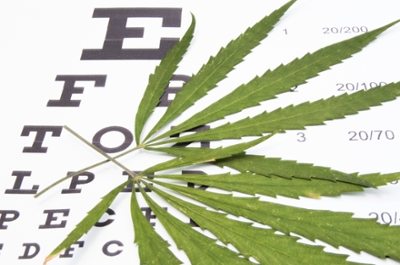
Glaucoma is a complex eye condition that damages the optic nerve over time. If untreated, the disease can cause permanent vision loss and lead to blindness. Glaucoma, which affects more than 4 million Americans, is characterized by elevated pressure within the eye (known as intraocular pressure or IOP). 

Glaucoma patients may have fluctuations in IOP throughout their lives, making it a challenging disease to manage.

For decades, the only way to control glaucoma and lower IOP levels has been through medication, such as prescription eye drops, or surgery—depending on the type of glaucoma and how severe it is. 

After several studies conducted in the 1970s showed that smoking marijuana appeared to lower the pressure levels of people with glaucoma, patients were hopeful.  

But that was then.


Source link