Major reforms to medical marijuana program become law

Major reforms to medical marijuana program become law


HONOLULU (HawaiiNewsNow) – Big changes are coming to Hawaii’s troubled medical marijuana system to make it easier for patients to use cannabis for more conditions without resorting to risky or illegal sources.

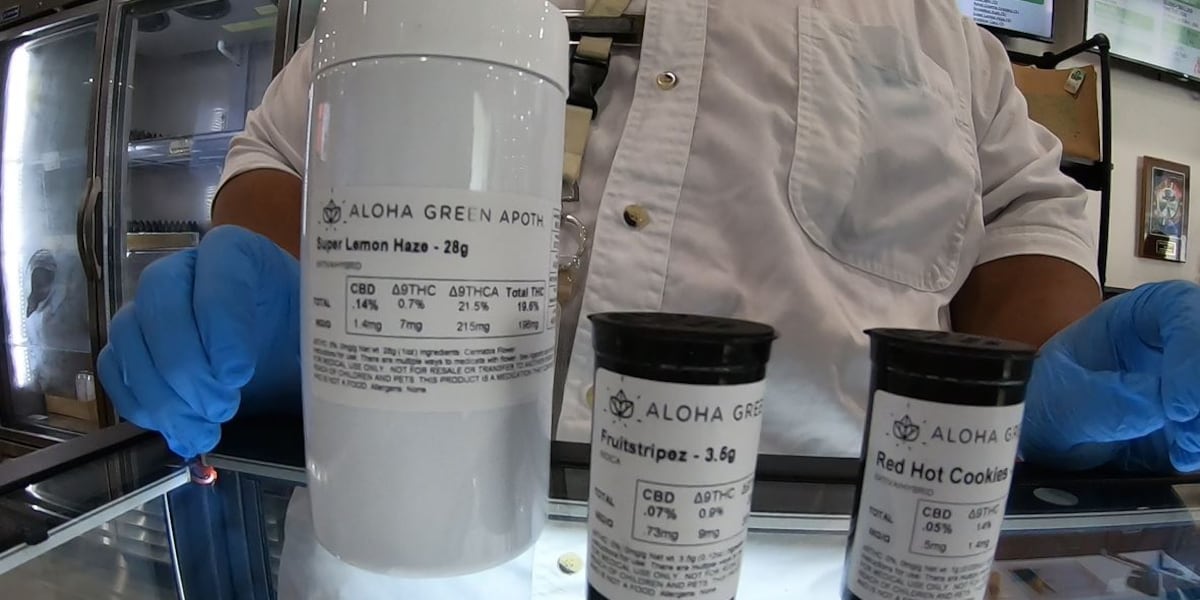
Hawaii lawmakers rejected the idea of legalizing recreational marijuana in favor of shoring up the medical cannabis system, which is built around highly regulated dispensaries like Aloha Green Apothecary in Mapunapuna.

The legislature took action this year out of concern that the 12-year-old system was failing.

Aloha Green Apothecary president Ty Cheng said while it was laudable that the system developed to deliver effective, safe and tested products, the investment hasn’t paid off.

“I think there was some irrational exuberance about how successful the program could be and what it could become,” he said.

Dr. Clifton Otto is a cannabinoid medicine specialist with many patients in Hawaii. He said dispensaries are unable to provide products many of his patients want and are too expensive.

“They’ve had to make a huge investment in building cultivation facilities from the ground up, which has been a huge expense,” he said.

A committee report on House Bill 302, which became the vehicle for major reform of the industry, said the number of registered patients has been falling, from a peak of about 35,000 to 30,000 and fewer than half are using dispensaries.

Instead, patients grow their own, rely on a caregiver grower or buy on the black market.

After realizing the votes weren’t there in the House for legalizing recreational marijuana for adults, Senate Consumer Protection Jarrett Keohokalole pushed for the dramatic changes to the medical cannabis program.

“It’s clear it’s not working the way everyone would like it to work,” he said.

The new law will make it easier and cheaper to get a medical cannabis card by legalizing telehealth consultation with a doctor or advanced practice registered nurse, setting a formula to cap fees on the initial appointment, and freedom for providers to recommend cannabis for more conditions and side effects.

Andrew Goff, manager of the Department of Health Office of Medical Cannabis Control and Regulation, explained the change.

“If you have a condition that’s not on our defined list of debilitating conditions, but a provider thinks that cannabis could be right for you and could be incorporated into your treatment plan. They are empowered to do that,” he said.

It’s hoped that will mean more customers for the dispensaries.

Aloha Green president Cheng says despite the costs of cultivation, production, quality and potency testing and taxes, their pricing is now competitive.

“We normally see now we see product at about $100 an ounce,” he said. “Which is actually around what the grey market or illicit market would be pricing their product as well.”

But Otto said many patients prefer cannabis products they or their caregivers have grown.

The new law expands what caregivers can do. Prior laws allowed a caregiver to only grow for a single patient. They are now allowing them to grow 10 plants each for up to five patients.

“What we really want to do is just make the whole system more convenient for patients,” Keohokalole said.

The law allows more dispensary licenses and bans large growing cooperatives. That’s a reaction to a cooperative grow site in Mokuleia that claimed to serve over 1,000 patients, but that concerned law enforcement and competed with dispensaries, although its supporters said it provided an essential service.

The law limits shared grow sites to five patients or caregivers on one site.

“So that’s 50 total plants and patients can also collectively pull their resources and grow on one plot, but only up to five patients,” Goff said. “So, it is a limited access that way, but that is to curtail some of the more commercial operations.”

The law was also designed to crackdown on providers who certify patients without enough information about their medical needs, so it makes it clear that the government can examine medical records.

That alarmed patients and providers, like Dr. Otto, and nearly got the bill vetoed.

“We have to realize that the information in these medical records could be potentially incriminating,“ Otto said. “Because there is evidence in there that patients are engaging in the illegal use of a federal schedule 1 controlled substance.”

The manager of the medical cannabis program says the intention was to make sure that providers had meaningful discussions about conditions and side effects and whether cannabis products were safe for them.

Source link

Thailand’s U-Turn On Cannabis Policy Strengthens Tourism Image

Thailand’s U-Turn On Cannabis Policy Strengthens Tourism Image

Published on
August 15, 2025

Cannabis

The Thai government literally just changed the policy on cannabis for the second time in three years, only legalising the use of cannabis in 2018; cannabis is now categorised as a narcotic again. Such policies will make the country more appealing as a family-oriented travel destination and have received positive reactions from senior leaders of tourism in the country. On the flip side, the new policies are likely to improve the tourism sector in the country for family-oriented travellers from more conservative countries.

The Cannabis Legalisation and Its Impact on Tourism

In June 2022, Thailand made history by becoming the first Asian country to legalise cannabis for both medical and recreational use. The move was initially aimed at promoting medical research and wellness tourism, positioning Thailand as a destination for health-conscious travellers seeking alternative therapies.

However, the lack of strict regulations quickly transformed the policy into a burgeoning recreational cannabis market. Dispensaries opened in key tourist destinations such as Bangkok, Pattaya, Phuket, Chiang Mai, Hua Hin, and Koh Samui, turning cannabis into a common feature of the tourist experience. The widespread availability of cannabis products and the pervasive smell of marijuana in busy tourist areas began to negatively affect the country’s appeal, especially among families and travellers from conservative regions.

Family Tourism Concerns

Tourism leaders have raised concerns about the negative impact of cannabis use on family tourism. Many families, particularly from conservative Asian markets, expressed discomfort with the widespread presence of cannabis in urban areas. Some governments issued travel warnings, cautioning their citizens about the potential risks associated with recreational cannabis use in Thailand.

In response to these concerns, tourism leaders are optimistic that the recent policy shift will help restore Thailand’s image as a safe and welcoming destination for all travellers. By reclassifying cannabis as a narcotic and limiting its use to medical purposes, Thailand aims to create a more family-friendly environment, attracting a wider range of visitors, particularly those with children.

Positive Impact on Core Markets

Thailand’s tourism industry heavily relies on visitors from the Asia-Pacific region, which accounts for approximately seventy percent of the country’s inbound travellers. Countries such as South Korea, China, and Japan, where cannabis use remains largely illegal, have expressed concerns about the potential impact of Thailand’s previous cannabis policy on their citizens.

The recent policy reversal is seen as a step in the right direction for maintaining strong tourism partnerships with key markets. By aligning its cannabis regulations with the preferences of its largest visitor bases, Thailand aims to ensure continued growth in its tourism sector.

Economic Impact and Business Adjustments

While the policy change is expected to strengthen the country’s tourism image, it also poses challenges for the cannabis-related businesses that have flourished in recent years. Over twenty thousand cannabis-related businesses across Thailand may face closures or costly adjustments as the government implements stricter regulations.

However, tourism leaders are optimistic that the reclassification can be turned into an opportunity. Thailand could reposition itself as a premium medical cannabis wellness destination, focusing on cannabis’s potential benefits in spa treatments, rehabilitation, and health retreats. This approach could help to combine the country’s wellness tourism offerings with its new focus on regulated medical cannabis use.

Strengthening Thailand’s Family-Friendly Image

With a focus on medical tourism instead of recreational use of cannabis, Thailand is attempting to create a family friendly atmosphere for local families and international travellers, including those who are conscious of their health. This action further confirms that the government is committed to maintaining the country’s position as a safe and appealing place for all sorts of travellers.

This change in policy is also meant to further the country’s sustainable tourism initiatives that focus on wellness and responsible tourism within the region. This comes with hope that the country will continue to diversify its travellers while catering to the needs of the many international markets.

To summarise, Thailand’s shift in cannabis policy is a well thought out decision to boost the declining tourism sector of the country. Thailand hopes to shift to family tourism and medical tourism which would, in turn, attract businesses and visitors, thus, making Thailand more appealing to visit for the whole world.

Source link

Oops: New York realizes it measured incorrectly when putting weed shops next to schools and 100 dispensaries are in limb

Oops: New York realizes it measured incorrectly when putting weed shops next to schools and 100 dispensaries are in limb

Since New York began licensing recreational marijuana stores about three years ago, the state has been using a simple tactic to ensure pot shops are kept a legally-mandated distance from local schools: Measure from the door of the dispensary to the door of the school.

But officials recently made a startling admission: They’d misread the law and had been measuring incorrectly the whole time. Now, about 100 cannabis shops are in limbo, crossing their fingers for a legislative fix while wondering whether they’ll have to relocate.

The news was like dropping “a grenade in the laps” of business owners, said Osbert Orduña, who owns a New York City dispensary called The Cannabis Place that is now deemed to be too close to a nearby preschool.

“The way that they executed this was a complete and utter failure in leadership,” he said.

The admission is just the latest bungle from New York’s beleaguered legal marijuana program, which has been hamstrung by legal challenges, a slow rollout and gaps in the law that allowed an illicit market to flourish.

Business owners found out about the issue from the Office of Cannabis Management last month, which admitted it should have been measuring from the edge of a school’s property line, rather than its entrance, to ensure weed stores were kept at least 500 feet (152 meters) away.

“To give you this news, and for the weight of it, I am incredibly sorry,” said Felicia A.B. Reid, acting executive director of the cannabis agency, said in notices to the businesses.

The error impacts a sizable share of the state’s roughly 450 cannabis dispensaries.

About 60 of those were licensed using the erroneous measurement system, mostly in New York City, plus around another 40 that have licenses but are yet to open their doors.

On top of that, there are almost 50 other businesses that have applied for licenses under the incorrect measurement system and are awaiting final approval from the agency. The state has set aside a pot of money where applicants can get up to $250,000 to help relocate.

The existing shops have been told they can remain open for now, and even continue to operate with their expired licenses as long as the businesses file an application for a renewal.

Regulators say they are urging state lawmakers to create a permanent fix that will allow the shops to stay put. But they have also noted that is not guaranteed. The state Legislature isn’t scheduled to sit again until January.

Meanwhile, business owners say they’re being forced to operate in a gray area.

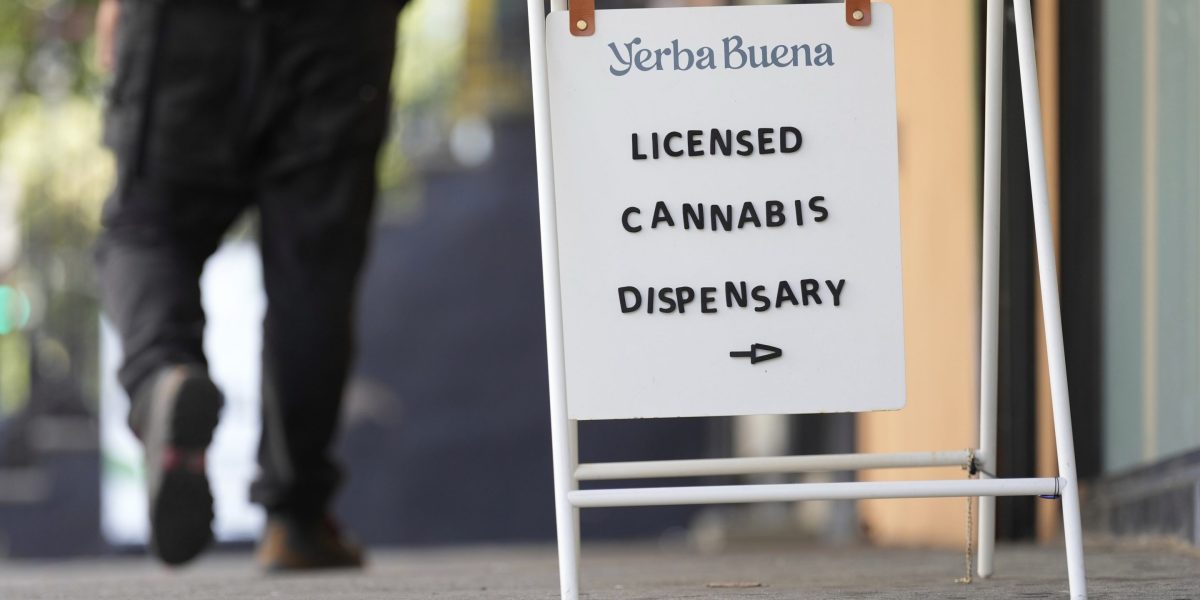
Jillian Dragutsky, who opened a dispensary called Yerba Buena in Brooklyn a few months ago, worries the issue still jeopardizes a dispensary’s ability to bank, get insurance and purchase inventory since they are supposed to have valid licenses in place.

“How do you grow your business not knowing where you’re going to be a few months from now?” Dragutsky said.

In a statement, the cannabis office said businesses can obtain “proof of a valid license or a letter of good standing to operate” by contacting the agency.

An internal review of the cannabis office released last year detailed numerous problems at the agency, including inexperienced management and shifting licensure rules, while state leaders promised an administrative overhaul.

Gov. Kathy Hochul, who has previously said the program has been a “disaster,” called the school proximity problem “a major screw up” and vowed to find a legislative fix.

“These people have worked hard. They’ve waited a long time. They put their life savings into something that they thought was going to help them support their families,” she said. “So what I’m been doing is first of all reassuring them that you’re going to be OK. Secondly, we need to get the law changed to have a fix.”

Introducing the 2025 Fortune Global 500, the definitive ranking of the biggest companies in the world. Explore this year’s list.

Source link

Israeli man arrested for possessing 30 kg. of cannabis

The indictment filed against Or Levy stated that he was in possession of approximately 30 kilograms of cannabis, divided into bags and packaging boxes.

Workers working at a cannabis farm in central Israel, on December 4, 2024.
(photo credit: YOSSI ALONI/FLASH90)

Source link

Local reaction to Trump announcing plans to reclassify cannabis

Local reaction to Trump announcing plans to reclassify cannabis

YUMA, Ariz. (KYMA, KECY) – President Donald Trump has announced plans to reclassify cannabis as a less dangerous drug at the federal level.

We spoke with local cannabis business owners who say the move could bring big benefits.

Cannabis is currently classified as a schedule I drug, the same category as heroin, methamphetamine, and ecstasy but that could change.

The federal government may soon reclassify marijuana to a lower tier, potentially treating it more like alcohol or tobacco, a move local cannabis businesses say is long overdue.

Angel Fernandez, the President and Owner of Aroma Cannabis, says “This is exciting because everyone knows that Trump appointed someone new as the head of the DEA, and we’re hoping that they will see it all they way through,”.

Aroma Cannabis and Yuma Dispensary both say the change could bring significant benefits including easier access to banking services, reduced tax burdens, and the ability to expand legally.

Fernandez says “There’s a lot of challenges to running a cannabis company, and the deductions that we’re not allowed to take in our IRS forms every single year when we file taxes, that’s one of the big ones,”.

Ricardo Nava, a Store Manager at Yuma Dispensary, adds “That means we can’t write off the salaries, marketing, or any bills like a traditional business, so that’s kind of heavy on the owner, it’s a lot of out of pocket,”.

But it’s not just owners who could benefit as staff and customers may see positive changes too.

Nava explains “I feel the customer will be the first one that will benefit off of it, actually being able to use debit and credit cards at a location… For employees, it’s just going to benefit them being able to express where they work and be proud of where they work at,”.

For years, Arizona cannabis users have traveled to California for better prices and higher quality but industry leaders say that’s changing.

Raul Molina, the Chief Operations Officer for Mint Cannabis in Phoenix, says “I think Arizona is catching up and you’ll see a little bit less of that as people go into the stores,”.

Molina says new strains, better cultivation, and stronger local businesses are making a big difference.

“Five years ago, either store in Yuma would’ve had a hard time breaking 250 (thousand) a month, and right now you’ve got one at 300 (thousand) and one at 600 (thousand), so there’s one million dollars a month being sold from in the Yuma-Somerton area,”.

Health officials also say the move could open doors for more medical research and regulated clinical trials.

But not everyone supports the plan, as critics say it could harm public health as well as impact younger generations.

Source link

Michigan cannabis company recalls several vapes over MCT oil

Michigan cannabis company recalls several vapes over MCT oil


Watch CBS News

A Michigan-based cannabis company is recalling several flavored vape products because they contain an oil that should not be consumed.

Source link

Incannex Healthcare (IXHL) Soars 64.82% on Cannabis Industry Growth

A Blueprint for Global Cannabis Leadership

Organigram Global Inc. (NASDAQ: OGI) (TSX: OGI) has emerged as a standout performer in the cannabis sector, delivering record financial results in Q3 2025 while accelerating its global expansion and product innovation. With a 73% year-over-year surge in gross revenue to $110.2 million and a 64% increase in adjusted EBITDA to $5.7 million, the company is demonstrating the scalability of its operations and the effectiveness of its strategic acquisitions. For investors, the key question is whether these metrics signal a sustainable path to long-term value creation—or if the company’s aggressive growth strategy comes with hidden risks.

Financial Performance: A Turnaround in the Making

Organigram’s Q3 results highlight a dramatic improvement in its financial health. Free cash flow turned positive at $5.0 million, reversing a $4.8 million deficit in the same period of 2024. This was driven by robust operating cash flow of $14.6 million and disciplined working capital management. While the company reported a net loss of $6.3 million, this was largely attributable to non-operational factors, such as fair value adjustments tied to preferred shares held by British American Tobacco. Excluding these items, Organigram’s core operations are generating consistent profitability.

The acquisition of Motif Labs Ltd. has been a critical catalyst. Motif-related synergies have already delivered $4.2 million in cost savings, with a target of $15 million within 24 months. This not only boosts margins but also funds further expansion. Meanwhile, the company’s cash reserves of $85.9 million (including $35.9 million in unrestricted cash) provide a strong buffer against volatility in the cannabis sector.

mounted () {\r
if (!window.__oversea_ainvest__) {\r
window.__oversea_ainvest__ = {\r
ENV: \”production\”\r
}\r
}\r
}\r
}”}], “props”: {“title”: “Earnings”}, “path”: “//cdn.ainvest.com/frontResources/s/foiegras/earnings/0.0.1/earnings@0.0.1index.js”, “meta”: {“js_url”: “//cdn.ainvest.com/frontResources/s/foiegras/earnings/0.0.1/earnings@0.0.1index.js”}, “style”: {“background-color”: “”, “padding”: “0”, “color”: “”, “display”: “block”, “width”: “auto”, “position”: “relative”, “height”: “auto”}, “isMaterial”: true, “_id”: 19, “id”: “iwencai/earnings1”, “hasEditor”: true, “packed”: false, “events”: [], “isSetDefaultValue”: true}]}}, “page”: {“layout”: {“layout_data”: “[{\”uuid\”: \”gyyEarnings\”, \”showType\”: \”jgyLowcode\”, \”children\”: []}]”}, “render_for”: “aigc”, “voice_txt”: “”, “uuid”: “39192”}}”>

International Expansion: A New Revenue Engine

Organigram’s international revenue surged 208% year-over-year to $7.4 million in Q3 2025, driven by its hemp-derived THC beverages in the U.S. and growing demand in Europe. The company’s U.S. direct-to-consumer (DTC) platform now serves 25 states, with new product listings and key account partnerships expanding its footprint. While international sales still represent a small portion of total revenue, their rapid growth rate suggests significant upside.

A pivotal milestone is the pending EU-GMP certification for Organigram’s Moncton facility. This certification would unlock access to Europe’s stringent but lucrative medical cannabis market, where demand for high-quality, standardized products is growing. With a record 24,210 kilograms of cannabis harvested in Q3—boasting an average THC potency of 29%—Organigram is well-positioned to meet these global standards.

Product Innovation: Securing Market Leadership

In Canada, Organigram remains the top cannabis company by market share, dominating categories like vapes, pre-rolls, and concentrates. Its recent product launches, such as the SHRED Max10 Party Pack gummies and new strains of Big Bag O’ Buds, underscore a consumer-centric innovation strategy. These products not only cater to evolving preferences but also command premium pricing, boosting gross margins.

The company’s acquisition of Collective Project further diversifies its portfolio with hemp-derived THC beverages, a category poised for explosive growth as U.S. states expand recreational cannabis access. By combining its Canadian expertise with U.S. market entry, Organigram is creating a dual-engine growth model that mitigates regional regulatory risks.

Risks and Realities

Despite its strengths, investors should remain cautious. Selling, general, and administrative (SG&A) expenses rose 70% year-over-year to $24.5 million, reflecting the costs of scaling operations and integrating acquisitions. While these expenses are justified by growth, they could pressure margins if revenue expansion slows. Additionally, the cannabis sector remains highly sensitive to regulatory shifts, particularly in the U.S., where hemp-derived THC faces ongoing legal scrutiny.

Investment Thesis: A Long-Term Play on Global Cannabis

Organigram’s Q3 results validate its strategy of leveraging acquisitions, product innovation, and international expansion to drive value. With a strong balance sheet, a clear path to EU-GMP certification, and a diversified product pipeline, the company is well-positioned to capitalize on the global cannabis boom. For investors with a multi-year horizon, Organigram offers exposure to a sector in transition, with the added benefit of a company that has already proven its ability to scale profitably.

Final Verdict: Organigram’s combination of financial discipline, strategic acquisitions, and global ambitions makes it a compelling long-term investment. While short-term volatility is inevitable in the cannabis sector, the company’s focus on high-margin products and international markets positions it to outperform peers. Investors should monitor its progress on EU-GMP certification and U.S. revenue growth, but for now, the fundamentals are undeniably bullish.

Source link

Tilray Surges 14% After Hours On Trump Cannabis Reclassification - Aurora Cannabis (NASDAQ:ACB), Canopy Growth (NASDAQ:CGC)

Tilray Surges 14% After Hours On Trump Cannabis Reclassification – Aurora Cannabis (NASDAQ:ACB), Canopy Growth (NASDAQ:CGC)

Tilray Brands Inc. TLRY stock surged by 14.13%, to $1.05 during after-hours on Monday. This surge follows a report suggesting that President Donald Trump is contemplating reclassifying marijuana, a move that could significantly impact the industry.

What Happened: The stock of major cannabis companies, including Tilray, Canopy Growth Corp CGC, and Aurora Cannabis Inc ACB, experienced a significant boost on Monday. This surge was triggered by a report from the Wall Street Journal indicating that Trump is considering reclassifying marijuana as a less dangerous drug. Such a move could have substantial financial implications for the industry.

The potential policy shift comes after cannabis companies made significant financial contributions to the president’s political groups. The reclassification, specifically moving marijuana to a Schedule III drug classification, would ease federal restrictions and potentially make the multibillion-dollar cannabis industry more profitable. This is because it would allow cannabis companies to take normal business tax deductions, a benefit they are currently denied under the existing tax code.

See Also: Bitcoin Dips Ahead Of CPI Release; Ethereum, Dogecoin Also Slide: Analyst Calls ETH The ‘Fastest Horse To Bet On,’ Eyes $10,000 Target

With a market capitalization of about $1.01 billion, the Canada-based pharmaceutical company has a trading volume of 246.6 million shares. TLRY traded between $0.35 and $1.98 over the past 52 weeks.

Why It Matters: The news of a potential federal shift in marijuana’s classification has sparked a significant market reaction. This development could reshape the cannabis industry’s financial landscape, with companies like Tilray standing to benefit significantly.

Trending Investment Opportunities

Price Action: Tilray Brands closed at $0.92 on Monday, capping a 41.82% surge for the day, according to Benzinga Pro data.

Benzinga’s Edge Stock Rankings indicate that TLRY stock is showing an uptick in both the short- and medium-term. Here is how the stock fares on other parameters.

Read Next: 

Photo: Below the Sky / Shutterstock.com

Disclaimer: This content was partially produced with the help of AI tools and was reviewed and published by Benzinga editors.

Stock Score Locked: Edge Members Only

Benzinga Rankings give you vital metrics on any stock – anytime.

Unlock Rankings

Market News and Data brought to you by Benzinga APIs

Source link

Cannabis decriminalisation backed by half of Guernsey's deputies

Cannabis decriminalisation backed by half of Guernsey’s deputies

John FernandezBBC Guernsey political reporter

BBC A cannabis plant. It has green leaves and in the background blurred out are weeds. BBC
Work to look at the decriminalisation of cannabis was paused in the last political term

Half of Guernsey’s deputies support decriminalising cannabis, according to research by the BBC.

Eleven of the island’s 38 politicians have said they are either undecided on the issue, or will wait to see any proposals before making a decision.

While four have expressed their opposition, while 19 supported plans to decriminalise the class B drug locally.

Andy Cameron, vice-president for education, sport and culture, said: “I believe the time has come to seriously explore the legalisation, regulation, and taxation of cannabis in Guernsey.”

During the previous political term, Health and Social Care (HSC) started a “high-level scoping exercise” to examine the legal status of cannabis. But that work was paused after 12 months.

HSC President George Oswald was one of those without a firm view on the issue, and has said his committee “looks forward to working with other committees on this workstream, and we look forward to any proposals from the Committee for Home Affairs”.

Committee for Home Affairs President Marc Leadbeater has been a long time advocate of reforming the island’s drug laws.

Previously some deputies have warned the UK government would not allow Guernsey to relax the island’s drug laws.

What is decriminalisation?

Cannabis decriminalisation is different to legalisation.

Decriminalisation, which is favoured by many deputies, reduces or eliminates criminal penalties for possessing small amounts of cannabis.

Guernsey and Bailiwick courts take offences related to the possession and trafficking of drugs extremely seriously.

While legalisation refers to the removal of all legal prohibitions against cannabis, allowing adults to purchase and use it similarly to alcohol or tobacco, and equivalent to Amsterdam.

Many politicians in Guernsey have said they want to see the island move towards a Canadian model of decriminalisation where people have legal and regulated access to recreational marijuana

Deputy Andy Cameron - A man with grey hair, wearing a blue suit and a blue shirt with a Guernsey flag on his lapel.
Deputy Andy Cameron supported reforming the island’s drug laws in his manifesto

The medicinal use of cannabis was legalised in Guernsey in 2021 and some politicians have said that system is being abused.

Mr Cameron said: “Guernsey currently has de-facto decriminalisation of cannabis.

“Almost anyone can obtain a medical cannabis prescription, often for minor conditions.

“The high volume of prescriptions has fuelled a widespread diversion market — yet, contrary to past concerns, the sky hasn’t fallen in.”

What work has already been done?

In 2022 politicians voted, as part of debate on the government work plan, to allow HSC to do some work scoping a review of decriminalising the drug.

However a lack resources at officer level within HSC led to that work being paused in the last political term.

Some newly-elected deputies, including Deputy David Dorrity, have said they want to see that work completed before they make any decision on whether the class B substance should be decriminalised locally.

Source link

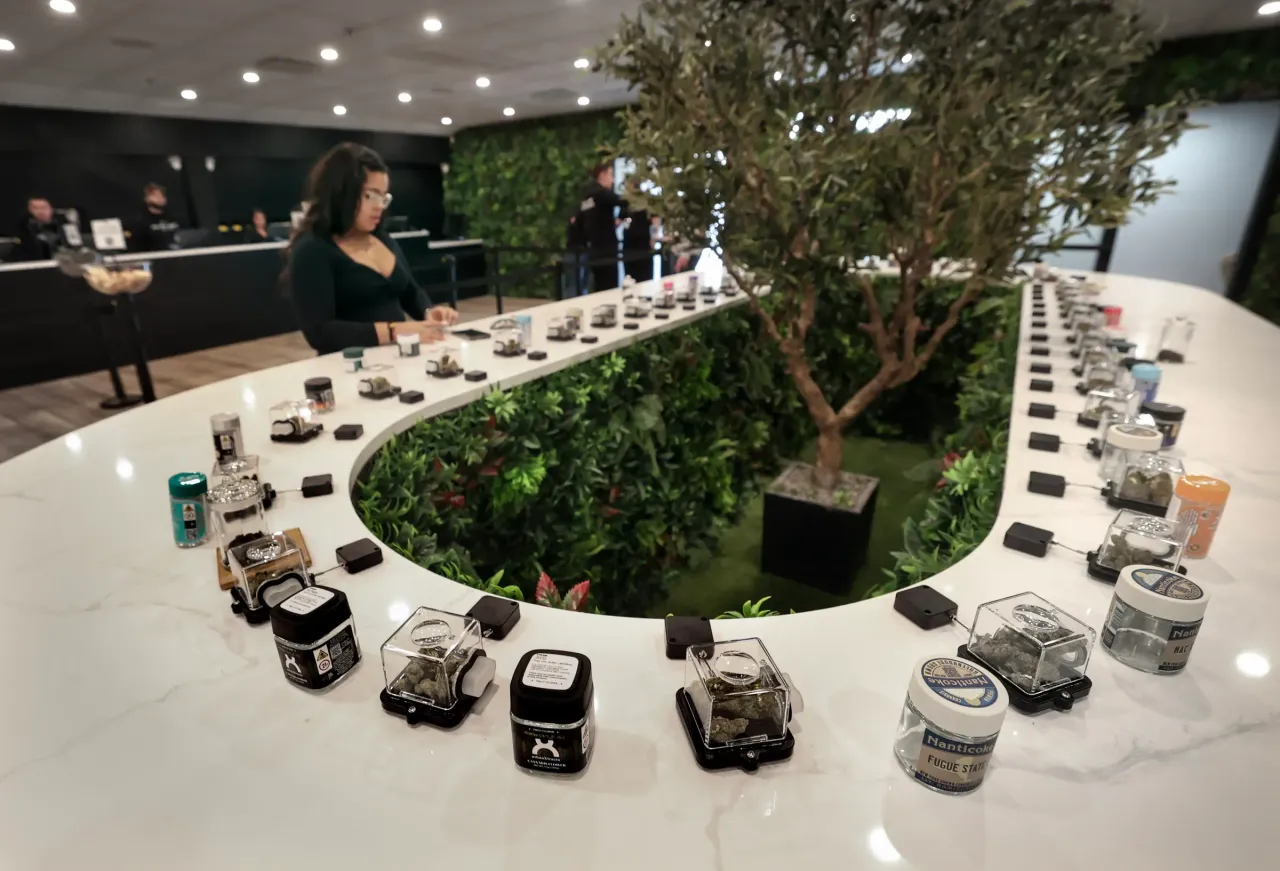
Dozens of varieties of marijuana samples are on display at dispensary in East Farmingdale, New York. (Photo by John Paraskevas/Newsday RM via Getty Images)

Microcap Cannabis Stock VFF Is Having A ‘Trump Pump’ Moment — And Retail Traders Feel Bullish Ahead Of Q2 Earnings

Several Stocktwits users flagged bullish signals, and the buzz further surged following a late Friday report hinting at significant upside for the U.S. cannabis sector.

Canadian cannabis producer Village Farms International (VFF) was at the top of retail investors’ radars last week, with message volume for the company’s shares on Stocktwits rising 1,300%, the highest in the consumer sector.

The bump is notable as the company is scheduled to report its quarterly earnings before Monday’s market open. Several Stocktwits users flagged bullish signals for VFF, and the buzz further surged following a late Friday report hinting at significant upside for the U.S. cannabis sector.

The Wall Street Journal reported that President Donald Trump is considering reclassifying marijuana as a less dangerous drug. Citing sources and Trump’s reported talks with industry leaders, including Trulieve CEO Kim Rivers, at a recent fundraiser, the report also said he would advocate research into marijuana’s medical potential.

“Word is out. Gap up Monday morning. Trump pump,” said a Stocktwits user.

Another user noted that AdvisorShares Pure US Cannabis ETF (MSOS), one of the primary ETFs that tracks cannabis stocks, purchased shares in VFF last week.

Trump’s reported view centers on whether marijuana should be reclassified as a Schedule III drug, which wouldn’t make the drug entirely legal but would ease restrictions on it.

While marijuana is legal in many U.S. states, it is still illegal at the federal level. Lawmakers remain deeply divided when it comes to marijuana legalization, while newly appointed DEA Commissioner, Terrance Cole, has signaled a willingness to review marijuana’s federal classification.

That comes after a particularly weak stretch for cannabis companies. The AdvisorShares Pure US Cannabis ETF, widely regarded as the benchmark for U.S. marijuana equities, has declined by 86% over the past five years, while companies have diversified to survive. Tilray Brands (TLRY) expanded to the craft beer and beverage alcohol segments, while Canopy Growth (CGC) is focusing on health and wellness offerings.

Village Farms, while much smaller than its rivals with a market capitalization of just under $195 million, is growing strongly. VFF shares are up 123% year-to-date.

In June, the company completed the spin-off of its greenhouse fresh produce division, which includes some of its farm assets in Texas, to a holding company backed by private equity investors. The company is said to have received $40 million in cash and a 38% stake in the resultant entity, Vanguard Food.

The same month, Village Farms said it had regained compliance with Nasdaq’s minimum share price requirement.

As of the last reading, the retail sentiment for VFF was ‘bullish.’

For updates and corrections, email newsroom[at]stocktwits[dot]com.

Get the daily email that keeps you tuned in and makes markets fun again.

Read Next: Can Under Armour Stage A Comeback? Retail Bargain Hunters Move In After Gloomy Outlook Tanks Stock

Source link