
Legal Weed Left the Bong Makers Behind

Legal Weed Left the Bong Makers Behind


Legal Weed Left the Bong Makers Behind

The federal paraphernalia statute that helped send Jerome Baker Designs founder Jason Harris to jail is still on the books. Twenty years later, he is relaunching in New York anyway.

In 2003, John Ashcroft went on national television to announce that the federal government had just targeted the functional glass industry. Jason Harris watched it from a jail cell in Eugene, Oregon.

“I was sitting in a jail cell watching the Attorney General of the United States talk about what we were doing,” he says. “That’s when it really sank in that this was bigger than just a legal issue.”

Operation Pipe Dreams was the federal government’s coordinated crackdown on the functional glass world. Fifty-five people indicted. Tommy Chong, among them. Harris, among them. Jerome Baker Designs, the company he had built into a $4 million annual business with 70 employees, was gone overnight.

That was 2003. It is now 2026. The Federal Drug Paraphernalia Statute that made Harris a criminal is still on the books, unchanged. And Harris is relaunching Jerome Baker Designs in New York.

“It’s definitely risky,” he says. “But it’s also invigorating.”

Bong Voyage And The Culture That Refused To Disappear

Bong Voyage, the short documentary chronicling Harris’s story, premiered April 20 on Hulu as part of Jimmy Kimmel’s 4X20: Quick Hits anthology, the same collection that includes a film about High Times and its founder, Tom Forçade. The pairing feels fitting. Both stories are about the same thing: a government that came for the culture before it came for the plant, and a culture that refused to disappear.

Also read: Jimmy Kimmel Made a Hulu Doc About High Times, But It’s Really About Free Speech, Its Director Says

Harris built Jerome Baker Designs starting in the Grateful Dead touring circuit, where functional glass was already its own underground art form. He scaled it into something that transcended the counterculture. Collectors. Gallery-level craftsmanship. A real company with real employees and real revenue.

Then the Attorney General of the United States held a press conference about it.

“It felt ideological,” Harris says. “Like we were part of a larger agenda being pushed at the time. It wasn’t just about enforcement. It was about making an example out of a certain culture.”

“It felt ideological. It wasn’t just about enforcement. It was about making an example out of a certain culture.”

Jason Harris, founder, Jerome Baker Designs

Nobody Is Fighting For The Pipes

The cannabis industry that emerged from that era has spent the years since fighting for the plant. Rescheduling. Banking access. The 280E tax problem. State-by-state legalization. Real wins, real money, real infrastructure behind the push.

“Paraphernalia has never had a unified voice,” Harris says. “There’s no real trade association, no serious lobbying presence, and nowhere near the level of funding that cultivation or retail has had.”

He is not wrong. The Federal Drug Paraphernalia Statute makes it unlawful to sell or offer for sale drug paraphernalia, use the mail or any facility of interstate commerce to transport it, or import or export it. The operative question is intent: whether an item is primarily intended or designed for use with a controlled substance. Bongs are sold openly across much of the country. Under federal law, though, selling or moving one across state lines can still carry real risk.

“Laws change when there’s money and organization behind them,” Harris says. “Until major corporate players see value in backing reform and building that infrastructure, it’s going to stay overlooked.”

That is one of the quieter scandals in legal cannabis. The culture that built the industry is still operating in a legal gray area the industry has not bothered to fix.

“Laws change when there’s money and organization behind them. Until major corporate players see value in backing reform, it’s going to stay overlooked.”

Jason Harris, founder, Jerome Baker Designs

What He Lost

When Harris describes what he lost in 2003, he does not lead with money.

“The biggest thing I lost was momentum,” he says. “When you’re building something at that scale, it’s not just the business. It’s your rhythm, your forward motion, your sense of purpose. That all disappeared overnight.”

Seventy employees. Four million dollars a year. A brand that had become synonymous with a certain level of craft and intentionality in functional glass. Gone, not because the market didn’t want it, but because the federal government decided the culture around it was the problem.

He spent years rebuilding. Quietly, deliberately, without the recognition the industry probably owes him.

“I don’t really look at it in terms of being owed anything,” he says. “What matters more is that people understand where this industry came from. The risks people took. The culture that built it.”

Why New York, Why Now

New York is where he has chosen to make his return, and the choice is not arbitrary. He has been building relationships there since the early 1990s. The market is enormous and genuinely diverse in ways that matter to what Jerome Baker represents. The timing, with New York’s legal market finally maturing and the Hulu documentary generating attention, made sense.

It also means building again under the same legal shadow that took everything from him the first time.

“There’s something about operating in that gray area that feels rebellious,” he says. “It’s a little dangerous, a little raw, almost like street art. That’s where this culture has always lived.”

He is not nervous. He is also not naive. The law has not changed. The risk has not disappeared. He is choosing to operate anyway.

The Ritual Of Glass

Harris has always talked about functional glass in terms the mainstream cannabis industry tends not to use. Ritual. Community. The smoke circle. The bong as an object with weight and meaning, not just a delivery mechanism.

Photo by Sam the Dab Man Photography – Courtesy of Jason Harris

“It’s not just about the product,” he says. “Functional glass is one of the purest ways to consume cannabis, but it also carries a sense of ritual, intention, and artistry that gets lost in a more commercialized market.”

The industry has more consumption options than it has ever had. Vapes. Edibles. Pre-rolls. Every format optimized for convenience and discretion. Harris is not arguing against any of that. He is arguing for something that tends to get lost when convenience becomes the only value.

“Glass connects you to the moment in a different way,” he says. “It’s tactile, it’s visual, it’s communal.”

From A Jail Cell To Hulu

Bong Voyage is a 20-minute film on a major streaming platform. That is not where cannabis culture would have expected to find itself in 2003, when the Attorney General was on television announcing that the government was coming for it.

That is the distance. Not legalization. Not normalization. The actual distance between a jail cell in Eugene and a Hulu premiere.

“No matter what happens,” Harris says, “you can rebuild, you can evolve, and you can keep pushing forward doing what you love.”

The law hasn’t caught up. He’s not waiting for it.

<p>The post Legal Weed Left the Bong Makers Behind first appeared on High Times.</p>
Source link

Double Gary Strain Feminized Seeds

Double Gary Strain Feminized Seeds

Double Gary Strain Feminized Seeds

Double Gary Strain Information

With THC levels ranging from 24% to 28%, Double Gary delivers a strong but manageable hybrid experience. You feel the effects settle in behind the eyes first, bringing a focused and alert headspace. It works well when you want to stay present and social without feeling scattered. As the high moves forward, your body starts to loosen. The relaxed effect builds slowly and keeps tension low without pulling you into full sedation.

The terpene profile leans on limonene and caryophyllene, which shape both the flavor and the overall feel. Limonene adds a slight brightness that keeps the gas from feeling too dense. Caryophyllene brings in a grounded, slightly peppery depth that supports body relaxation. Together, they create a smooth balance between mental clarity and physical ease. Each hit carries that nutty, gas-forward profile with a soft berry finish that stays noticeable but never overpowering.

Growing Double Gary Strain

Double Gary grows with a balanced structure that reflects its hybrid background. It stays manageable during cultivation, making it a solid choice for growers with some experience. The plants respond well to topping and training methods like SCROG, helping improve light exposure and encouraging fuller, more even bud development. During flowering, dense buds begin to form and stack along the branches, often needing light support as they gain weight. Expect strong aroma output as the plant matures, especially in the later stages. Proper ventilation and odor control are essential when growing indoors to maintain airflow and manage strong smells effectively. Flowering follows a standard cycle, with plants delivering solid yields when grown under stable, well-managed conditions. Consistent airflow helps protect the dense buds and supports healthy development through the final weeks.

The post Double Gary Strain Feminized Seeds appeared first on Crop King Seeds.

Source link

Pax Cannabica: How the Plant Became a Geopolitical Tool in a World at War

Pax Cannabica: How the Plant Became a Geopolitical Tool in a World at War

Pax Cannabica: How the Plant Became a Geopolitical Tool in a World at War

Cannabis is quietly emerging as a geopolitical tool in 2026, reshaping global trade, diplomacy and soft power amid energy crises and shifting alliances. From U.S. policy shifts to exports in Latin America and reconstruction efforts in Ukraine, the plant is increasingly positioned as a strategic asset in a changing world order.

Rarely, perhaps not since the world wars, has the world resembled a Risk board where the pieces seem sticky, wobbly and dangerously unstable. In 2026, while news reports flare up over the Strait of Hormuz and traditional energy systems crumble, a quieter form of diplomacy emerges from the sidelines, one that smells neither of gunpowder nor diesel fuel. It is a green diplomacy, a network of soft routes circumventing blockades, sanctions and the stagnation of certain commodities to propose a new world order where the plant dictates the terms.

Of course, on the horizon of this green diplomacy looms the creak of textbook geopolitics, which clashes with the price of a barrel of oil and with the pulse of conflicts that never seem to be resolved. There, at that crossroads, with Donald Trump actively playing his hand on other continents, with the irresolvable tension between Israel and Palestine, and with the violent unfolding of that impossible-to-define scenario called Iran, cannabis moves discreetly, interconnecting economies. A guerrilla diplomacy, one built on niche markets and treaties that, despite their specific weight, are usually signed hastily due to the urgency of those who know that the old world is withering away, live and in real time.

Cannabis geopolitics: key players in 2026

United States

Schedule III reclassification opens door to global investment and botanical soft power

Costa Rica

Completed first major medical cannabis export to Europe in March 2026

Ukraine

Building cannabis-based reconstruction strategy as part of post-war recovery

Morocco

Legal cultivation area exceeds 4,700 hectares; first legal shipments to Switzerland underway

Czech Republic

Home cultivation legal; possession of up to 100g permitted; social club model advancing

Uruguay

Montevideo port emerging as regional logistics hub for Brazilian and Paraguayan hemp

The Pax Cannabica

In April 2026, the United States finally released the handbrake and shifted gears, moving forward with the reclassification of cannabis to Schedule III. It wasn’t an act of kindness, altruism or patriotic self-indulgence. It was more of a chess move. By removing weed from the heroin shelf, the United States not only legitimized a domestic industry that was already a monster, but also allowed its banks to finance global expansion. A small nuance: reclassification doesn’t legalize cannabis federally, but it does eliminate the bureaucratic barrier to international investment.

Now, under this new scenario, U.S. capital could potentially land in any port without bureaucratic pushback. It’s a kind of pax cannabica imposed by the market, a sign that Washington prefers to export genetics rather than continue losing the war on drugs on its own soil. Furthermore, this move allows the U.S. to establish a kind of botanical soft power: those who control the seeds and patents, in a world hungry for new medicines, control the global health narrative.

Those who control the seeds and patents, in a world hungry for new medicines, control the global health narrative.

Latin America steps up

While Europe grapples with how to heat its homes next winter, grapples with migration tensions and suppresses the advance of certain political trends that could threaten the cannabis status quo, Costa Rica completed its first major export of medicinal cannabis to the Old Continent in March 2026. A hefty amount.

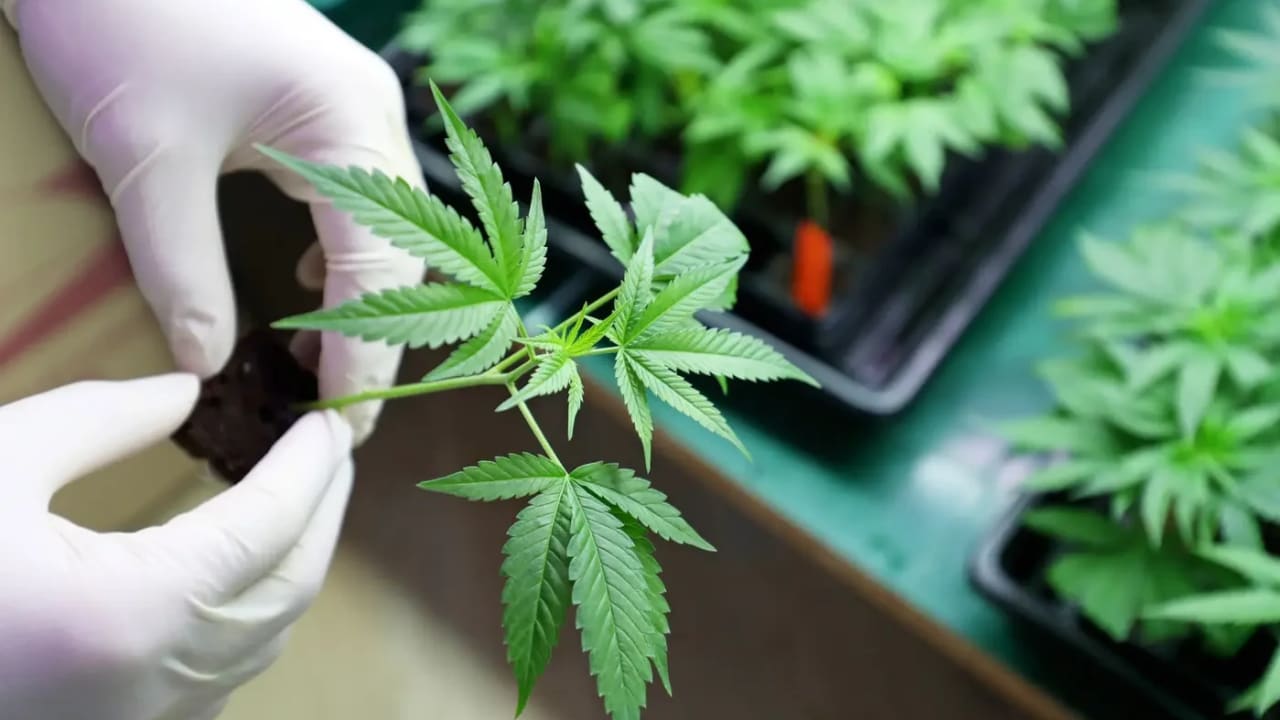
Costa Rica isn’t just selling flowers. It’s projecting institutional stability to the world. The picture is a perfect illustration: a country that sees itself as a green oasis supplying pharmacies in a Europe crumbling under the weight of its own energy contradictions. Its underlying strategy is welfare diplomacy. On a similar note, with ARICCAME (Regulatory Agency for the Hemp and Medicinal Cannabis Industry), Argentina aims to become a player in said diplomacy, having successfully extended its existence and, despite political pressure, avoided dissolution. Unfortunately, the situation in Argentina isn’t exactly normal at the moment.

Hemp as the new soybean

Added to this is the resurgence of other established players. The clearest example: Uruguay, which seemed to have rested on its pioneering laurels and is now reactivating its logistics hub within South America. Faced with supply crises in other regions, the port of Montevideo became the emergency exit for Brazilian and Paraguayan industrial hemp. It’s low-profile diplomacy, but with high impact on foreign exchange: cannabis flowers have become the new soybeans, with all that entails for these humid pampas.

Weed for peace

Ukraine, which at this point seems almost like a science fiction dystopia, is developing its famous “Marshall Plan for cannabis.” Interestingly, this didn’t remain just a campaign promise of the decimated Volodymyr Zelensky. In 2026, with the European Parliament approving multi-billion-dollar loans for reconstruction, the plant became central to public health and economic recovery.

Ukraine is not only focusing its efforts on overcoming the post-traumatic stress of a population that witnessed horror firsthand. It is also pursuing a sovereignty strategy, aiming to resolve its issues independently, without needing handouts from NATO, the United States, Europe or anyone. Currently, Ukraine is building a production infrastructure that does not depend on Russian gas networks or heavy fertilizers.

If they won’t let you buy steel, you plant your own bricks.

It’s weed for peace, or at least to prevent the post-war period from becoming a wasteland of pills, booze and steep mental decline. The environmental factor emerges as a geopolitical bargaining chip: faced with the blockade of traditional building materials from the East, Ukrainian hemp, with the momentum of its historical agricultural tradition, could build new walls. Literal and metaphorical.

A diplomacy of opportunity

Traditional warfare is also reshuffling scientific leadership. Israel, which for decades was a mecca of cannabis research, now sees its export capacity weakened by internal conflict. Meanwhile, this gap is being exploited by countries like Colombia and Thailand, which entered the fray to demonstrate that they can offer cutting-edge science without the risk of being located in areas of permanent tension. This is a diplomacy of opportunity.

The elephant in the room

It’s not all lab meticulousness and math calculations. Morocco remains the elephant in the room. The world’s largest hash exporter has shifted from headlines to state policy. Since legalizing medicinal and industrial cultivation in 2021, the legal area under cultivation has doubled, exceeding 4,700 hectares in 2025. Morocco is now sending its first legal shipments to Switzerland. It’s a masterstroke: whitewashing an age-old tradition to fit it into European Union standards, transforming a dense history of smuggling into diplomacy and a seal of origin.

Europe’s green frontier

Meanwhile, other countries are still resolving their own dilemmas. The Czech Republic, which aims to be the most liberal country in the European Union, allows home cultivation and possession of up to 100 grams, becoming the lifeline of a Europe still fearful of its own shadow. The Czech government not only gave the green light to consumption but also implemented a system of social clubs that rivals the German model. In Prague, they no longer speak of substances but of civil rights and improved tax collection, which they say will go toward urban development, among other things.

Some countries are struggling with the ups and downs of green diplomacy, striving to find cracks, fissures and loopholes in a system that is too rigid to survive. Too collapsed to simply continue. With the operating system critically outdated, it can no longer keep pace with events. Amidst the bloody jaws of this filthy world, cannabis ends up acting as a lubricant for that geopolitical machine that’s running out of fuel. In times of war, when borders close, the plant still finds a path forward. It just needs someone, somewhere, to understand that the future is green.

<p>The post Pax Cannabica: How the Plant Became a Geopolitical Tool in a World at War first appeared on High Times.</p>
Source link

Legal Weed, Unequal Justice: Mary Bailey’s Fight to Free Cannabis Prisoners

Legal Weed, Unequal Justice: Mary Bailey’s Fight to Free Cannabis Prisoners

Legal Weed, Unequal Justice: Mary Bailey’s Fight to Free Cannabis Prisoners

The Last Prisoner Project co-founder and 2025 DOPE Award winner’s fight for freedom

Mary Bailey stays in motion.

The event organizer, activist, and managing director of Last Prisoner Project runs a relentless schedule. From picking up newly released cannabis prisoners to producing the Hawaii Cannabis Conference in Honolulu, Bailey is constantly on the go—and that’s exactly where she wants to be.

Bailey has spent much of her life bringing people together around a greater purpose. A former concert promoter and community organizer, she’s always focused on creating spaces where people can gather and build something meaningful.

“I’m a humanitarian at heart. Kindness feels like the right thing to do, and helping others comes naturally to me. We all need support at different points in our lives.”

Mary Bailey, Managing Director and Co-Founder, Last Prisoner Project

Mary and High Times Publisher Josh Kesselman

A yoga and reggae fanatic, Bailey developed a deep connection to cannabis early on. Growing up in Florida during the height of prohibition, Bailey became “immediately fascinated” by the intersection of music and weed culture upon her first introduction.

In her twenties, that passion led Bailey to Hawaii and, eventually, inspired the launch of the Maui Cannabis Conference. By that point, she was already producing events through her company, Alpha Agency, including the Maui Yoga Festival and community block parties for the County of Maui Office of Economic Development.

“Stepping into the conference space felt like a natural next move. The goal was to create a space where local entrepreneurs could learn directly from leaders in the industry and build something meaningful of their own,” she explained.

That momentum put Bailey on a path that would ultimately change her life—and the lives of countless others.

The Birth of Last Prisoner Project

After hosting the second Maui Cannabis Conference, a social media video about a cannabis prisoner stopped Bailey in her tracks.

“It hit me like a ton of bricks. I realized it could have been me. I could have been the one locked up. I could have been separated from my daughter.”

Mary Bailey

Bailey’s friend, Maui-based activist Jeremy Jarvis, encouraged her to take action. Searching for a way in, she reached out to Andrew DeAngelo—who was already thinking along the same lines. He told Bailey he had been discussing the launch of a nonprofit dedicated to helping cannabis prisoners.

Bailey traveled to SXSW in 2019 to meet with DeAngelo, his brother Steve, and Dean Raise, manager of the reggae band Rebelution. That meeting became the spark for the Last Prisoner Project (LPP).

Mary and High Times Editor-in-Chief Javier Hasse

The group later sought guidance from Norm Reimer of the National Association of Criminal Defense Lawyers, with Harvard law graduate Sarah Gersten stepping in as executive director.

The newly minted team had a clear mission: support people serving time for non-violent cannabis offenses, help secure their release, and ensure a smooth return to society. The nonprofit began by building legal and reentry programs that connect prisoners with the resources they need to win their freedom and thrive once they’re home.

LPP quickly gained traction, earning support from industry leaders and cannabis-friendly celebrities.

$9M

In pro bono legal counsel provided to constituents

$3.7M+

In grants disbursed to prisoners and their families

200K+

Records cleared since LPP’s inception

The Greatest Reward of All

Asked about defining moments in her advocacy work, Bailey points to the people whose lives LPP has helped change. One that still stands out is the phone call with Michael Thompson, when he learned he had been granted an executive commutation from Michigan Governor Gretchen Whitmer.

“He had spent 25 years in prison serving a 40–60-year sentence and had nearly lost hope of ever being reunited with his family,” Bailey said.

Bailey also points to her connection with Stephanie Shepard, who served 10 years for cannabis-related charges. Shepard was eventually hired by LPP and worked her way up to acting executive director, a role she currently holds.

Yet one of the biggest moments was seeing Richard DeLisi walk out of a Florida prison. Once the longest serving nonviolent cannabis prisoner, DeLisi was eventually released thanks in part to the pro bono legal services he received through LPP.

“I will never forget standing alongside the DeLisi family and Richard’s legal team—Mariah Daly, Elizabeth Buchanan, and Chiara Juster—watching Richard walk out of the prison gates after serving 32 years of a 98-year sentence from one of the earliest RICO cases. One of my favorite moments that day was when Richard looked at us and said, ‘I’ve got the most lit legal team ever!’”

Mary Bailey

It’s these moments, and countless others, that led to Bailey being named the first recipient of the 2025 DOPE Award.

The announcement, part of High Times’ relaunch of DOPE Magazine, caught Bailey off guard. She said she was deeply honored by the recognition, but was quick to downplay it. Awards are nice, she insisted, but freeing someone who has spent years locked in a cell, separated from their family, is the only reward that really matters.

“Seeing a former cannabis prisoner truly thrive in their freedom is, without question, the greatest reward of all.”

Mary Bailey

The War on Drugs Isn’t Over

While Bailey and LPP have achieved many wins over the years, the work is far from over. She urged everyone in the cannabis space to take action, arguing that anyone benefiting from legalization has a responsibility to help those left behind.

Mary simply being fabulous

“I feel strongly that anybody who has been in prison for cannabis or is currently incarcerated for cannabis is a true pioneer of the industry,” Bailey expressed. “It means that all of us in the legal industry should feel a moral obligation to join the mission to fight for their freedom.”

Bailey is clear that anyone can be an advocate, whether that means signing petitions or writing letters to people still behind bars. She urges readers to visit LPP’s Take Action page to find ways to get involved. The work won’t be finished until families torn apart by the war on drugs are brought back together.

Bailey leaves no room for complacency: “It will take all of us working together to achieve our mission of freeing every last cannabis prisoner.”

Take action

Help bring cannabis prisoners home.

Visit LPP’s Take Action page to sign petitions, write letters and support the legal and advocacy work that gives real people a real shot at coming home.

Take Action at Last Prisoner Project

<p>The post Legal Weed, Unequal Justice: Mary Bailey’s Fight to Free Cannabis Prisoners first appeared on High Times.</p>

Source link

The Positioning Trap: Why Most Wellness Brands Get It Wrong

The Positioning Trap: Why Most Wellness Brands Get It Wrong

The Positioning Trap: Why Most Wellness Brands Get It Wrong

Wellness brand positioning starts with one question: what makes your brand unique.

Ask most wellness founders who they are and they’ll answer with their product instead. “We make a high-bioavailability magnesium supplement.” “We sell full-spectrum CBD oil, third-party tested.” “Our pet health line uses only organic, human-grade ingredients.”

All true. None of it is wellness brand positioning. In-fact, there are only a few companies that understand how important wellness brand positioning is.

Positioning isn’t what you make, it’s who you are or what is your solution to a specific problem. It’s the reason that makes the client choose you over other. And the brands that define themselves by their product almost always end up in the same place: competing on price, fighting for attention in a crowded category, wondering why growth has stalled.

In a category where everyone offer dreams and focus on high-quality, organic and natural ingredients your brand must stand out. The natural way is to drive attention to your products, but that’s what everyone does…

Wellness Brand Positioning – Can You Solve My Problem?

It feels natural to lead with the product. You’ve spent months or years developing it. You know every ingredient, every formulation decision, every quality control step. The product is real and specific in a way that “positioning” feels abstract.

But your buyer doesn’t start with your product. They start with a problem.

They’re not waking up thinking “I need a high-bioavailability magnesium supplement.” They’re waking up thinking “I can’t sleep” or “my stress levels are unsustainable” or “my dog’s joints are getting worse.” The product is a potential solution to a problem they already have. Whether they choose your product over the thirty others at the same shelf depends entirely on whether your brand speaks to that problem more clearly and credibly than the alternatives and whether they can trust YOU.

When you lead with the product, you’re answering a question your buyer hasn’t asked yet. When you lead with the problem, you’re meeting them where they already are. True, when you lead with a solution you might end up with claim you are not allowed to say, that’s why this step is so important: knowing how to support your claims in a way that won’t put you in risk. That is why smart brands are winning by turning regulations Into a competitive advantage, while others are trying to avoid it and fail.

That’s the difference between positioning that works and positioning that doesn’t.

Wellness Brand Positioning is Difficult

In an unregulated market, you can close the gap between product and problem with direct claims. “This will help you sleep.” “This reduces anxiety.” “This relieves joint pain.”, etc.

In regulated wellness, you can’t make those claims, or you can only make them within strict limits that make them feel vague and unconvincing. So the gap between product and problem stays open, and most brands fill it with the same generic language: “natural,” “effective,” “trusted,” “premium.”

The buyer reads those words and feels nothing. Because everyone says them. Because they can’t be proven. Because they address no specific problem the buyer actually has.

True, this constraint is frustrating. But it’s also, as I’ve written before, an opportunity. The brands that figure out how to speak to their buyer’s problem within their regulatory constraints, specifically, credibly, without overclaiming and focus on the truth.

The constraint forces creativity. Most brands fail because they don’t know how to solve this problem.

The Three Positioning Questions Most Brands Can’t Answer

If you’re not sure whether your positioning is working, try answering these three questions as specifically as possible.

Who is your buyer, exactly?

Not “health-conscious consumers.” Not “people interested in wellness.” The specific person, their age, their situation, their prior experience with products in your category, their level of skepticism, their information sources, what they’ve already tried and why it didn’t work.

The more precisely you can describe your audience, the more precisely your messaging can speak to it. Vague positioning attracts vague buyers. Specific positioning attracts the right buyers, the ones who stay, who repeat purchase, who tell others.

What problem are you solving, specifically?

Not the general category problem. The specific, particular, this-is-what-keeps-them-up-at-night problem. The one your product should be uniquely positioned to address. The one that, when you name it precisely, makes your buyer feel genuinely understood rather than marketed to.

In regulated wellness, you often can’t name the problem directly in your advertising. But many times you have ways to point to it in your content, your email, your community, your brand story. The channels that actually work in this market are the ones where you have the freedom to be specific, the brains to do it right and the balls to do it at all.

Why should they believe you over the alternatives?

This is the hardest question and the one most brands skip. “Because our product is better” isn’t an answer as every other brand says that. The real answer is specific and provable: your sourcing, your testing, your formulation rationale, your track record, your transparency about what you can and can’t claim and why.

Don’t offer 100 fraudulent reviews, that will only put you in trouble. Try to do the hard work, with real science and treat your brand like a pharmaceutical one, with that level of seriousness.

If you can’t be specific and verifiable about your brand and about your solutions, your buyer doesn’t have any real reason to choose you. Practice on your elevator pitch – that 30-to-60-second, concise professional summary designed to introduce who you are, what you do, and your unique value is. Until you do it right, your path to success is blocked.


What Good Wellness Positioning Actually Looks Like

Good wellness brand positioning has three qualities.

It’s specific enough to exclude people. If your positioning speaks to everyone in your category, it speaks to no one… The best-positioned brands in this market have a clear sense of who they’re for and who they’re not for, and they’re comfortable with that.

It’s built around a specific buyer’s problem, not the product’s features. Features are the proof (and make sure your deliver the truth in every statement of your brand, or you will lose trust). The problem is the hook, always. Lead with what keeps your buyer awake, and use your method, research, tests and features to explain why you’re the solution.

It works within your regulatory constraints rather than despite them. The positioning doesn’t depend on claims you can’t make. It’s built on what you can prove, what you can demonstrate, what your buyer can verify independently. That kind of positioning is durable in a way that claim-dependent positioning never is.

Where to Start

Sadly, repositioning an existing brand is harder than positioning a new one. But the starting point for a successful wellness brand positioning is the same: get out of your own product and into your buyer’s specific problems.

Talk to your customers. Not a survey, not reviews, not AI, but a real conversation and do it often! Ask them what they were trying to solve when they found you. Ask them what they’d say to a friend who had the same problem. Ask them what made them choose you over the alternatives. The language they use to answer those questions is almost always better positioning material than anything your marketing team has written.

Then look at that language and ask: does our current messaging reflect this? Does someone who arrives at our website with the problems our customers had would feel immediately understood.

If the answer is no, and for most regulated wellness brands, it is, that’s where the work starts.

Not in marketing. Not in advertising. Not in a new marketing channel. In the positioning that everything else is built on. This is where you should focus your attention, as nothing else will help, if your brand uniqueness is the color of your packaging…

The post The Positioning Trap: Why Most Wellness Brands Get It Wrong first appeared on Cannadelics.

Source link