
Safe Harbor expands financial platform to aid cannabis industry growth
May 1, 2026
Published by toker

Dog owners frequently encounter conflicting advice about supplement amounts printed on various product labels. A single serving recommendation rarely fits every canine because size, age, and health status vary dramatically between individual animals. Many commercial …
Continue reading “Mushroom Serving Guidelines Every Dog Parent Should Know”
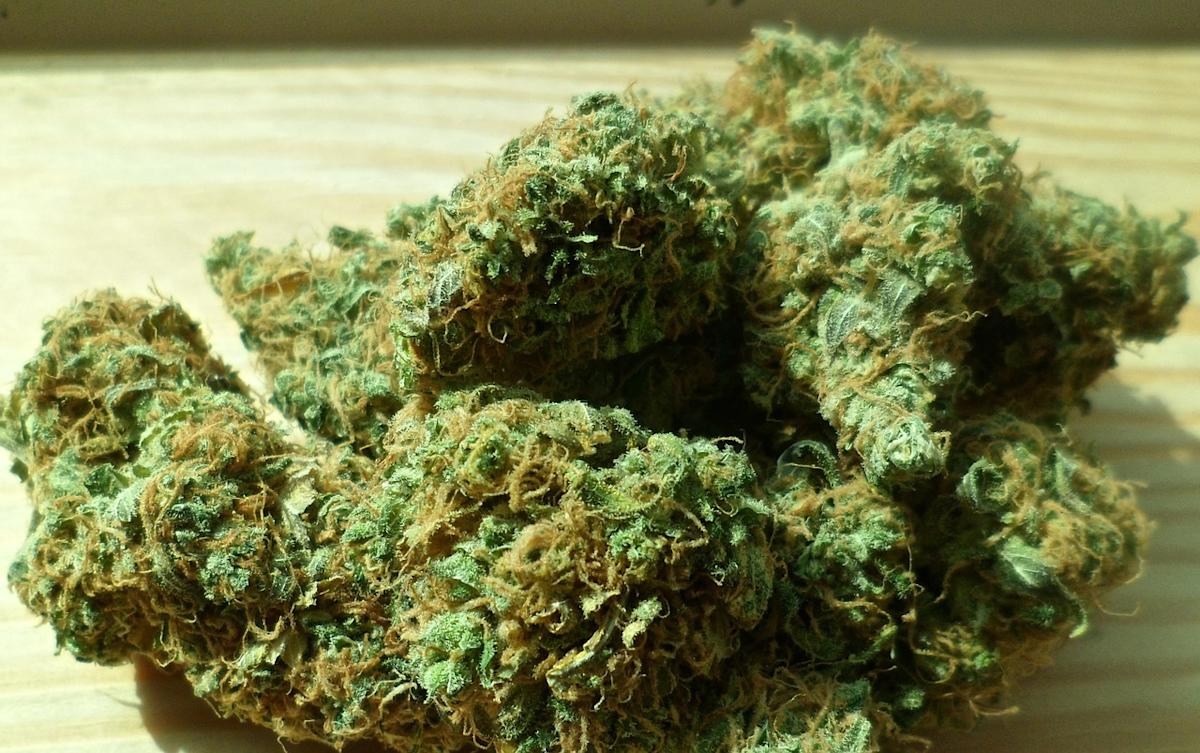
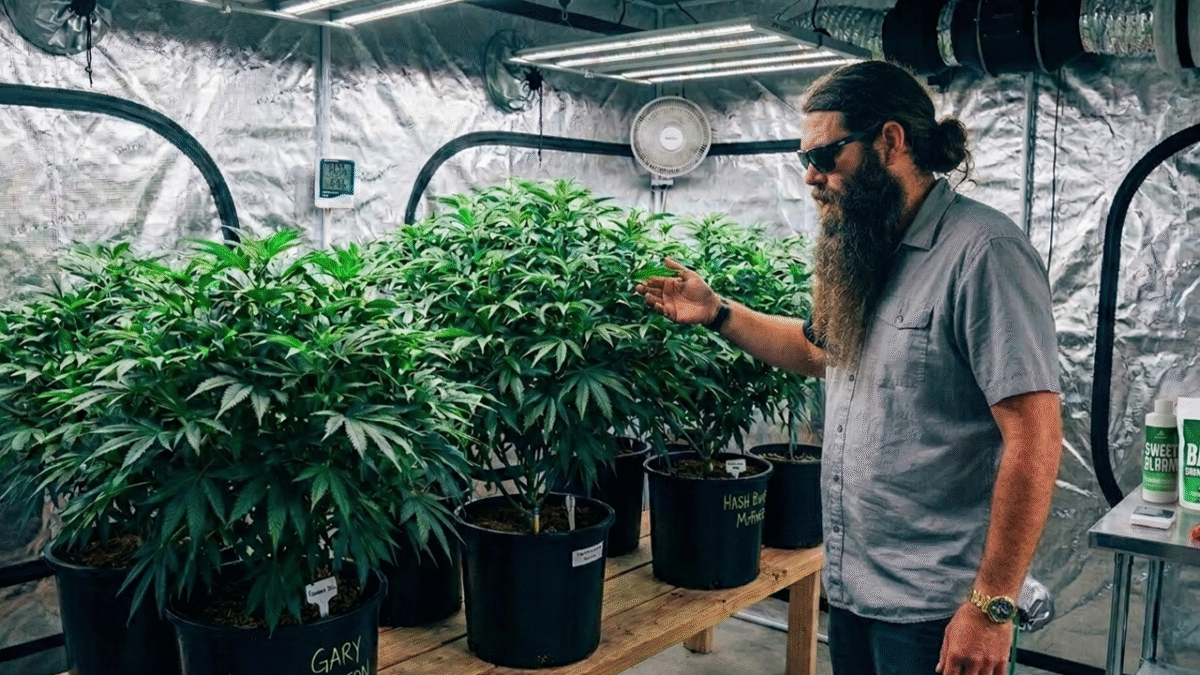
If you want an endless supply of high-performing, genetically stable clones, knowing how to maintain a cannabis mother plant is one of the most …

Dr. Dana Lambert left hospital pharmacy in 2013 to study cannabinoid pharmacology, learned plant medicine from indigenous elders, and bet her career on the whole plant. A new Oxford-published study shows two cannabinoids most dispensary customers have never asked for, CBC and CBG, can make silver work 64 times harder against MRSA, E. coli and Pseudomonas.
“I asked the cannabis plant (yes, I asked the plant itself, as recommended by the elders) to create better medicine.”
That is not a sentence you expect from a woman with a PhD in pharmaceutical sciences who runs a biotech company. Dr. Dana Lambert wrote it herself, in a personal essay published earlier this year. She meant it literally.
The contradiction is the point.
Lambert grew up on Vancouver Island, started a business degree at the University of British Columbia at 17, then transferred to pharmaceutical sciences when she realized she cared more about the chemistry of medicine than the business of it. She graduated as a licensed pharmacist in 2010 and went to work in hospitals. The job lasted two and a half years.
“I saw firsthand at patients’ bedsides the suffering, and too often, the mortality, caused by cancer, treatment-resistant infections, non-healing wounds, and chronic pain,” she wrote. “My job was to optimize drug therapy for patients, but all too often, the available treatments fell short.”
She left clinical pharmacy in 2013 and went back to UBC for a PhD in cannabinoid pharmacology. During her training she had also studied with indigenous elders on Vancouver Island and in Central America. One teaching stayed with her.
A woman with esophageal cancer who had failed chemotherapy with paclitaxel, a drug derived from Pacific yew bark, was reportedly cured after drinking tea prepared by an elder using the whole bark. The single isolated compound failed. The whole plant worked.
That observation became Lambert’s working thesis: pharmaceuticals routinely fail to capture the medicinal range of the plants they come from, because they isolate one active ingredient and discard everything else.
Cannabis is the plant for which this thesis was built.
“I asked the cannabis plant (yes, I asked the plant itself, as recommended by the elders) to create better medicine.”
Dr. Dana Lambert
On April 21, the Journal of Applied Microbiology, an Oxford University Press journal, published a study from Lambert’s company, Andira Pharmaceuticals, and the University of British Columbia. The findings are not subtle.
The researchers tested silver, an antimicrobial used in wound care and medical devices for centuries, against three of the bacteria responsible for the worst hospital-acquired infections: MRSA, E. coli and Pseudomonas aeruginosa. Silver alone is losing the fight, both to bacterial resistance and to its own toxicity at higher doses.
When the researchers added two cannabinoids most dispensary customers have never asked for, cannabichromene (CBC) and cannabigerol (CBG), the math changed. The combination cut the silver dose required by up to 64-fold. It converted weak bacterial growth inhibition into rapid killing. It cleared bacterial biofilms, which are present in over 60% of diabetic ulcers and which most antibiotics can’t touch.
“This work identifies a practical way to revitalize an existing antimicrobial that is already widely used in healthcare,” Lambert said in a statement.
The most consequential finding came from a 20-day resistance test. The researchers ran the silver-CBC-CBG combination side by side against fusidic acid, a standard antibiotic, exposing MRSA to both compounds at sub-lethal doses every day for three weeks. By day two, fusidic acid had already lost most of its punch. The combination held flat for the full passage.
(function() {
function loadChartJs(callback) {
if (typeof Chart !== ‘undefined’) { callback(); return; }
var existing = document.querySelector(‘script[data-silvanex-chartjs]’);
if (existing) { existing.addEventListener(‘load’, callback); return; }
var s = document.createElement(‘script’);
s.src=”https://cdnjs.cloudflare.com/ajax/libs/Chart.js/4.4.1/chart.umd.js”;
s.setAttribute(‘data-silvanex-chartjs’, ‘true’);
s.onload = callback;
document.head.appendChild(s);
}
function initChart() {
var ctx = document.getElementById(‘silvanex-resist-chart’);
if (!ctx || ctx.dataset.rendered) return;
ctx.dataset.rendered = ‘true’;
var days = Array.from({length: 20}, function(_, i) { return i + 1; });
var ssCbcCbg = [0, 0, 0, 0, 0, 0, 0, 0, -2, -2, 0, 0, 0, -2, 0, 0, 0, -2, 0, 0];
var fusidic = [0, 8, 8, 8, 8, 16, 16, 16, 16, 16, 16, 16, 16, 16, 16, 16, 16, 16, 16, 16];
new Chart(ctx, {
type: ‘line’,
data: {
labels: days,
datasets: [
{
label: ‘Silver + CBC + CBG’,
data: ssCbcCbg,
borderColor: ‘#1D9E75’,
backgroundColor: ‘#1D9E75’,
borderWidth: 2.5,
pointRadius: 3,
pointHoverRadius: 5,
tension: 0.1
},
{
label: ‘Fusidic acid’,
data: fusidic,
borderColor: ‘#E24B4A’,
backgroundColor: ‘#E24B4A’,
borderWidth: 2.5,
borderDash: [6, 4],
pointStyle: ‘rectRot’,
pointRadius: 4,
pointHoverRadius: 6,
stepped: ‘before’
}
]
},
options: {
responsive: true,
maintainAspectRatio: false,
plugins: {
legend: { display: false },
tooltip: { callbacks: { label: function(c) { return c.dataset.label + ‘: ‘ + c.parsed.y + ‘-fold’; } } }
},
scales: {
x: {
title: { display: true, text: ‘Passage day’, font: { size: 12 }, color: ‘#5F5E5A’ },
ticks: { autoSkip: false, maxRotation: 0, font: { size: 11 }, color: ‘#5F5E5A’ },
grid: { display: false }
},
y: {
title: { display: true, text: ‘Fold-MIC shift’, font: { size: 12 }, color: ‘#5F5E5A’ },
min: -4,
max: 18,
ticks: { stepSize: 2, font: { size: 11 }, color: ‘#5F5E5A’ },
grid: { color: ‘rgba(128,128,128,0.12)’ }
}
}
}
});
}
if (document.readyState === ‘loading’) {
document.addEventListener(‘DOMContentLoaded’, function() { loadChartJs(initChart); });
} else {
loadChartJs(initChart);
}
})();
The framing of the paper is medical. The implication is bigger.
Antimicrobial resistance is one of the World Health Organization’s top global health threats. Big Pharma has largely walked away from antibiotic development because the unit economics don’t work. Hospital-acquired infections cost the United States an estimated $28 to $45 billion a year, according to the Oxford paper.
Into that vacuum walked a Vancouver pharmacist with a PhD, a research team at UBC and a thesis she did not invent in a lab. She inherited it from a woman who beat esophageal cancer with tea.
Andira is now preparing two parallel Phase 1/2a clinical trials of the silver-CBC-CBG combination, branded as Silvanex Topical, for surgical wounds and chronic diabetic ulcers. Both are scheduled to begin in Q4 2026, with FDA Fast Track and QIDP applications to follow.
“I’m probably the furthest thing from an academic scientist you’ll ever meet.”
Dr. Dana Lambert
Lambert is candid about how she got here. “I’m probably the furthest thing from an academic scientist you’ll ever meet,” she said in an earlier interview with this reporter. “I did it because I wanted to learn how to develop drugs and get involved in early-stage research and drug discovery.”
She has also been candid about the philosophical scaffolding. In her own essay, she wrote that her belief in the medicine she is developing rests on “the understanding that both human and plant intelligence came together to create them.”
Most pharma CEOs would never put that sentence in writing.
For thirty years the cannabis conversation in the United States has been a fight over THC. The medical horizon got handed to CBD, mostly through wellness products with thin clinical backing. Meanwhile CBC and CBG, the cannabinoids the industry treats as filler in full-spectrum products, are quietly the ones showing up in Oxford journals.
Lambert spent fifteen years preparing for this moment. The plant, in her telling, was not a metaphor.
The minor cannabinoids were never minor.
<p>The post Big Pharma Gave Up On Superbugs. This Pharmacist Asked The Cannabis Plant Instead. first appeared on High Times.</p>
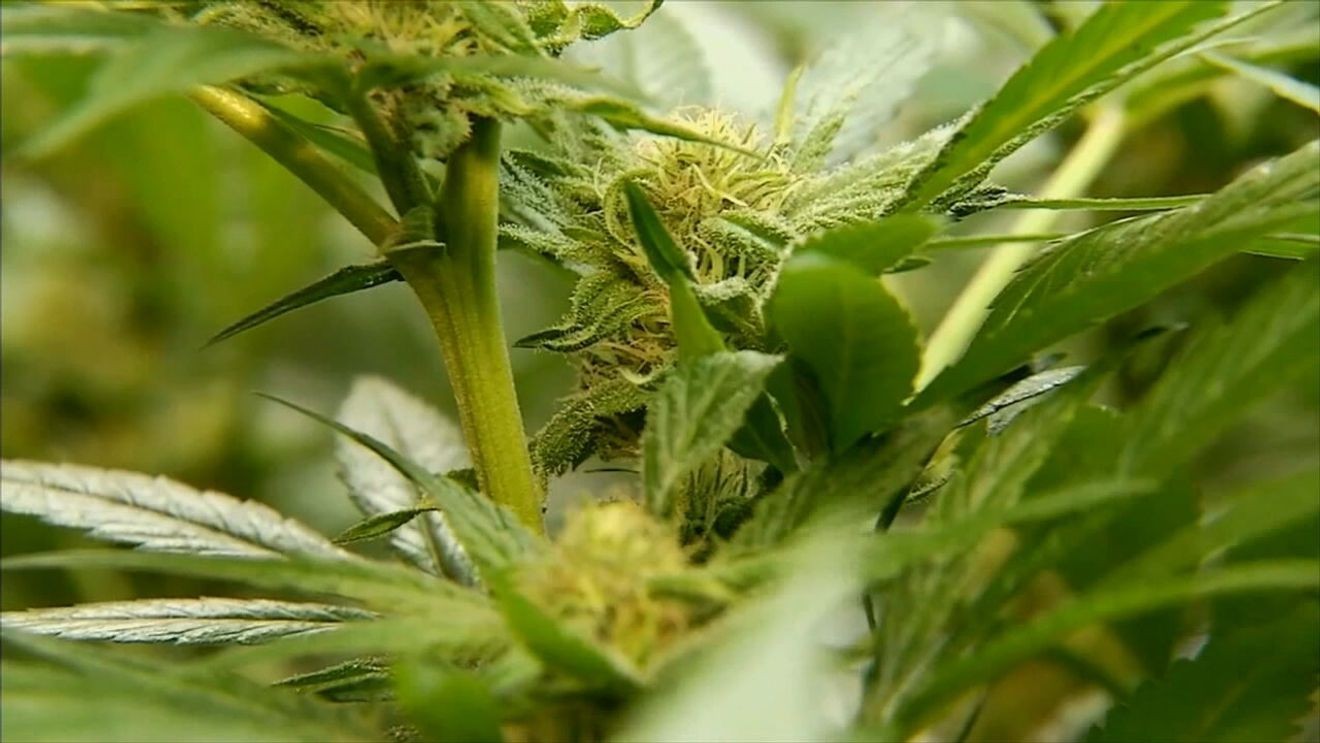
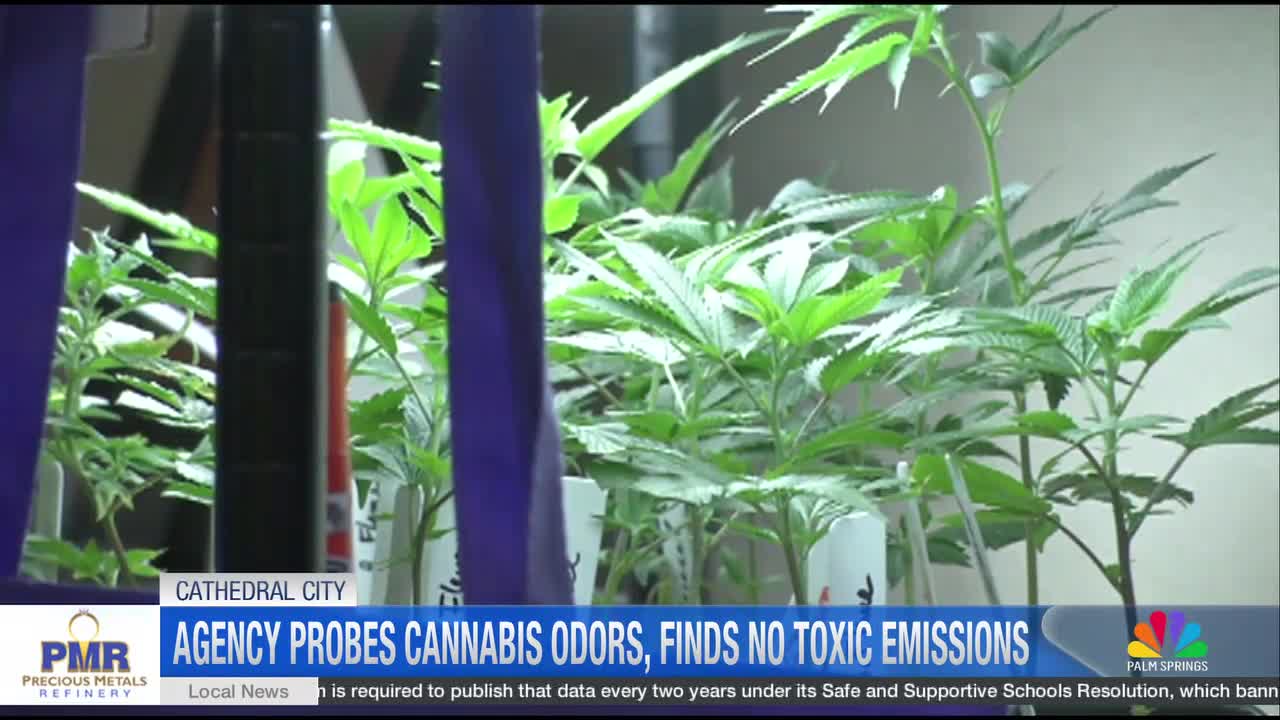

The M&A scramble for Europe has continued at a fearsome pace over the last few weeks. Organigram has closed its landmark acquisition of Berlin-based Sanity Group in a deal worth up to €250 million.
Aurora Cannabis this week announced the purchase of Safari Flower Company, adding a purpose-built EU-GMP certified facility in Ontario to feed its European export pipeline.
Tilray, having spent years assembling a 20-country distribution network, has moved to acquire UK medical cannabis clinic Lyphe, alongside its buyout of major alcohol brand Brewdog.
Canadian licensed producers already dominate European medical cannabis supply chains. According to Statistics Canada trade data, exports across dried flower, extracts, and medicament categories totalled CA$51.6 million in February 2026 alone, with Germany absorbing more than 60% of that by value. Now, the same producers are moving to dominate European operations.
One Canadian frontrunner, however, is notably absent from this fervent land-grab. Canada’s largest dried flower producer and one of the world’s largest EU-GMP certified cannabis operators, Village Farms, is watching this flurry of M&A activity from the sidelines patiently.
“Our industry has historically suffered from a little bit of shiny object syndrome,” Sam Gibbons, Senior Vice President of Corporate Affairs at Village Farms, told Business of Cannabis.
“We usually see a lot of overzealousness and capital gets thrown at the next exciting thing… We really want to be sure that any decisions we make from an M&A standpoint are going to be smart long-term investments with partners who want to be in it for the long haul.”
This more cautious approach is all the more notable given that Village Farms is in a prime position to make such strategic acquisitions. According to its latest financial filings, Village Farms ended 2025 with $86 million in cash, record full-year net income of $21 million, and $58 million in operating cash flow.
Although the company may have remained absent from the recent spate of headline transatlantic M&A deals, it is by no means ignoring the European opportunity.
Currently, Village Farms’ European strategy has two main arms. The first is a medical export business run from its EU-GMP certified production campus in Delta, British Columbia, a 4.8m square foot facility operated by its wholly-owned subsidiary Pure Sunfarms.
From there, the company ships pharmaceutical-grade dried flower to Germany, the United Kingdom, Israel, Australia, and New Zealand, and it is in the process of adding further markets, with new country announcements expected later in 2026.
According to its latest financial filings, it is currently the largest exporter of medical cannabis to Europe, with three of Germany’s top five cultivars by sales ranking, based on data compiled by market tracker Flowzz.
The second is on-the-ground operations. Through its wholly-owned subsidiary Village Farms International B.V., in the Netherlands, the company holds one of just ten licences to produce and distribute recreational cannabis under the Dutch experiment, one of the first and most closely watched regulated adult-use cannabis programmes in mainland Europe.
Its Phase I facility in Drachten has been operating at full capacity since mid-2025, with products represented in 91% of participating coffeeshops. Construction on a Phase II indoor facility in Groningen is now nearing completion, with the first grow rooms expected to be planted within weeks.
Once the facility is fully completed, later in Q2, the Groningen facility will add approximately 8,000kg of annual capacity, bringing the company’s total Netherlands production to around 10 tonnes a year.
“We expect to have our first rooms planted within the next couple of weeks,” Gibbons told Business of Cannabis in late March. “Post-processing and manufacturing should be completed by May, and the facility should be fully operational by that timeframe, ramping through Q2 and reaching full capacity by the end of Q3.”
This will see the company’s production capacity in the Netherlands quintuple, not only quietly making it a major force in the region, but also putting the company in a position to directly address concerns over whether licensed operators in the Dutch experiment can supply enough product across enough formats to displace the deeply embedded illicit market.
One of the most closely watched supply gaps in the Dutch programme’s early months was hash. When Business of Cannabis reported on the experiment’s transition phase in August 2024, hash production among the then-operational licensees was running well below the minimum stock thresholds required by the government, and ministers had written to parliament flagging the shortfall as a specific concern.
Village Farms was not yet online at that point, but Orville Bovenschen, now Global President of Operations for Village Farms, and previously the public face of the Netherlands subsidiary, had already flagged it as an opportunity.
“We’ve been producing hash in Canada for a long time and have gained a lot of expertise in the process,” he told us at the time.
The Phase II expansion in Groningen is, in part, designed to capitalise on exactly that expertise, with Gibbons noting that increased capacity will enable improved hash offerings alongside stronger pre-roll and flower supply.
As seen across much of Europe over the last year, the Dutch experiment’s longevity has been thrown into question amid recent political turmoil.
According to Gibbons, a parliamentary debate in late March addressed the programme directly, with opposition from at least one Christian party. The outcome, he said, was broadly positive with the coalition agreeing to see the experiment through its full four-year term.
“There is a party who’s not enamoured with the idea of the pilot,” Gibbons explains, “but they have agreed to see it through at least the full four years of the programme.
“There is a lot of work that needs to be done to educate local stakeholders and correct some misperceptions that aren’t really applicable. If the goals of this program are to reduce criminal activity and improve public health and safety, then our experience in Canada is a great model for success. In Canada, we’ve seen the legal market reach around 75 to 80% of the total market in the span of just eight years, which is a great reflection on the benefits of regulating cannabis and proves that when given a choice, consumers prefer safe and tested products from reputable sources..”
Despite its refrain from rushing to buy up European positions to date, Village Farms’ posture could be beginning to shift.
In late March, it announced that long-serving CFO Stephen Ruffini, a 17-year veteran who oversaw the company’s NASDAQ uplisting and its transformation into a cannabis CPG operator, would transition out of the finance role and into a newly created position focused exclusively on mergers and acquisitions.
The move was described by CEO Michael DeGiglio as reflecting the company’s commitment to ‘complementing continued organic growth investments with accretive acquisitive opportunities globally.’
Gibbons, however, suggested that the company’s long-term strategy remains intact. “We’re getting pitched a lot of things right now, especially in Europe, and we’re just not feeling like we need to rush into anything,” he says.
“We’re getting to know a lot of operators, building relationships, looking at things more strategically. We won’t rush into anything or overpay until we feel comfortable we’re getting a long-term solution.”
“We feel like we’ve got really solid visibility for the next two years or so. In the meantime, we’re being very thoughtful, prudent, and patient, and there are a lot of opportunities out there.”
The post ‘Thoughtful, Prudent, Patient’ – Why Village Farms Is Sitting Out the M&A Rush appeared first on Business of Cannabis.

Your 40s often bring a shift in the way you think about money, responsibilities, and future planning. Health insurance also starts to feel less like a routine purchase and more like a long-term financial decision …
Continue reading “How Your 40s Can Shape Your Long- Term Health Insurance Decisions”











We use cookies to improve your experience on our site. By using our site, you consent to cookies.
Manage your cookie preferences below:
Essential cookies enable basic functions and are necessary for the proper function of the website.
Drag & drop or click to select
JPEG, PNG, GIF, WebP, MP4, WebM · Images max 30 MB · Videos max 100 MB


