World’s Oldest Cannabis Plant May Have Been Found in a Berlin Museum — and It’s 56 Million Years Old

World’s Oldest Cannabis Plant May Have Been Found in a Berlin Museum — and It’s 56 Million Years Old


World’s Oldest Cannabis Plant May Have Been Found in a Berlin Museum — and It’s 56 Million Years Old

A fossilized leaf imprint found near Eisleben, Germany, may be 56 million years old, doubling the previously accepted timeline for the Cannabis genus and raising new questions about where the plant actually came from. Researchers say further investigation is underway. The implications are enormous either way.

It had been sitting in a museum drawer for nearly 140 years.

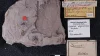
First described in 1883 by the scientist Paul Friedrich as Cannabis oligocaenica, a fossilized leaf imprint in the collection of Berlin’s Museum für Naturkunde had not been analyzed in detail until now. When researchers recently took a closer look, they realized they might be sitting on one of the most significant botanical discoveries in recent memory.

The fossil, a leaf impression in fossilized mud found near Eisleben in Germany’s Saxony-Anhalt region, has been dated to the Lower Eocene, approximately 56 to 48 million years ago. If the identification holds up, it would make this specimen by far the oldest known cannabis fossil ever found, doubling the previously accepted timeline for the entire Cannabis genus and raising fundamental questions about where the plant actually originated.

The museum is careful about the framing. “Further investigations are now underway to determine whether this is indeed by far the oldest known specimen of the Cannabis genus,” the institution said in an April 17, 2026 press release. This is a preliminary finding, not a confirmed classification. But the early evidence is striking enough that scientists are taking it very seriously.

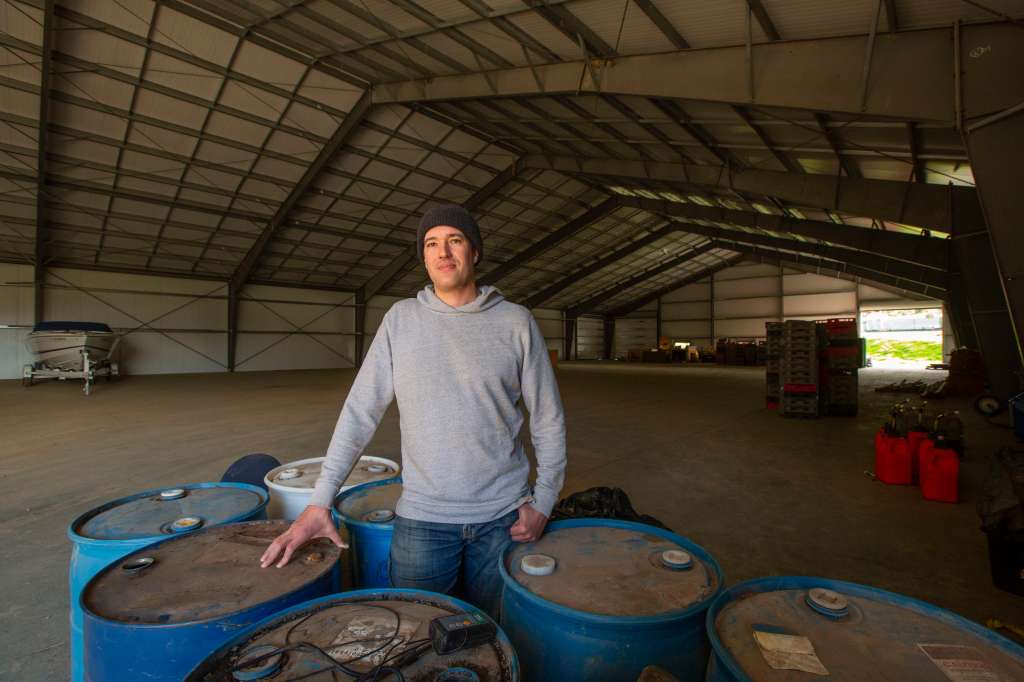
Photo: Ludwig Luthardt/Museum für Naturkunde Berlin

What makes this fossil significant

Until now, the oldest known cannabis evidence came from two sources. Pollen samples from the Miocene epoch dated cannabis to roughly 20 million years ago. Molecular dating of genetic material from living cannabis plants suggested the genus could be as much as 28 million years old. Both figures pointed to an origin in northwest China and the broader Central Asian region, the so-called Tibetan Plateau origin theory that has dominated cannabis botanical research for decades.

The German fossil challenges both the timeline and the geography.

How this fossil changes the timeline

20M years

Oldest known cannabis pollen samples, from the Miocene epoch, found in Central Asia

28M years

Estimated age of the Cannabis genus based on molecular dating of modern plant DNA

56M years

Estimated age of the Berlin fossil, found in Germany — potentially doubling the entire known timeline

Note: The 56 million year identification is preliminary. Further investigation is underway at Museum für Naturkunde Berlin.

The leaf that looks almost identical to modern cannabis

The morphological resemblance between the fossil and modern cannabis plants is what caught researchers’ attention. Ludwig Luthardt at the Museum für Naturkunde Berlin told IFLScience that the similarities were immediately striking.

“The morphological similarities with modern-day cannabis leaves is striking. Not only the overall morphology or outlines of the leaves is nearly identical but also the leaf venation pattern.”

Ludwig Luthardt, Museum für Naturkunde Berlin

The imprint, with its serrated, lanceolate leaves, bears a remarkable resemblance to the cannabis plant as it exists today. That visual similarity is what makes the case compelling. But it is also where the limits of the evidence become clear.

The fossil is missing the microscopic structures that would allow for definitive classification. Specifically, the trichomes — the fine hair-like structures on modern cannabis leaves that contain THC — are not preserved in the imprint. Without them, researchers cannot confirm with certainty that this specimen belongs to the Cannabis genus rather than a related species within the Cannabaceae family, which also includes hops.

“We cannot exclude that these were originally present, but leaf epidermal structures are missing in the fossil.”

Ludwig Luthardt, Museum für Naturkunde Berlin

Whether the ancient plant produced any psychoactive compounds is, of course, impossible to know. As the museum noted in its press release: “Whether the fauna of the Eocene experienced any intoxicating moments is, of course, not recorded.”

Where did cannabis actually come from?

The geographic implications may be as significant as the timeline. Finding a potential cannabis fossil in Germany’s Saxony-Anhalt region — not Central Asia, not the Tibetan Plateau, not northwest China — directly challenges the accepted origin story of the plant.

“The origin of Cannabis sativa and Cannabis indica was supposed to be in the Himalaya montane regions, where open habitats were favouring the radiation of herbaceous plants. Probably, our specimen was a different species, but the origin of the genus might be now seen somewhere else.”

Ludwig Luthardt, Museum für Naturkunde Berlin

Luthardt went further, suggesting the plant’s story may be even older and more geographically widespread than the Eocene fossil implies. The Cannabaceae family has existed since the Cretaceous period, approximately 90 million years ago. That opens the possibility of even older cannabis ancestors waiting to be discovered in fossil localities that have not yet been systematically explored.

“Fossil localities are hardly accessible and the research focus on the floras of this age is low.”

Ludwig Luthardt, Museum für Naturkunde Berlin

Translation: there are almost certainly older cannabis-related fossils still waiting in the Himalayas, Nepal and across Central Asia, in localities that researchers have not yet systematically examined. The Berlin fossil may not be the oldest cannabis ancestor ever. It may simply be the oldest one found so far.

What this means for everything we thought we knew

If the identification is confirmed through further investigation, the implications extend well beyond botany. The accepted story of cannabis (that it evolved in Central Asia, that it was discovered and cultivated by humans in that region, that its history as a plant begins in a relatively narrow geographic and temporal window) would need to be fundamentally revised.

The plant’s natural range, its evolutionary adaptations, its relationship with climate and soil across geological epochs, and even the question of when and where ancient humans first encountered it would all become open questions again.

A plant that has been at the center of human culture, medicine, commerce and policy for thousands of years may turn out to have been part of the Earth’s botanical landscape for tens of millions of years before a single human being ever laid eyes on it.

What the German fossil makes clear, regardless of final classification, is that cannabis has a history far deeper and far more widespread than the existing evidence has captured. Further investigation is underway at the Museum für Naturkunde Berlin.

The plant, as always, has more to tell us.

Sources: Museum für Naturkunde Berlin, press release, April 17, 2026; IFLScience. Photos: Ludwig Luthardt/Museum für Naturkunde Berlin, via museum press release.

<p>The post World’s Oldest Cannabis Plant May Have Been Found in a Berlin Museum — and It’s 56 Million Years Old first appeared on High Times.</p>

Source link

Tsarina Feminized Grow Report

Tsarina Feminized Grow Report

Tsarina Feminized Grow Report

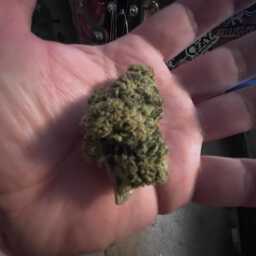
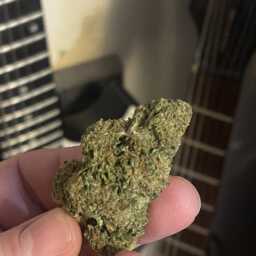
In this report, we’ll go over our time with Tsarina Feminized. Overall, this was a simple, hassle-free plant that shows incredible potential for more advanced growing techniques. While it’s a bit slower than some other indicas, it uses the extra time to create an impressive harvest of large, dense, and potent buds.

The post Tsarina Feminized Grow Report appeared first on Sensi Seeds.

Source link

Preview – Submerged in Sound: An Asé Listening Experience

Preview – Submerged in Sound: An Asé Listening Experience

Preview – Submerged in Sound: An Asé Listening Experience

Union Hall Art Space and Asé Continuum presents Submerged in Sound: An Asé Listening Experience, an immersive, curated listening event exploring the Afrofuturist lineage in music. Now sold-out, the event takes place on Saturday, April 18 (Record Store Day) from 6-9PM as a part of Union Hall’s current exhibition Drexciya: Into the Deep, curated by

Source link

Cannabis Marketing in 2026: AI, Trends, What Works & Creative Strategies

Cannabis Marketing in 2026: AI, Trends, What Works & Creative Strategies

Cannabis Marketing in 2026: AI, Trends, What Works & Creative Strategies

How to Market Your Cannabis Brand or Store in 2026 The cannabis industry in 2026 is no longer “new.” It is competitive, regulated, and increasingly saturated. While legal markets continue to grow across North America and globally, many brands are discovering that what worked even two years ago is no longer effective. Marketing cannabis today […]

The post Cannabis Marketing in 2026: AI, Trends, What Works & Creative Strategies appeared first on The Cannabis Business Directory.

Source link

THC Drinks Hit Governors Ball With ayrloom—And New York Culture Won’t Look The Same

THC Drinks Hit Governors Ball With ayrloom—And New York Culture Won’t Look The Same

THC Drinks Hit Governors Ball With ayrloom—And New York Culture Won’t Look The Same

New York has always been a proving ground for culture. Music, fashion, street energy—it all collides here first, then ripples outward. Cannabis spent decades orbiting that world just outside the spotlight.

This June, that changes. At Governors Ball in Queens, THC beverages are stepping inside the gates. No workaround, no side-eye, no hiding in the crowd.

ayrloom, a New York cannabis brand rooted in generations of farming, is entering the festival as its first hemp-derived THC beverage partner. It’s a small headline with real weight behind it.

Cannabis Finally Gets a Seat at the Festival

Cannabis and live music have always gone hand in hand. The difference now is legitimacy.

At Governors Ball, ayrloom’s low-dose drinks will be sold on-site to 21+ attendees, placing THC into the festival’s official beverage mix. Each can is built for pace, not intensity, with 1mg THC paired with 15mg CBG, designed for a light, social lift instead of a heavy high.

That shift reframes cannabis from something you sneak into a crowd to something you casually sip between sets. No smoke, no spectacle, just another option in the rotation.

And in a setting like this, normalization doesn’t come from messaging. It comes from behavior.

The Rise of Low-Dose Social Cannabis

If flower defined cannabis culture for decades, beverages are rewriting how it shows up in public.

Drinks offer something uniquely suited to regulated spaces: control. You know what you’re getting, you can pace it, and you don’t need to step away to partake. It fits the rhythm of a festival in a way smoking never fully could.

ayrloom is leaning into that experience beyond the can. Their footprint at Governors Ball includes a dedicated “garden club” space for relaxing and a daily 4:20 p.m. “Flower Hour.”

It’s branded, sure, but it’s also instructional. It shows people what cannabis can look like when it’s designed for social settings instead of the sidelines.

Cannabis has flirted with mainstream acceptance for years: celebrity drops, splashy launches, legalization headlines. But real normalization is quieter than that.

It happens when you can buy a THC drink as easily as a beer. When dosage is low enough to fit into a long day outside. When nobody around you treats it like a big deal.

That’s what’s unfolding here.

New York’s cannabis market is still evolving, and hemp-derived THC exists in a complicated legal lane. But culturally, the signal is clear: cannabis isn’t being tolerated in public spaces anymore—it’s being integrated into them.

Festivals are the perfect test case. If it works here (fast-paced, crowded, unpredictable), it can work anywhere.

For years, cannabis lived in the same spaces as music festivals without ever being formally invited. What’s happening at Governors Ball is the industry finally getting that invite, and showing up prepared.

A 1mg THC drink might seem subtle. But inside a packed New York festival, where cannabis is treated like just another choice at the bar, it signals something bigger than a product launch.

It’s a shift in how the culture moves.

Images courtesy of ayrloom.

<p>The post THC Drinks Hit Governors Ball With ayrloom—And New York Culture Won’t Look The Same first appeared on High Times.</p>


Source link

How to Build a Wellness Newsletter That Converts

How to Build a Wellness Newsletter That Converts

How to Build a Wellness Newsletter That Converts

As a brand, building your wellness newsletter is one of the few marketing channels that actually works in regulated markets. No ad account bans. No algorithm changes. No platform-level restrictions on your category. Just a direct line to people who have already told you they want to hear from you.

That doesn’t mean compliance disappears – your messaging still needs to stay within FTC and FDA guidelines, same as everywhere else. But if you have your own wellness newsletter, you control the channel. Nobody can shut it down or restrict your reach overnight. In regulated wellness, that kind of stability is worth more than most brands realize.

That’s a rare thing in this space. And most brands waste it completely.

Based on our own experience with The Sunday Edition, Cannadelics’ weekly wellness newsletter, this channel proved to be priceless, as it built loyalty and allowed us to communicate directly with our audience without relying on any platform we don’t control. And we achieved that without paid advertising, without a viral moment, and without any of the shortcuts most growth guides recommend. What we learned is that building a wellness brand newsletter that converts isn’t complicated. But it requires making a set of decisions that most brands get wrong from the start.

The First Decision: Who Is This Actually For?

Most brands fail with their wellness newsletter even before the first issue is sent because they never answered one question clearly: who is the newsletter for?

Generally speaking, your newsletter can either serve your customers as a retention tool, or serve your industry as a credibility tool. The distinction matters more than most brands realize.

For a brand, you should never forget the simple rule that a wellness newsletter is a retention tool. It’s about keeping buyers engaged, building habit, deepening trust, and generating repeat purchase. The content is about getting the most from your products, understanding why they work, and staying connected to your brand’s world.

A newsletter for your industry is a credibility tool. It’s about establishing authority with partners, press, investors, and potential clients. The content is about market intelligence, regulatory shifts, and strategic insight, exactly what we are doing in the Sunday Edition. We don’t write for consumers. We focus on industry operators and founders, offering them intelligence to improve their brand performance.

These are completely different products. They have different audiences, different content strategies, different conversion goals, and different metrics for success. Brands that try to serve both audiences in one newsletter often fail in building a successful channel.

Before you write a single subject line, answer this: who is the primary reader, and what do you want them to do after reading each issue?

Everything else follows from that answer.


Why Your Wellness Newsletter Won’t Convert

Most brands believe that since ‘the money is in the list’ they should focus on subscribing people to their newsletter. True, building a list is powerful, but it is not your end-goal which is building a wellness newsletter that works for you. We’ve seen brands with a huge list of subscribers focusing on sales and generating almost nothing else from their email channel. While sales are important, don’t ever limit your own channel, as a wellness newsletter is an amazing tool, if only done right.

While every newsletter is unique, most brands suffer from one of the following wrong habits:

They’re broadcasting, not communicating. Every issue of their wellness newsletter is a promotion. Buy this. Try that. Limited time offer. The subscriber signed up expecting value and is getting a sales channel instead. Open rates drop, unsubscribes climb, and the brand concludes that “email doesn’t work for us.”

Email works. Promotional broadcast email doesn’t, at least not as a primary strategy, especially in regulated wellness, where your buyer is already skeptical and already over-marketed to. This rule applies to other industries too.

They’re inconsistent. They send when they have something to sell and go quiet when they don’t. The subscriber forgets who you are as they never established a true relationship with them. When the next email arrives, they don’t recognize the sender name and hit unsubscribe or mark it as spam.

Consistency is the single most underrated factor in newsletter performance. A mediocre newsletter that arrives every Tuesday is worth more than an excellent newsletter that arrives whenever someone remembers to write it. This brings us to another point, which is planning in advance. If you plan to have a weekly newsletter, make sure you can deliver and no, a weekly promotion is not enough, unless that’s specifically what your subscribers signed up for.

They have nothing specific to say. The content is generic, industry news that could have come from anywhere, product updates the subscriber doesn’t care about, wellness tips that have been written a thousand times. There’s no point of view, no specific insight, no reason to open the next one.

They’re outsourcing their voice. AI tools make content easier to produce. That’s real, and there’s nothing wrong with using them. But a wellness newsletter that’s fully automated isn’t a newsletter, but a useless content machine. And your subscribers can feel the difference.

True, AI can help you draft, structure, and edit. But it cannot replace your judgment, your perspective, or your specific knowledge of your market. The moment you stop personally approving every word in your newsletter, you stop owning your most important asset. Not your inventory. Your community.

Always remember, that in regulated wellness, your buyers are sophisticated and skeptical. They’re not reading your newsletter for information they can get anywhere. It is YOU they want to read.

What an Effective Wellness Newsletter Looks Like

Each brand is different so their own voice is unique. However, for your wellness newsletter to be an effective one, It should have the following qualities:

It has a clear, specific audience. Like what we discussed earlier, you must write for clear personas. This persona can’t be a general ‘wellness enthusiasts’, and not ‘my client’, but someone you can imagine and describe in details. True, your actual audience is way bigger, but for establishing a good relationship, you should always focus on someone first.

The more precisely you can describe this person, the more precisely you can write for them, and the more they’ll feel that the newsletter was written specifically for them, which is the feeling that drives opens, clicks, and loyalty.

When we first started Cannadelics, back in 2017 (when it used to be called CBD Testers, as it was focused on the Cannabis industry and CBD users), our media arm was writing for a very specific audience, of people who want to improve their daily lives with the use of cannabis-based remedies. Only later we have expanded to supplements, pet health, functional mushrooms and regulated wellness, but still we had to start somewhere. Along the way your audience might change and you will adapt, but a good newsletter must always be focused.

It delivers something the reader can’t easily get elsewhere. Following the former step, once you have a specific audience, it becomes much easier to deliver unique content. Your readers want to hear your own voice, to learn from your specific expertise about your category, or to benefit from your experienced perspective on what’s happening in the market.

If you have nothing specific to say, either find someone with real experience to collaborate with, or don’t operate a newsletter at all. Your followers will feel the difference and reward you with higher open rates. Guaranteed.

It arrives on a schedule the reader can rely on. We have mentioned this part earlier. Pick a day and a frequency and honor them without exception. Not “when we have something to say.” Every week, or every two weeks, or every month and always send on the same day. The reader should be able to predict when your email will arrive before they check their inbox. Try it and you will see much better results for the same effort.

Special editions are additions, not replacements. Holidays, sale days, and events are opportunities for an extra issue, not a reason to skip your regular one. For a brand, that is a great opportunity for a special edition with sales and deals.

Building the List: No Shortcuts

Paid list building, such as buying leads, running contests, using lead magnets that attract anyone with an email address, offer free samples and using an aggressive referral program might feel successful, but that is a trap. While it produces a list that looks impressive and performs terribly, it won’t create a community, but only bring more one-time buyers, at most.

In addition, you will see the negative results coming fast: single digit open rates, high unsubscribe rates that trigger spam filters and a list full of people who don’t actually want to hear from you. Read our Wellness Retention: Why Most Brands Keep Losing Buyers article, to learn more about it.

In regulated wellness, there are usually no short cuts. The list that converts is built slowly, from the right sources, with the right expectations set from the start.

Organic content. Articles, videos, guides, and educational content that attracts readers who are genuinely interested in your category. These readers convert to subscribers at higher rates and stay subscribed longer than any paid source.

Point-of-purchase capture. The moment someone buys from you is the highest-intent moment in your entire relationship with them. A clear, simple opt-in at checkout with an honest description of what they’ll receive builds a list of people who already trust you enough to spend money with you. This is the point when a client can become a member, which means a lot when it comes to their Life Time Value (LTV)

In-person and community channels. Events, communities, forums, and spaces where your target audience already spends time. A genuine presence in those spaces, combined with a compelling reason to subscribe, builds slowly but produces highly engaged subscribers. This last point might feel demanding for small brands, as it requires them to ‘waste’ time on potential clients. However, this is exactly where your efforts are not wasted, as wellness buyers needs someone to relate to, when they look for solutions for their problems.

Again, no short cuts here. Sorry.

The Content That Converts

In regulated wellness, the content that drives conversion, repeat purchase, consulting inquiries, referrals and trust, almost never looks like direct promotion.

It may look like education. Explaining the science behind your category in a way that’s honest about what the research does and doesn’t show. Addressing the questions your buyer is most skeptical about. Publishing the things your competitors are too cautious to say.

It should also feel like market intelligence. What’s changing in the regulatory landscape. What new research means for your category. What trends are emerging that your reader should know about before they become mainstream.

It may also read like a point of view. An opinion about something happening in your industry. A take on a trend that most people are getting wrong. A perspective that’s specific enough to be disagreed with. That’s how you know it’s strong enough to be remembered.

That said, your brand belongs in the newsletter too. Your readers expect it. Feature your products in context, not as promotions. Show how they connect to what you just educated them about. That’s the difference between selling and serving.

The content that converts is somnething that adds value. Information the reader would like to continue getting.

Open Rates Are Not Everything

Most brands running a wellness newsletter track open rate as their primary metric. It tells you whether people opened the email. It doesn’t tell you whether the newsletter is actually working.

Other numbers worth tracking are activity rates (clickthrough, reply rates and shares). For example, how many people responded to your article by clicking on a Learn More button, how many of them responded to an issue or asked you a question and how many forwarded the newsletter to someone else (which is something usually you can’t track, but still important).

The right metric depends on what your newsletter is trying to do. If it’s editorial, watch reply rate. If it’s product-focused, watch click-through and conversion. Open rate alone tells you very little about whether the newsletter is actually working for your brand.

Always remember that having a newsletter is about operating a community. As much as you want them to follow you, you should be listening to them. A good wellness newsletter is one that both you and your followers contribute to its success.

The post How to Build a Wellness Newsletter That Converts first appeared on Cannadelics.

Source link